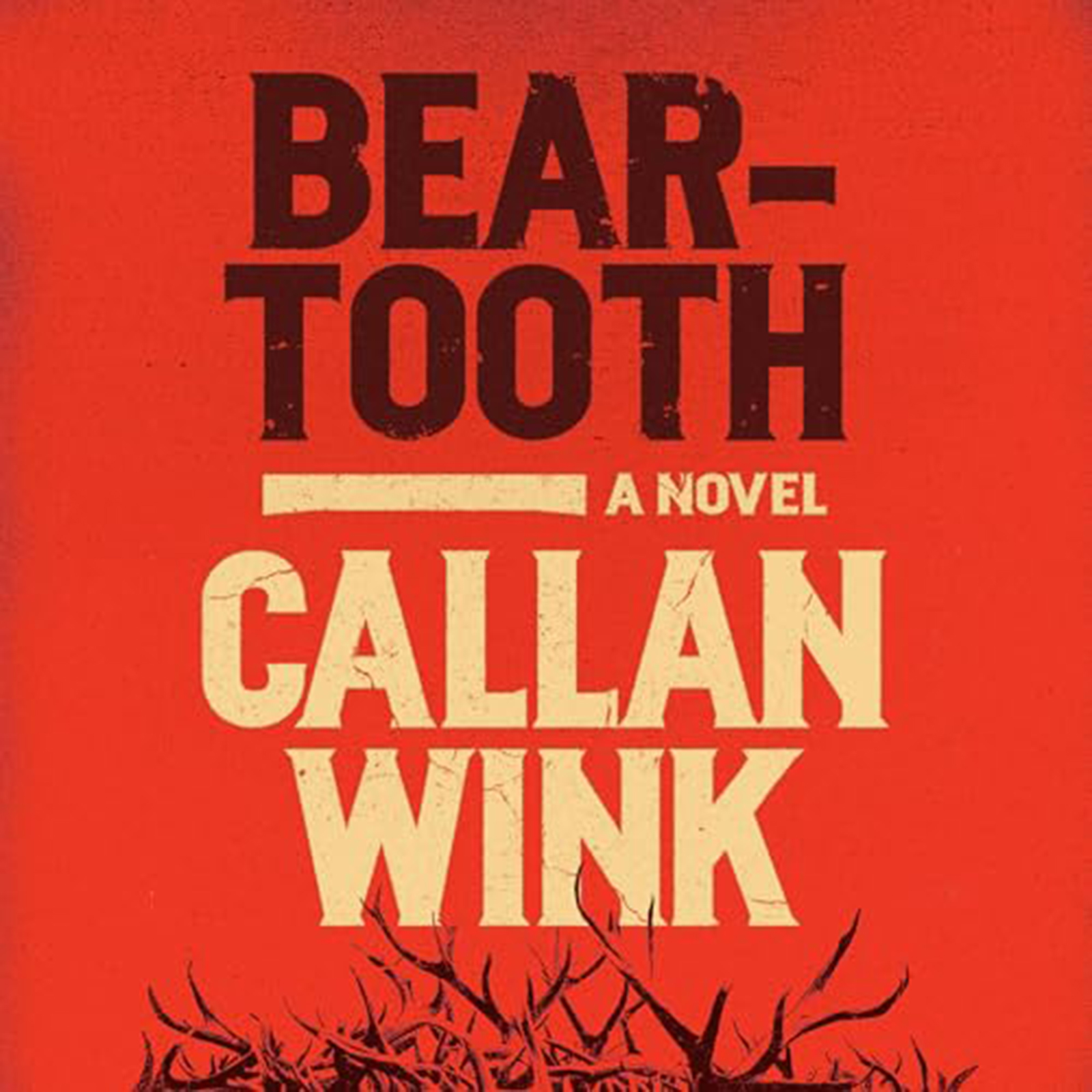
With an opening line that explodes from the barrel, Callan Wink’s newest novel, “Beartooth” is an unrelenting look at what happens when desperation comes to roost for the brothers Thad and Hazen in Montana’s Absaroka-Beartooth Mountains. The Livingston novelist and fly-fishing guide sets the tone for the heist-meets-backcountry story with the first sentence. “Thad had just shot a black bear out of season,” he writes, and the story cracks open from there.
The brothers are in their late twenties, skilled in wilderness survival, and were mostly raised by their father, instructing them to feel comfortable in the backcountry. Thad, one year Hazen’s senior, is now charged with keeping the two housed and fed in their home after the passing of their father. Thad keenly feels the weight of unpaid property taxes and outstanding medical debt when their father was hospitalized. Thad and Hazen are trying to avoid losing everything by resorting to unsavory methods, like poaching black bear to sell their gallbladders and skulls.
Published last winter, “Beartooth” is Wink’s third book. With it, the writer whose short stories have graced multiple issues of The New Yorker has achieved critical acclaim. The novel landed on many best-of-the-year lists, including those published by The Economist and Wall Street Journal, and it was selected as a finalist for the 2025 Montana Book Award.
The novel’s characters are rich and multidimensional. Thad, the heir apparent responsible for keeping Hazen supplied with food and shelter, does not enjoy his involvement with the man called “the Scot,” a known killer who wears a kilt daily and scours the logging roads of the region in a black Suburban, a vehicle big enough to store his ill-gotten gains. But Thad can earn $1,500 for poaching. It’s the same income he and his brother would earn for cutting, splitting, stacking, and delivering at least six cords of woods, if their customers paid on time. As the younger brother, Hazen appears a bit stunted for his age but he has a preternatural affinity for the rawness of butchering wild animals and humping a heavy pack for miles and miles in the mountains. Thad keeps a close eye on his brother, limits his beer intake, and tells him to keep quiet while he negotiates with the Scot.
Thad’s litany of worries grows when his mother, curiously named Sacajewea, returns after years of abandonment. For weeks, Thad insists she stay in her van, the one with a shredded tire that boasts no hurried exit, but Hazen brings his mother freshly caught trout and wonders about her daily yoga practice. This is not a happy family reunion. Thad has a tax lien and a leaking roof to worry about, not whether his mom is going to stick around even though it was her father who built the timber-frame home. Then, after Thad has sworn not to engage in any more of the Scot’s schemes, the man who suspiciously escapes prosecution for his various crimes returns, upping the ante. He’s also sidestepped Thad and starts talking with Hazen directly. The job is more lucrative than poaching black bears, but it’s also far more dangerous. The clandestine operation in Yellowstone National Park near Yankee Jim Canyon will forever alter Thad and Hazen’s lives.
Wink’s talent lies in the propulsive physicality he brings to the page. The surrounding landscape shudders and shakes as Thad and Hazen traverse wild country, packs laden with carcasses and treasures. His descriptions immerse the reader in places best felt by body and bone, with passages like this: “The river drained out cold and green from country that few visited and no one called home. Places where the earth’s crust was so thick it was a like a scab over a molten wound.” However, the tension that crackles from the first page snags midway through the book when Wink moves the action, including confrontations between Thad, Hazen, and the Scot, and discards them offstage.
“Beartooth” is an unflinching examination of the bond between brothers, tested by familial abandonment and grief, alongside a reckoning of how to survive in a place that offers little comfort but nearly indescribable beauty — all of which makes men like Thad and Hazen long for a home they can make their own. Their relationship will be tested by what they do to stay afloat, and that desperation permeates this thrilling story.