Great Basin Incident Team 7 to Transition Out of Skillet Fire
Starting Monday, the Great Basin Incident Management Team 7 will begin the transition process with the local Type 3 team as the fire’s containment reaches 75%
By Lauren Frick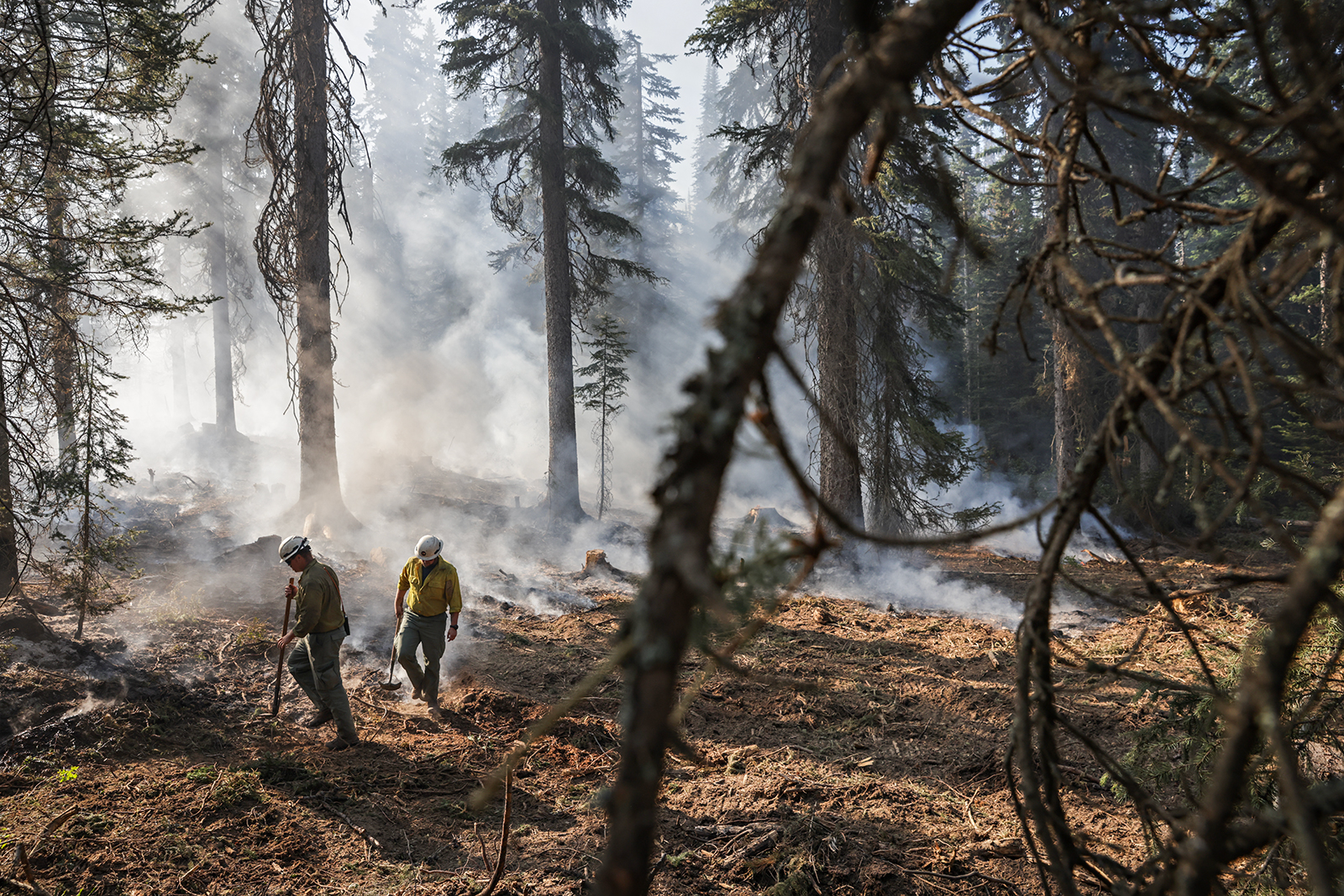
The Great Basin Complex Incident Management Team 7, who have been managing the 3,364-acre Skillet Fire west of Olney since the start of the month, began the transition process with the local Type 3 team after the fire’s containment jumped to 75% as of Monday morning.
As cooler, wetter weather and minimal fire behavior persisted over the weekend, crews and equipment started being demobilized to either rest and prepare for the next fire or to be reassigned to another fire, the Great Basin Incident Management Team 7’s Aug. 16 operational update stated.
“This rightsizing of resources helps to lower the complexity of the incident and create a more manageable organization for the incoming Type 3 team from local agencies,” the updated stated.
“Starting [Monday], Great Basin Team 7 will begin the transition process with the local Type 3 team,” the team’s Aug. 17 update added. “Having this time provides a thorough transfer of information to the incoming team ensuring operations continue smoothly and the support resources need arrives uninterrupted.”
Fire behavior will continue to be minimal, although an increase in temperatures on Friday could cause a slight uptick in fire behavior, according to the team’s Aug. 17 update.
“Heavy fuels continue to smolder interior to containment lines,” the Aug. 17 update stated. “Interior fire activity is unlikely to threaten the existing holding features but could produce noticeable smoke in the coming weeks.”
On Sunday along the southwestern flank of the fire, back haul operations were conducted to continue moving firefighting supplies to areas of greater need. Aviation resources remained available for firefighting operations, even as the need for them has decreased.
“Firefighters are accomplishing more mop up depth off containment lines to ensure these features hold in the event the fire becomes more active,” the Aug. 17 update stated. “Due to snag hazards on the north side of the fire, crews are actively ensuring the containment lines are holding by using UAS. Their thermal detection sensors allow ground resources to check for heat without exposing them to unnecessary risk by mopping up further off the line.”
There’s still “quite a bit of heat” off the edge of the south side of Alder Creek, but crews are going to continue to mop that up and work it more inward, Great Basin Team 7 Incident Command Chief Ryan Jones added in the Aug. 17 briefing.
Evacuation orders were downgraded to a warning for the Good Creek, Alder Creek, and Greg Creek areas on Aug. 7.
Closure orders for the Flathead and Kootenai National Forests remain in effect to provide for public and firefighter safety during ongoing fire suppression and repair activities. A security checkpoint will remain in place to ensure that only residents and property owners are allowed access into the closed area. The closure includes roads, trailheads, trails, day-use areas, and campgrounds — the current closure order can be found here.