Kalispell City Council Strikes License Plate Camera Funding After Pushback
About 40 residents protested a proposed $70,000 LPR camera, leaving the question of how to improve parking enforcement downtown unanswered for the time being
By Zoë Buhrmaster
Around 40 Flathead Valley residents turned out Monday night to protest a Kalispell City Council proposal to add a License Plate Recognition (LPR) camera to the city’s budget. Parceled under the police department’s budget, a $70,000 line item proposed to cover the cost of hardware for one vehicle-mounted camera, plus a future service agreement for a contractor. In recent months, however, community members have spoken out against such cameras, pointing to nationwide problems with AI-powered cameras and criticizing the surveillance technology.
“They’re already collecting all of our data on our cell phones,” Kalispell resident Laura O’Neil said. “Everything goes to the cloud. What more do we need? We’ve lost so many freedoms already.”
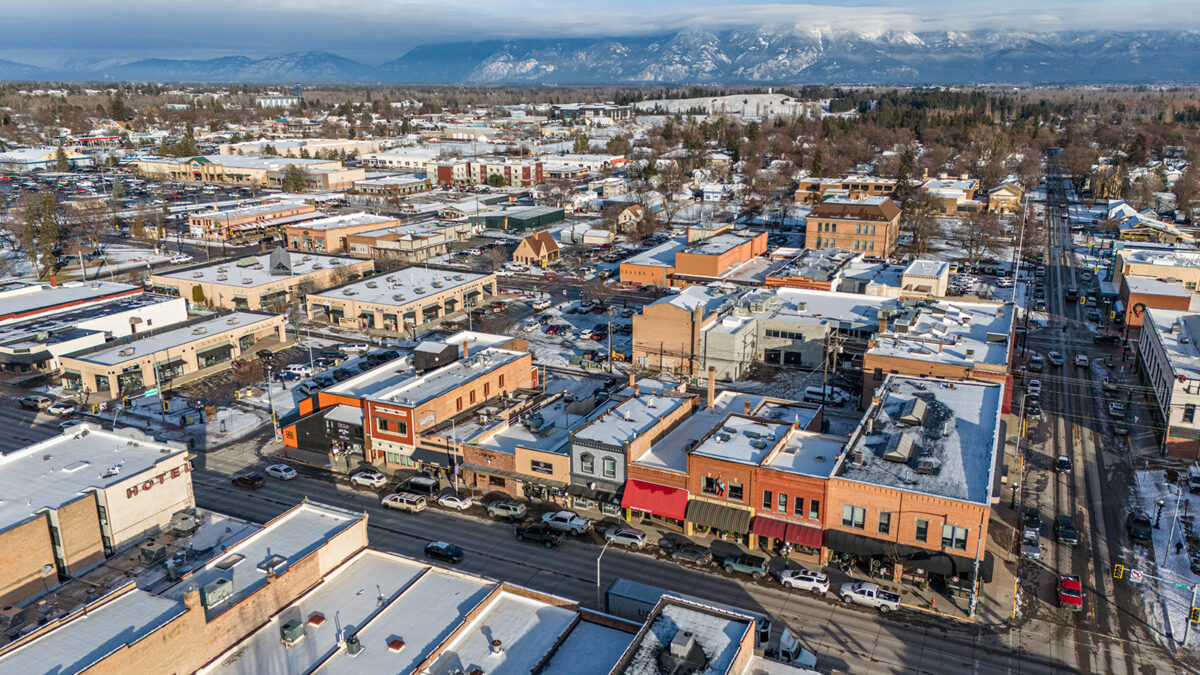
The idea to use LPRs for parking enforcement in Kalispell came through a recommendation from the Downtown Kalispell Forward Coalition and the Parking Advisory Board. With growing concerns from local businesses about current parking practices downtown, the groups found in a report commissioned by Downtown Forward that underutilized city lots, confusing signage, differing time limits and “musical chairs” in street parking contributed to a perceived parking shortage. The city adopted new parking rules based on the recommendations, and the Kalispell Police Department began looking into LPR software to streamline parking enforcement.
Police have historically enforced parking time limits through personnel chalking tires. With only one full-time position dedicated to parking, however, most downtown spots were only enforced twice a day, turning the city’s two-hour parking into four-hour spaces, City Manager Jarod Nygren said.
“It’s the most inefficient way we could do parking management,” he said. “We’re not able to implement the rules as designed.”
Since the previous parking enforcement officer retired earlier this year, many downtown parking regulations have gone unenforced with only part-time oversight. Police Chief Jordan Venezio said they’ve been waiting for city council to approve the budget for the new LPR technology before hiring and training another dedicated staff member.
But license plate-reading cameras have made national headlines recently, as cities around the U.S. grapple with the use of AI-powered cameras by law enforcement. Kalispell citizens Monday night cited examples of officers illegally using industry leader Flock Safety’s cameras to stalk people and instances of the cameras misreading license plate numbers. Some surveillance cameras in the Kalispell Lowe’s parking lot appeared to be recently vandalized as discussion around privacy concerns finds its way to northwest Montana.
Residents of differing ages spoke to those concerns at Monday’s council meeting, saying they’d rather use their taxes to pay for additional personnel to chalk tires over adding the newer technology to the city’s budget.
Nygren reiterated the proposed LPR was not a stationary camera, like many of Flock Safety’s cameras, but a singular camera on a vehicle intended to improve the efficiency of parking enforcement. He also noted that the process of selecting a contractor would happen after the budget approval, and would require additional input from city council.
“I want to hold off,” Councilor Jed Fisher said. “I want to see more success stories first.”
Council approved an amendment brought by Councilor Sam Nunnally to remove the $70,000 line item from the budget. Of the seven present council members, Councilors Dustin Leftridge and Kari Gabriel were the only two to vote against the amendment.
“We’re not talking about a nurse driving home from work or cameras in people’s backyards, those things are not being considered. If we were, I’d be fundamentally opposed,” Leftridge said, referencing public comments. “What I’m trying to reconcile here is we’ve had extensive discussions about what to do about enforcing parking downtown to ensure there is parking availability for the economic vibrancy of downtown. What I don’t hear is another good solution.”
Leftridge suggested adding money for another full-time position to the budget for parking enforcement from the city’s mills. Nygren said with a final budget due to Flathead County the following day, it would be difficult to alter the city’s entire budget the night prior.
Without the new technology approved, the city will return to one full-time parking enforcement officer. With parking likely to remain an issue, councilors noted they could do a budget amendment sometime within the next year.
“There are options there, but I foresee we’ll have to have some more work sessions on the issue,” Council President Kyle Waterman said.