Last year when Sarah Defelice’s estranged mother was dying of a brain lymphoma in Hallsville, Mo., she traveled from her home in South Carolina to be with her during those final days. It had been 17 years since they’d last seen each other in person, and although her illness left her mother speechless as her mind and body continued failing, her eyes welled with tears when she saw her daughter.
Ladonna McLane Nutter died on May 16, 2025, at age 68 in Columbia, Mo.
Despite the old wounds that drove them apart, Defelice wanted to give her mother respect and dignity at the end of her life, as well as in the aftermath.
“She passed away and there was no one really to advocate for her,” Defelice said. “She had a brain tumor, so that’s how I got involved. We were just trying to figure out what to do with her remains.”
Although Nutter had not relayed her dying wishes to any of her family members, including her son and ex-husband, Defelice decided to cremate her body with the intention of burying her.
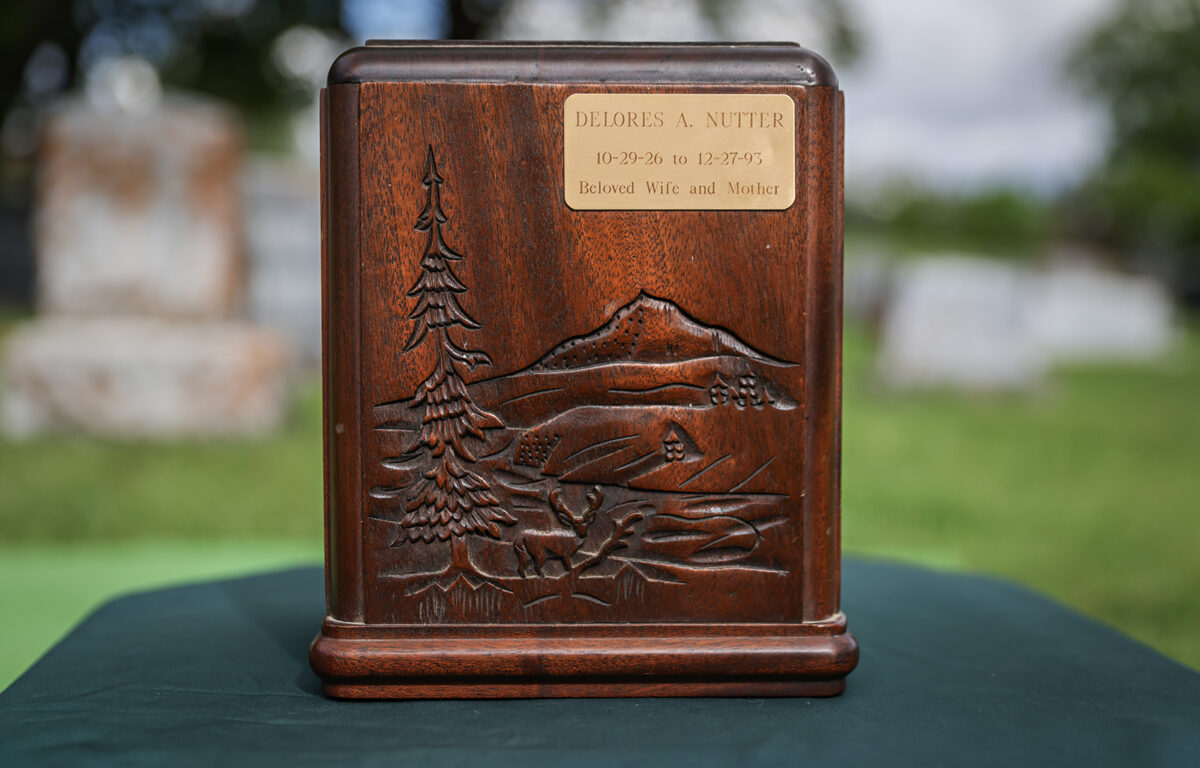
After she died, Defelice inherited both her mother’s ashes and her grandmother Delores Nutter’s ashes, which had traveled from Columbia Falls to Spokane, Wash., to Missouri and to South Carolina since her death in 1993.
Her grandmother’s ashes had most recently been in her mother’s possession, but now Defelice had suddenly inherited the task of putting two generations of matriarchs to rest.
“It just felt like she had been put in somebody’s closet — it didn’t feel respectful,” Defelice said. “Nobody knew their wishes. My mom didn’t have any final wishes. My family doesn’t talk about this type of stuff.”
Growing up in Spokane, Defelice remembers traveling to the Flathead Valley for her grandmother’s funeral in the early 1990s and visiting the farm where her mother grew up in Columbia Falls on Trap Lane, which her family homesteaded in 1897. Her grandparents had raised her mother and two uncles on the family farm before Ladonna Nutter moved to Spokane, where she and her ex-husband had Defelice and her brother, Benjamin.
Ladonna later moved to Missouri, with Defelice becoming estranged from her mother as she entered adulthood.
As Defelice grew more distant from her roots, she and her husband eventually moved to South Carolina, leaving what was left of her family dispersed around the country.
“I’ve never had family roots, and I just wanted to be part of it and bring them back together,” Defelice said.
After visiting her mother in Missouri last year, Defelice and her husband found her grandmother’s ashes while cleaning out her house, along with a receipt for her grandfather’s inurnment, which is how she learned he was buried in the C.E. Conrad Memorial Cemetery in Kalispell.
This plot is where the rest of her family must be buried, Defelice thought, but the conversation with the cemetery’s caretaker left her with more questions than answers.
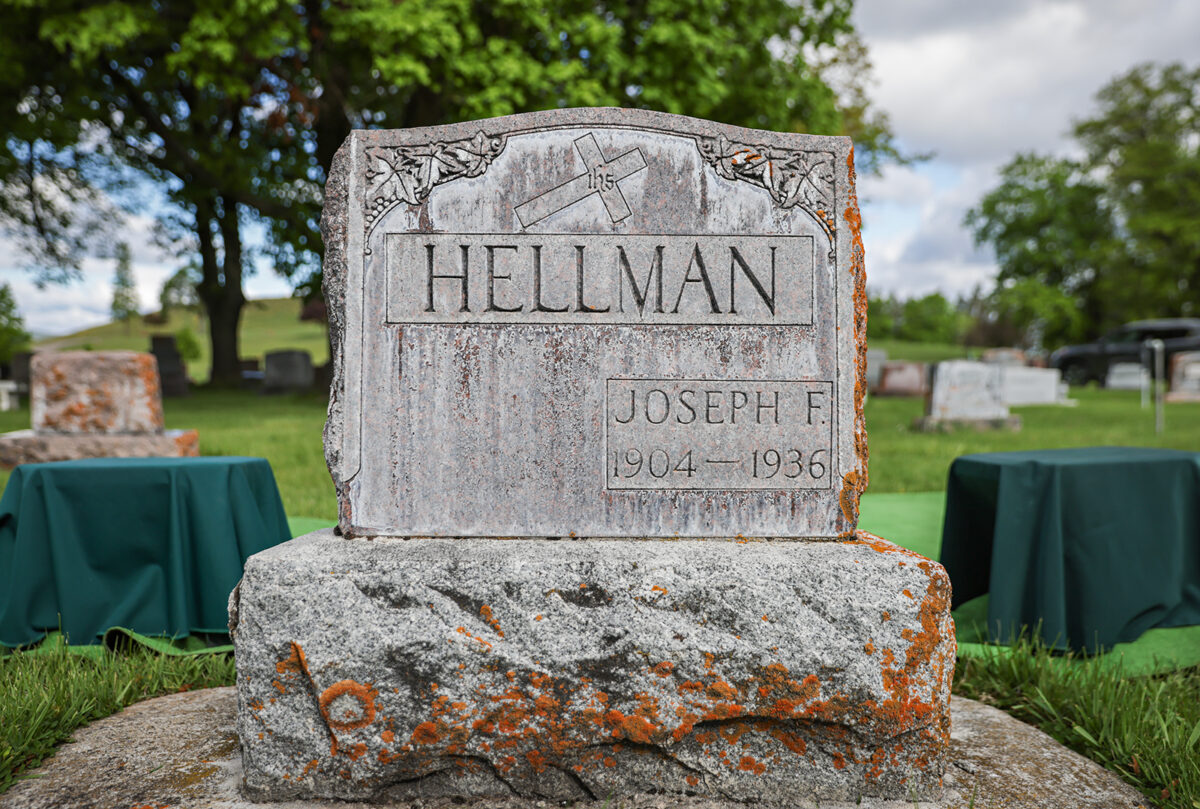
According to the cemetery records that Conrad Cemetery Superintendent Jeff Epperly found, the six-person plot where her grandfather, John, was buried was owned by someone named Joseph A. Hellman — a name Defelice had never heard before. His grave was marked by the only tombstone in the entire plot, which also contained her great grandmother and great uncle — all of whom shared the last name Nutter.
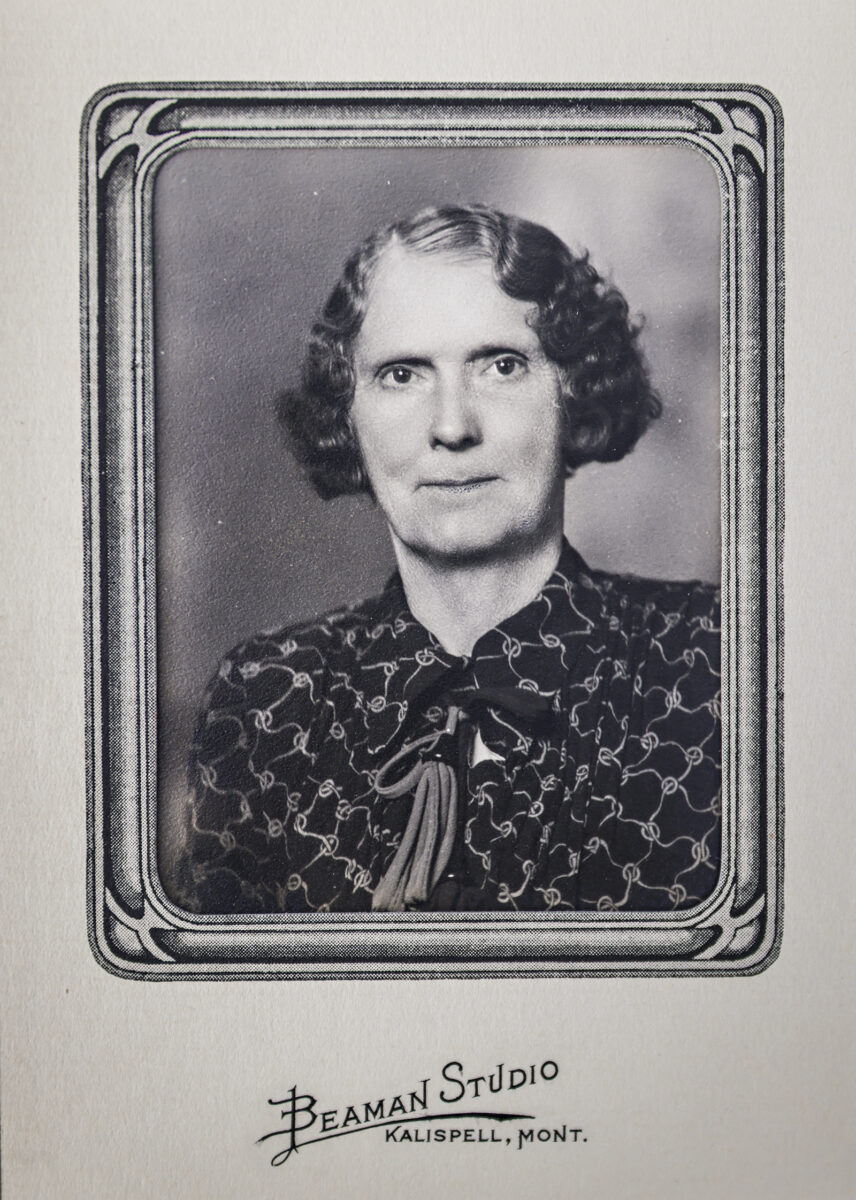
“It was just this mystery of who was buried there. There are no tombstones or markers,” Defelice said.
With no living relatives left to ask, Defelice went down a genealogy rabbit hole that revealed Hellman was married to her great aunt. Their only child was born out of wedlock, taking his mother’s last name and preventing the Hellman name from being passed down to future generations before he died at age 31.
“Sarah got hold of me this winter,” Epperly said. “It took us a while to get to the bottom of it. She was amazing — she just started digging and finding all of this stuff out.”
Epperly said grave ownership is transferred down through generations, which can become confusing over time. While cemetery records provide legal proof, physical markers can provide simple clues to retrace ancestral history.
“It’s really helpful to have markers and headstones and some sort of record,” Epperly said. “With so many people buried here, burial rights are really significant; if one person owns a lot of graves, you’ve got to have a legal basis for family members to be buried in that area. So we have to have some sort of rights to the graves that get transferred down through the generations.”
To do this, Epperly said a family member simply signs a document to assign somebody to a grave.
Traditionally called a sexton, Epperly oversees the historic Conrad Cemetery, which was established by Alicia Conrad in 1905 and covers 127 acres where roughly 20,000 people are buried.
“We have a lot of room for growth,” Epperly said.
Only about 30 acres have been used in its 121 years of operation and Epperly’s team of three staff members maintain the property and perform the labor required for burials.
Historically, families would purchase a group of graves ranging from three to as many as 30 at once. But over time, traditions have changed and husbands and wives would purchase plots together. Now, many individuals buy single graves, Epperly said.
Epperly said burial traditions have also evolved in the United States, with inurnments becoming the most popular method. Cremation also eliminates time sensitivity, which sometimes keeps the remains of loved ones above ground longer than anticipated.
“Urn burials you can do anytime,” Epperly said. “With a body, there’s a shelf life and you’ve got to get it in the ground. A lot of people have had a loved one die six or seven years ago and they have a plot, but they put mom or dad or spouse up on a shelf in the living room. Eventually they say, ‘Okay, I’m ready,’ and then they schedule a burial and we finally bury the urn. There’s a lot of flexibility with urn burials and, like the Nutters’, they could bring them from different parts of the country and very easily schedule a burial.”
While Epperly has only been on the job at the Conrad Cemetery since last year, he worked for seven years in hospice as an end-of-life counselor. Although he’s no stranger to death, he now handles the aftermath of every kind of fatality.
“[Hospice] was people at the end of their life dying of disease — this is a little different,” Epperly said. “Here, you get some surprises.”
Epperly watches families with different backgrounds and situations deal with a universal ritual: Grief and the finality of death.
“These are just remembrances of loved ones who are gone,” Epperly said, referring to the gravesites. “This place is for the living to come back to and remember. And that’s probably the biggest thing — you can see how people remember.”
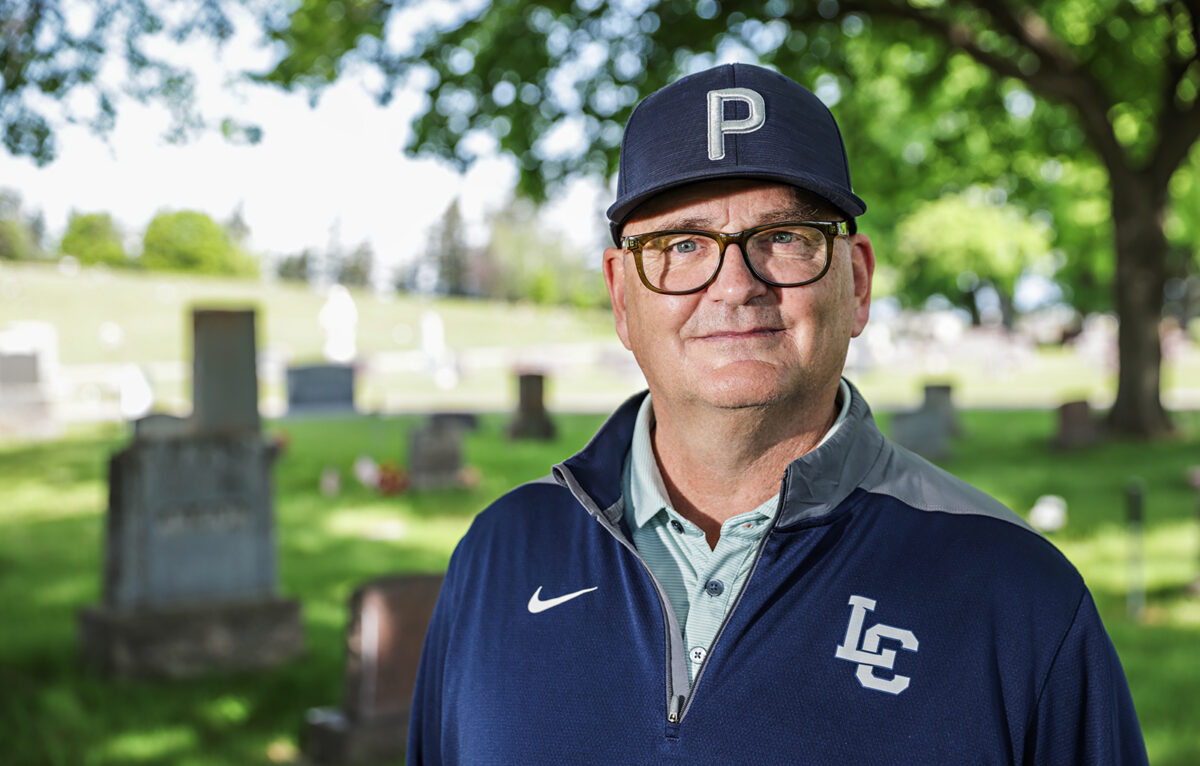
Without end-of-life instructions from her mother or grandmother to guide her, Defelice chose to bury them with their relatives in the Conrad Cemetery as part of two inurnments.
“I don’t know their wishes, but if somebody wants to come visit them, I’d like them to be able to,” Defelice said.
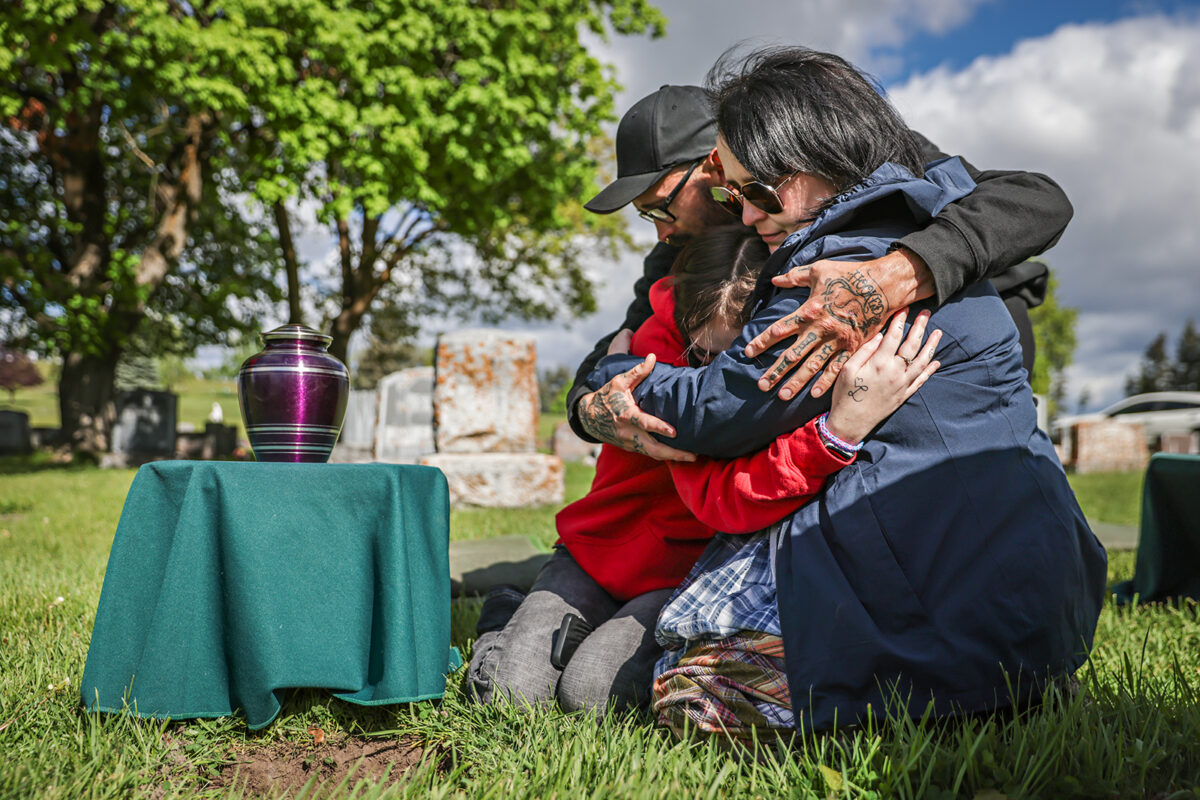
Defelice scheduled a burial for her mother, Ladonna McLane Nutter, and her grandmother, Dolores Nutter, on May 15, 2026, in the oldest section of the Conrad Cemetery.
Almost exactly one year since her mother’s death, Defelice was joined by her brother, niece, husband, father and stepfather. Together, they stood in the same place where the two generations before her were placed — the six-person plot owned by Joseph Hellman, who was buried there in 1936 and whose existence was forgotten from family lore.
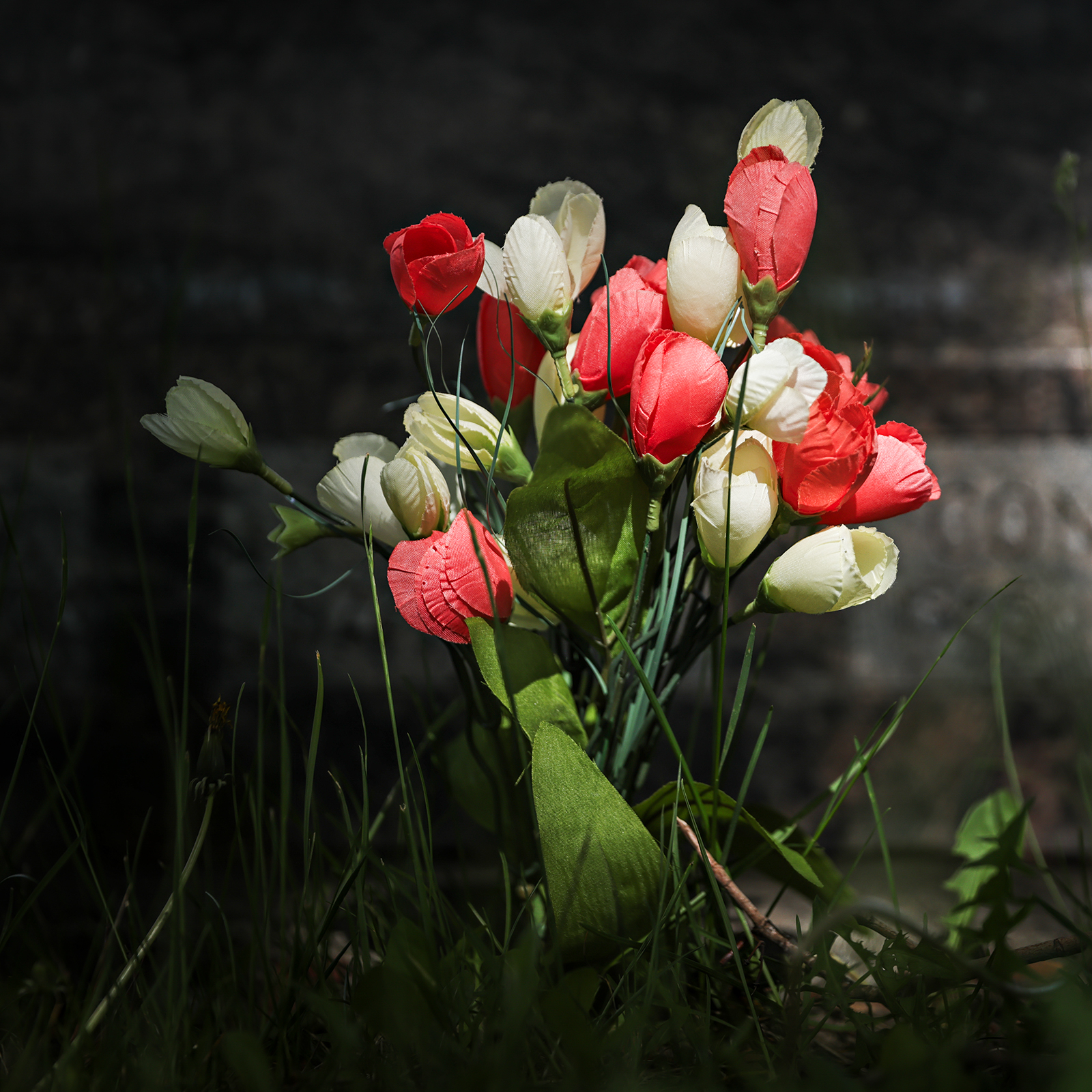
Defelice isn’t sure why nobody placed headstones for her other relatives buried in the plots, some of whom have been buried there for close to 70 years. But she plans to eventually buy plain granite markers for the five other family members who have been laid to rest, unbeknownst to a passerby.
“Nobody knows they’re there, and that’s just sad,” Defelice said. “It’s just one tombstone. You’d have no idea there’s all this history here.”
Defelice is currently raising funds to purchase markers. To donate, visit her GoFundMe page.