Skateboarding and Therapy Share the Ramp at the Balance Project
A pilot program for a therapeutic skateboarding group teaches emotional regulation tactics, giving kids a chance to practice mindfulness at the park
By Zoë Buhrmaster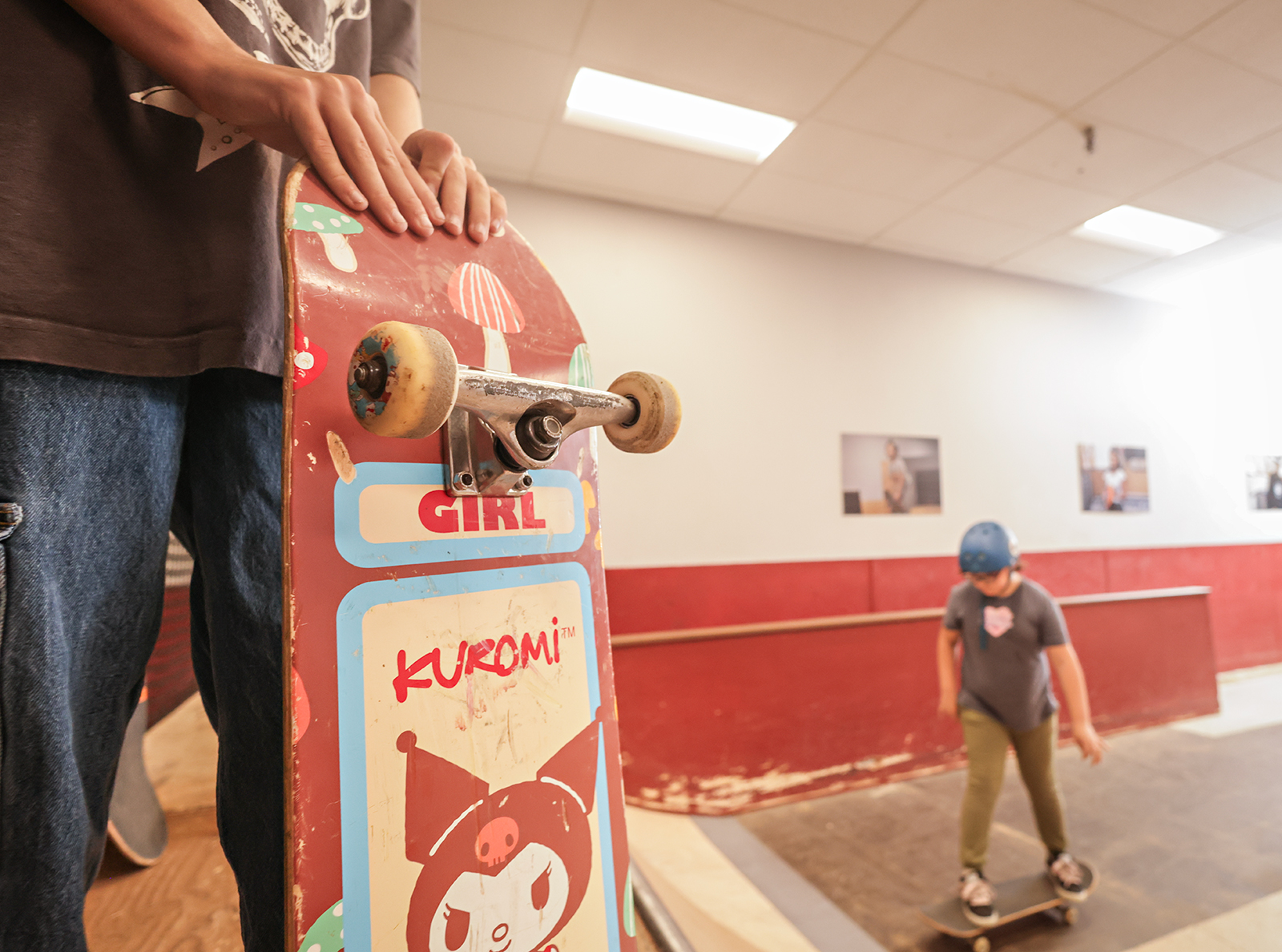
Growing up at Serious JuJu, an indoor skateboard park and nonprofit that supports young skaters in the Flathead Valley, Kianna Chandler learned the power of skateboarding as a kind of therapy at a young age. In her day job as a licensed clinical social worker and addiction counselor, she’s developed a recovery-oriented skateboard program for clients at Recovery Centers of Montana, and she currently works in crisis intervention at Logan Health’s emergency department. As she’s continued to skate, she’s volunteered her time as a youth mentor, program leader and board member at the nonprofit.
About a year ago, Chandler began floating the idea for the Balance Project, a therapeutic skateboarding program for kids struggling with mental health issues.
“Skateboarding is kind of independently therapeutic,” Chandler said, sitting at a long table inside Serious Juju’s headquarters. “When we skate, when we’re teaching kids just on a normal session, if they get disregulated we’re like, ‘hey, go take a few breaths and then come back and try.’ Or even if they’re on top of the ramp and about to drop in we’ll say, ‘hey, let’s take some deep breaths and then go.’ Those pieces can be really big. The Balance Project was just a way to put names to it and identify the inner workings of it.”
Serious JuJu’s Managing Director Randy Beckstrom pointed Chandler in the direction of Matt Holloway, a longtime skateboarder and one of the founders of the Flathead Valley Skatepark Association.
“I thought it was the best idea ever,” Holloway said when Chandler reached out, asking if he’d partner on the program as a skate coach.
Chandler developed a curriculum combining Dialectical Behavior Therapy, a structured style of talk therapy geared toward managing intense emotions, with strategies for regulating emotions and building self-confidence. Holloway helped secure a grant from a private donor to fund the pilot program, making it free to kids. They reached out to Peterson Elementary School and the Logan Health Newman Center for referrals into the program.
The pair launched the Balance Project in April, starting with eight weeks of group therapy sessions and two private sessions with each kid and their parents. Holloway and another adult helped corral the group of seven children, and, with a history as a high school teacher, Holloway helped Chandler break the material down for the 8- to 12-year-olds.
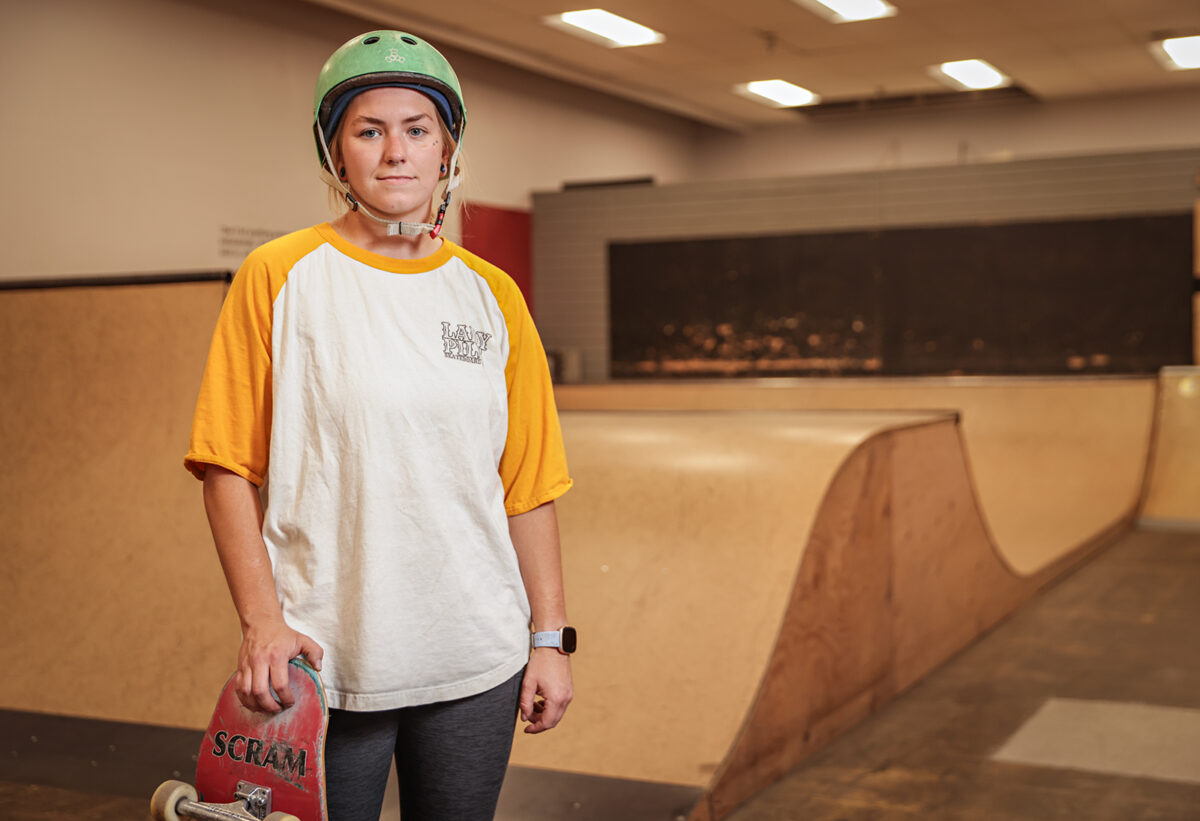
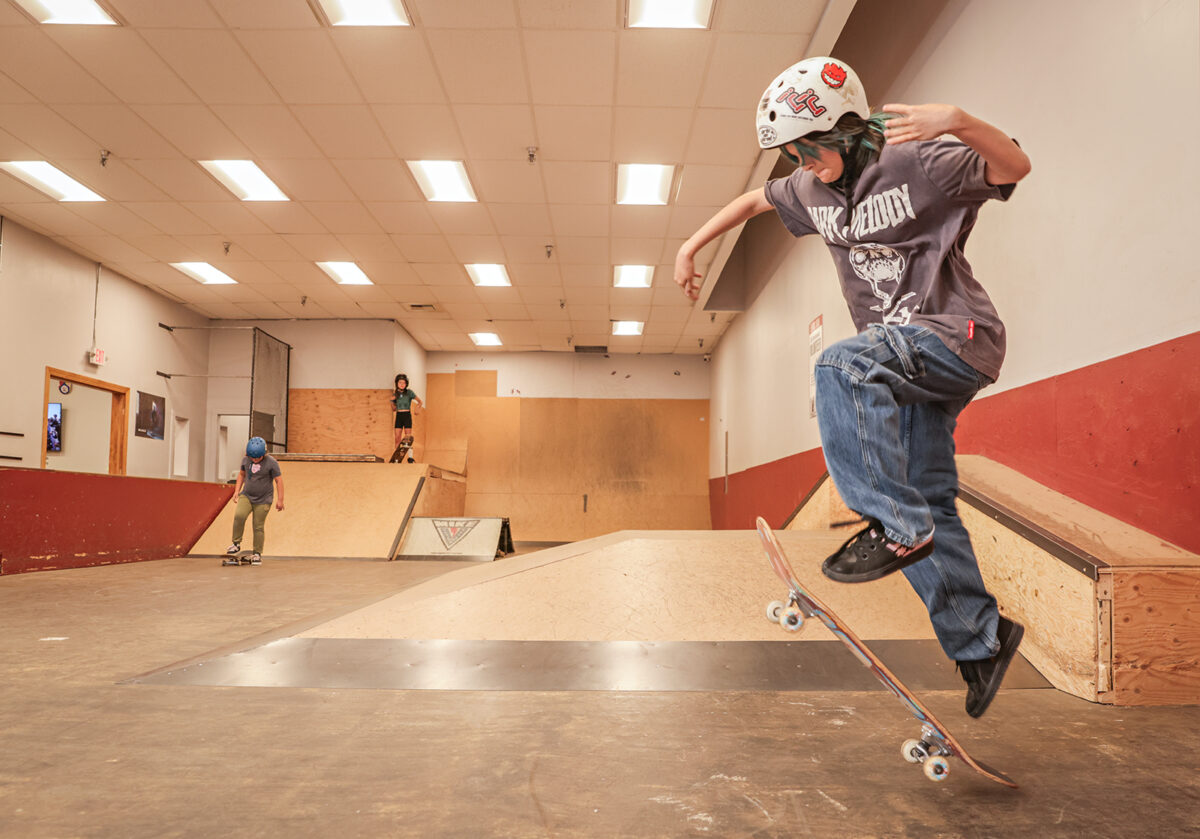
Sessions began with 10 to 15 minutes of skating to loosen up the kids and release initial jitters at the Saturday morning meetups. They gathered afterward in another room for the therapy-like sessions, where the kids and adults sat in a circle and shared experiences of intense emotion over the past week and introduced ways to regulate their emotions. They followed the discussion with a long skate session, an opportunity to put some of the mindfulness techniques into practice on the ramp, before returning to the group for a snack and a review on how it went.
Most of the kids had never skateboarded before, Holloway noted. Before the first skate session, he asked the kids what was guaranteed to happen to everyone when they went out on the ramps. One kid replied, “We’re going to fall.” Holloway asked again what else they all were going to do, to which another kid responded, “We’re going to get up.”
When they went back into the classroom, Holloway asked the 8 and 12 year olds who fell. Everyone raised their hands.
“I said, ‘We’re all here and we’re good right now, aren’t we?’” he recalled. “They said ‘Yeah.’ And I said, ‘Okay. That’s a lot of what this is about. This is called life. You fall and you get up and you keep going and you realize it’s okay. And as a matter of fact you can learn from it.’ That was a big piece of what every student invariably came to understand.”
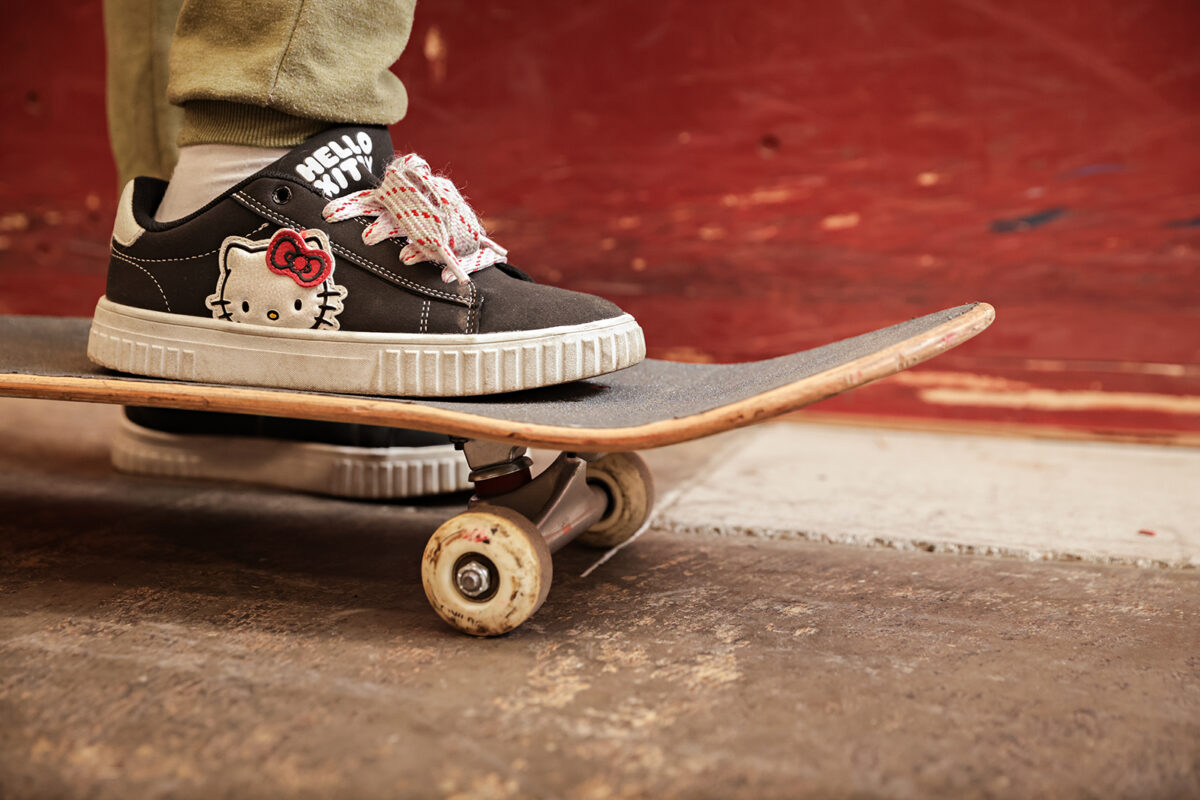
Group therapy programs for kids in the Flathead Valley are few and far between – a large part of why pediatric psychiatrist Kelsey Moore jumped at the chance when Chandler asked if she would refer kids to the Balance Project. Moore works at the Logan Health Newman Center, where she diagnoses, prescribes medications, and connects adolescents and children with outpatient mental health services.
“There aren’t a lot of programs for kids,” Moore said. “Kianna really hit on something unique … This was the first time I’ve ever pitched to a kid and they were like, ‘That sounds cool.’ It’s really hard to get kids interested in therapy or group therapy.”
Since the pilot program finished earlier this year, Moore’s followed up with some of the children who participated. Everyone said they loved it, and one kid told Moore it was the “best therapy” he’d ever done.
“I loved that he recognized it was still therapy, even though he still said the skateboarding part was the best,” she said.
Another parent shared with Moore that while their shy son had not enjoyed the talking component of the sessions, Chandler had given him tasks where he still felt included without making himself uncomfortable. “I loved hearing that from a parent,” Moore said. “It wasn’t just a black and white design, but she really catered to the group she had.”
Moore has referred kids to Serious JuJu’s free weekly skate nights before, which are open year-round to those of all skill levels. She often encourages her adolescent clients to go “hobby shopping” and try new things until they find something they enjoy. Hobbies, Moore says, provide a unique opportunity to naturally practice skills like emotional regulation.
“Especially skateboarding – there’s somatic feedback with nerves at the top of the ramp, and you push through and build confidence dropping in,” Moore said. “You’re using muscles for self-regulation without realizing you’re using them.”
Based on a screening Chandler developed to track symptoms of emotional disregulation, the Balance Project’s young participants saw an average 45% reduction in symptoms across the board from the program’s start to finish. Some saw significant improvement, including one child who began with a high score of 106 and dropped to a 14.5 by the end of the eight weeks.
In future sessions, Chandler hopes to incorporate a check-in with participants six months or a year after they’ve been through the program to see how much of the skills they retain long term.
With a successful pilot program complete, she and Holloway are exploring how to transform the program into a replicable, scalable model that they can use to repeat and share with others. Chandler wants to refine the curriculum, including making it a more intensive wraparound program with additional one-on-one therapy sessions alongside the group sessions. They hope to secure more funding so that the program can continue to be free for participants.
“It all comes back to community,” Holloway said. “It all comes back to helping each other and being a part of something that is a beautiful whole. Any way we can do that is going to benefit everyone, and luckily, skateboarding is very open ended. I often joke the only rule is gravity, and be a nice person.”