Northwest Montana’s New Fisheries Manager Brings Two Decades of Experience — and a Personal Stake in the Job
Leo Rosenthal reflects on a career shaped by mentors, Montana fishing traditions and striking a balance between recreational angling and native fish conservation
By Tristan Scott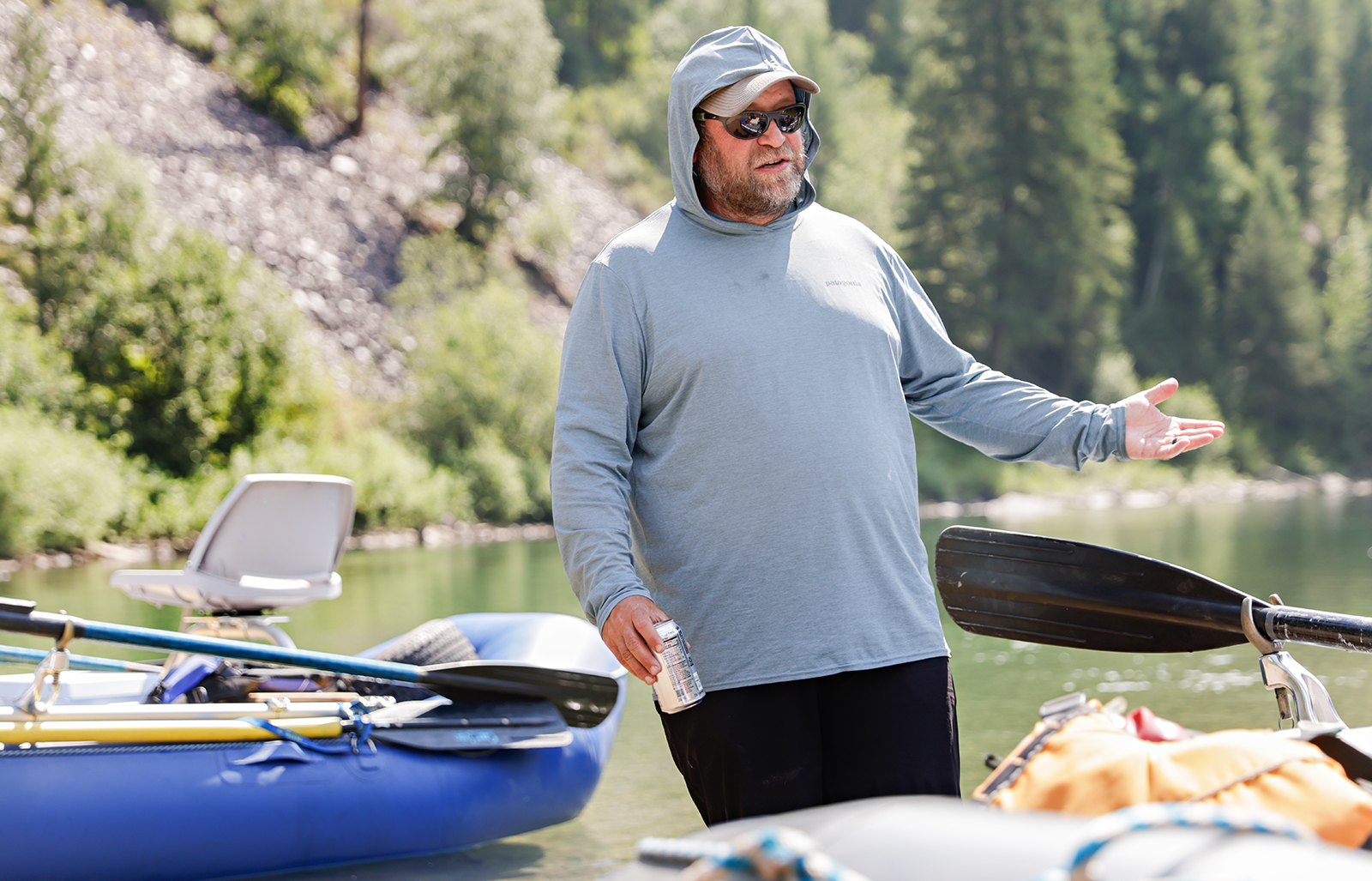
Montana Fish, Wildlife and Parks (FWP) has named Leo Rosenthal as the new regional fisheries manager for Region 1 in northwest Montana, capping a nearly 20-year career that began, almost by accident, with a summer job studying American dippers in Missoula.
Rosenthal is a Butte native who holds a bachelor’s degree from the University of Montana and a master’s degree from Montana State University. He’s spent most of his career as a fisheries biologist in Region 1, where he’s worked on a range of fisheries projects, partnered with other agencies, and built relationships with local communities — experience regional supervisor Amber Steed says makes him the right fit for the new role.
“Leo’s experience in Region 1, paired with his extensive knowledge of our fisheries and the landscapes they depend on, makes him an outstanding fit for this position,” Steed said. “His time spent here has given him valuable insight into the challenges and opportunities in northwest Montana, and his exceptional communication skills will help him continue serving as both a steward of our fisheries resources and a trusted conduit of information for the public.”
As regional fisheries manager, Rosenthal will oversee fisheries programs, staff and operations across northwest Montana, with a mandate to protect healthy aquatic ecosystems while supporting recreational fishing opportunities for residents and visitors.
For now, that also means juggling two jobs at once. Rosenthal is still finishing up his field work for the year even as he steps into his new leadership duties. (As an example of that tension, this interview was delayed when a recent outing setting gillnets on Swan Lake got interrupted by a storm.) The state is hiring his replacement as a full-time biologist, with the position closing Sept. 13, so he expects to have that support in place by fall.
“I’m treading water a little bit,” he said. “But it’s fun. I’m excited for this next chapter.”
From dental school to dip nets
Rosenthal didn’t set out to be a fisheries biologist. He grew up in Butte fishing with his father, a dentist, on the Big Hole, Beaverhead and Missouri river drainages, and assumed he’d follow his dad into dentistry. After finishing his undergraduate degree, with dental school on the horizon, he took a job working for a wildlife graduate student in Missoula studying American dippers.
“It was very eye-opening that there was this whole world, this career based in fish and wildlife biology,” he said. “I didn’t think that was a possibility.”
He went on to work on a study of brook trout movement in the St. Regis drainage with a Ph.D. student, which sealed the decision to abandon dental school for fisheries work. From there, things “snowballed”: six or seven years doing fisheries work for Plum Creek Timber Company, then a season with FWP in Missoula working under longtime biologist Lad Knotek, who Rosenthal credits as a formative mentor.
“He gave me this tough-love talk and said, ‘You have to go back to grad school and get a master’s degree,'” Rosenthal said. He took the advice, enrolling at Montana State University in 2005 to study fish and wildlife management under professor Tom McMahon, with research funding support that also connected him with fellow graduate students Lisa Eby and Andrea Whiteley.
After finishing his master’s, Rosenthal spent eight months with FWP in Dillon before a position in Region 1 opened up in 2007. He spent the next 19 years as a biologist there before stepping into the regional manager role.
“It’s funny how life happens that way — you never envision yourself being in that role,” he said. Having been with the department so long, he said he hopes to play the same role for other biologists that Knotek once played for him. “My role here is to be the support system for all these bios that we have. The bios are the face of the department on the ground, so now it’s my turn to be the supporting role for them and help them accomplish everything that we can.”
A dual mission, and a growing sense of urgency
Rosenthal describes FWP’s fisheries mission as one that hasn’t fundamentally changed in his time with the department: balancing the conservation of native fish species with providing diverse recreational fishing opportunities. What has shifted, he said, is the agency’s understanding of just how much trouble some native species are in — and the urgency that comes with it.
“We have a better understanding of the dire straits that some of our native fish are in,” he said. Bull trout populations, he noted, are largely in decline, and even the more stable populations are rarely increasing. Bull trout and westslope cutthroat trout both face compounding threats from hybridization and climate stress.
Better data has sharpened that picture. Hoot-owl restrictions and improved monitoring technology now give FWP a clearer read on conditions in real time — including two consecutive summers of real-time temperature data from gauges on the Middle Fork and South Fork of the Flathead River, where the agency previously had only stream flow data.
“Now we’re able to be more responsive if we have to take action,” he said.
Still, Rosenthal is quick to note that native fish conservation hasn’t crowded out FWP’s commitment to recreational fishing — it’s simply drawn more attention because of the urgency involved. And on a personal level, recreational fishing is what drew him to the job in the first place.
“When it comes to that dual mission, recreational fishing is extremely important to me,” he said. “It’s the reason I got into this job.” Growing up, he fished for brown and rainbow trout — not native species — and that’s still where his heart is, even after a career spent largely on native fish conservation.
Every year, he fishes opening day on the Beaverhead River, a tradition he shared with his father growing up. After his father died, Rosenthal scattered his ashes on the river. He still returns every opening day to fish, and to remember.
“It’s sentimental,” he said. “Every year I go down for opening day, fish, pay a little respect to my dad, and remember what’s important.”
Rosenthal can be reached at [email protected].