Whitefish Volleyball Program to Commemorate Nearly Half-Century Legacy
The historic program will celebrate its legacy, which includes six state titles, with a reunion open to former players, coaches, managers and fans at the Bulldogs’ game against Ronan on Thursday, Sept. 17.
By Lauren Frick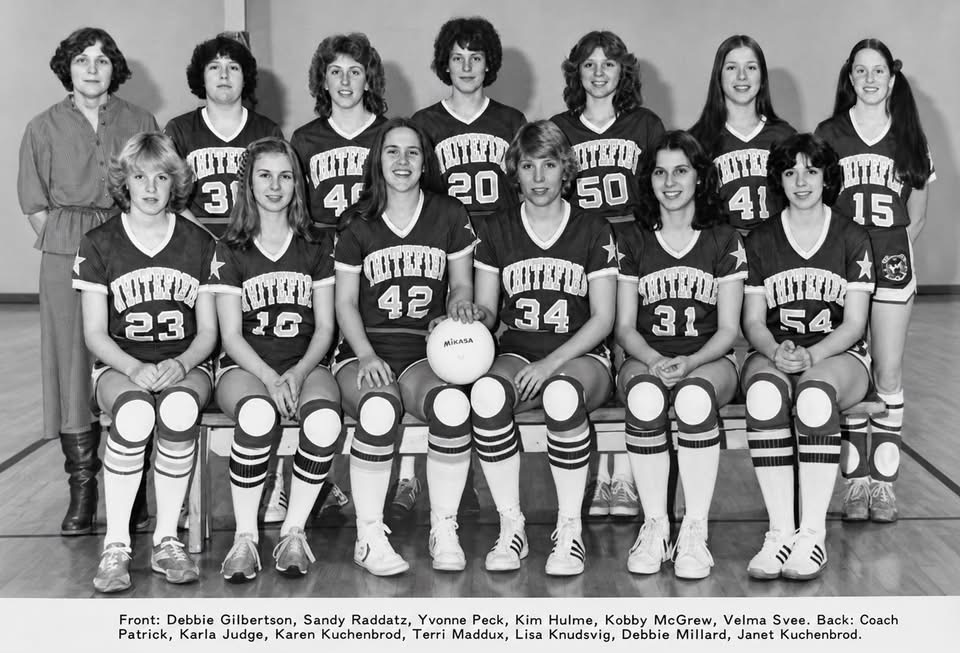
Prior to the Whitefish High School volleyball team’s first-ever match on Feb. 8, 1979, there were only two opportunities for girls to suit up in a Bulldogs uniform: basketball in the fall and track in the spring.
A Title IX compliant and subsequent investigation in 1978 — the deadline year for schools to comply with the athletic regulations in the landmark non-discrimination education legislation — forced this reality to shift.
After feedback from the community about what could fill the winter girls sports team gap, the options were narrowed down to table tennis and volleyball, with the latter winning out in a student vote, Colleen Sullivan, who was part of the first team’s coaching staff, said.
While pressure from federal Title IX officials initially served as the catalyst for expansion, the school, community, and, most of all, the students, welcomed the team with open arms, Sullivan recalled. More than 80 girls turned out for tryouts to earn a spot on the program’s inaugural varsity, JV and freshmen teams.
“Our kids were pretty excited,” Sullivan said. “It was a real funny time for girls’ sports here, funny in a good way. We won the state basketball tournament in the fall [of 1978], and so lots of the same players were basketball players that came out. We didn’t have uniforms; they wore the basketball uniforms to play.”
A proponent for equality between girls and boys in sport at the school, late, former Athletic Director Bob McLeod proposed sanctioning volleyball to the Montana High School Association (MHSA) ahead of the Bulldogs’ first season, given that nearly all other Montana schools also had unbalanced scales in girls and boys sports participation.
“Everybody laughed at us in Helena when we suggested girls’ volleyball,” McLeod told the Whitefish Pilot in a Feb. 1, 1979 article.
“[McLeod] said association members apparently feel they can get by another couple of years without adopting another girls’ sport,” the article stated. “In the meantime, a Whitefish High School girls’ volleyball team exists and will play its first game next week.”
Despite the discouraging response from MHSA, the Bulldogs continued with their eight-game season — which featured games against Bigfork, Kalispell, Polson and Ronan — commencing nearly five decades of players and coaches building a trailblazing program that has captured six state championships.
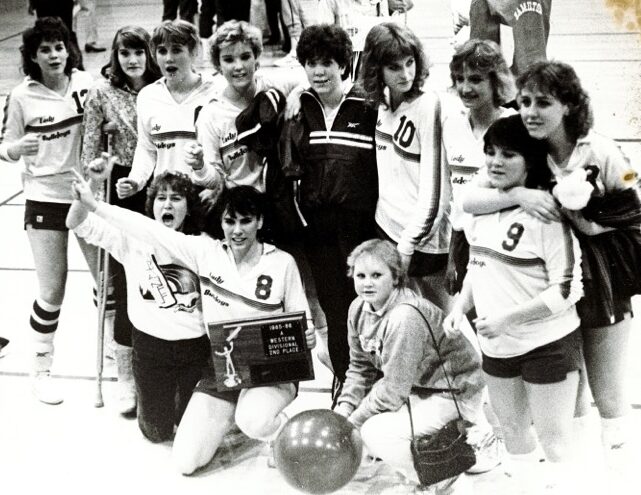
Now, the historic program will celebrate this legacy with a reunion open to all former players, coaches, managers and fans at the Bulldogs’ game against Ronan on Thursday, Sept. 17. The event will also mark the 40th, 25th and 20th anniversaries of the teams’ 1986, 2001, and 2006 state titles.
The celebration will include a pre-match gathering at the Bulldog Saloon at 3 p.m. before being recognized in-between the JV and varsity matches on Thursday night. The reunion will conclude with a post-match celebration at Whitefish High School.
“The contacts over the last few weeks of reaching out with kids and hearing from them has been really fun, so hopefully we’ll have a good turnout,” Sullivan said. “I think we could have five members of the original team, which would be awesome.”
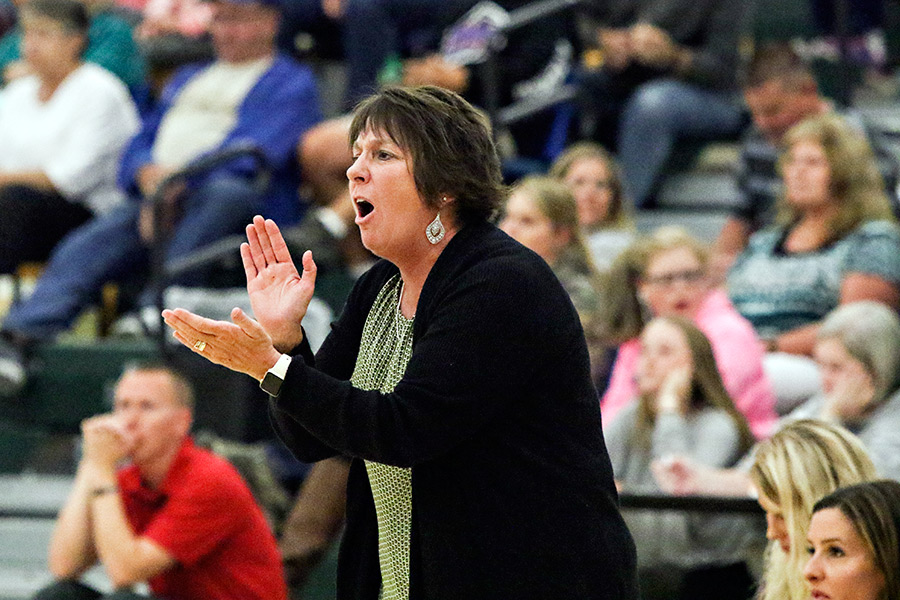
Having been part of three coaching stints spread out over nearly 40 years, Sullivan has witnessed the growth of the program, as well as the game of volleyball itself.
Unsurprisingly, that first Bulldog volleyball season in 1979 presented its own unique obstacles.
“In that window of time, we didn’t have a gymnasium,” Sullivan said. “Our school had a fire, and the gym had burnt. Most of the school had burnt out, and it wasn’t rebuilt yet. We used our middle school gym, which is much smaller and had a much lower ceiling.”
But even once they secured a gym to play in, a major question still remained for the unsanctioned sport — what are the rules?
“There was an association called AIAW, the Association of Interscholastic Athletics for Women, and when I was in college, that was the rule books that you found,” Sullivan said. “Everything that had women’s rules were part of that, and that association existed before the NCAA for women. So we had a choice between that, and then there was an international federation.
“Which rules should we go by? Then we had to find officials, and we had to find them and teach them the game, so they could officiate the game.”
By the time Sullivan returned to the Bulldog coaching staff in the early 2000s, three-set matches where teams could only score off the serve turned into five-set athletic affairs with scoring on every possession — “pass, set, spike” had transitioned to “dig, set, kill,” she noted.
“That kind of language just changed, and so did the level of play. The strategies, the amount of offensive things that you are running, the defensive things that you’re putting up now, I think we were just glad to get three hits and get the ball over the net in the first season,” Sullivan said with a laugh.
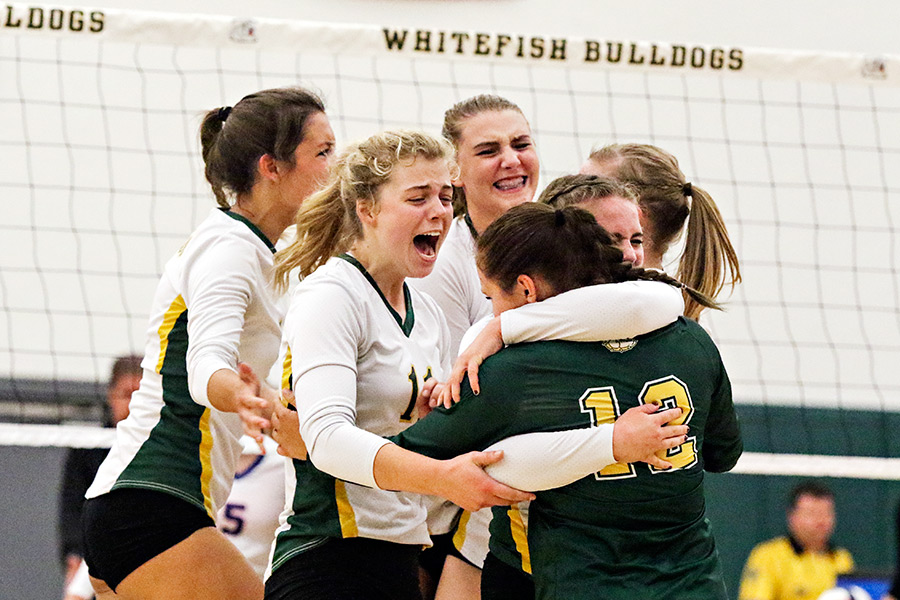
Led by longtime Head Coach Jackie Fuller, the program saw its most sustained success throughout the 2000s, capturing five of its six state titles, including going back-to-back-to-back-to-back from 2002-2006.
“Winning breeds winning, there’s no doubt about that,” Sullivan said. “They understood the hard work it took, and spent the time in the off-season training and conditioning and working on their ability to jump and trying to home in on fine details. They did a really nice job with that. So that was a culture, and then there’s always a few young kids on a team, and that became the mindset.”
Thursday’s reunion, however, will be about far more than state titles, Sullivan said.
“It’s about reconnecting, just reaching out and recognizing their hard work and their accomplishments,” Sullivan said. “Whether you were a team that won or didn’t win, it’s an accomplishment to complete the season and to play and to represent your town and take a prideful moment.”
As Fuller often told her teams, “the game is bigger than the white ball,” and Thursday’s event will be no different, as everyone from former managers, to parents, to bus drivers will be celebrated.
“We always tried to find some place for kids if we could,” Sullivan said. “We needed managers, we needed statisticians, we needed filmers, and they all played such a huge part in it. Everybody from like getting officials; the bus drivers, they just hung in there with our little whims of saying, ‘Hey, we need to do this. We want to go there.’ That means getting everybody on a bus and moving them back and forth.”
“The bricks and mortar of our community have been really supportive,” she added. “Even when we went and looked for support for this event, you know, like that was a no-brainer for a lot of people. They just said, ‘Oh, absolutely.’”