Glacier Park On Pace to Challenge Annual Visitation Record After 15% August Jump
Visitation to Glacier National Park is up 10% for the year, putting the park's all-time annual record of 3.3 million visits within reach
By Tristan Scott
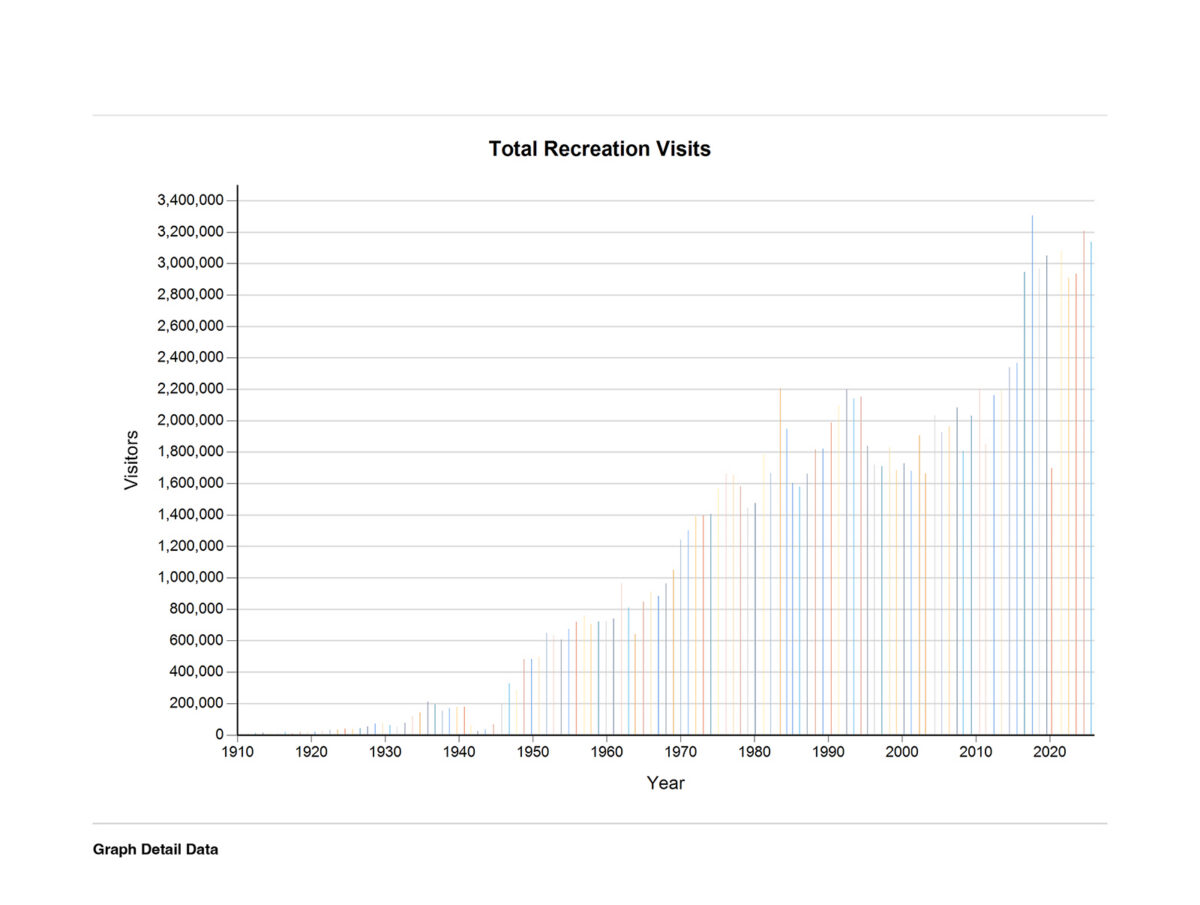
Glacier National Park is 653,908 visits away from the busiest year in its history, and with four months left to cover the gap, it’s on track to get there. After an August that drew 828,126 visits, up 15.2% from a year ago, the park has logged 2,651,604 visits in 2026, 10.16% ahead of last year’s pace.
The record to beat is 3,305,512 visits, set in 2017. Last fall, the park logged roughly 729,400 visits from September through December, an average of about 5,980 people a day, based on 2025’s full-year total of 3,136,557 and the 2,407,130 visits it had recorded through August. Breaking the record would take about 5,400 people a day this fall. Merely matching the same four-month, end-of-year period as last year would see 2026 finish with nearly 3.38 million visits. Visitation could also run about 10% below last year’s fall pace and still break the record.
Fall weather could complicate that math. Going-to-the-Sun Road’s alpine section, between Avalanche and Jackson Glacier Overlook, has closed temporarily twice this month: on Labor Day, after heavy rain and thunderstorms that began the evening of Sept. 6, and again the following weekend, when cold temperatures and snow levels as low as 6,500 feet brought light snow to Logan Pass. The park typically closes the alpine section for the season by the third Monday of October, which falls on Oct. 19 this year, and may close it earlier depending on conditions. The West Entrance, the park’s busiest gateway, remains open year-round.
August, meanwhile, widened the park’s lead over last year’s visitation, with year-to-date growth climbing from 8% through July to more than 10%. On an average August day, roughly 26,700 people passed through the park.
This is the first summer since 2021 that the park has operated without a vehicle reservation requirement on Going-to-the-Sun Road. Officials scrapped the pilot program ahead of this season in favor of a reservation-only shuttle system and a three-hour parking limit at Logan Pass. Since July 1, visitors have needed a reservation to ride the shuttle.
Park spokesperson Autumn Sifuentes said in written responses to Beacon questions that the park “anticipated that visitation could be higher this summer with the vehicle reservation system no longer in place.” She cautioned that weather, travel trends and broader tourism patterns also influence visitation, making it “difficult to attribute the increase to any single factor.”
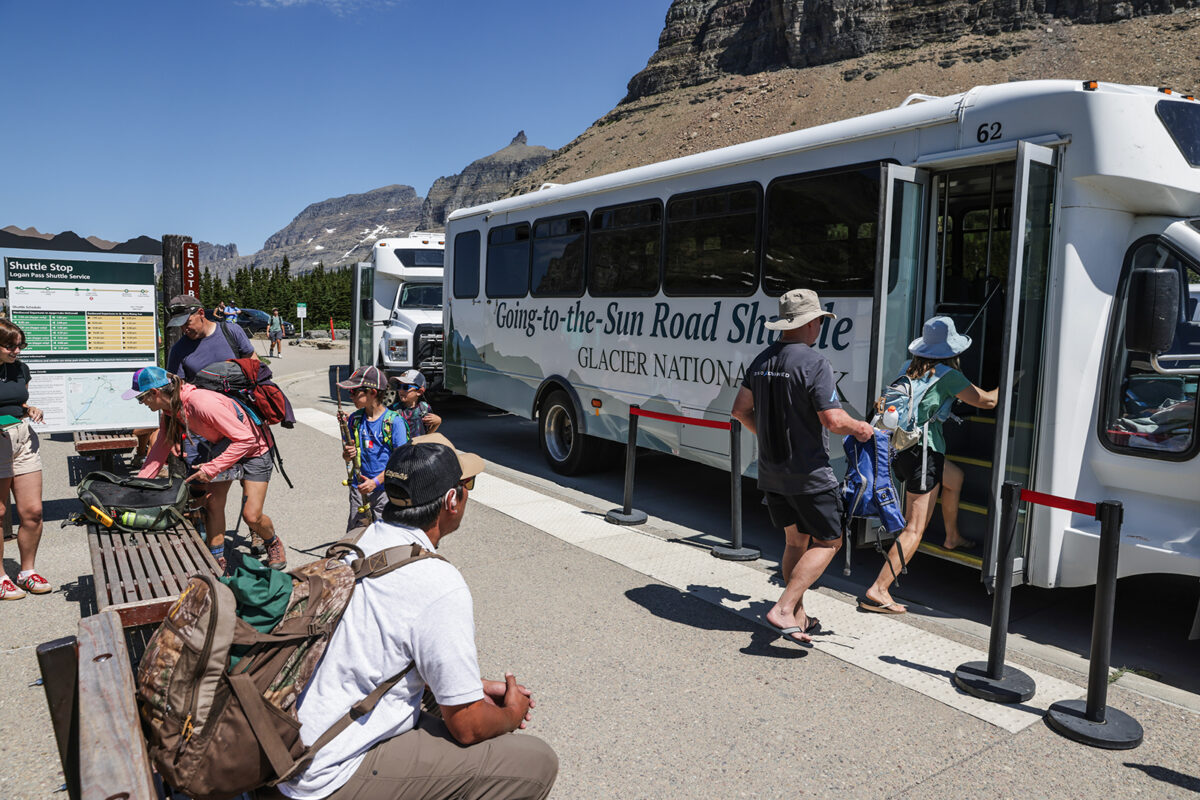
Asked whether the shuttle and parking limit have eased pressure on the park, Sifuentes said the goal “is not to limit visitation” and identified limited parking capacity at popular destinations as one of the park’s biggest challenges. The shuttle and timed parking at Logan Pass, she said, have helped the park manage that capacity and reduce some congestion while giving visitors more ways to get around.
Superintendent Dave Roemer has described the shift as “a deliberate pivot” and has unveiled a long-range proposal to expand the park’s 36-vehicle shuttle fleet and add up to 600 parking spaces, growing both “in lockstep.”
The gains were uneven across the park’s gateways. Many Glacier drew 106,736 visitors in August, up 227.9% from 32,549 a year earlier, when the Swiftcurrent area was closed for a rebuild of its roads, parking lots and water system. Many Glacier Campground and the Swiftcurrent Motor Inn reopened in mid-May, so the jump is as much a rebound as new demand. For the year, Many Glacier is up 148.8% to 293,202. The Saint Mary entrance grew 25.5% to 217,937 visitors (603,223 year to date, up 15%). The West Entrance, the park’s busiest gateway, rose 4.6% to 379,733 and is up 5.6% for the year at 1,298,648. Polebridge edged up 3.3% to 16,422.
Other areas moved the opposite direction. Two Medicine fell 22.8% to 46,307 visitors and is down 25.8% for the year to 164,021, as a utility project and road rehabilitation keep its campground closed in 2026. Camas dropped 26.3% to 20,352, Walton/Goat Lick fell 18.2% to 21,571, and Goathaunt slipped 11% to 6,014.
Overnight stays, meanwhile, rose just 1.2% in August to 108,873 (324,693 year to date, up 1.5%), a far smaller gain than the jump in overall visits. Concession lodging climbed 19.3% to 35,027, and group camping rose 25.4% to 2,851. NPS campgrounds were down: tent stays fell 7.5% to 31,403 and RV stays 4.1% to 28,371. Backcountry stays dropped 9.4% to 11,221.
The park hasn’t pinned down why. Asked about the gap between day use and overnight stays, Sifuentes said the park does not “have enough information at this point” to identify a specific reason, pointing to travel trends, lodging availability and cost, and the length of visitors’ trips as possible influences.
The National Park Service cautions that current calendar-year figures are preliminary and subject to revision. The data won’t be finalized until the end of the first quarter of 2027.