Montana Supreme Court Denies New Trial for Kila Man Convicted in 2022 Martin City Murder
Del Orrin Crawford argued that Flathead County District Court Judge Dan Wilson erroneously admitted statements during trial that violated his due process rights
By Maggie Dresser
The Montana Supreme Court this week denied a new trial for a 44-year-old Kila man convicted of murdering a Hungry Horse woman and injuring her husband during a shooting in the parking lot of a Martin City bar in 2022, ruling the defendant’s due process rights were not violated.
A Flathead County jury in 2024 convicted Del Orrin Crawford of a first felony count of deliberate homicide; a second felony count of attempted deliberate homicide; a third felony count of assault with a weapon; and a fourth felony of evidence tampering. He was acquitted of a separate assault with a weapon count.
Flathead County District Court Judge Dan Wilson sentenced the defendant to 100 years in the Montana State Prison with no parole eligibility restrictions. He is currently being housed in the Tallahatchie County Correctional Facility in Mississippi.
In Crawford’s appeal brief filed last year, appellate defender Colin Stephens asked the court to reverse the conviction and remand the case for a new trial, citing two errors he said the district court made in ruling on a motion to suppress statements.
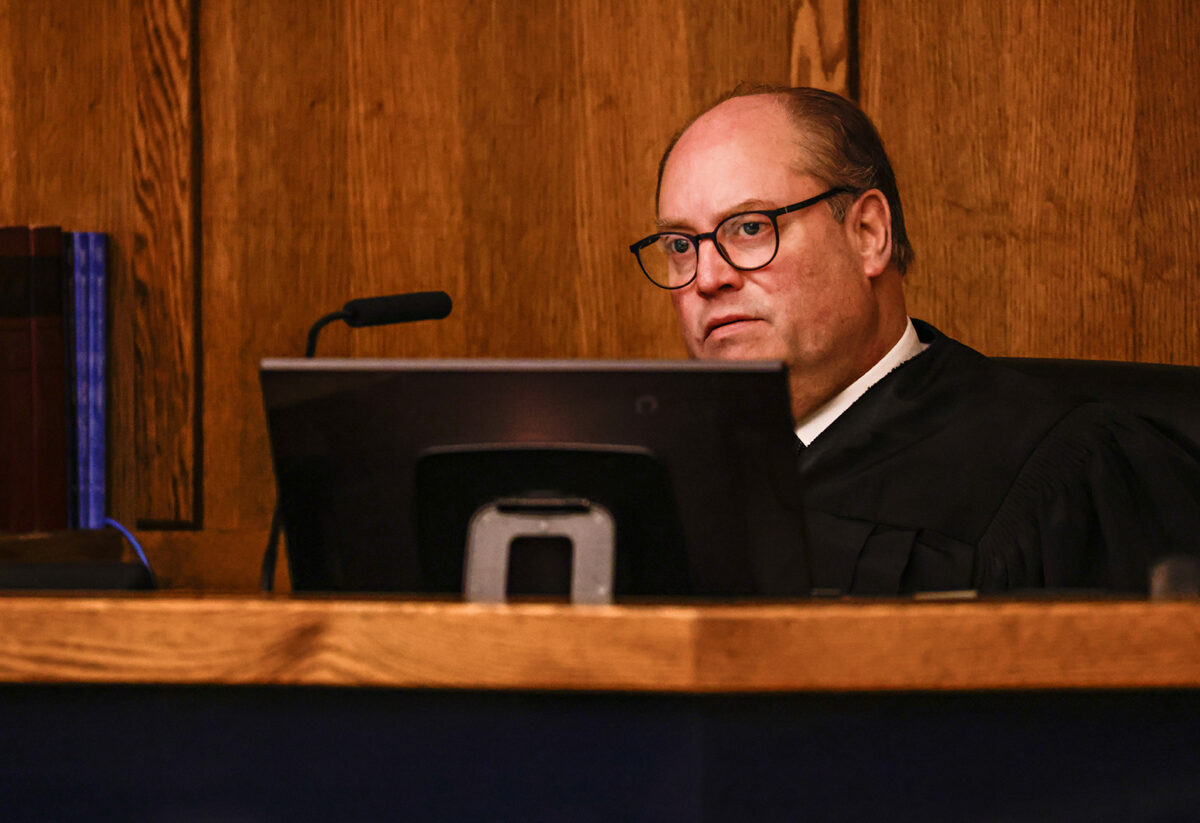
In the Sept. 22 opinion drafted by Justice Beth Baker, the Montana Supreme Court concluded that the district court did not err when it admitted statements Crawford made — after invoking his Miranda rights — about the location of the firearm he used in the shooting. Even if the district court should not have allowed statements related to the firearm, Justice Baker wrote, any error was harmless beyond a reasonable doubt because Crawford lied about the gun’s location.
Justices Cory Swanson, Katherine Bidegaray, Ingrid Gustafson and Jim Rice joined in the opinion.
In the appeal, Stephens argued Flathead County Sheriff’s Office Cpl. Aaron Westphal did not honor Crawford’s request to counsel at the time of his arrest and instead “simply ignored the invocation and pressed on with his questioning” before his Miranda rights were read, according to the brief.
When Stephens filed a motion to suppress the statement, he said the court erroneously adopted a “public safety” exception to the defendant’s invocation of his right to counsel because the firearm used in the shooting was missing and not yet recovered it or determined its locations. But Stephens argued that since Cpl. Westphal handcuffed and transported Crawford to a secure location, there was a “lack of imminent threat to either law enforcement or the general public,” rendering the public safety exception moot.
“This Court should conclude the public safety exception should not apply in a situation where the defendant specifically invoked his right to counsel and where there was not an immediate threat to either law enforcement or the public,” Stephens wrote in the brief.
But Justice Baker wrote that it was unnecessary to determine whether the district court properly admitted Crawford’s statements under the public safety exception because “error, if any, was harmless.” She also wrote that because of the strong evidence admitted, the court concluded “there was no reasonable possibility Crawford’s statements to Cpl. Westphal might have contributed to his conviction.”
In a separate issue, Justice Baker ruled that the district court did not err when Judge Wilson chose to allow Crawford’s conversation about the investigation with law enforcement. Since the defendant re-initiated the conversation about the investigation and waived his right to counsel while offering a voluntary statement, his rights were not violated.
According to the defendant’s brief, Stephens argued the court erroneously admitted evidence of Crawford’s interrogation at trial despite law enforcement ignoring Crawford’s invocation of counsel.
“Not only did Cpl. Westphal not inform the detectives that Del had invoked his rights under Miranda, but he affirmatively told them that Del ‘may want to talk,’” Stephens wrote.
Crawford subsequently agreed to make statements to detectives during the custodial interrogation, but only after his previous requests for an attorney had “gone ignored,” Stephens wrote. Only at that point did detectives advise Crawford of his rights, according to Stephens, who said Crawford then confirmed he understood and signed the Miranda Rights Advisory form.
In Justice Baker’s opinion, she wrote that Cpl. Westphal previously read Crawford his Miranda rights and he subsequently denied a second reading by the two detectives that he was later handed off to, at which point he did not assert his right to counsel.
The Supreme Court agreed with the district court’s ruling that because Crawford voluntarily offered information unprompted after he waived his right to counsel, those statements were admissible.
“Substantial evidence supports the District Court’s finding that Crawford offered repeated, unprompted statements and inquiries before deputies gave him a second Miranda advisory and asked further questions,” Baker wrote.