Federal Memo Would Exempt Accidental Killings from Endangered Species Act
A former grizzly recovery coordinator says the internal U.S. Fish and Wildlife Service directive would mean “a whole lot of dead and injured grizzly bears”
By Jules Lingenfelter
A leaked U.S. Fish and Wildlife Service (FWS) memo would stop treating accidental killings as violations of the Endangered Species Act (ESA), a shift conservationists say would strip a core protection that has aided recovery of Montana’s grizzly bears, bull trout and other threatened species. The change would effectively dismantle the incidental take permit system that has long regulated development and industrial activity in their habitat.
Since its passage in 1973, the ESA has prohibited the “taking” of a federally listed species, and enforcement has historically included accidental death or injury. A hunter who shoots a grizzly bear mistaken for a black bear can face prosecution. Crucially, public and private development and industrial uses in threatened species habitat are also held accountable for their impact on listed species.
That accountability gives individuals and private entities reason to take preventive measures. A hunter may exercise extra caution in confirming the identity of a target. A company operating in habitat inhabited by grizzlies — a railway running trains through the area, for example, or a developer clearing land — can obtain an incidental take permit if it implements a habitat conservation plan, as outlined in the ESA.
Signed by FWS Director Brian Nesvik, the memo marks a shift in how the agency would regulate the ESA, prohibiting only direct, intentional death or injury. It was dated Sept. 14 and first reported by the New York Times.
“A vessel that inadvertently strikes a whale has not taken it, because the vessel’s course was not set against the whale,” the memo states. “Felling a tree is not a take of the bats roosting in it unless the tree is felled for the purpose of killing or capturing them.”
In a statement to the Beacon, Elizabeth Peace, associate deputy communications director at DOI, said the memo reflects FWS guidance for implementing the ESA following the final rule rescinding the regulatory definition of “harm” — a separate, earlier change to how the agency interprets the law. Under the guidance, she said, the ESA’s prohibition on “take” continues to cover conduct including harassing, pursuing, hunting, shooting, wounding, killing, trapping, capturing or collecting protected wildlife.
In its July announcement of the harm-definition rescission, DOI said “actions that directly injure or kill listed wildlife will continue to be prohibited.” Asked how that squares with the leaked memo’s treatment of incidental and accidental take, DOI did not directly respond, instead pointing the Beacon to its July press release and the underlying rule in the Federal Register.
The leak drew immediate concern in Northwest Montana, where ESA protections have long supported the recovery of a suite of threatened species in the region.
“This is 180 degrees counter to the way things have been done in the past,” said Chris Servheen, co-chair of the North American Bear Expert Team with the IUCN Bear Specialist Group.
“There’ll be a whole lot of dead and injured grizzly bears across the landscape because of this particular interpretation,” he told the Beacon.
Servheen, who retired in 2016 after 35 years as the FWS Grizzly Bear Recovery Coordinator, said the interpretation is a departure from the law’s intent to hold accountable those whose actions, intentional or not, can harm threatened species. On an individual level, he said, people who injure or kill threatened species could avoid punishment by claiming the act was unintentional. More broadly, he said, ending the incidental take permit system would allow development and industrial activity to occur in habitat without regard for the wildlife living there.
The system has “regulated activities which can result in the death of grizzly bears,” Servheen said, pointing to BNSF Railway Company as one local example.
In 2025, BNSF received an incidental take permit from FWS for a nearly 200-mile stretch of railway inside grizzly habitat after implementing a habitat conservation plan (HCP). Trains running through Northwest Montana inevitably kill bears, and will continue to, but the HCP outlines how the company will reduce deaths and mitigate the impact on bears. BNSF also committed nearly $3 million to conservation efforts to offset the deaths. The seven-year permit allows the company 19 incidental takes in exchange for implementing the HCP.
“Regardless of changes to the [ESA] or its implementing regulations, BNSF intends to complete the mitigation funding commitments made in its Habitat Conservation Plan,” said Kendall Sloan, a spokesperson for BNSF, in an emailed statement to the Beacon.
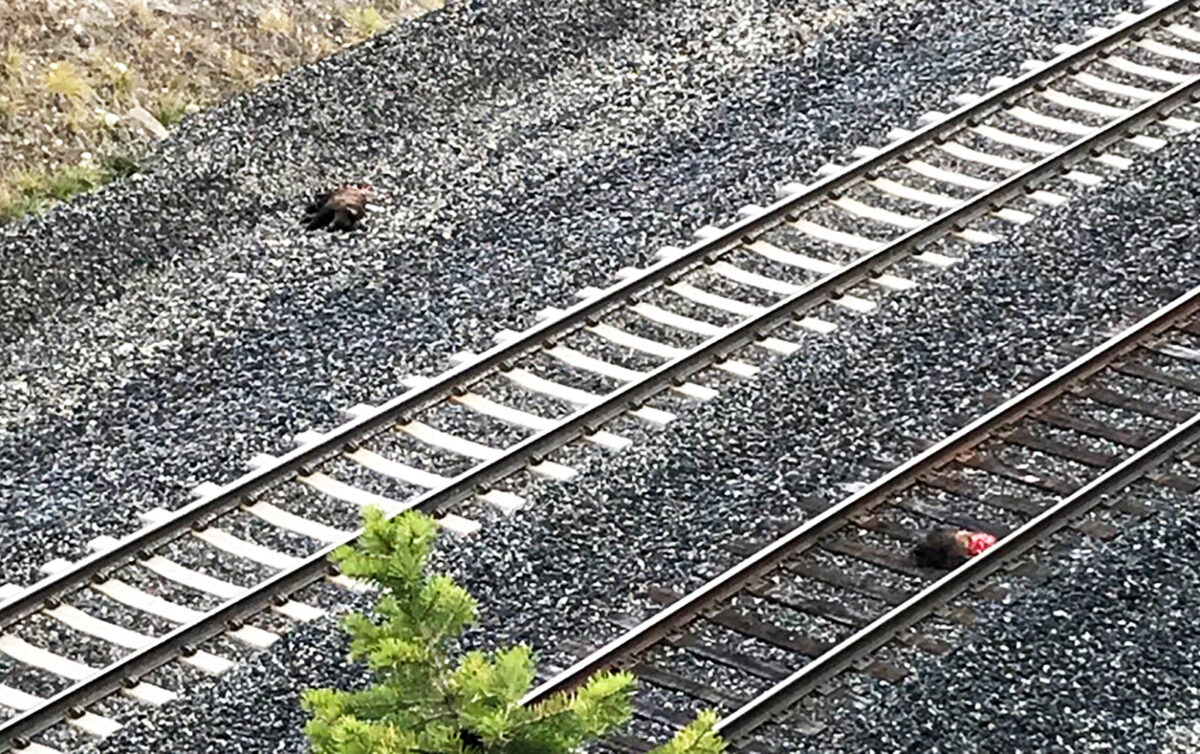
Servheen emphasized the central role the regulatory apparatus has played in the grizzly bear’s recovery.
“I can tell you that, if we didn’t have the regulation of habitat in place under the Endangered Species Act,” Servheen said, “we would have no grizzly bears south of Canada today.”
The memo comes on the heels of the federal administration’s July rescission of the regulatory definition of “harm”. Under that definition, habitat modification that negatively affected a threatened species’ ability to “feed, breed and shelter” could constitute a violation of the act. With the definition rescinded, it no longer can. The rule states that existing permits and incidental take statements “will not be required to be reevaluated” as a result of the rescission.
“That approach turned routine activity into a regulatory trap, drove up costs that impacted people’s lives, and expanded federal authority beyond what Congress intended,” said Interior Secretary Doug Burgum in an earlier press release. “This action restores common sense, respects private property, provides much-needed certainty for landowners and follows the statutes Congress actually passed.”
Soon after the decision, the environmental law firm Earthjustice sued the Department of Interior on behalf of several conservation groups, alleging that it violated the protections guaranteed by the ESA. On Sept. 9, attorneys general from 20 states and the District of Columbia put forth a lawsuit challenging the department’s redefinition of harm.
“The Trump administration is trying to undermine the law, the will of Congress and the will of the people who overwhelmingly support protections for endangered species,” said Washington Attorney General Nick Brown at a press conference, according to CNN. “Instead of stewardship, this administration’s approach to our land, to our water is one of exploitation.”
Both lawsuits are pending.

In a Sept. 17 press release, Earthjustice threatened further legal action over the memo. “The government’s new legal position is a prescription for extinction. It says that as long as you claim you didn’t mean to kill an endangered species, the law can’t and won’t stop you. That’s ridiculous — and a totally illegal, active misreading of the Endangered Species Act. We’ll see the Trump administration in court about this,” stated Ben Levitan, an attorney with the law firm, in the press release.
Conservationists say the recent string of changes have effectively gutted protections for threatened species.
“What these people are doing right now is essentially eliminating the Endangered Species Act through a back door,” Servheen said. “By taking away the harm regulation, you eliminate the ability to control the destruction of the habitat of the species. Well, there’s not a species alive on the Earth that doesn’t require a habitat to live.”
“And this new regulation is even worse,” he added.
For Servheen, who oversaw grizzly recovery efforts in the Northwest before retiring, and has since become an advocate for the bruins’ future, the shift at FWS is a step backward for federal conservation.
“They’re reversing all the laws that allow us to help those animals and give them some chance to survive on the Earth with us.”