Elk-Kootenai Study Board Postpones Draft Report on Transboundary Coal Pollution
Draft now planned for late November, with a one-month comment period; final report to the IJC pushed back to February 2027
By Tristan Scott
A binational study board examining decades of coal mine pollution in the Elk-Kootenai watershed has postponed the release of its draft Final Report to late November and secured a second extension on its final deadline, pushing its recommendations to Feb. 5, 2027.
The International Elk-Kootenai Watershed Study Board had planned to release the draft Sept. 30, opening a public comment period that would have run through Oct. 16. The revised schedule instead opens a one-month comment period in late November. The board said in a news release that the public had requested a longer window during earlier comment periods.
The board’s final report and recommendations to the International Joint Commission (IJC) were previously due Dec. 9.
The board said the added time will allow it to complete quality assurance processes and ensure the report “reflects the breadth of technical analysis and input received throughout the study process.” It also said it will conduct more in-depth engagement with Indigenous Nations and advisory groups. The IJC said the fall public meetings will be rescheduled, with details on timing to be announced in the coming weeks.
Tom Bansak, the board’s U.S. co-chair and associate director of the Flathead Lake Bio Station, said he was unable to provide additional information about the postponement. In an emailed statement, Chrissy Chiasson of the IJC said the delay will ensure the report, including its key findings and recommendations, is as comprehensive as possible given the significant amount of technical analysis and input received throughout the study.
The postponement is the board’s second delay. An earlier extension, announced April 14, moved the deadline for the final report to Dec. 9. The IJC said at the time it was needed to offset time lost during the U.S. federal government shutdown and B.C. government labor action in late 2025. The IJC attributes this delay to the volume of technical analysis and input received and to quality assurance, and the board said it will also use the time for deeper engagement with Indigenous Nations.
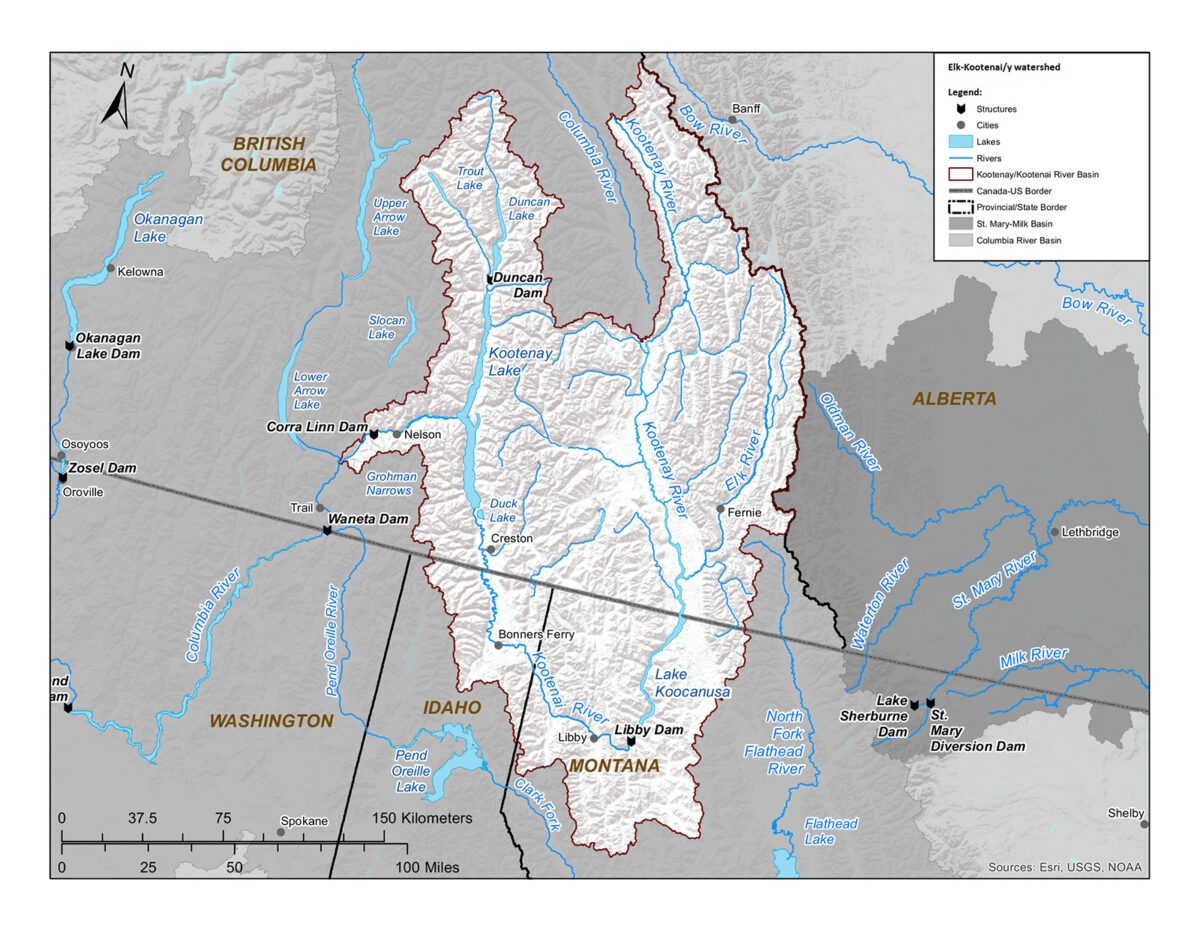
The board, made up of experts and knowledge holders from both countries and the Ktunaxa Nation, was appointed in 2024 after Canada and the United States asked the IJC under the Boundary Waters Treaty of 1909 to examine pollution in the watershed. It was the first such request in the commission’s history developed jointly with an Indigenous Nation. The board delivered an interim report to both governments in late 2025.
The IJC said the Ktunaxa Nation has been closely involved throughout the study, including on the board, a council of Indigenous knowledge holders, a council of governments advisory group and the technical working groups.
Its task is not to conduct new research but to synthesize existing data collected by governments, researchers, industry and communities, including selenium and other contaminants leaching from coal mines in British Columbia’s Elk River Valley and migrating downstream into Montana and Idaho. Four technical working groups are examining water quality, human health, ecosystem health and cumulative effects, and mitigation. A separate governance body established at the same time will develop an action plan based on the findings. The IJC said the body has already begun drafting it, with additional work to follow the release of the board’s report.
The revised timeline still puts the board’s findings ahead of the formal review of Glencore’s proposed Fording River Extension, which would extend the life of Canada’s largest metallurgical coal mine by decades. Under a joint permitting timeline for the project, which is subject to change, Elk Valley Resources would submit its application in the second quarter of 2027, with provincial and federal decisions not expected until late 2028.
A coalition of tribes and conservation groups is pressing Ottawa for an independent federal review of the expansion, which Environment Minister Julie Dabrusin declined in May. Tribal governments have long called for a moratorium on new or expanded open-pit coal mines in the transboundary watershed until the effects of existing pollution are understood and remedied. Elk Valley Resources says provincial and federal assessments of the project have been comprehensive and that it is making significant progress on its water quality plan.
Editor’s note: This story has been updated to include information the Beacon received from the International Joint Commission after the publication deadline.