Days of Piikani Honor Blackfoot Relationship to Land
Blackfeet Community College’s annual event seeks to rebuild cultural knowledge, covering topics from treaty law to traditional dollmaking
By Zoë Buhrmaster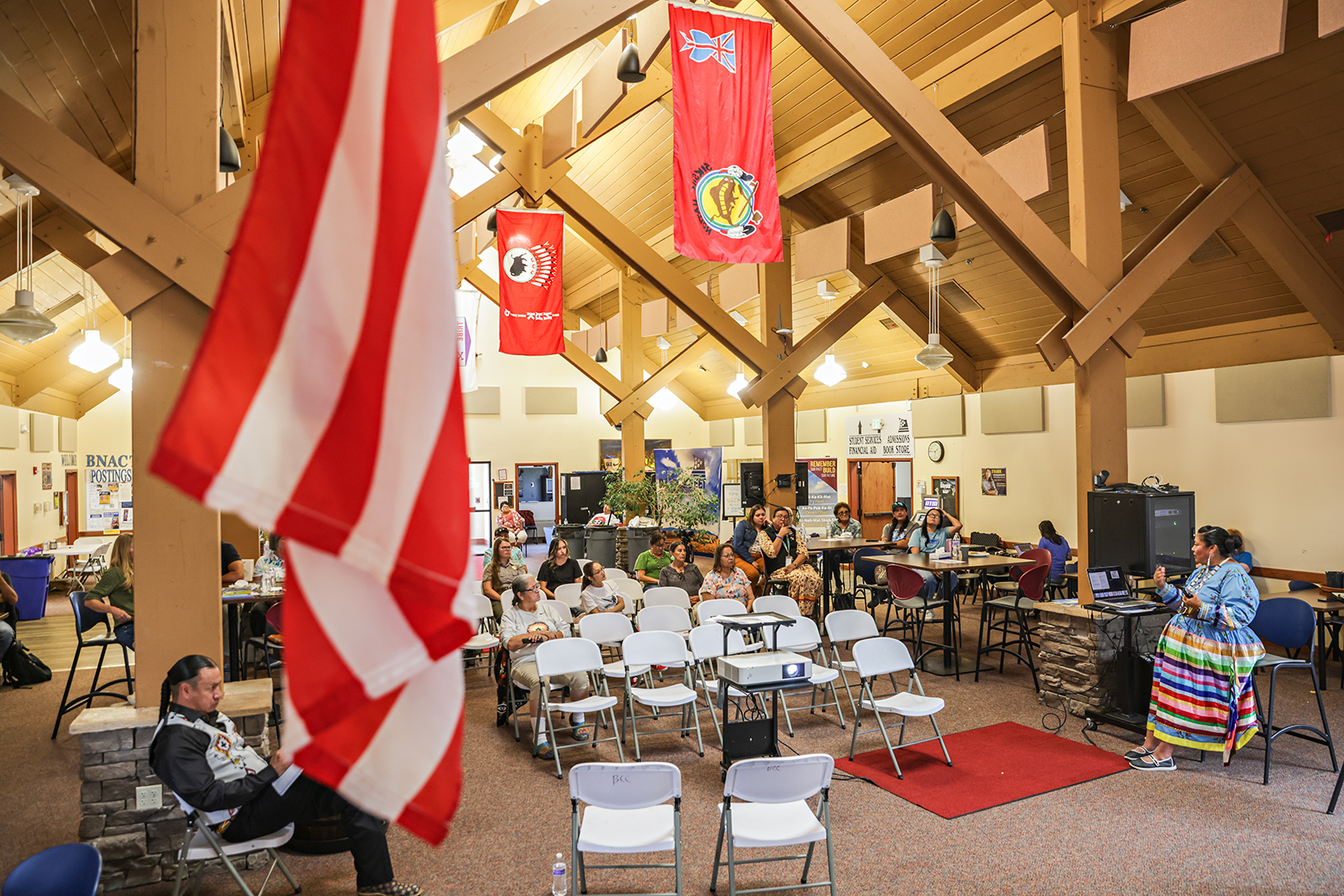
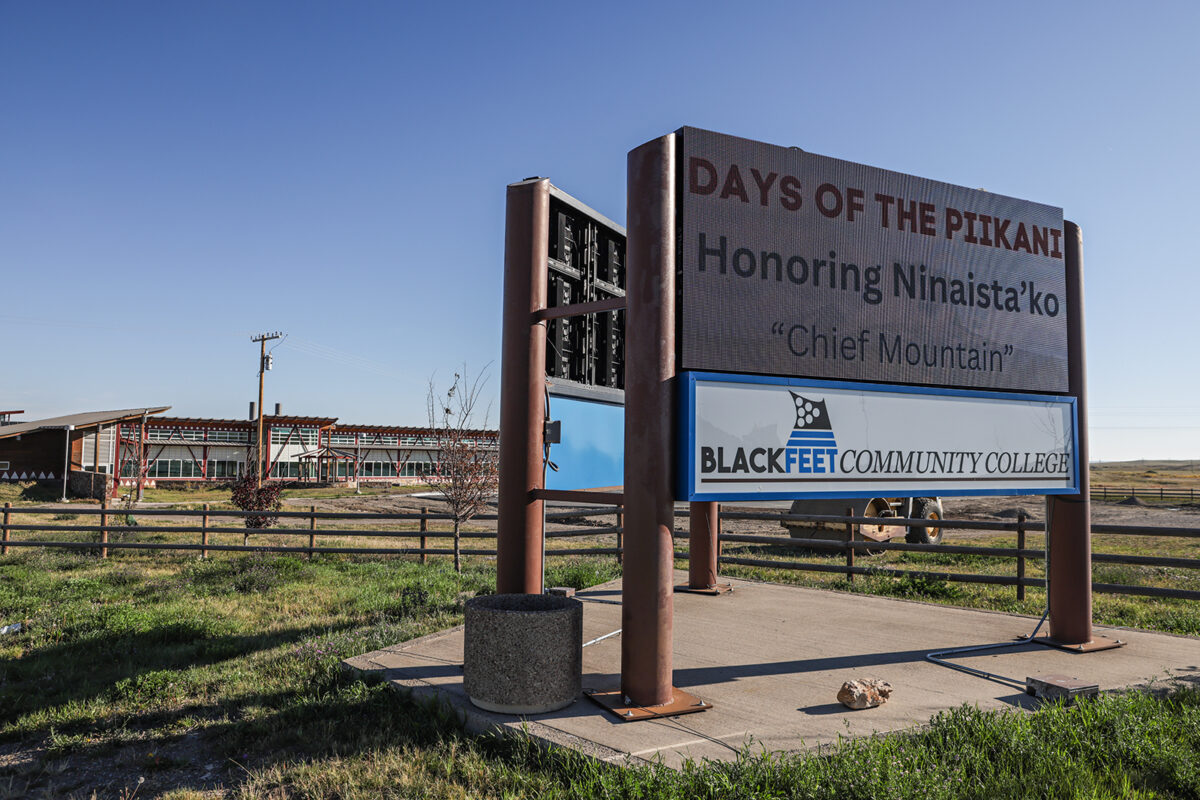
Oral histories and Blackfeet stories echoed inside the Beaver Painted Lodge Student Commons at Blackfeet Community College. The cultural event, Days of Piikani, ran Sept. 22-24 and brought speakers to Browning from across the Blackfoot Confederacy territory spanning Canada and Montana. They included Eldon Weasel Child, a Blackfoot elder and culture, language and history teacher.
“The land and the animals define who we are, not the other way around,” Weasel Child said. “Our first treaty was with those animals.”
Over three days, Blackfoot elders, researchers and community members gathered for a series of sessions on the Blackfoot Confederacy, with topics ranging from treaty law to traditional Blackfoot practices. Presentations centered around the Blackfoot’s relationship with Chief Mountain, a sacred site referred to as Ninaista’ko in the Blackfoot language Nitsii’poowahtsin.
Marvin Weatherwax, Carol Murray and other Blackfeet tribal members launched the first Days of Piikani in 1992 to create a space for sharing traditional Blackfoot culture and language across generations. Native communities were then beginning to reconnect with their culture after years of residential boarding schools in the United States sought to erase Indigenous knowledge and languages.
The American Indian Religious Freedom Act, which protects and preserves traditional religious and cultural practices for Native Americans, Native Alaskans, and Native Hawaiians, had only been signed into law in 1978. Fourteen years later, Blackfeet tribal members created the Days of Piikani as a way to rebuild that cultural knowledge.
“It wasn’t until 1978 that Native Americans were allowed to practice sun dances, sweat lodges, ceremonies — that’s pretty recent,” Alden Spoonhunter said. As the Piikani language and culture coordinator at Blackfeet Community College, Spoonhunter has helped organized Days of Piikani for the last three years.
“That’s one of the primary reasons we have Days of Piikani,” he added. “A lot of these kids are still not taught these ways of life.”
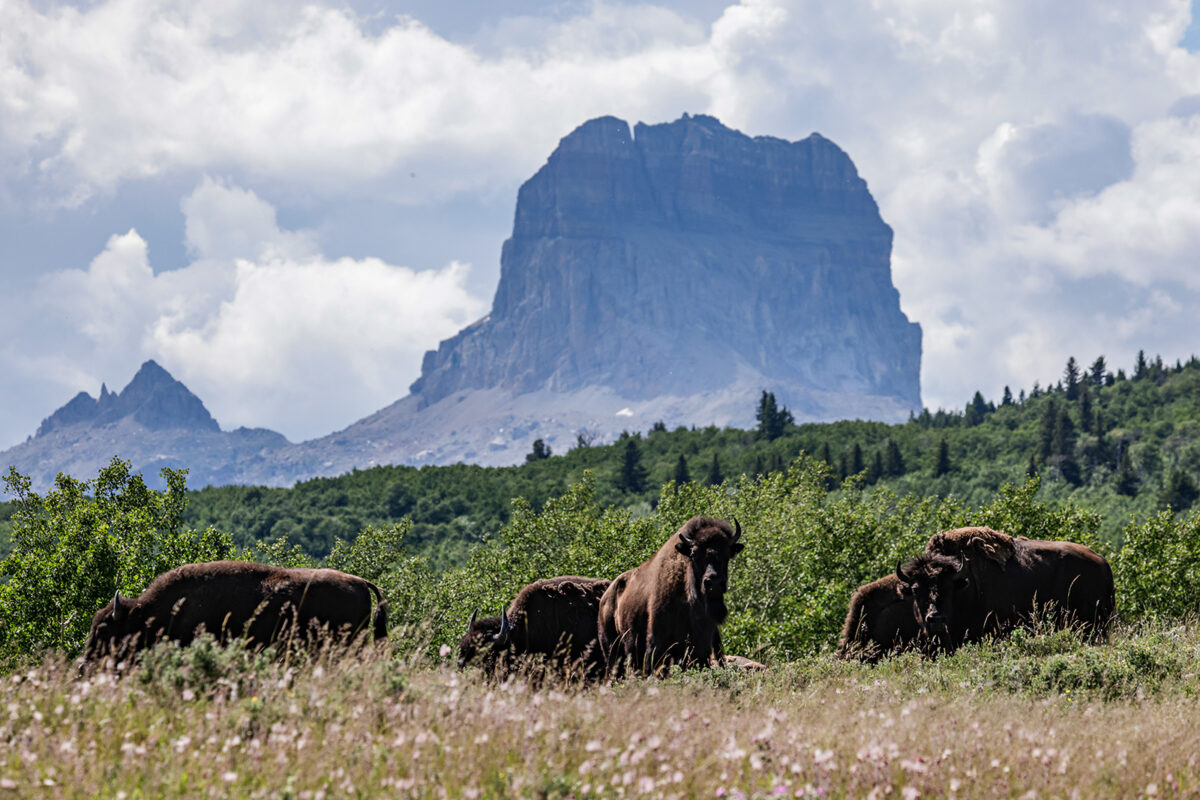
A presentation from the Knowledge Carriers Lodge highlighted the release of bison to their ancestral homelands at Ninaista’ko in 2023 and a medicine wheel built near the sacred mountain through the Iinnii Initiative. Iinnii is the Blackfoot word for buffalo.
Tribal members later removed the herd to construct fence lines in some places for the iinnii, but Ervin Carlson, director of the Blackfeet Buffalo Program, said they are working to release a wild herd again. In the meantime, the medicine wheel at Ninaista’ko has continued to serve as a sacred site for ceremonies, prayers and offerings.
“Even though it’s flat on the ground, it’s still a sphere of energy and relationships,” said Helen Augare Carlson, a coordinator at the community college with years of experience in cultural preservation.
“These are very, very powerful things we place on the land.”
That relationship to land has been tested over the years. Since the Blackfeet Nation’s 1895 Agreement with the U.S. over the land today known as Glacier National Park, tribal members have sought to reestablish traditional rights to hunting, fishing and gathering plants in the park. Some rights, including gathering plants, have been restored, while others remain contested, said Tarissa Spoonhunter, director of the High Plains American Indian Research Institute.
A member of the Blackfeet Nation with a doctorate in American Indian Studies, Tarissa Spoonhunter emphasized the importance of learning tribal and federal law. The place to start, she said, is reconnecting with the land.
“Reconnecting ourselves and our grandchildren is really important and really essential to the assertion of our rights to honor our agreements and our treaties,” she said.
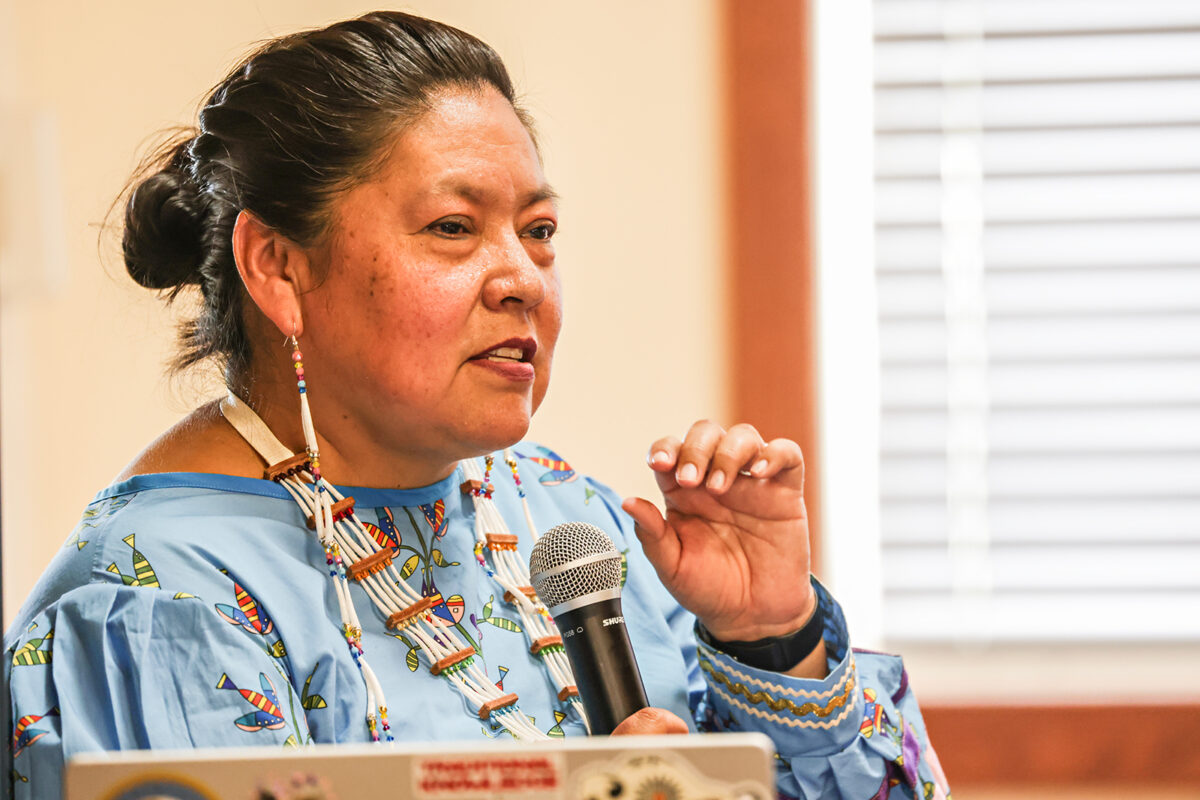
On the last day of the event, Blackfeet elder Evelyn Kelman and her daughter, Debbie Kelman, stood at the front of the room. Beside them, a table was covered with dolls of various sizes, dressed in regalia and traditional beadwork. Over the past few years, Evelyn Kelman has honed her skills creating the traditional Blackfeet dolls, with her daughter helping on the beadwork. The process has helped her heal from her time growing up at a residential boarding school.
“This has been the biggest part of my healing,” she said. “This is my passion, to heal.”
Evelyn Kelman held up a hundred-year-old doll passed down to her from her great-grandmother. At the boarding school, she said family members would visit, instilling courage and planting seeds of traditional knowledge. She recalled relishing the taste of the wild turnips her grandmother would pick for her, and the way her aunt’s songs would bring brightness to her and friends, temporarily causing them to forget where they were.
“Our culture is nature based,” she said. “Everything, the energy comes through from the plants to the animals to you, and that helps you, bringing motivation to me to keep going.”
Today, she shares the traditional dolls with her grandchildren and her daughter as a way of healing the past and continuing that cultural heritage.
“Every doll is an individual,” she said, gesturing to the 20-some dolls her and her daughter crafted. “Each doll, I put a lot of energy into it, and it gives me energy back, because I think about our ancestors, the survivors, and some of them that didn’t make it. I pray for those people. Eventually our culture is going to be strong – it is strong. And it’s getting stronger.
“The residential school did a lot of damage to people,” she continued. “When I’m making those dolls, I think of those people. My friends who I went to school with, they’re all gone, I’m the only one. I think about the time when we were at the residential schools, and I think about my friends and my family. It’s like they’re giving me energy to make dolls like this.”