Pandina, Koch Face Off for House District 4 Seat After Incumbent’s Primary Defeat
Both first-time candidates stress deep community roots, but Republican Shaun Pandina and Democrat Paula Koch offer sharply different policy approaches
By Lauren Frick
With Republican Shaun Pandina and Democrat Paula Koch each running for their first term in the Montana Legislature, both candidates are leaning into their deep community roots in House District 4 as Election Day nears.
For Pandina, a 1997 graduate of Columbia Falls High School, running for the Legislature is about representing a district he “truly cares” about and carrying his community’s concerns to Helena.
“I care about the whole district and I will represent the whole district,” Pandina said. “I’ve hit hundreds of doors, actually over 1,000 doors, and I really do genuinely enjoy talking with people and hearing their perspective. Some people have great ideas for solutions, you know, but they’re just busy in their day-to-day. I’m just the one that chose to stand up and help and carry their voice forward to Helena, so I look forward to it.”
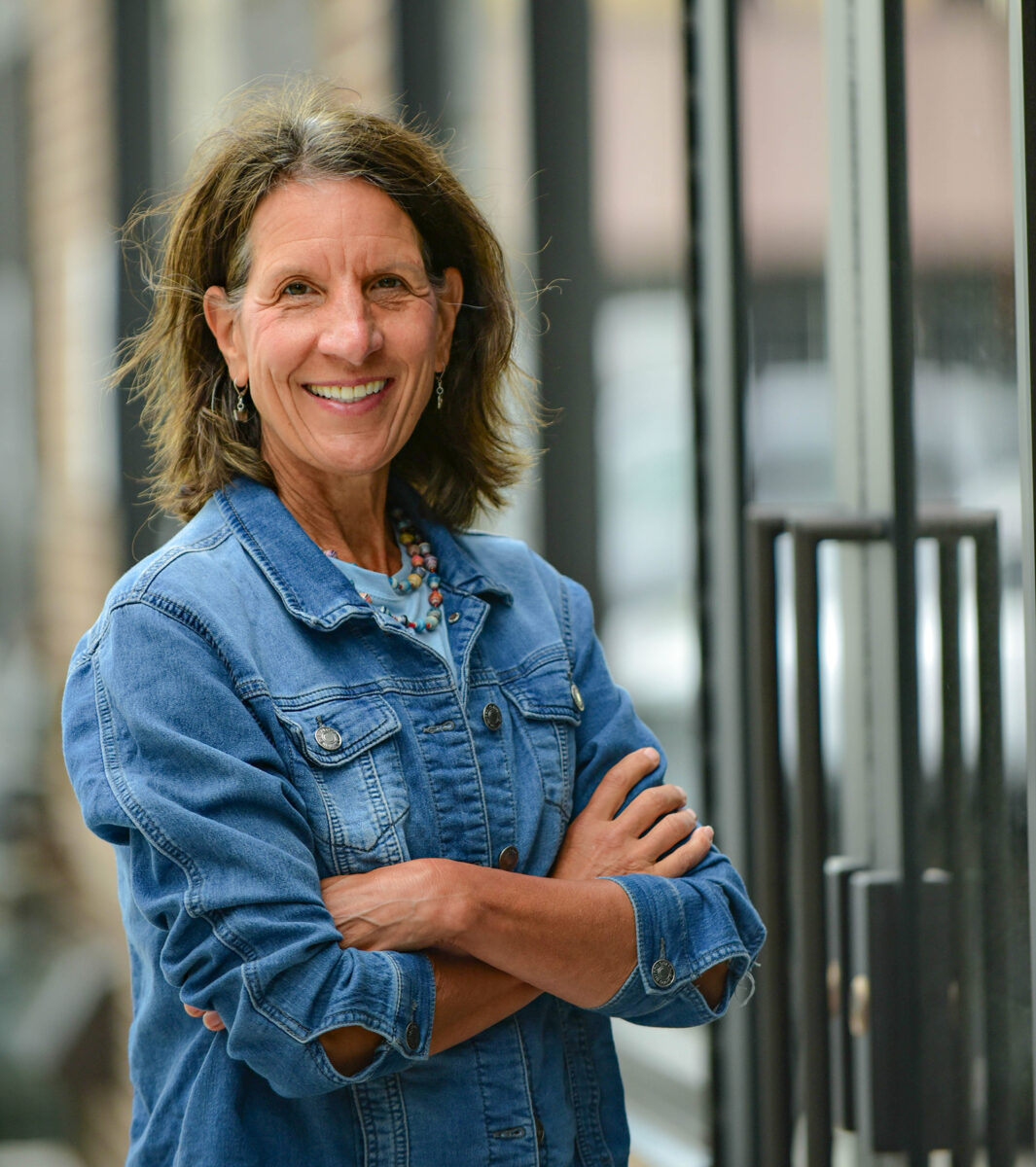
Koch, a longtime Whitefish resident and educator in Columbia Falls for 30 years, delivered a similar message when describing her reason for jumping in the race.
“I have lived in and raised my family in Whitefish for 35 years … my kids went to school there,” Koch said. “I was a volunteer community member, invested in that community. At the same time, I was in Columbia Falls teaching for 30 years.”
“I’m doing this for the community,” she added. “I’m not doing this for an agenda. I’m not doing this because I have a political passion. I’m doing it because it’s the right thing at the right time.”
The similar sentiments anchor campaigns with sharply different policy approaches in the north Flathead Valley district, which includes most of Columbia Falls and parts of Whitefish.
The seat is open because Pandina defeated the district’s current representative, Rep. Lyn Bennett, in a three-way Republican primary in June, capturing 65% of the vote.

Pandina won with backing and donations from local legislators and the Flathead County Republican Central Committee (FCRCC). Bennett’s defeat came in the face of intraparty division and blowback regarding her affirmative votes for a pair of transformative property tax reform bills in 2025, despite voting with the Republican majority 91% of the time in her first term, according to Montana Free Press’ capitol tracker.
Property tax reform and broader tax relief have been pillars of Pandina’s campaign from the primary to the general election. A local entrepreneur who has lived in the Flathead for more than 30 years, Pandina said he’s running to combat rising costs and to protect his family and community’s ability to stay in the Treasure State.
“It’s never an easy decision to decide to run, but I did receive a lot of support in the district and I’m very thankful to that and the voters that supported me, and I’m hoping that the voters that didn’t support me will support me in the general,” Pandina said when asked about his primary victory.
Looking to flip the district seat is Koch, a longtime Whitefish resident who has spent more than 30 years as an educator in Columbia Falls. Koch holds a Montana Administrative Education License, a Master of Science in special education and Spanish, and a degree in recreation management, and has served on the board of the Tamarack Grief Resource Center. Her main campaign platforms center on public education and fair school funding, healthcare access and mental health care, and protecting the environment and public lands.
“I know these communities probably better than, well, than anybody could running for this race,” Koch said. “As I always say, this community is my community. These kids that have grown up here were my students. I have watched them. I have worked with their families. My own kids have been in the schools.
“Particularly here in Columbia Falls, it’s a unique community, and I do understand them. I think it’s hard for people to think that a Democrat could understand all the needs of the range of political spectrums, but I really can because I do it every day in the classroom.”
Since the primary, Pandina said it’s clear “the number one issue still seems to be the number one issue” — affordability. He said he would focus on lowering constituents’ property taxes because “people are getting taxed out of their homes and they’re losing their properties.”
“The bill that got passed in the last session, it affected a lot of Montanans, not just out-of-staters like they said it was going to,” Pandina said. “Most of the people affected were Montanans and while I definitely support the reduction to primary residences, I do not like that it was a tax shift. I am more focused on making sure everyone gets a tax reduction, not just a tax shift.”
Raising wages and bringing in higher-paying jobs is also key to offsetting living costs, Pandina said.
“We can do that through removing red tape in certain industries, which will bring back better paying wages,” Pandina said. “Lowering taxes on businesses also helps them. I’m a business owner, so I understand that I’m able to pay higher wages, hire more people, when my costs go down.”
For Koch, the Legislature “took initiative” to deliver “some sense of relief” to Montanans with its 2025 property tax reform, but she acknowledged there’s still room for improvement. If elected, Koch said she will rely on data and information from the 2025 bills and evaluate their outcomes in her approach to continued property tax reform.
“The results of how well did or did not the tax reform work in 2025 will be what will guide me and lead me to make those votes on how to benefit the people for not only this district but for the state,” Koch said.
“Did it lower rent?” she added. “Did it open up homes for young families and that were affordable? I think we’ll come back to the fact that it hasn’t, right? So, therefore, reforming and working with what they put in place to just really make it better, improve it, make it stronger to bring more relief to people.”
Regarding affordability, Koch also noted the issue spans a variety of components — from gas prices, to groceries, to housing costs — that will need to be comprehensively addressed in Helena.
“What I’ve come to learn in talking with a variety of age groups and neighbors is affordability looks different based upon where you’re at,” she said.
As a longtime educator, Koch lists public education and school funding among her top priorities.
“Education is a big driving force behind this campaign and my motivation to run for office,” Koch said. “Not the sole reason, but after 30 years of watching this system continue to not meet the needs of the infrastructure, of the salaries, not keep up with inflation rates, to watch it have to cut programming, cut teachers, not find teachers in rural areas, it’s really been my passion to help restructure some of that.”
Central to that effort, she said, will be working to remove the 3% cap on annual inflation adjustments for public school general fund budgets — although Koch recognizes the change will take “creative thinking on how to make that not only happen, but affordable.”
“How do we serve the needs of the community and the young people who deserve to have what they’re going to need for the next 50, 100 years; for their adult life?” Koch said. “That’s the biggest one for me, is really focusing on how do we work on that inflationary cap… and fund schools the way in which they should be funded. I’m working with a couple local former superintendents and administrators throughout the state on how we can build language for that.”
For Pandina, fiscal responsibility — namely reining in the state’s budget — is another top legislative priority.
“Just making sure that we’re being responsible with taxpayer dollars because when we’re overspending in areas we shouldn’t be spending in, then that’s just costing Montanans money. They’re not necessarily seeing a return on their money if it’s not being spent wisely.”
Other legislative priorities for Pandina include continuing to support the Second Amendment and “protecting women’s sports.”
“We had a bill that went through, but then failed and we plan on running another bill with similar wording to the one that went to the U.S. Supreme Court and succeeded,” Pandina said. “We definitely need to make sure that men are not in women’s sports or in their safe places like locker rooms.”
Ballots were mailed to absentee voters Oct. 9. Election Day is Nov. 3. Voters can check their registration status and the status of their ballot here: https://voterportal.mt.gov/WhereToVote.aspx.
To register to vote, voters can either bring their completed voter registration application to their county election office or visit their county elections office to fill out a voter registration application and receive a ballot there.