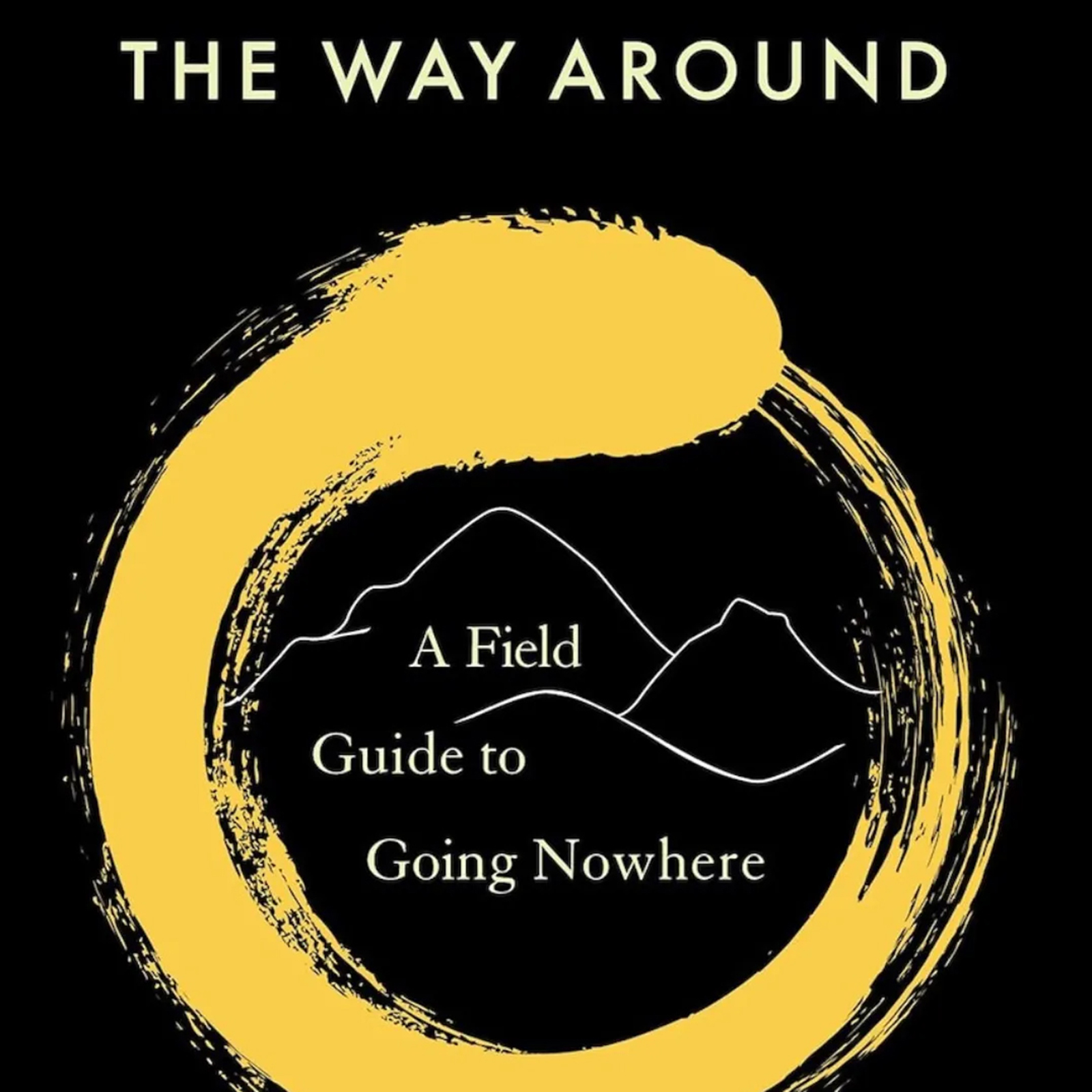
When it comes to movement or thought, circles get a bad rap. Running around in circles? A futile endeavor, lacking in progress despite the busy pursuit. Circular reasoning should be avoided and rarely wins the argument. For Missoula author, filmmaker and photographer Nicholas Triolo, the shape of the circle, especially in movement, thought and prayer, became his obsession and quest after years of moving linearly and competitively as an endurance athlete. Circumambulation and the spiritual, environmental and cultural practices related to going in circles comprise the path of inquiry in in Triolo’s book, “The Way Around: A Field Guide to Going Nowhere.” Published in 2025, the travel memoir won the 2026 Reading the West Award in Memoir and Biography and was named this year’s Humanities Montana Great Reads Selection.
Circumambulation is to circle on foot for ritual and spiritual purposes. Triolo’s book charts three circumambulations after first encountering kora, a moving form of prayer in which pilgrims walk in circles around a sacred site or object, in Kathmandu. Three such extended walks set him on worldwide circuit from Mount Kailash in Tibet, northern California’s Mount Tamalpais, and Butte, America’s Berkeley Pit Complex. The three locations for his journeys reflect his 20-year devotion to reexamining the shape of his life, studying the rituals and practices of religions and cultures that take a less linear and productive, accomplishment-fueled approach. Of this pilgrimage, the self-described “wayfaring intellectual” writes of his quest that “Intimacy and attention, compassion and staying power, restraint and reverence — these were the shapes I sought to embody, and it was indeed the body that proved to be my most trusted guide.”
The slim book is divided into three parts, or, thematically appropriately, “rounds.” The first round occurs in Tibet where Triolo takes part in a guided trek to learn about kora, a walking prayer practiced around the planet for millennia by all major world religions. According to Triolo, kora is an aspect of circumambulation and the practice, he writes, “seems to have grown from a simple method of reverence and grounding, a way both outward and inward: a merging with God and exchange of solipsism for a wider unified field, if also an inward homecoming to the Self.” After confronting a range of questions about spiritual tourism, the Chinese occupation of Tibet, and a jagged landscape saddled with ancient myths, Triolo admits to finding more complications than answers. His second trek delivered him back home to California after his mother’s cancer diagnosis to take part in an annual 15-mile route around Tamalpais, made famous by Beat poets like Gary Snyder. His third circuitous journey struck an entirely different tone: one not defined by landscapes of grandeur or foreignness but the nation’s largest Superfund site, also known as “the Pit.” In Butte, Triolo joins a hydrogeologist and environmental consultant who’s long called the Pit home, to walk the entire 20-mile circumference of the Berkeley Pit, the toxic result of mining and the long-unchecked greed and environmental degradation led by the Copper Kings.
Triolo’s big-hearted book is also grounded in research and he takes care to orient the reader within these distinct landscapes, from their inhabitants to the unique geological layers that formed mountains or what lies beneath. However, at times he belabors this point, highlighting the words of others and their perspectives on relating to the land, whether that’s invoking Snyder’s poetry or any number of writers, philosophers or seekers that help Triolo blaze this trail. The University of Montana’s graduate department of environmental studies would be pleased to see this alumnus deploy such strong research and scholarly efforts but, as a memoir, the book should also center his own experiences, as with the anecdote of the author play-excavating a mine shaft as a child to find the center of the earth, wholly inspired by Jules Verne.
Although the title claims the book is a field guide for “going nowhere,” this is a lie. Even going in circles is going somewhere, and this type of movement, focused on reciprocity and aliveness, is a necessary and inspiring definition of going in circles. It’s not a bad route.