Four-term House Veteran and Democratic Newcomer Vie for Open Senate District 1 Seat
Republican Steve Gunderson, who sat out the 2025 session, and Democrat Jonathan Jameson, a geosteering specialist, are competing to succeed term-limited Sen. Mike Cuffe
By Tristan Scott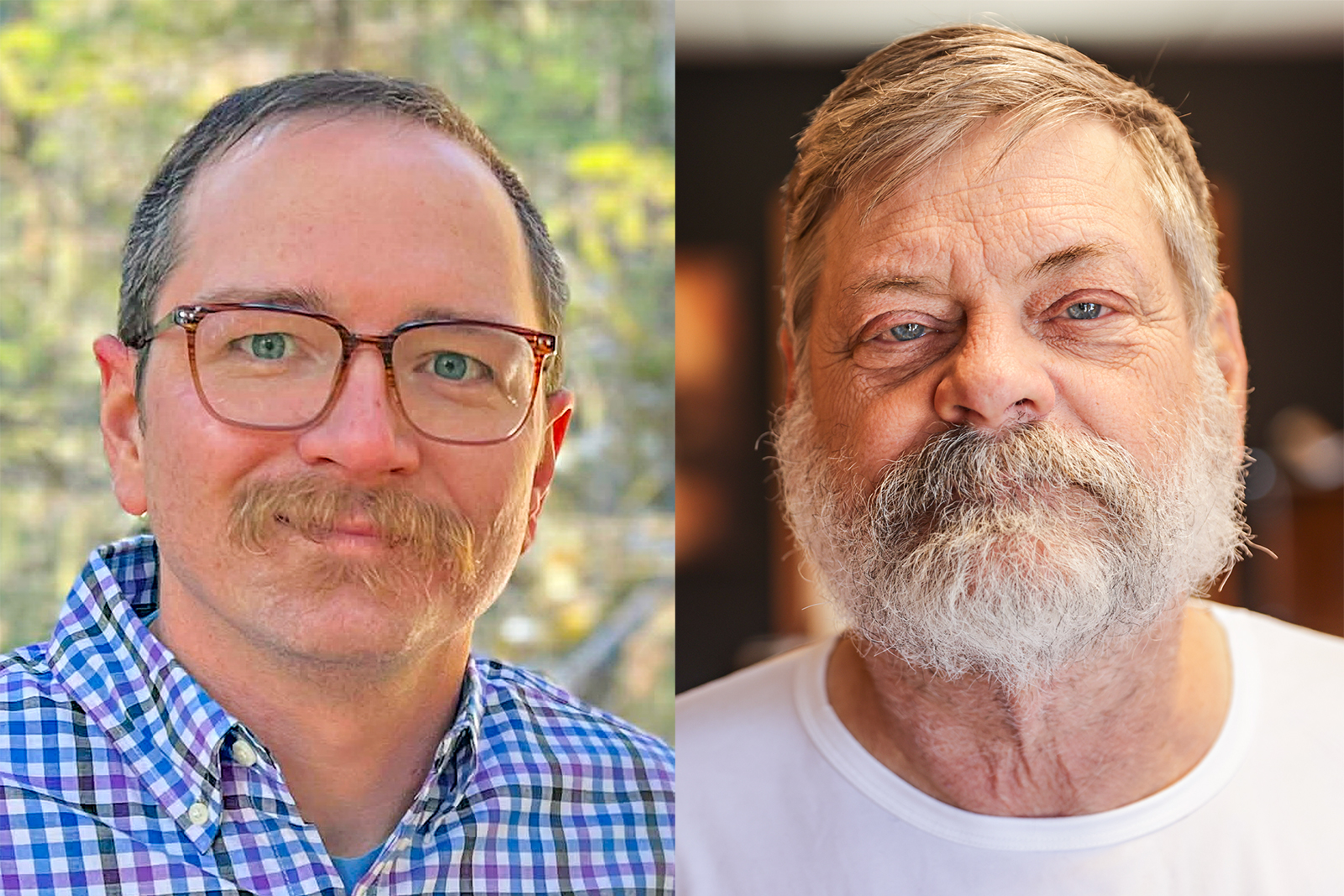
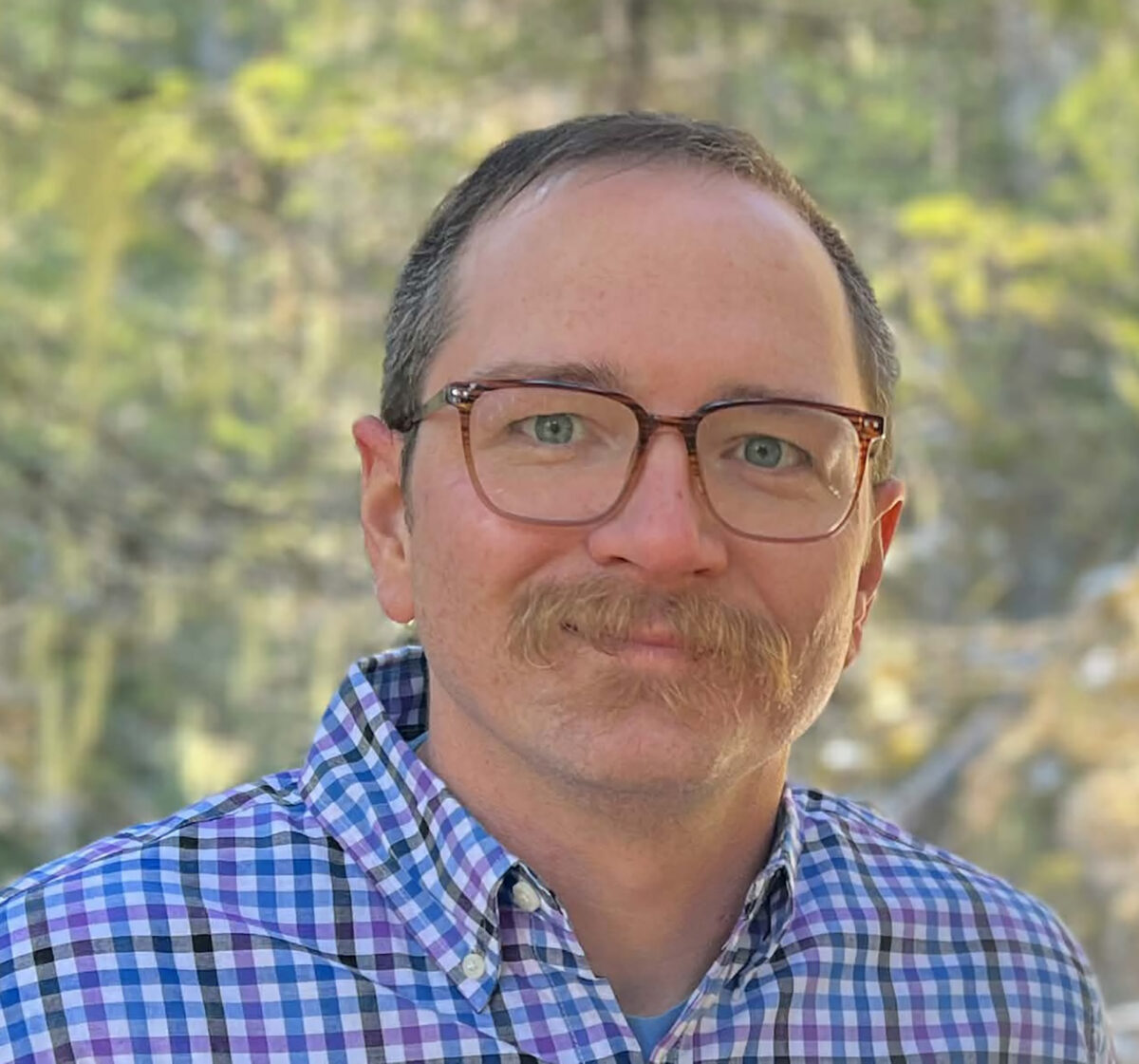
In a district where Donald Trump took 76% of the vote in 2024, the letter beside Jonathan Jameson’s name may matter more to the outcome of the Senate District 1 race than anything either candidate says between now and Nov. 3, and Jameson, a 41-year-old Libby Democrat who has never held elected office, said he understands as much.
“I’m staring at the impossible every day with the attitude I’m possible,” Jameson said.
His opponent, Republican Steve Gunderson, has the district’s partisan lean behind him and has made experience the center of his case. Beyond the arithmetic, the two split on Canadian coal mines, data centers and who should manage the forests that cover most of the county. Meanwhile, they find rare common ground on wildfire and on replacing Libby’s shuttered asbestos clinic.
The seat is open because Sen. Mike Cuffe, a Republican, is term-limited. Gunderson, of Libby, served four terms in the House beginning in 2017 and sat out the 2025 session; Jameson, also of Libby, is a geosteering specialist who has spent 17 years reading rock samples and gamma-ray data for oil and gas operators in the Williston Basin. Jameson has never held elected office, and his one prior campaign, a run for Libby mayor last November, ended with 69 votes, behind Hugh Taylor’s 401 and incumbent Peggy Williams’ 220. The district, Jameson noted, reaches as far south as Marion.
Gunderson runs on what he calls “a big toolbox of contacts,” a roster of phone numbers and email addresses in Helena, Washington, the U.S. Forest Service and the congressional delegation that he said he built over four House terms and nearly 20 years as a citizen advocate. He spent the winter, he said, working with the delegation and U.S. Forest Service Chief Tom Schultz to keep public land accessible after windstorms laid down timber across the county and to find money for damaged bridges and culverts.
The blowdown, in his telling, turned a long-standing problem into an urgent one. A county that is roughly 75% federal land lost access to much of it, and the downed trees became fuel.
“We are at a point now where we are primed not if we have a 1910 catastrophe, but when we have a catastrophic wildfire,” Gunderson said.
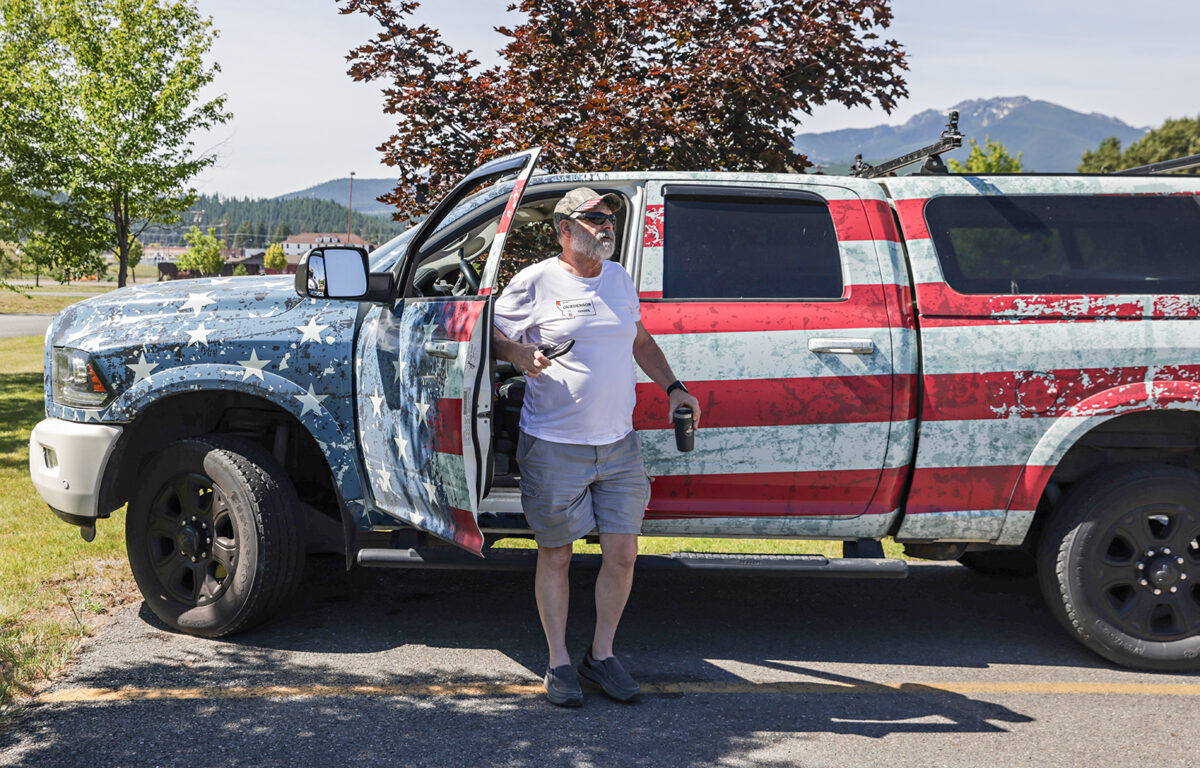
By Gunderson’s estimate, so much of Lincoln County’s land base is federally managed that the 2.2 million acres of the Kootenai National Forest fit almost exactly inside its outline. His solution is a state-led one. Gunderson has followed the question of federal-versus-state land management for 12 years, he said, and he has concluded that the two are “identical” except that federal projects can be litigated under the Equal Access to Justice Act — which allows individuals, small businesses and other organizations to recover attorney’s fees when they prevail in litigation — and state projects largely cannot. He pointed to the Good Neighbor Authority, under which the Forest Service lays out a timber sale and the state forester completes it, as a model, and said that if transferring all federal land is not feasible, the state could take “small pockets” of it. He cited a one-paragraph 2015 bill by then-Sen. Jennifer Fielder that would have barred the state from selling any transferred land as a measure he would consider re-introducing if elected.
“The federal lands are the worst neighbor that we could ever have,” he said. “They don’t pay taxes, they pull resources into that area even though we are not reimbursed for them.”
Gunderson ties the forest to the county’s finances. Lincoln County, he said, is “on the verge of insolvency,” and more fuels work could supply a proposed biomass generator in Libby and eventually a small log mill. On the 2025 property tax overhaul, he said the reform “wasn’t adequate,” but he offered no specific replacement. “I’m what you would call a natural resource nerd,” he said, adding that he has begun consulting colleagues with tax expertise and expects “viable solutions” to emerge in the 2027 session.
Jameson, for his part, has little interest in disputing the fire danger. He cited testimony from an interim legislative committee that about one-third of fire suppression costs are incurred in high-risk areas, mostly in the wildland-urban interface, and said a century of fire suppression has produced more high-intensity fires. His prescription is prescribed burning, more Forest Service jobs, wider use of Good Neighbor Authority and stewardship agreements, and sustainable logging outside the wildland-urban interface. Montana, he said, has lost 36 mills in 36 years, and the state now imports lumber from Canada.
He also wants a use for the slash piles that logging contractors burn because hauling the material out of the woods does not pay, and he said a biomass facility could supply one.
Where he parts from Gunderson most sharply is on the environment and on what he expects from the Trump administration. Jameson said his top concerns are selenium contamination of the Kootenai River watershed from Canadian coal mines, the rescission of the federal roadless rule and inefficiency in logging. And he put “no data centers” at the center of his campaign, arguing that the region’s water, dam and federal land make it a target for developers, as has happened elsewhere in the Northwest.
Selenium is the issue on which the candidates are furthest apart. Lake Koocanusa’s site-specific standard, adopted in 2020, is 0.8 micrograms per liter, tighter than the 1.5 micrograms per liter federal standard. Lincoln County commissioners petitioned the Department of Environmental Quality to loosen it, and the department denied the petition on Sept. 2, 2025, calling a change premature while international studies continue. Gunderson has led legislative efforts to weaken the standard and has downplayed selenium pollution at recent candidate forums.
He told the Beacon that he doubts the harm of selenium has been demonstrated, despite scientific evidence showing otherwise. “I’m still 12 years later asking where’s that two-headed trout,” he said. He argued that selenium concentrations in the Kootenai are exceeded in other places in Montana and that the lake is singled out because it is a transboundary waterway, and he said that if elected he would ask DEQ to compare current levels with those before the standard was tightened.
At the center of the selenium dispute is Lake Koocanusa, which straddles the Montana-Canada border and is part of the Kootenai River watershed that stretches from British Columbia’s Elk River Valley through Montana and Idaho and into the Columbia River. For decades, coal mines have polluted B.C.’s Elk River with elevated concentrations of selenium. The trout population of the upper Fording River, located below Teck’s mines, collapsed in recent years and the company was ordered to pay a $60 million fine under Canada’s Fisheries Act for its role.
In November 2023, the U.S. Geological Survey (USGS) published a report revealing that since 1984 selenium and nitrates in the Elk River have increased by 581% and 784%, respectively, signaling unprecedented increases of the pollutants in the watershed.
On Libby’s asbestos legacy, the two sound closer. Both said the Center for Asbestos Related Disease clinic’s closure left a hole, and both want a replacement for screening. Gunderson described a working group, about a year old, planning a research and screening facility for asbestos-related disease and the autoimmune conditions he said are appearing across the county with no explanation. He also said he was diagnosed in 2015 after coaching Little League and cutting Christmas trees in the contaminated Operable Unit 3 area, and that he never worked for W.R. Grace, which operated the vermiculite mine responsible for the community-wide exposure.
Jameson said screening should be free to residents, because no minimum exposure is safe and a person can feel healthy for decades. His grandfather, he said, died of asbestos-related disease.
The campaign has also been a quarrel over experience. Gunderson, who has the Montana Republican Party’s “Honor Roll” designation, said his legislative experience and his contacts “pretty much blows out everyone who will want to run against me,” and that his opponent lacks a voting record. “I’m not just looking for a title,” he said. “I’m actually here to serve.”
Jameson accepts that the arithmetic is against him. He studied the 76% to 24% split before filing, he said, and concluded that the only path was to go where a Democrat would not be expected to go: Republican meetings, county commission sessions, interim committees in Helena. He has questioned the Republican sheriff’s candidate about the jail, attended budget training in Billings, and says he gets along with Republican leaders. His message, he said, is that the district can step off “a very destructive course” at “the next stop,” and that the job of a senator is to understand the whole state, not only the county.
He described his trade, steering a drill bit through a thin layer of rock miles below the surface by reading data from behind, as “like driving a semi on an interstate using only your mirrors.”
“I’ve overcome a lot of challenges,” he said. “I’ve overcome the impossible before, and I’m ready to do it again.”