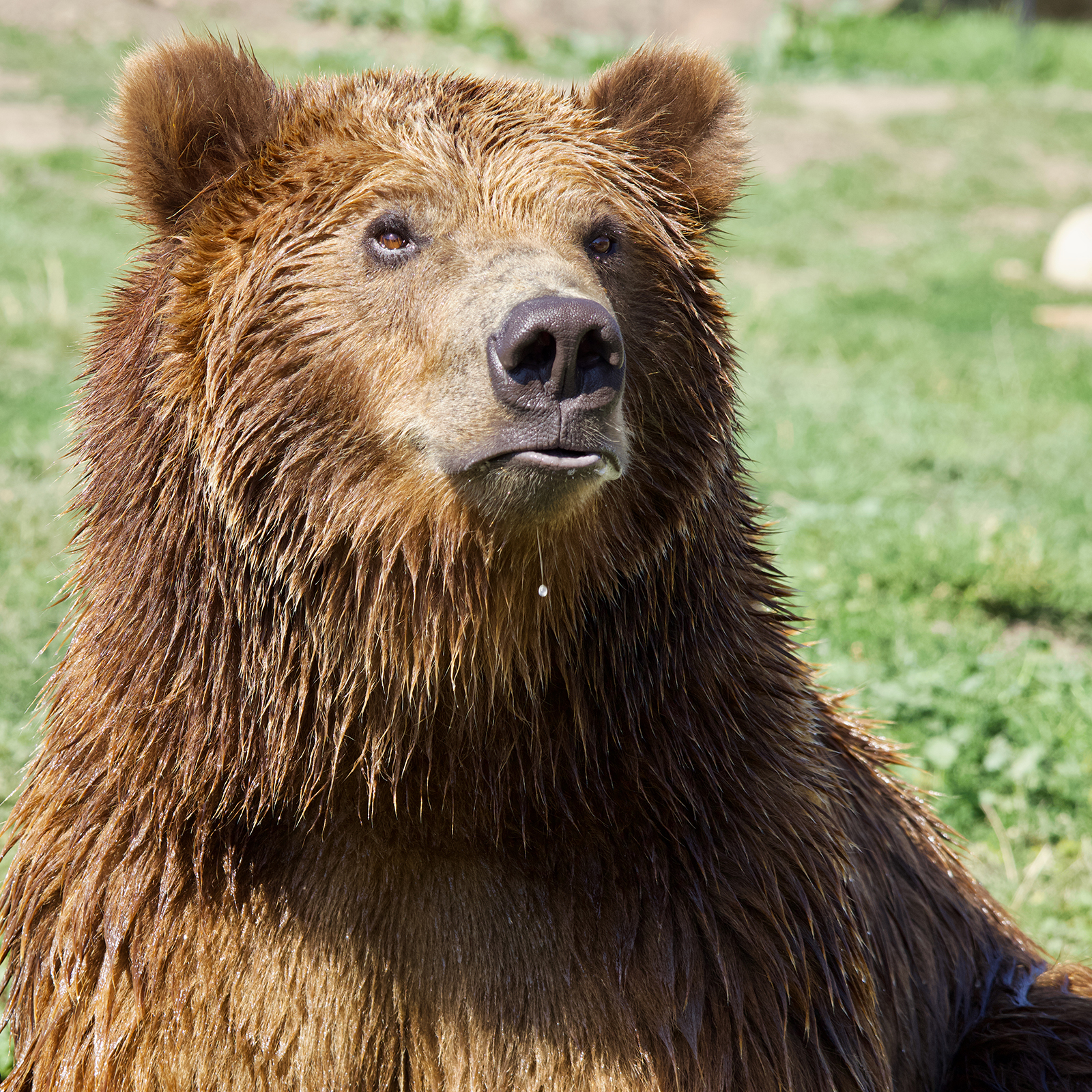
A family moves to the Swan Valley to live their dream. A few acres where they can have chickens, a garden, and maybe a few fruit trees. They hang bird feeders on the deck so they can watch the birds and are enchanted by an almost nightly sighting of a doe and her twin fawns. Life is so peaceful. But then one night they are awakened by a terrible racket in the coop as the stillness of night explodes with the sounds of chickens squawking and the family dog barking. They discover that their wildlife neighbors also include hungry bears.
This is a theoretical case, but closely depicts a scenario that might precede a bear encounter report in the Swan Valley. People are sometimes unaware of the bear attractants that exist on their properties. Garbage is the number one attractant — followed by chickens. Swan Valley Bear Resources (SVBR) is an arm of Swan Valley Connections that offers free consultations to residents to secure or eliminate those attractants to prevent future human-bear conflicts.
Though unintentional, SVBR looks like it might be an abbreviation of “Save Bear,” which has been at the heart of the Swan Valley Bear Resources’ purpose since 2007, when bears in the Upper Swan Valley were dying at an alarming rate. The volume of human-bear conflicts occurring outweighed the degree of social tolerance, and agency bear managers were having to remove human-habituated and food-conditioned bears at an alarming rate.
Wildlife biologist Luke Lamar initially was in charge of SVBR, but as his responsibilities grew and he assumed the role of SVC’s managing director, Shane Lisowski became the organization’s Bear Conflict Prevention Coordinator. Lamar said SVBR formed to mitigate human-bear conflicts on both public and private lands. Its range of resources include a bear-resistant garbage container loaner program, an electric fencing program, property consultations, and educational events and presentations.
The mission of SVBR is to offer community resources to promote coexistence between people and bears. They operate as a collaboration of local nonprofit organizations and community members with the U.S. Forest Service, Montana Fish, Wildlife and Parks and U.S. Fish and Wildlife Service, as well as other non-governmental partners in natural resource management. Through that growing sphere of influence, SVBR is able to pool resources and expertise to get ahead of human-bear conflicts in the Swan Valley.
With garbage standing out as the number one cause of human-bear conflicts, SVBR started a loaner program for bear-resistant garbage containers, providing them to property owners for an indefinite period of time. The containers are free, but donations are welcome so that the nonprofit organization can continue to buy more trash containers. Containers are purchased with funds raised by SVC and with support from variety of federal and state grant programs, foundations, and private donations. To date SVC has loaned out over 575 trash cans and 32 bear-resistant dumpsters.
Lamar said he’s observed that a single bear incident for a homeowner may indicate a recurring problem; if food and garbage are not secured as bears move through an area, the neighborhood becomes a buffet table loaded with delicious options for a hungry bear. Because some residents in the Swan Valley haul their trash as far as 30 miles to the nearest transfer site, Lamar said trash builds up. He’s noticed it left in the back of a pickup until the next dump run, providing easy forage for a bear.
Garbage is one of the more obvious attractants along with human and dog food left outside, chickens and other small livestock, grain, vegetable gardens, berry patches and orchards. Other attractants that might not be so obvious to property owners are dirty barbecue grills, birdfeeders, outside freezers and grain-based beverages stored in a cooler or deck refrigerator. Some of the more surprising attractants are found in places such as saunas or bathhouses where soap, essential oils, and toothpaste might be stored. Items commonly found in shops such as motor oil, antifreeze, paints, cleaning agents and windshield wiper fluid are also known to attract bears even though they don’t eat them. For some reason, they also love to tear into rubber and foam found in upholstered furniture in ATVS, hot tubs and cars. A complete list of attractants can be found on the SVBR website page at https://www.swanvalleyconnections.org/swan-valley-bear-resources
The expanding human population in the Swan Valley along with a growing bear population has increased the need for services to avoid human-bear conflicts. Lamar said newcomers sometimes buy their Montana homes sight-unseen and are naïve about the wildlife that share their neighborhood, telling him, “There’s bears in the valley bottoms? I thought they just lived in the wilderness!” In reality, bears spend a lot of time in the river bottoms in the valley corridors and regularly pass through neighborhoods and along area trails.
While doing an electric fence consult, SVBR’s Shane Lisowski had the property owner tell him that they didn’t think they had any bear sign, even though they chose to be proactive by planning an electrified chicken coop. While doing the property inspection, Lisowski found bear scat and well-defined bear tracks in the mud. Lamar notes, “They live in our backyards without us knowing it.”
It’s not only newcomers who have had to revise their thinking and practices regarding wildlife as a growing population of people and bears increases the chances of conflict. Lamar said some of the longer-term residents experiencing bear problems tell him, “We never had a problem until now.”
He said one of the more memorable incidents occurred in 2019 when a collared bear they named Windfall (after the area where it was collared) started getting into garbage along with her three cubs. Neighbors failed to report the incidents because they didn’t want to get the bears in trouble. Lamar said it was ironic given that an instance of bear tolerance worked against the bear. Over time, the bears became more habituated and conditioned to human food and the conflicts grew until the mother bear had to be trapped and euthanized. Two of the three cubs were also trapped and relocated at the Grizzly Bear and Wolf Discovery Center in West Yellowstone where they were named Condi and Seeley after their homeland. The third cub was able to avoid the trap and was left to survive on its own.
For Lamar, the case highlighted the importance of reporting a human-bear conflict as soon as possible, before the bear can become habituated and food-conditioned, which can raise human safety concerns as the bears learned to associate attractants and areas around people’s homes as a food source. This can result in a death sentence for the bear.
Last fall, a bear broke into 17 different structures, including eight that were occupied when he broke down the door. Any bear activity or human-bear conflicts should be reported immediately to Montana Fish, Wildlife and Parks’ bear-management specialists. Lamar said the bear was clever enough to avoid culvert traps set by FWP.
SVBR has recently expanded its services from the upper Swan to Ferndale, which has become known as a hotbed for bears, and to Bigfork, where bears are known to occasionally roam through downtown. In 2022, a grizzly bear was trapped on Electric Avenue, which is the main thoroughfare through downtown Bigfork, but also a historic bear corridor between the Swan Mountains and Flathead Lake.
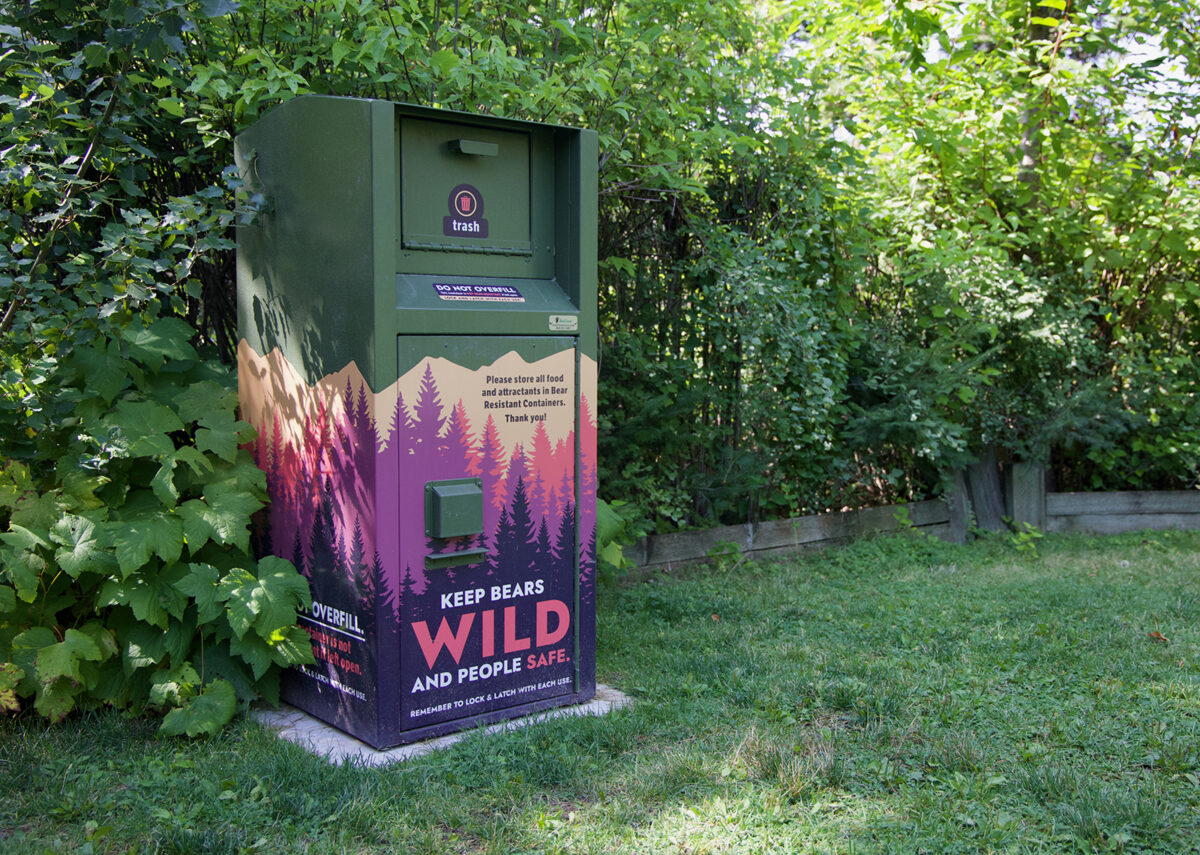
This spring SVBR collaborated with Community Foundation for a Better Bigfork (CFBB), People and Carnivores out of Bozeman, along with other Bigfork organizations, to install seven metal bear-resistant trash cans throughout downtown Bigfork and at Sliter Park. The colorful cans read, “Keep bears wild and people safe,” the hallmark of their mission.
SVC collaborations are based on making connections. Lisowski introduced the A-Bar in Ferndale to Full Circle Diesel to replace their grease trap. The company offers the only bear-resistant grease trap on the market and will install it and pick up cooking oil for free.
Almost 20 years after SVBR was started, Lamar said the organization has tracked a reduction in human-bear conflicts, fewer agency removals, and fewer mortalities in spite of the increasingly overlapping populations. He notes, “We still have occasional conflicts, but they have been dramatically reduced.” In 2025, there was only one grizzly mortality caused by human interaction. A resident in Swan Valley killed an adult female grizzly bear in self-defense when the bear charged him after disturbing his livestock and dog.
The history of human-bear conflicts tied to human feeding is colorful, going back to the 1880s when the open dumps behind park hotels began to attract bears. In the early 1900s, some of the freshly founded national parks actually set up bleachers and feeding tables to entertain park visitors. A sign at a feeding area set up for bears near Old Faithful in Yellowstone read, “Lunch counter for bears only.” A photo taken in 1922 shows Park Superintendent Horace Albright eating pancakes with bears along with the boast, “What a Nat. Park will bring.” In the 1930s, as many as 70 grizzlies came to the feeding table.
The feedings led to “bear hold-ups” in which bears would actually stop traffic and approach cars in search of food, breaking into concessions buildings in Yellowstone. Visitors were injured trying to hand-feed the bears, many of which were euthanized.
There were also open garbage pits where bears congregated in Glacier National Park, resulting in the bears becoming habituated and associating humans with food. In 1967, the infamous “Night of the Grizzlies” resulted in the attack and death of two campers in two separate incidents. The tragedy signaled a pivotal moment in bear management, prompting closures of open garbage dumps, the widespread use of bear-proof trash cans and implementation of strict food storage rules.
Bears that become habituated are usually removed or euthanized, which spurned the grim catch phrase, “A fed bear is a dead bear.”
SVBR’s electric fencing program helps property owners secure attractants such as chicken coops, small livestock, gardens, orchards and beehives from bear visits. When properly installed and maintained they are considered 100 percent effective. The organization installed 15 fences last year and will probably install a similar number this year.
When Chris and Jan Moore moved to the Swan Valley, they knew they wanted a garden space. “The more we read about gardening in Montana,” Chris said, “the more we realized the need to have fencing to keep the deer out, but with composting and fruit trees, there was a need for fencing to keep the bears out as well.”
After the garden space was established (but not planted) and a deer fence installed, they met with Lamar who helped them “marry their deer fence with a bear fence.” They were provided with a detailed materials list and the SVC crew helped them build the bear fence. Afterwards they submitted receipts for material costs to the Defenders of Wildlife and were reimbursed half of their cost through their cost-share program. “The garden was planted including six fruit trees, multiple berry bushes, veggies and compost bins and in eight years we have never had a problem with bears in our garden despite seeing them or signs of them elsewhere on our property every year,” Chris said. The experience inspired Chris and Jan to join SVBR and, along with a number of other local volunteers, they created Bear Aware Bigfork (BAB) to foster bear awareness and neighborhood safety in the Bigfork and Ferndale communities.
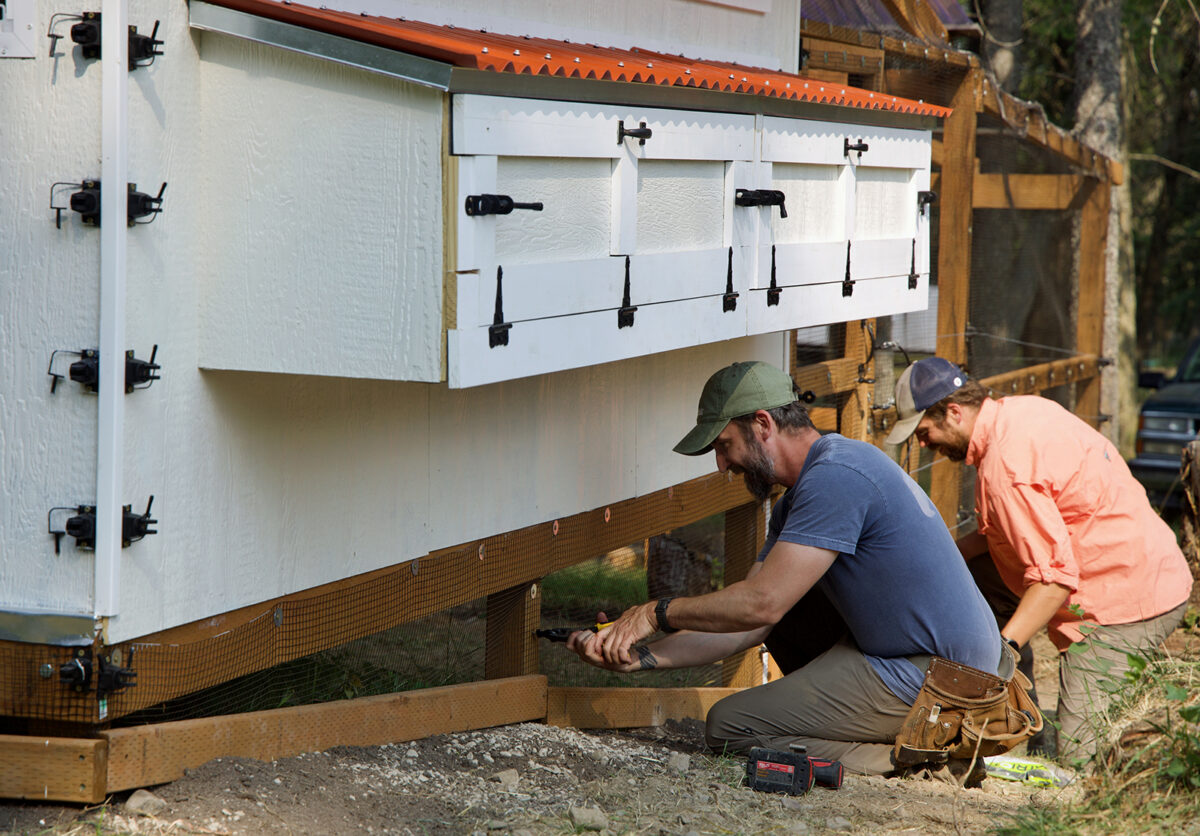
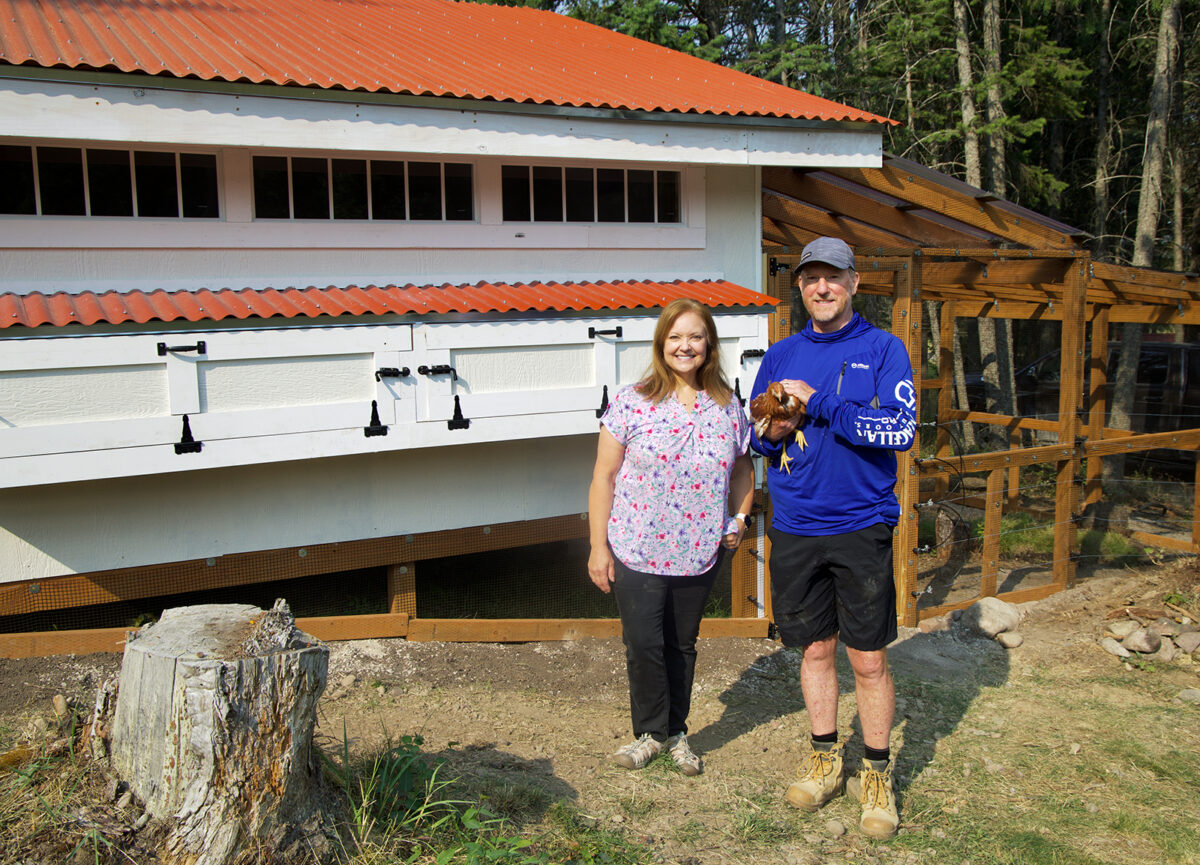
SVBR has helped plan and install 75 electric fences in the Swan Valley to date. Lisowski recently helped a couple near Many Lakes install an electric fence on their chicken coop. In one instance, what Lisowski called the “Taj Majal of chicken coops” posed special considerations with the number of doors that had to be electrified to prevent them from providing point of entries for a hungry bear.
After the site visit, Lisowski made a detailed blueprint for the system, but says plans often change as a project unfolds. “There is an art and science to making a proper bear fence.” He takes both esthetic and technical considerations while designing the fence.
Like many of SVC efforts, the fence included the help of other agencies. Ryan Wilbur, Conflict and Preservation Specialist for People and Carnivores, and Christine Lambert McCauley, who works as a conflict prevention specialist for USDA Wildlife and Services, joined Lisowski when it required a second day of work. SVC often partners with People and Carnivores who also offer trash-resistant containers and electric fence assistance.
Property owner Rob Fahy checked in with the crew and offered help on the project with the goal of wrapping it up that day. Rob, along with his wife, Diane, and daughter were excited for move-in day for 10 rapidly growing chickens that were housed in their basement until the electric fence was completed.
The chickens found their home just in time, for what Lamar predicts to be a busy year for bears. With widespread huckleberry failure this year the bears are moving to the valley floor to look for easier eats. He said data shows a direct correlation between a poor berry crop and increased human-bear conflicts.
If you have a bear conflict, contact:
ERIK WENUM
Wildlife Conflict Management Specialist
Montana Fish, Wildlife & Parks, Kalispell (R-1)
Cell: 406.250.0062
Home office: 406.756.1776
FWP R-1 office: 406.752.5501
JUSTINE VALLIERES
Wildlife Conflict Management Specialist
Montana Fish, Wildlife & Parks, Kalispell (R-1)
Cell: 406.250.1265
FWP R-1 office: 406.752.5501
SVC has several events that are held on an annual basis including a Bear Wake Up event held in Condon every April, to remind folks to contain their attractants as bears emerge from hibernation, a collaboration with Bear Aware Bigfork volunteers for a bear spray training event at the Bigfork VFW, and a Bear Fair that usually rotates between the upper and lower Swan watershed. In 2026 it was held in Bigfork, so in 2027 it will be staged in Condon. They also participate in HOA meetings to provide information and answer questions.
A monthly bear awareness column in the Bigfork Eagle newspaper covers various bear-related topics written by various partners.
This year they will partner with Bear Aware Bigfork to set up an informational table about fruit gleaning and assist with cider pressing during Tamarack Time, a cooking contest and tasting festival held in downtown Bigfork each year the second Saturday in October. This year the celebration will be on October 10.