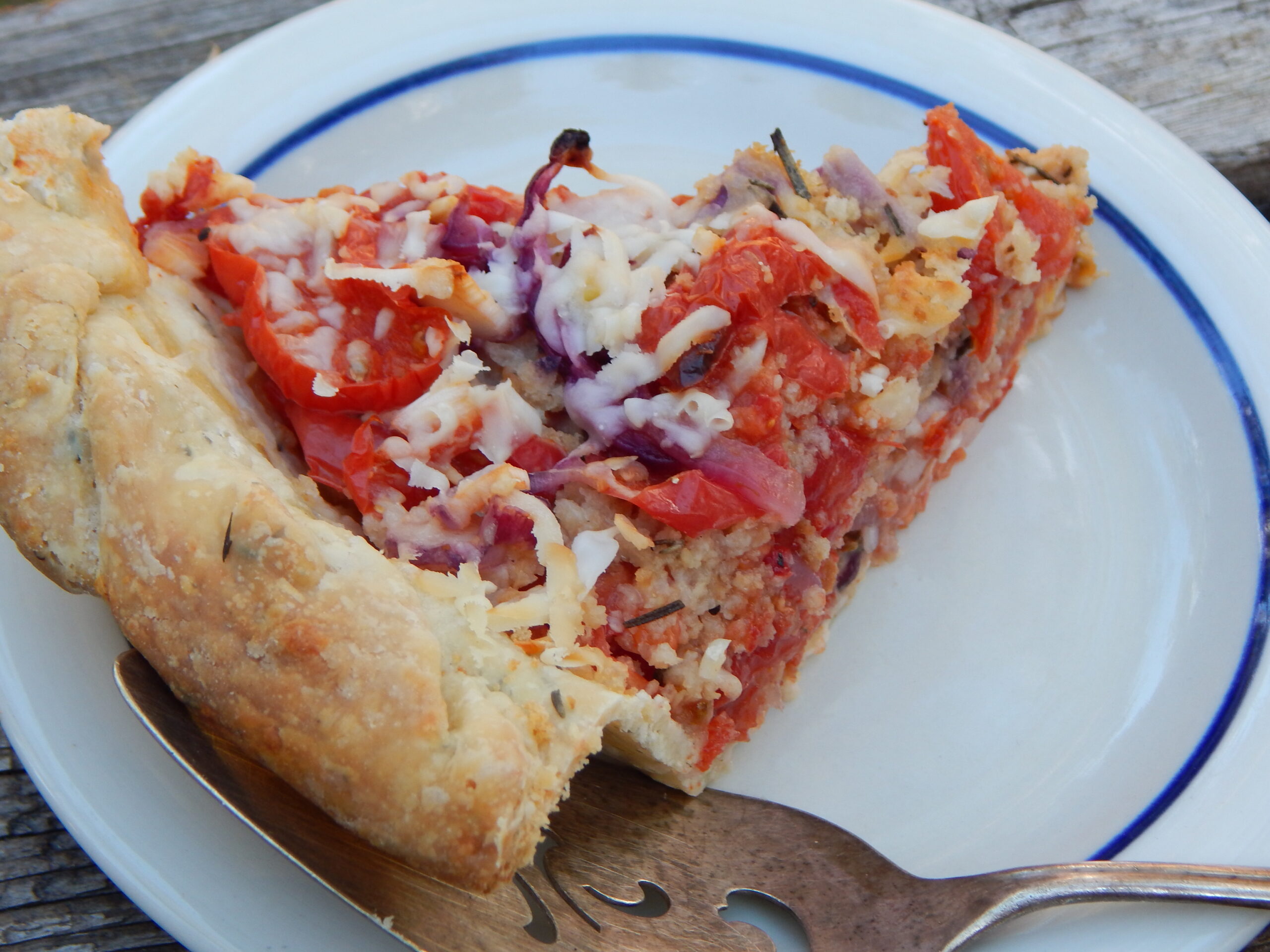
When my grandmother made her renowned pie crust, she always used the same simple ingredients, whether it would enclose a savory quiche or fruity dessert. I long did the same: I tweaked the fats in her version but otherwise left the ingredients basic and neutral.
As I started making galettes, I discovered that hints of flavor in the crust complement the filling without distracting from it. Citrus zest and a little sugar mixed into the dough brightens pears, plums or rhubarb and huckleberries in a galette or sweet pie.
For savory pies, like last week’s Late-Season Tomato Pie recipe, I flavor the dough with herbs and cheese. I mixed rosemary into the tomato filling, so I use thyme in the crust to avoid a single, overpowering herb. Other options include chives, parsley or sage.
For the cheese, firm Parmesan or Asiago melts into the crust as it bakes without becoming excessively oily. Sharp or extra-sharp cheddar also works well and is a delicious option for not just savory pies and quiche but also Crumble-Top Deep-Dish Apple Pie. I grate Parmesan with a microplane and then sprinkle and fold it into the flour to ensure there are no clumps and the cheese distributes evenly as I mix the dough and roll the crust.
In general, the colder the ingredients, the better if you want a flaky pie crust. But coconut oil needs slightly different treatment. It starts to melt around 75°F, so when I’m baking fruit pies in summer, I set it in the fridge – briefly. Leave it in the fridge too long, and the oil becomes so solid that it’s hard to measure and work into the flour. In fall, my house is usually cool enough that I don’t need to prechill coconut oil.
Cheese and Herb Pie Crust
Makes 1 single crust
1-1/4 cups unbleached all-purpose flour
1 teaspoon flaky kosher salt
1 teaspoon dried thyme
1/4 cup finely grated Parmesan or Asiago cheese
1/4 cup unsalted butter, chilled and diced
1/4 cup coconut oil
3-4 tablespoons ice-cold water
In a mixing bowl, combine the flour, salt and thyme. Sprinkle on and then fold in the cheese until it is distributed evenly. Work in the butter and coconut oil with your fingertips until the dough becomes mealy. Drizzle in a tablespoon of water at a time, working it in briefly with your fingers, until the dough starts to cling together. On a piece of parchment paper, press the dough into a disk, wrap it up and chill for at least one hour.
When ready to use the dough, remove the disk from the refrigerator. On a lightly floured surface, roll it out until the diameter is at least 1 inch larger than the top of a standard 9-inch pie plate. Fit the dough into the pie plate, trimming away any that hangs more than an inch over the edge. Flute the remaining dough along the plate’s lip, pinching it between your thumb and forefinger to form a wavy edge.
Julie Laing is a Bigfork-based cookbook author and food blogger. Learn more about this month’s pie and cookie workshops at TwiceAsTasty.com.