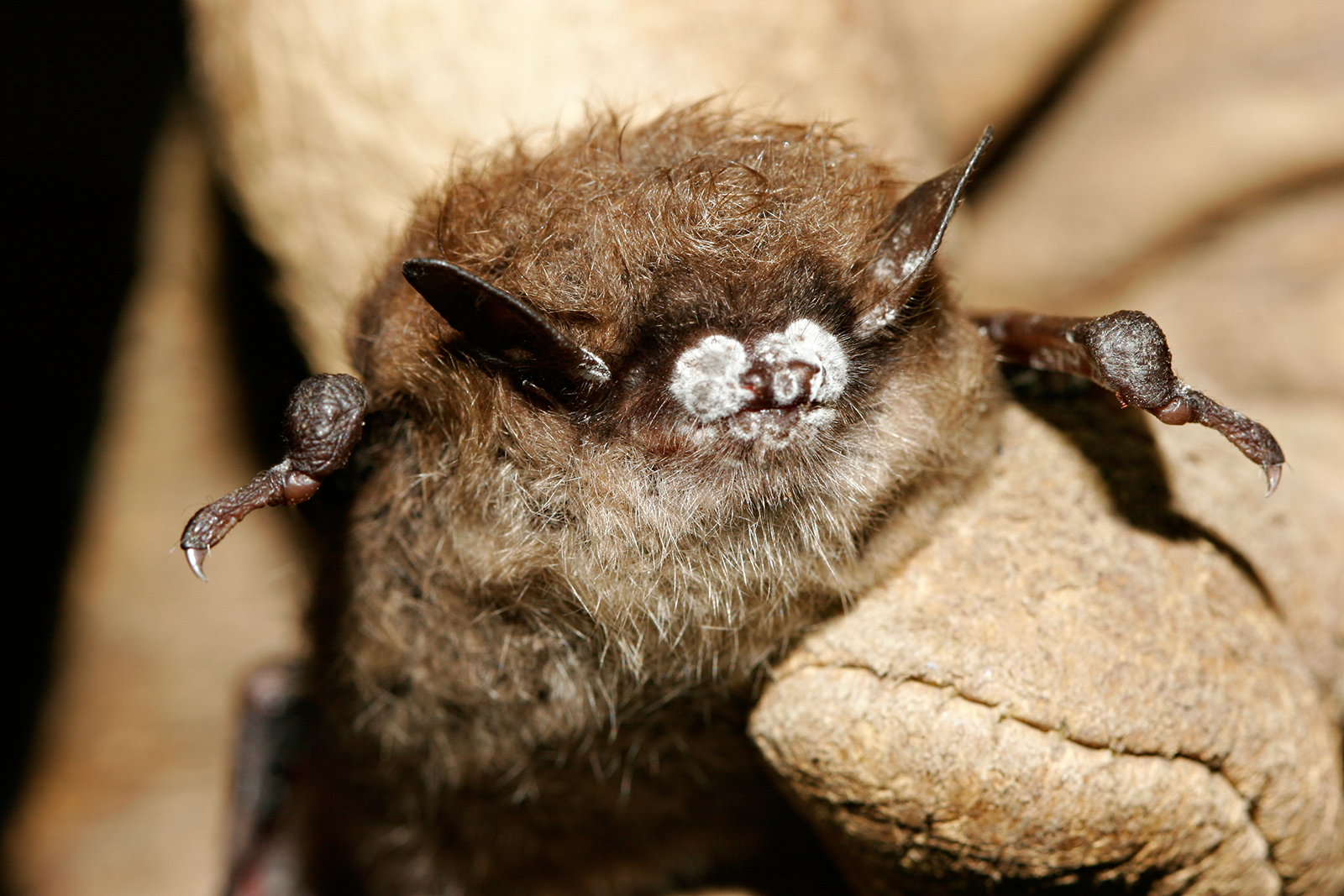
Glacier National Park has confirmed its first case of white-nose syndrome (WNS) after a deceased little brown bat found near St. Mary in May tested positive for the disease. Officials have also confirmed the presence of Pseudogymnoascus destructans, the fungus that causes WNS, in live bats on the east side of the park. The fungal disease, which has decimated bat populations across the country, had yet to reach the barriers of Glacier.
Named for the white growth around infected bats’ muzzles, WNS attacks bats by upsetting their internal regulation systems. Pseudogymnoascus destructans thrives in cold, dark environments and often infects bats as they hibernate in caves. With a reduced metabolic rate and a lowered body temperature, infected bats are forced awake during the winter when natural resources are scarce.
By the time bats exhibit the telltale signs of WNS, the disease has already depleted their fat reserves and left them starving and dehydrated. With a high death rate, WNS has caused some species, including the little brown bat, to see populations decline by up to 90%.
Glacier confirmed its first case Oct. 21. Officials warned that a decimated bat population could have far-reaching effects within the park.
“All bats in Glacier National Park are insectivores and can eat up to 1,200 mosquitoes an hour, making evening outings more enjoyable for humans,” Autumn Sifuentes, spokesperson for Glacier, wrote in a statement to the Beacon. “Bats also take up where birds leave off in the day, eating many of the forest insect pests that can kill trees stressed from environmental factors, like drought and mild winters. Therefore, bats can have a direct connection to decreasing wildfire risks.”
“In short, loss of bats could cause ripple effects through the park’s ecosystem,” Sifuentes added.
The fungal disease, which likely originated in Europe or Asia, was initially detected in the U.S. in 2006 in New York. Since then, it has been confirmed in 42 states. In 2025, a pair of bats captured in Libby tested positive for WNS, marking the first cases in Montana west of the Continental Divide.
As WNS swept westward across the country, Glacier set its sights on better understanding the park’s bat populations. In 2011, park biologists conducted their first bat inventory study and have now documented 10 species living in the park. The program has since grown, providing vital information from trends in little brown bat maternity roosts to year-round relative bat abundance. During monitoring efforts, biologists have been testing any captured bats for WNS before releasing them back to the wild.
In 2024, the park began participating in an ongoing study to test a potential vaccine against WNS. Biologists captured 529 bats and delivered a vaccine to half and a placebo to the rest. Participating bats were fitted with tags and researchers have continued to monitor the survival rates of the two groups. The study was a preventive measure, but WNS presence in the park will start to put that vaccine to the test.
“We will continue with our monitoring efforts to best assess the impacts of WNS now that it has arrived,” Sifuentes said. “We will also continue our vaccination efforts to assess long-term survival rates of bats receiving the vaccine vs. bats that have not received the vaccine.”
In the meantime, park officials have urged visitors to aid in the prevention of WNS. While current evidence suggests that the disease does not infect humans and pets, people can transport the fungus through items such as hiking gear, shoes and clothing. The disease was likely introduced to the U.S. through contaminated gear, Sifuentes said, and parkgoers can avoid further spread by following decontamination guidelines after visiting cave sites.
Park officials recommend that visitors change into clean clothes and footwear. Used clothing shoes and gear should be washed with hot water and detergent, soaking items in 131°F water for five minutes or a 1:10 bleach solution for 10 minutes. Nonwashable gear should be disinfected with wipes or 70% isopropyl alcohol.
Visitors should avoid contact with sick or dead bats and report any sightings to park rangers. More information on WNS and its impact can be found online.