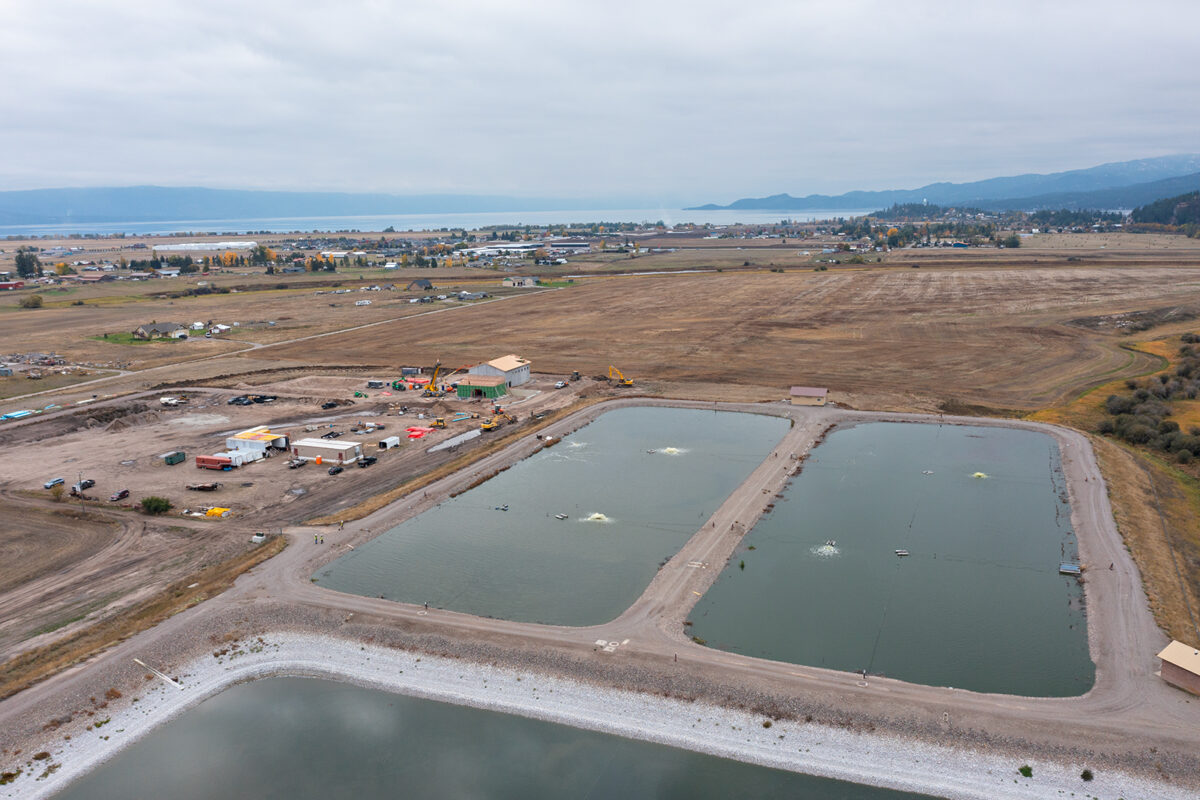
Lakeside County Water and Sewer District ratepayers may soon see a new bond assessed on their properties to help get the district’s expansion project over the finish line. District officials began designing a new facility in 2021, after realizing the existing wastewater holding ponds were at capacity.
The $14.8 million special assessment would finance the final stages of phase two of the project, which is currently under construction. The bond would be spread evenly across the district’s 1,442 current properties over 30 years with a 3% interest rate, resulting in an annual assessment of $520.55 per property. Somers ratepayers would also help cover the associated costs, likely through a rate increase.
As future subdivisions are built and added to the district, the annual payment will be distributed among the new lots, lowering the average cost for all properties, General Manager Rodney Olson said.
“We felt after studying it with a bond council and our board and looking at it, that was the fairest way, most equitable way for everyone involved really,” Olson said.
Construction began last year with phase one, which included a new headworks building, septage receiving facility, a buried main connecting the facilities and replacement of one of the district’s lift stations. Phase one also secured a wastewater treatment permit allowing the district to discharge treated wastewater into groundwater through three rapid infiltration basins (RIBs). The district won’t begin using the permit until phase two, which includes the treatment plant, is complete.
Ratepayers saw a rate increase last year to help cover operating costs associated with upgrading the facilities. Phase one was paid for largely with grant funds the district pursued in 2021.
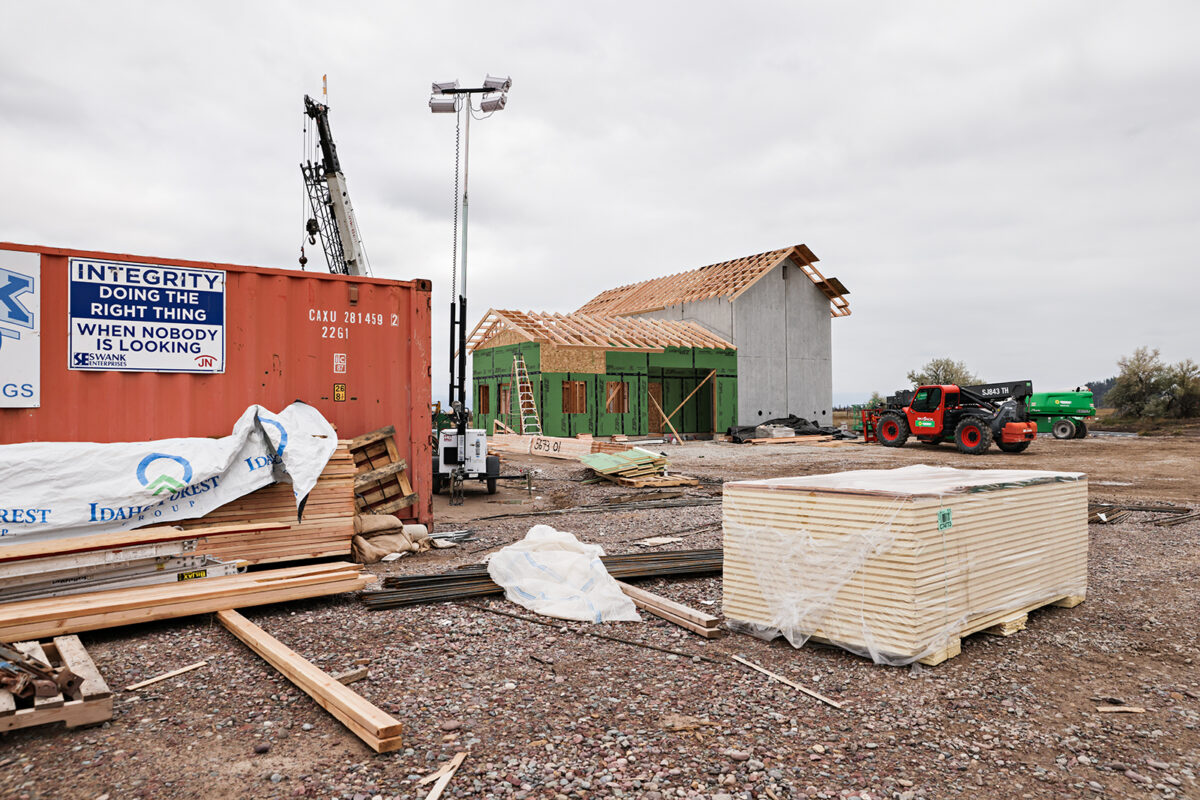
Phase two began earlier this year. Along with construction of the district’s wastewater treatment plant, which will use sequencing batch reactor (SBR) technology, it includes sludge-handling facilities, three RIBs and interconnected piping. Crews are currently working on ground improvements for the plant: a series of holes 20 to 40 feet deep designed to support it in an earthquake.
“If you had an earthquake, the soil would liquify and wash the construction away, so this will support that,” Olson said. “This $14 million is for the next phase after that ground improvement is done and what that is, is all the concrete work.
“There’s a lot of concrete, a lot of rebar to build the basins for the treatment process and then the building where all the blowers, the pumps, the plumbing and the electricity and all that goes,” he added. “That is specifically what this is for.”
The district had considered a low-interest loan from the Montana Department of Environmental Quality’s state revolving fund to pay for phase two. Repaying the loan would have required raising rates again, Olson said.
“We felt like the impact on that as a capital project would be better through the tax rate, after studying the whole thing rather than impact monthly fees,” he said. “It’ll come around annually.”
The board also considered assessing the bond by property value or size. After reviewing all three models with a bond counsel in Missoula, it chose to assess all properties equally as the “most equitable” option, Olson said.
The district is still pursuing grants to help with the project, particularly to fund additional tertiary treatment, including a membrane bioreactor and PFAS treatment. Olson said the district could be awarded a $10 million grant through U.S. Sen. Tim Sheehy’s office, $3 million through U.S. Rep. Ryan Zinke’s office and another $500,000 through the state.
At the Nov. 17 board meeting, where the special assessment was announced, Lakeside and Somers ratepayers packed the Lakeside Quick Response Unit building for public comment. Many had questions about the funds, and several called for greater transparency with the community.
“As I began to write down my comments, I became angry at what I see as a consistent no’s to Lakeside’s concerns — concerns about our safety, our property rights, our ability to thrive in this beautiful place,” Lakeside resident Melissa Villemuir said. She pointed to controversial issues in the lake town over the years, including construction of an alpine coaster, rezoning efforts and the Discovery Land Company’s proposed subdivision and private golf course.
“It seems to me that we don’t have a voice here in Lakeside, and I’m trying to figure out how to make transparency, how to create a situation in which we all understand what’s going on, because it’s so frustrating,” she said.
Board members answered some questions and explained their decision-making process. They encouraged residents with questions to email the district or stop by its office.
“I can agree with you that there’s been a lot of moving parts with this thing and that’s been that way for our board also,” Olson said. “A lot of changes from 2021 when we started this project.”
Ratepayers have 30 days to submit written protests against the proposed assessments. Protests must be in writing, identify the protester’s property in the district, be signed by all owners of the property. Written protests must be delivered to the district’s secretary.
The board will also be holding a public hearing on the special assessment on Jan. 5 at 5:30 p.m. in the Lakeside Quick Response Unit at 201 Bills Road.