Flathead Breweries Tap into Generational Trends with Fresh Flavors, Diversified Menus
As declining demand triggers a nationwide drop in craft beer production, Flathead Valley brewery owners are adapting their business models with alternative fermentation, non-alcoholic beverages, expanded food menus and community events
By Maggie Dresser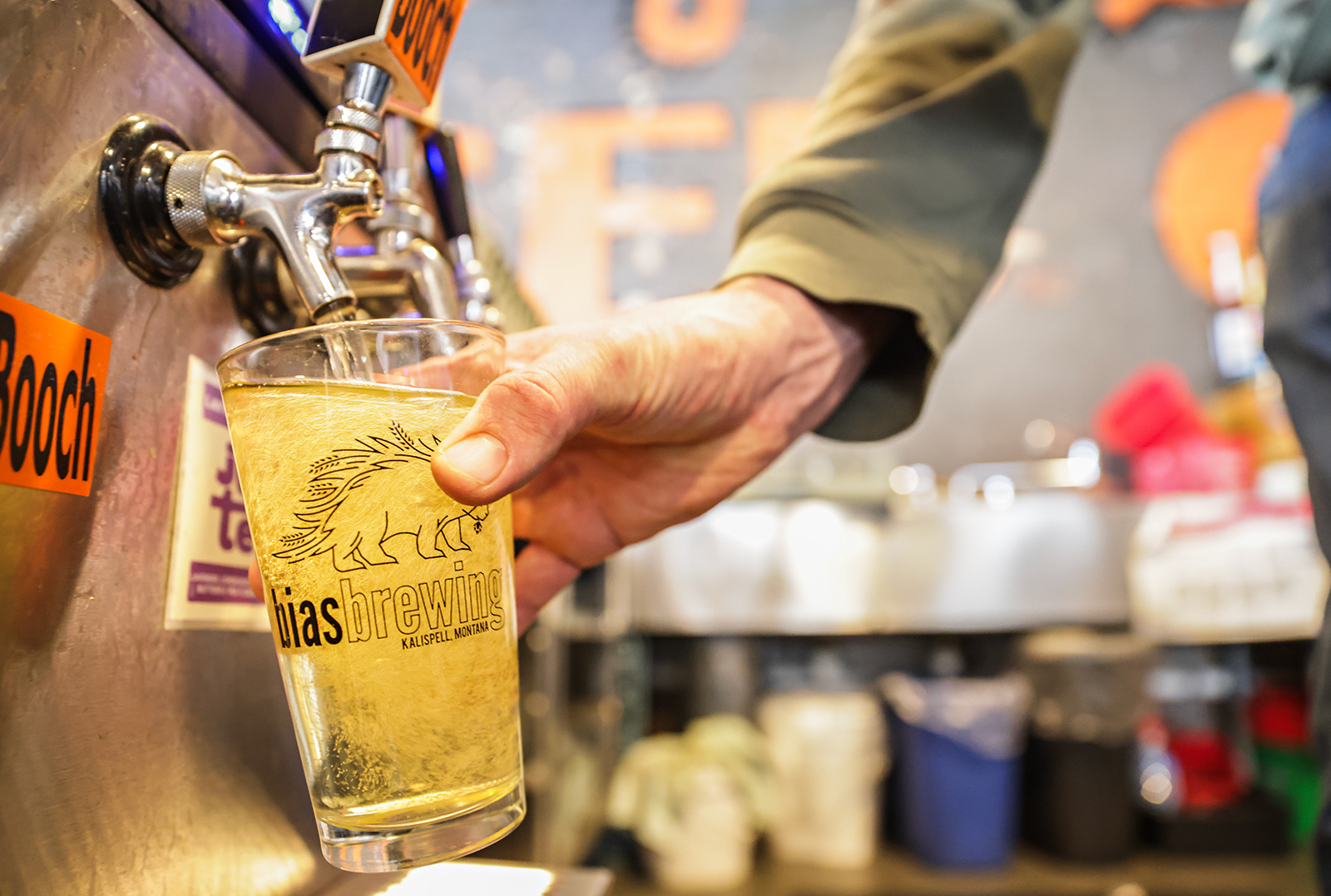
In 2018 when Gabe Mariman and Adam Robertson transitioned from a homebrewing operation in Whitefish to launch Bias Brewing in downtown Kalispell, they started pouring craft beers like sours and blondes at their initial location on First Avenue East. To add some variety to the taproom, they also saw a market for alternatives and launched a hard seltzer within the first three months of opening.
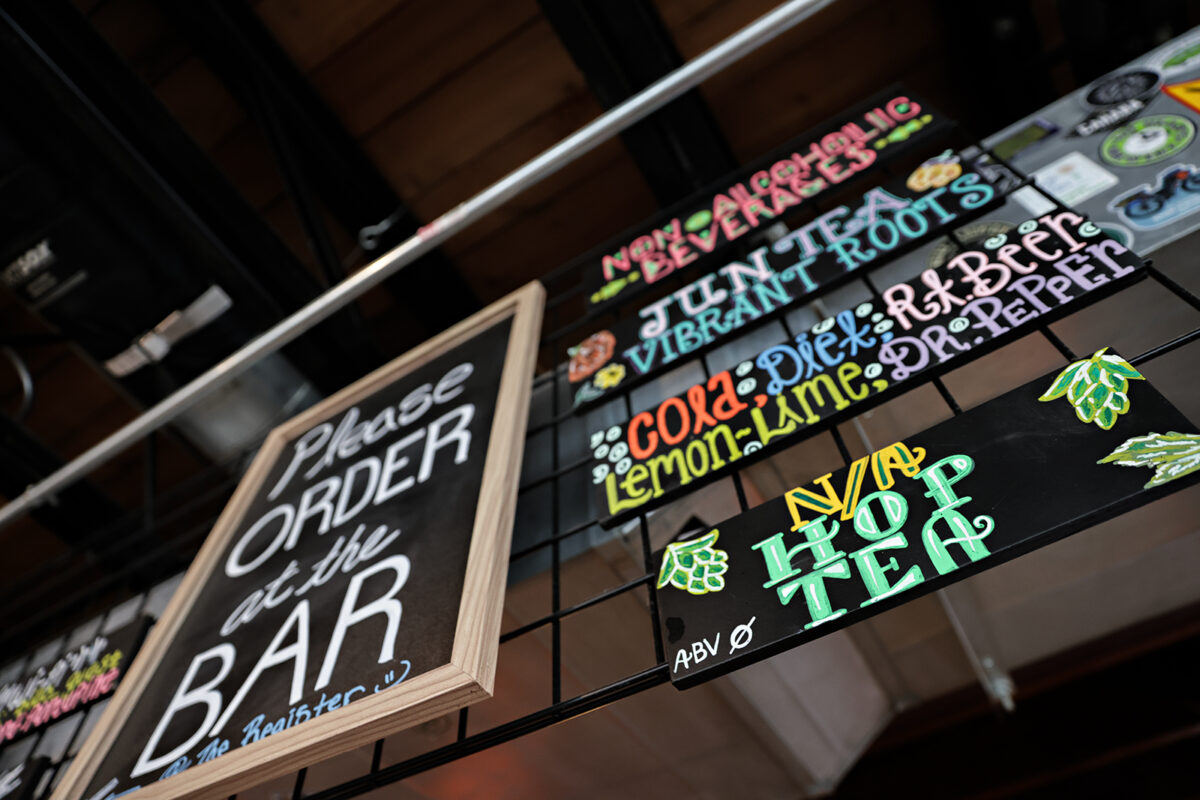
Seven years later at a new location on Main Street, Bias Brewing now offers 20 beverages on tap, roughly 20% of which includes alternative alcoholic options like seltzer, wine and cider along with non-alcoholic (NA) elixirs like hop tea, Jun Tea probiotic drinks and cans of Athletic Brewing’s NA beer. As demand rises, he also plans to brew an NA beer in-house and add ready-to-drink cocktails to the menu.
“I think people want variety,” Mariman said. “They want alternative fermented products — they want non-alcoholic options.”
Industry experts say the seltzer craze, which started gaining popularity around the same time Bias opened, marked the beginning of an era when tastes dramatically started expanding beyond beer, wine and spirits. But as palette diversity grew, demand for beer has steadily declined while other drinks compete for changing consumer cravings.
“Seltzer was the big first thing that cut into space on the shelf in the grocery store,” Mariman said. “That space that was being taken up by craft beer now has seltzer and ready-to-drink cocktails like a huckleberry lemon shandy or a Moscow Mule or canned gin and tonic. You’ve got all these products that are now replacing craft beer.”
According to nationwide Brewers Association data, craft beer production last year dropped 3.9% compared to 2023 and the overall beer market was down 1.2%. In Montana, craft beer production has dropped 5% in that same timeframe and has dipped 12% from its peak four years ago.
But experts say there’s another reason kegs of beer aren’t being tapped.
Young people aren’t partying.
According to a recent Gallup survey, which has been tracking drinking behavior since 1939, the percentage of U.S. adults who say they consume alcohol has fallen to a record low of 54%. Only 50% of people age 18 to 34 drink, less than the 56% of people age 35 and over who consume alcohol, according to survey results.
That number has seen a dramatic drop in recent years, slipping four percentage points for all ages since 2024. From 1997 to 2023, at least 60% of Americans reported drinking alcohol. By contrast, alcohol consumption peaked between 1974 and 1981, hovering around 70%.
The decline coincides with wellness trends and recent research that indicates alcohol negatively impacts health, according to the Gallup report.
To compensate for the shifting demand, brewery owners are expanding their menus.
“People are being more health-conscious and they are drinking less and breweries are responding with non-alcoholic offerings,” Montana Brewers Association Executive Director Matt Leow said. “We are also seeing generational trends. Previous generations consumed more alcohol and more beer than young people do today.”
Historically, Leow said Gen X was part of a demographic who catapulted the craft beer renaissance in the 1990s. But as that generation ages out of the drinking scene, Gen Z and young Millenials aren’t picking up the slack.
Trends like Dry January, which began as a public health initiative in 2012 to promote a “positive and fun-filled month of sobriety,” as described by the National Library of Medicine, has created a headache for the hospitality industry.
“Dry January is a tough time for restaurants,” Leow said. “People pull back after the holidays and don’t spend as much and then you add Dry January — it has been a tough time in the craft brewery world.”
But as craft beer sales decline, those losses are being offset by their diversified business models that also include food menus.
On average, nationwide draught beer sales at individual breweries are declining by an average of $73 per month while non-beer categories show growth, according to a Brewers Association midyear production survey. Average food sales have increased by $42 per month while liquor and draught cider sales are rising $15 per month.
At Bonsai Brewing Project in Whitefish, owners Charlotte Lubert and Daniel Wright say food sales represent two-thirds of their profit while beer only accounts for one-third.
Lubert and Wright, too, have noticed that younger generations don’t consume as much alcohol as those that came before them. While the brewery offers bottles of kombucha and cans of Athletic, they have also toyed with the idea of launching a non-alcoholic beer. But since the process is more time intensive, Wright says it’s not practical from a business standpoint.
“The generation below me just doesn’t drink that much,” Wright said. “In terms of beer, I think craft beer is kind of a hard sell to a huge number of people.”
According to an IBISWorld report, nationwide craft beer revenue hovered near or below zero growth between 2022 and 2025 while breweries experience persistent year-to-year revenue swings as the “drink less, drink better” mindset takes hold.
Younger drinkers, according to the report, increasingly favor spirits, ready-to-drink beverages like cocktails in a can and non-alcoholic beverages while IPA “fatigue” takes hold.
The pandemic also shifted behaviors from bar visits to at-home drinking, which continues through 2025. Craft beer revenue plunged by 25.2% in 2020 and rebounded by 15.5% in 2021.
Looking ahead, the report identifies “health and wellness” as a dominant force in new product development over the next five years as breweries move beyond basic NA and light lagers. Experts forecast a surge in gluten-reduced and low-calorie, low ABV beer options while there will also be more CBD-infused drinks in states where laws are unrestrictive.
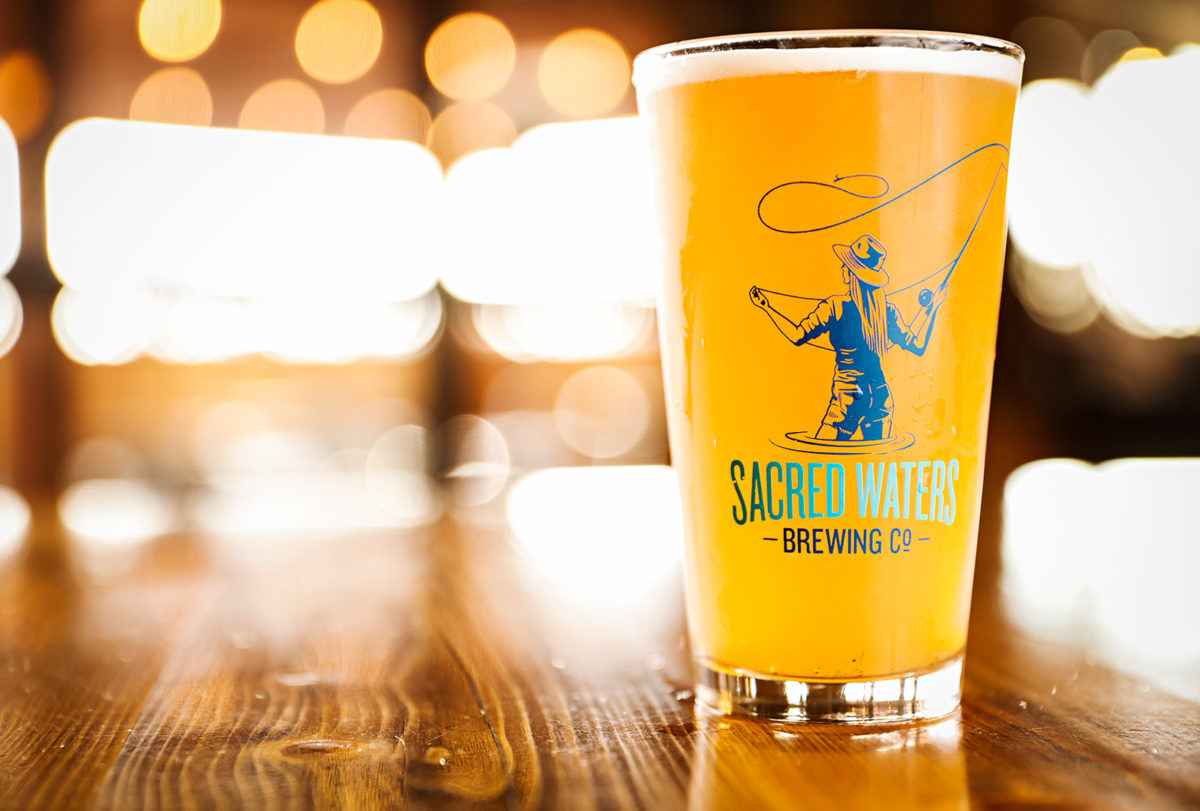
“With different health trends going on, we have to adjust for those things,” said Jackie Evans, the general manager of Sacred Waters Brewing Company in Evergreen. “There’s been a big growth in gluten-free and different things going on in the food industry. That’s where we’re seeing things like seltzers and NA products. We are working on other types of products, but I think really high-quality beer will always have a place.”
Even as craft beer demand drops, Leow at the Montana Brewers Association says that decline hasn’t translated to a dramatic closure of businesses. In recent years, statewide brewery numbers have hovered around 100, which is an exponential figure compared to the statewide inventory of breweries at the turn of the millennium.
Despite the diminished alcohol sales, nationwide brewery employment in 2024 rose by 3% as business models shift to focus on hospitality.
“Increasingly, I’m seeing our members adding a kitchen and buying a retail license so they can expand their hours and offer other products like wine or malt beverages,” Leow said. “A member said to me, ‘I started operating a brewery and now I’m running a restaurant.’ That’s a common story.”
But despite the shifting drinking trends, business owners say breweries remain a community fixture and a family-friendly destination.
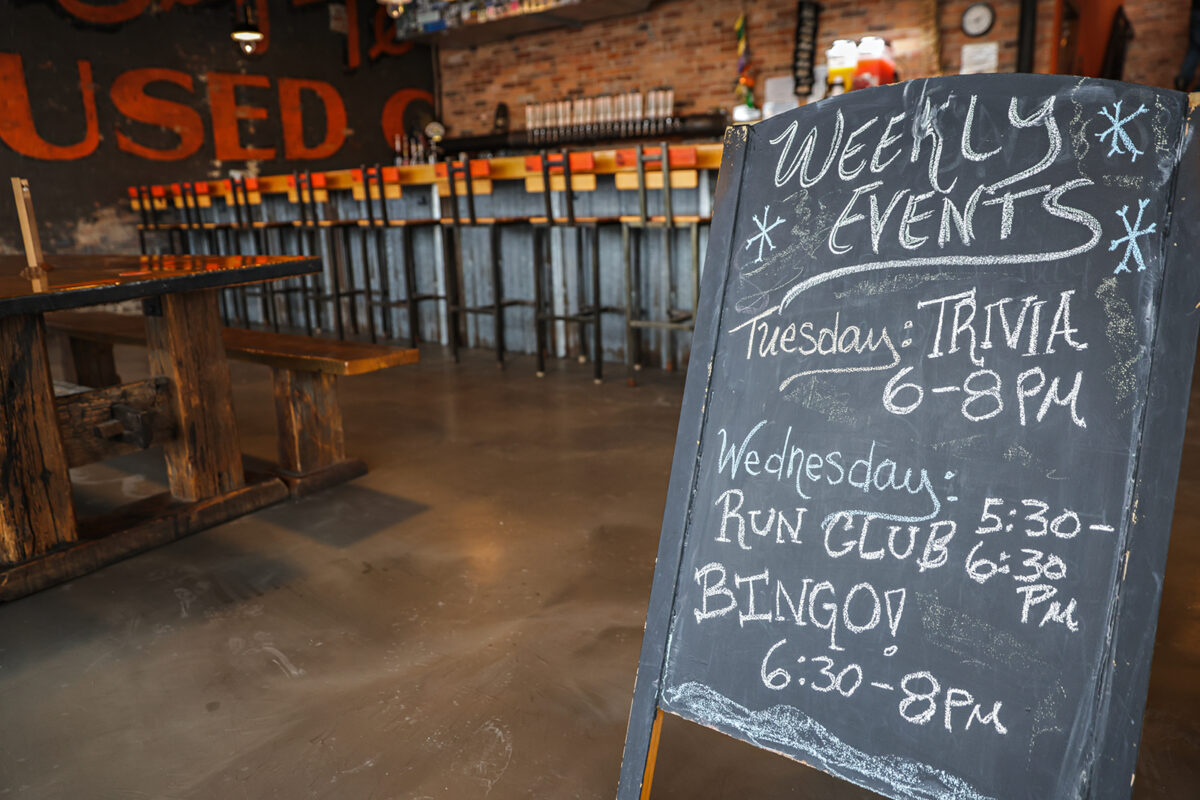
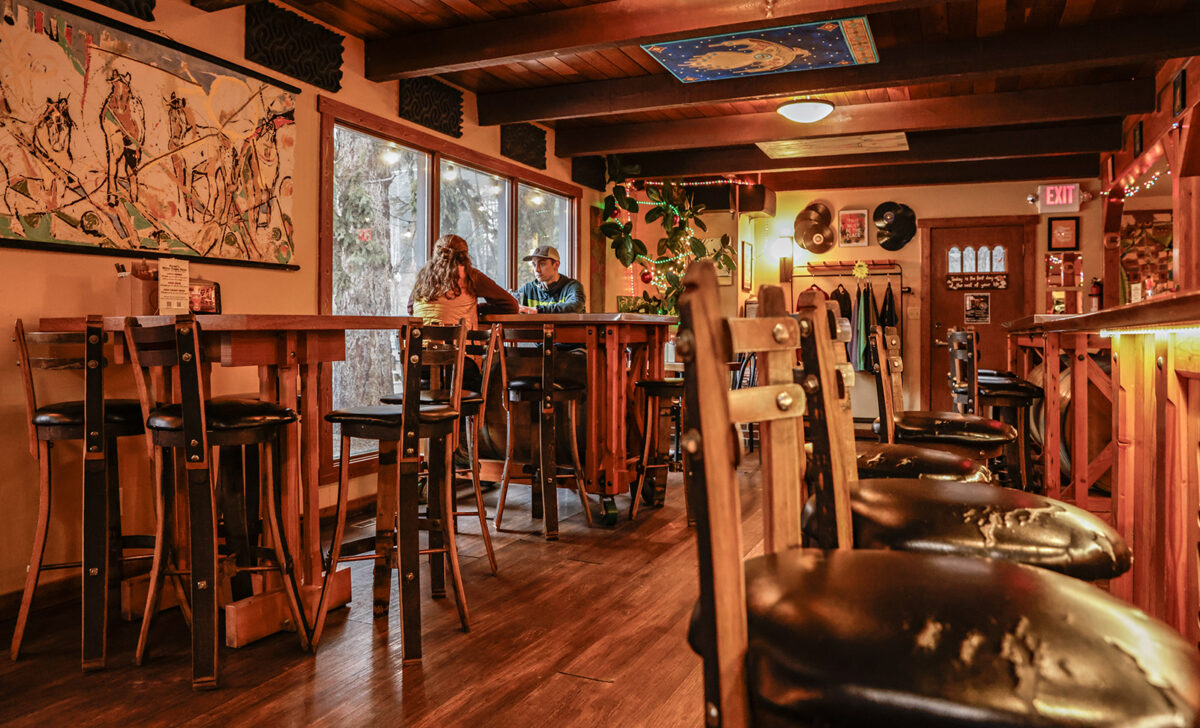
At Bias Brewing in Kalispell, Mariman operates a restaurant and he continues adding a variety of beverage options to the tap, which will include an NA beer soon. He also offers weekly events like Triva Tuesday, a running club and a monthly open mic night. In the last seven years, the brewery has raised $300,000 for local nonprofits while the Main Street location maintains a family-friendly atmosphere.
“We want to attract families and leaders and volunteers into our brewery to help us continue our mission of building community,” he added.
Like Bias, Sacred Waters in Evergreen offers adjacent events with an all-ages atmosphere while taking advantage of the brewery’s proximity to the Bob Marshall Wilderness and the Three Forks of the Flathead River system, with brew names like “The Bob” IPA and the “South Fork Session.”
“A local brewery has taken a place in the culture with community events and donations,” Evans said. “Alcohol and drinking preferences aside, we will remain an important community hub. We will continue to expand and change with the times, but there’s always a need for people to gather.”