Montana Supreme Court Denies Held Plaintiffs’ Bid to Block Laws Enacted by 2025 Legislature
A five-justice majority of the court wrote that the plaintiffs had failed to demonstrate that their lawsuit meets the ‘emergency’ threshold that enables litigants to bypass a lower court
By Amanda Eggert, Montana Free Press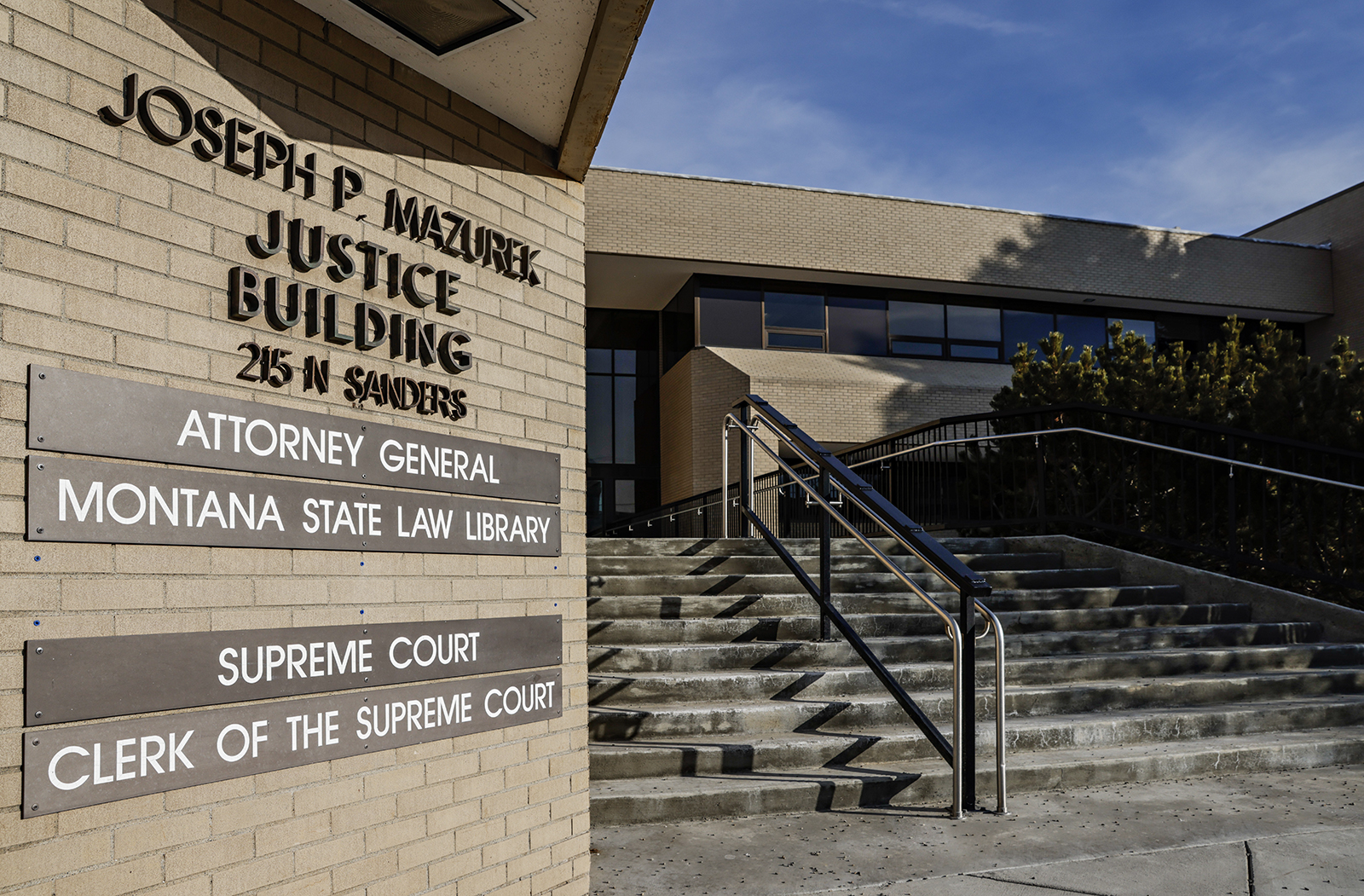
The Montana Supreme Court will not — at least in the immediate future — take up another round of constitutional climate litigation filed by 13 young Montanans who successfully sued the state over its energy-permitting practices.
In a short order issued Dec. 23, a five-justice majority wrote that Rikki Held and her co-plaintiffs failed to meet the “emergency” threshold necessary to bypass a lower court with the new litigation. That means it could be years before Montanans have clarity on the legality of three bills the state’s Republican-controlled Legislature passed earlier this year. Those bills revise the environmental review process and outline how state agencies should analyze and disclose greenhouse gas emissions for large projects that come under their permitting purview.
Our Children’s Trust, the Oregon-based nonprofit law firm representing the plaintiffs, argued in its Dec. 10 brief that the 2025 Legislature failed to act in accordance with the Supreme Court’s 2024 determination that Montanans’ constitutional right to a “clean and healthful environment” includes a “stable climate system.” The attorneys contend that the bills lawmakers passed in response to that ruling will only worsen the plaintiffs’ climate-related harms and put “blinders back on state agencies to ensure their ongoing approval of fossil fuel permits.”
The Dec. 23 order doesn’t evaluate the merits of the plaintiffs’ challenge to the laws. Rather, Chief Justice Cory Swanson cast a wary eye on the seven-month period between when the laws went into effect and when the plaintiffs filed the petition. He directed the plaintiffs to follow established legal process for challenging the constitutionality of legislation.
“[Petitioners’ argue that the petition raises pure issues of law that have the requisite urgency because — quoting the First Judicial District Court’s Conclusions of Law in the Held litigation — ‘[e]very additional ton of GHG emissions exacerbates Plaintiffs’ injuries and risks locking in irreversible climate injuries,’ making litigation in the trial courts and the normal appeal process inadequate,” Swanson wrote. “Although Petitioners argue that development of a factual record is unnecessary given the factual record in Held, they do not address why a district court would not be equipped to consider the legal issues in a timely fashion and permit them to present an appeal in the ordinary course. In fact, district courts entertain constitutional challenges routinely and have the tools to address allegations of irreparable harm or similar questions of urgency,”
Justices Beth Baker, Jim Shea, Katherine Bidgaray and Ingrid Gustafson also signed the order.
Roger Sullivan, a Kalispell-based attorney who represented the plaintiffs in both the initial 2020 case and the current case, told Montana Free Press the plaintiffs are evaluating their options for next steps.
“We were disappointed with the Supreme Court’s decision, but also recognize the court’s discretion,” Sullivan said. “The court recognized and acknowledged in the quote from our pleadings the substantive issue of climate change we are dealing with. But procedurally, they took the position that it should begin in the district court, not the Supreme Court.”
House Speaker Brandon Ler, R-Savage, who sponsored one of the bills at issue, wrote in a statement to MTFP that the court “respected both due process and the separation of powers” with its order.
“While we have had clear disagreements with the Court when it has ventured into policymaking, this ruling properly affirms that sweeping legal and factual questions should be developed in trial courts, not rushed through extraordinary judicial shortcuts,” Ler wrote.
The Legislature passed the three bills in April. Gov. Greg Gianforte signed them into law on May 1.
Under Senate Bill 221, state agencies, including the Department of Environmental Quality, are directed to inventory large projects’ emissions of six greenhouse gases, including carbon dioxide, the most common one. SB 221 also specifies that such emissions “will not be regulated” by state agencies and directs the state not to incorporate “upstream” or “downstream” emissions in its environmental analyses. The law effectively bars agencies from considering emissions associated with the extraction, processing and transportation of fossil fuels.
House Bill 285 eliminated significant portions of the Montana Environmental Policy Act, which dates to 1971 and was expanded by the 1972 state Constitution. During a hearing on the bill in February, Ler said his measure is intended to keep industry-adverse groups from using MEPA to block large projects with “endless hurdles for responsible development.”
House Bill 291 prohibits state agencies like DEQ from adopting air quality standards stricter than those outlined in federal laws such as the Clean Air Act. It was introduced in late January, shortly after President Donald Trump started his second term and began dismantling his predecessor’s climate policies.
The initial round of Held v. Montana litigation wound through the judicial system in a nearly five-year process involving thousands of pages of filings, a seven-day district court trial and an oral argument before the state Supreme Court.
Sullivan told MTFP he anticipates his clients will proceed with a district court filing, and that the new litigation, dubbed Held v. Montana II by Our Children’s Trust, will reach a faster conclusion than the initial litigation.
“We would certainly hope that the timeline be substantially shorter because of the precedent of the Held v. Montana case,” he said. “We anticipate that the district court applying that precedent will foreshorten that time substantially.”
This story originally appeared in the Montana Free Press, which can be found online at montanafreepress.org.