State Supreme Court Says Ballot Issue Aiming to Undo Citizens United Has Too Many Parts
The Supreme Court’s ruling backs the attorney general’s legal sufficiency finding on the initiative, in the latest answer on a slate of lawsuits regarding ballot issues trying to make it in front of voters this fall
By Mariah Thomas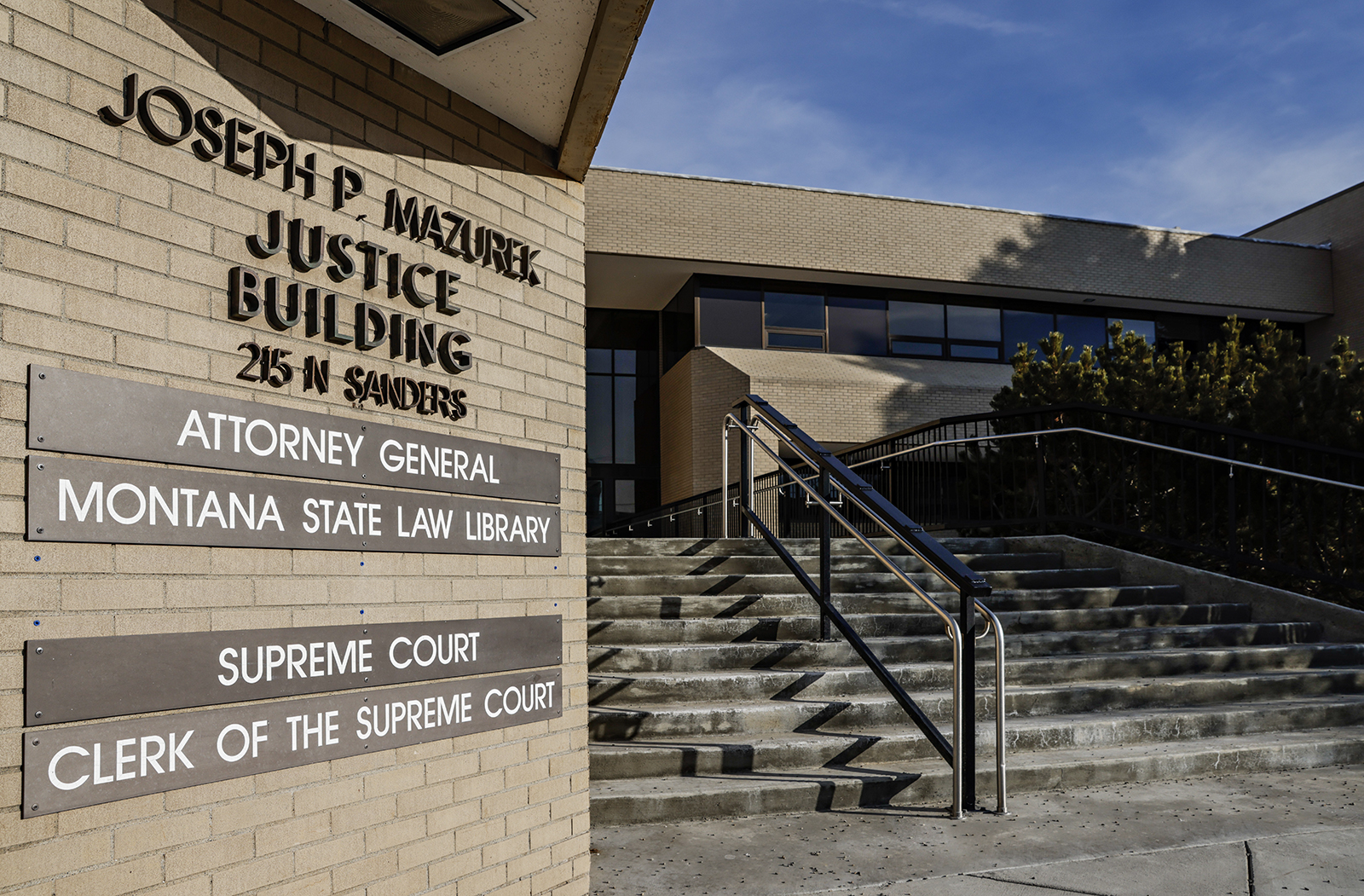
A ballot issue aimed at ending corporate spending in political campaigns was stopped in its tracks Tuesday after the Montana Supreme Court sided with the attorney general’s finding that the issue was legally insufficient.
A group of former officeholders devised “The Montana Plan,” or Ballot Issue 4, last summer. It gained national attention for its potential as a new approach to overturn Citizens United. That 2010 Supreme Court decision opened the door for corporations to more heavily contribute to political campaigns and gave rise to super PACs — political action committees — that now hold major political influence.
Montana’s proposed ballot issue would have aimed to redefine the powers of corporations in Montana’s constitution. It would have done so by preventing “artificial persons” from contributing to campaigns and political action committees to impact elections. The proposed language defined an “artificial person” as a business, nonprofit or other incorporated and unincorporated entities operating in Montana.
The issue’s proponents have argued the effort falls in line with Montana’s long tradition of bucking against corporate interests in politics. The initiative’s primary advocate, Jeff Mangan, a former commissioner of political practices, traced that history back to the Copper Kings at a Kalispell presentation in October.
But the proposed measure, Attorney General Austin Knudsen found, violated Montana’s separate-vote principle, which guards against logrolling multiple issues into a single ballot initiative. In a unanimous decision, the state’s Supreme Court sided with the AG’s legal sufficiency finding.
In his majority opinion, Justice Jim Rice wrote the initiative would force voters to make a choice on two issues. First, it asked voters to choose whether to limit the rights of “artificial persons”; and second, to choose whether to limit their powers to “engage in activities other than election and ballot issue activities in significant but unspecified other ways.”
“The clear import of Article XIV, Section 11, of the Montana Constitution, is that voters must be allowed to express their separate opinion as to each proposed amendment,” Rice wrote. “Accordingly, this Court is obligated to ensure the voters have the opportunity to cast separate votes for separate amendments without encumbering the people’s right to amend the Montana Constitution.”
Knudsen’s office heralded the decision Tuesday afternoon.
“As Attorney General Knudsen said from the beginning, this initiative would have misled voters by amending multiple sections of the Montana constitution,” said Chase Scheuer, the AG’s deputy communications director. “We are pleased the court unanimously came to the same conclusion. Attorney General Knudsen will continue to do his part to ensure Montanans know exactly what they’re voting for on election day.”
Mangan was not immediately available for comment.
The lawsuit about the Montana Plan is one of a slate of suits the AG’s office has contended with throughout the fall and winter. Other lawsuits focused on ballot issues aiming to protect nonpartisan courts and another aiming to protect the ballot initiative process. The lawsuits have stemmed either from rewrites or legal sufficiency findings on the proposed ballot issues.