Flathead Lake Rises to Unprecedented Winter Levels
The SKQ dam received over a million acre feet of water in December, compared to an average of 258,000 acre feet in the winter months
By Zoë Buhrmaster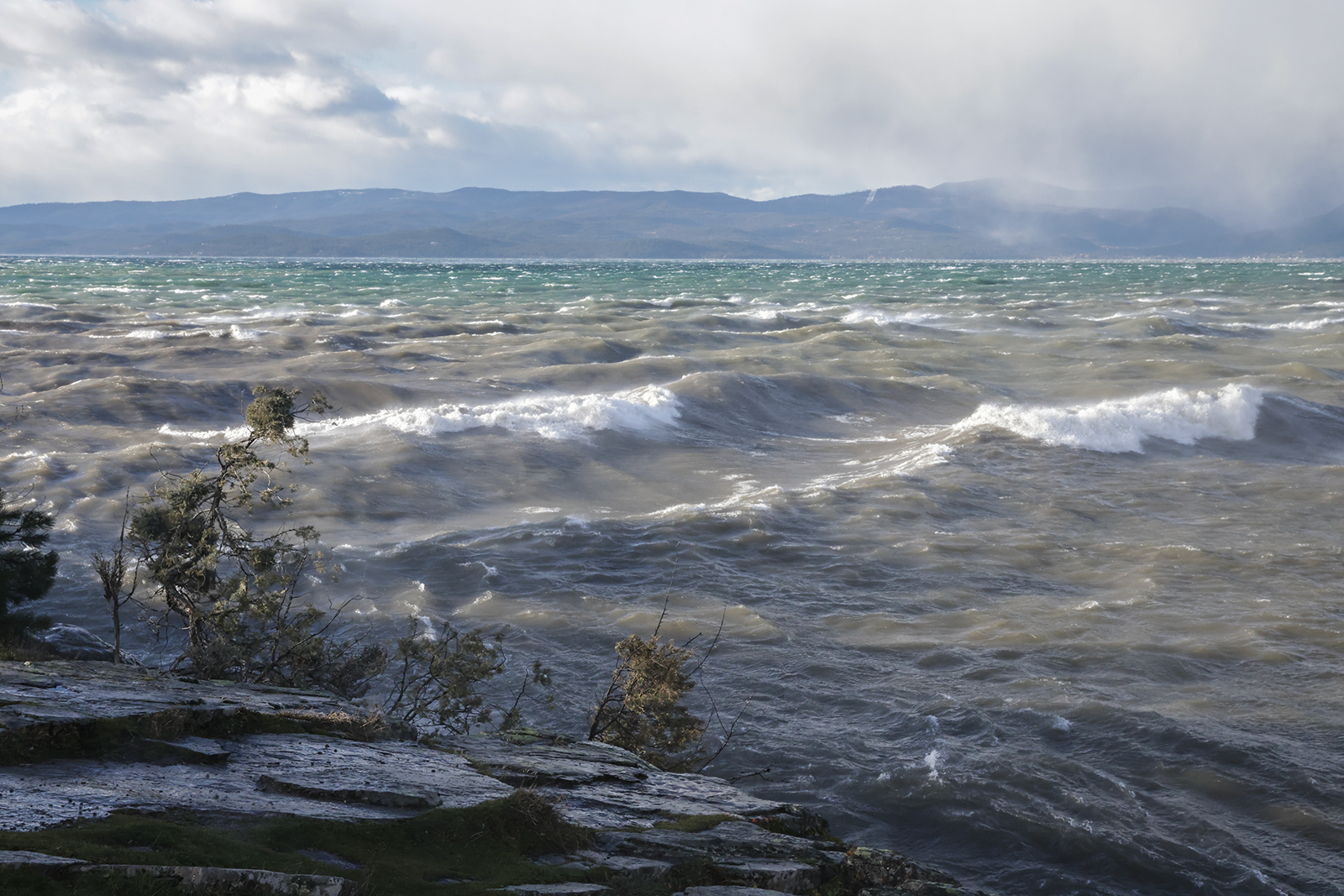
As the largest freshwater lake west of the Mississippi sits just below full pool at the beginning of January, Energy Keepers Inc. (EKI) CEO Brian Lipscomb reflected on the events of the past weeks — record-setting precipitation and higher than average temperatures — that led to Flathead Lake’s high winter levels. EKI operates the Se̓liš Ksanka Qĺispe’ (SKQ) dam located at the base of the lake and the head of the Lower Flathead River.
At the beginning of January, Flathead Lake sat at 2,892 feet, about 4 feet higher than normal for the winter months.
“We’re fuller now than we’ve ever seen, than I’ve ever seen in my entire life at this time of year,” Lipscomb said.
On average, the SKQ dam normally receives around 258,000 acre feet of water during the month of December, per the NOAA water supply forecast that dam operators use to map out water flow. This past December, however, as an atmospheric river and “warm, subtropical air” washed over northwest Montana, the dam received over a million acre feet of water, Lipscomb said. Flathead Lake rose to 2,892 feet, just shy of full pool at 2,893 feet.
The hydroelectric dam is responsible for managing the top 10 feet of Flathead Lake, between 2,883 and 2,893 feet, which totals 1.2 million acre feet in water storage.
“We almost received the entire amount of storage in December,” Lipscomb said. “We received 238% of our normal precipitation, much of it falling as rain on existing snow. This sent inflows into Flathead Lake soaring to over 300% of normal.”
In mid-December, massive waves from the full lake wreaked havoc on lakefront property owners’ docks as a violent windstorm tore across the Flathead Valley.
Larry Menghini lives south of Bigfork and watched as waves battered his dock, tipping over the boat lift. He recalls running out to attempt wrangling a rope over the lift to keep it from drifting away, when a wave broke over his head forcing him out of the water. The next day after the waves calmed down he returned to secure the lift, noticing several broken welds but unable to see what damages lay submerged. He helped neighbors clean up logs and pieces of broken docks that had washed up on their properties.
“I know we can’t predict Mother Nature and there was flooding downstream, but we can’t keep having damage like this,” Menghini said.
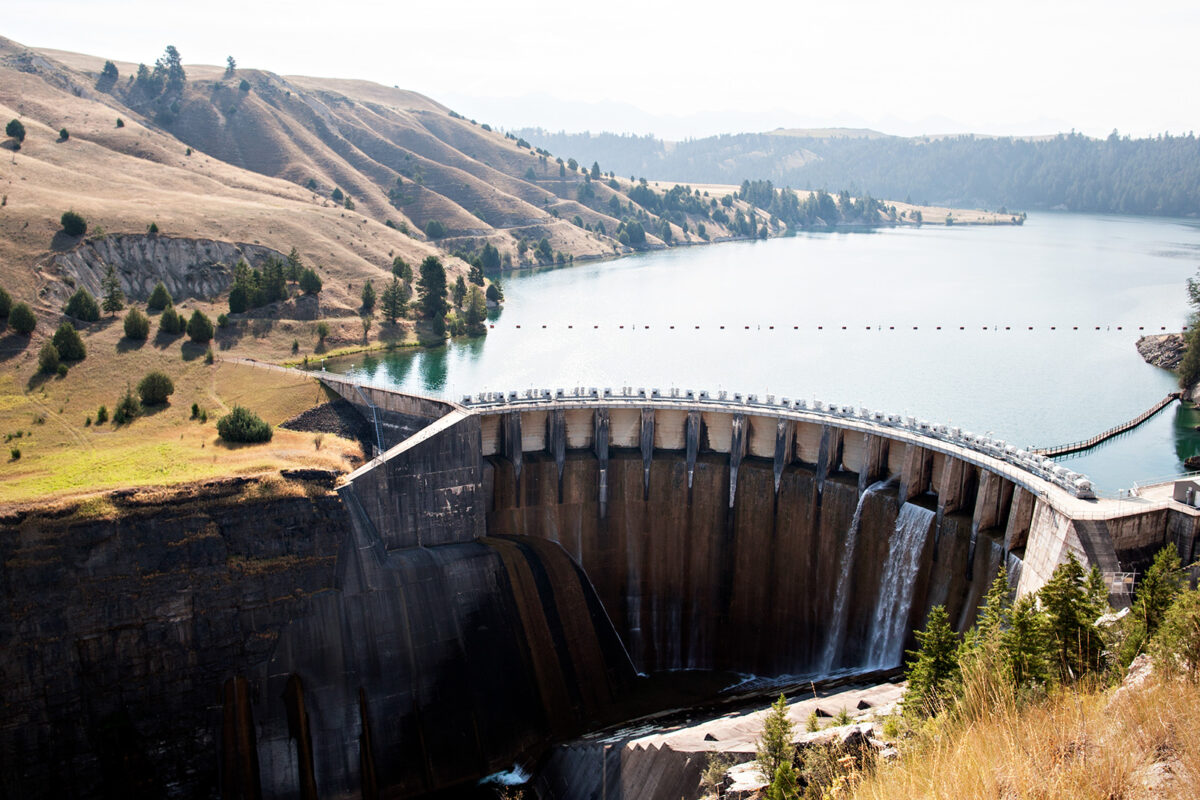
Per the dam’s regulatory license, EKI is responsible for managing the influx of water into the Lower Flathead River, which drains into the Columbia River Basin. Multiple sections along the Columbia River were under flood watch in December, and the confluence of the Willamette River and the Columbia River near the Port of Vancouver in Washington drew particular concern from hydrologists. The area experienced record-setting rain and flooding in nearby rivers and has a history of devastating floods in the populated area.
“That’s the biggest population center,” Lipscomb said. “But there was localized flooding all across the [Columbia River] basin.”
To help prevent downstream flooding, dam operators at EKI coordinated with the U.S. Army Corps of Engineers, the U.S. Bureau of Reclamation and other dam operators in the Columbia River basin. Operators filled regional storage reservoirs — including Flathead Lake, Lake Pend Oreille, Dworshak Reservoir, Lake Roosevelt and Umatilla Lake — to near capacity in order to successfully hold the Columbia River just below flood stage at the Port of Vancouver, Lipscomb said.
Now, as long-term forecasts transition to below-normal precipitation across the west, EKI and other federal partners are beginning to rapidly draft the reservoirs to accommodate for spring runoff. Lipscomb anticipates Flathead Lake will reach its lowest levels for the season by late March.
“We’ll just continue to draft through the next three months until we get to the lowest point,” he said. “By then, we’ll check the snow levels and make sure we have enough to refill.”
