FWP Investigating Illegal Pike Introduction at Kalispell’s Pine Grove Pond
After an angler hooked a pike at the popular family fishing site last fall, officials are trying to determine how the nonnative species ended up there. Tipsters with information about the illegal introduction could be eligible for a $3,500 reward.
By Tristan Scott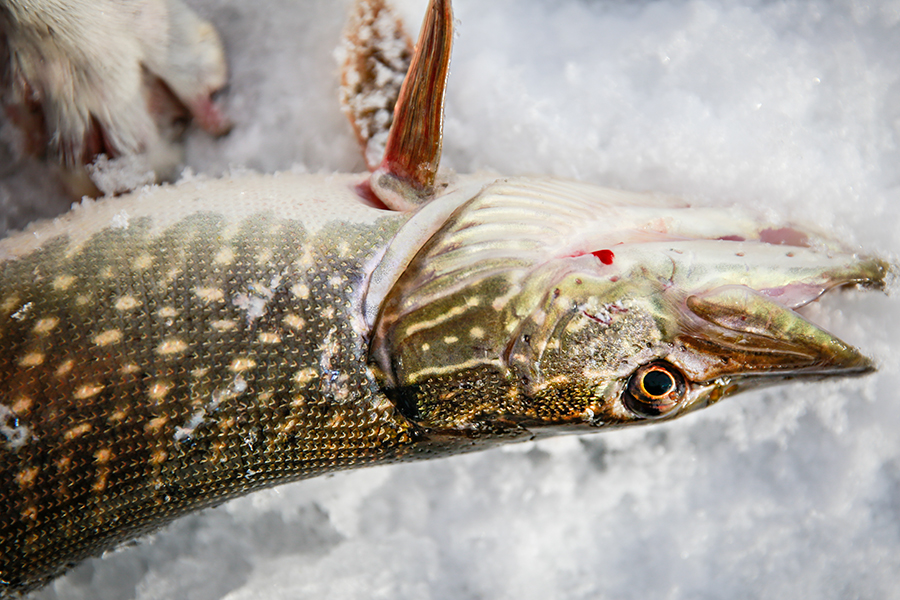
Montana Fish, Wildlife and Parks (FWP) officials are investigating the illegal introduction of a northern pike into Pine Grove Pond, where the invasion of an aggressive nonnative fish could decimate resident trout species and eliminate angling opportunities at one of the region’s most popular family fishing sites.
FWP fisheries biologists learned about the presence of northern pike last fall when an angler caught one and posted a widely shared photo to social media. The angler who captured the pike unknowingly released it, prompting FWP officials to urge anglers to kill and submit any northern pike or other nonnative fish species caught in Pine Grove to FWP’s Kalispell office. Pine Grove Pond is catch-and-release only for trout, except anglers 14 or younger, who may keep one trout daily.
Anyone with possible information about the pike is encouraged to visit tipmont.mt.gov to provide details. Tipsters may be eligible for a cash reward of up to $1,000. Flathead Valley Trout Unlimited has also pledged an additional $2,000 in reward money, and Flathead Wildlife, Inc., has pledged $500.
Known as “bucket biology,” illegal fish introductions have caused problems in hundreds of waters across the state, costing hundreds of thousands of dollars to rectify, according to FWP. In most cases, the illegal introduction cannot be undone, often leading to lost fishing opportunities and collapsing aquatic food webs.
In this case, FWP set lines on Pine Grove Pond after it froze and, on Jan. 29, caught a pike they believe may be the same fish that was photographed. However, biologists won’t know the extent of the introduction until they can deploy environmental DNA (eDNA) technology later this spring.
In the meantime, agency officials are trying to educate the public about the perils of illegal fish introductions while trying to identify the culprit.
“This is an extremely disappointing and damaging act,” Mike Hensler, FWP’s regional fisheries manager in Kalispell, said in a press release. “Pine Grove Pond was built and managed as a place for kids and families to learn to fish and enjoy catching trout. Introducing pike could ruin that experience for everyone.”
Northern pike are non-native everywhere in Montana besides the Saskatchewan River drainage on the east side of Glacier National Park. All pike found west of the Continental Divide are the result of illegal introductions. In small waters like Pine Grove Pond, just a few pike can quickly wipe out a stocked fish population, according to FWP.
Pine Grove Pond is regularly stocked with rainbow and westslope cutthroat trout to promote recreational opportunities, making it a popular destination for anglers, especially youth. The pond, which receives 70,000 angler days each year, is isolated from nearby waterbodies, which means the pike was illegally introduced.
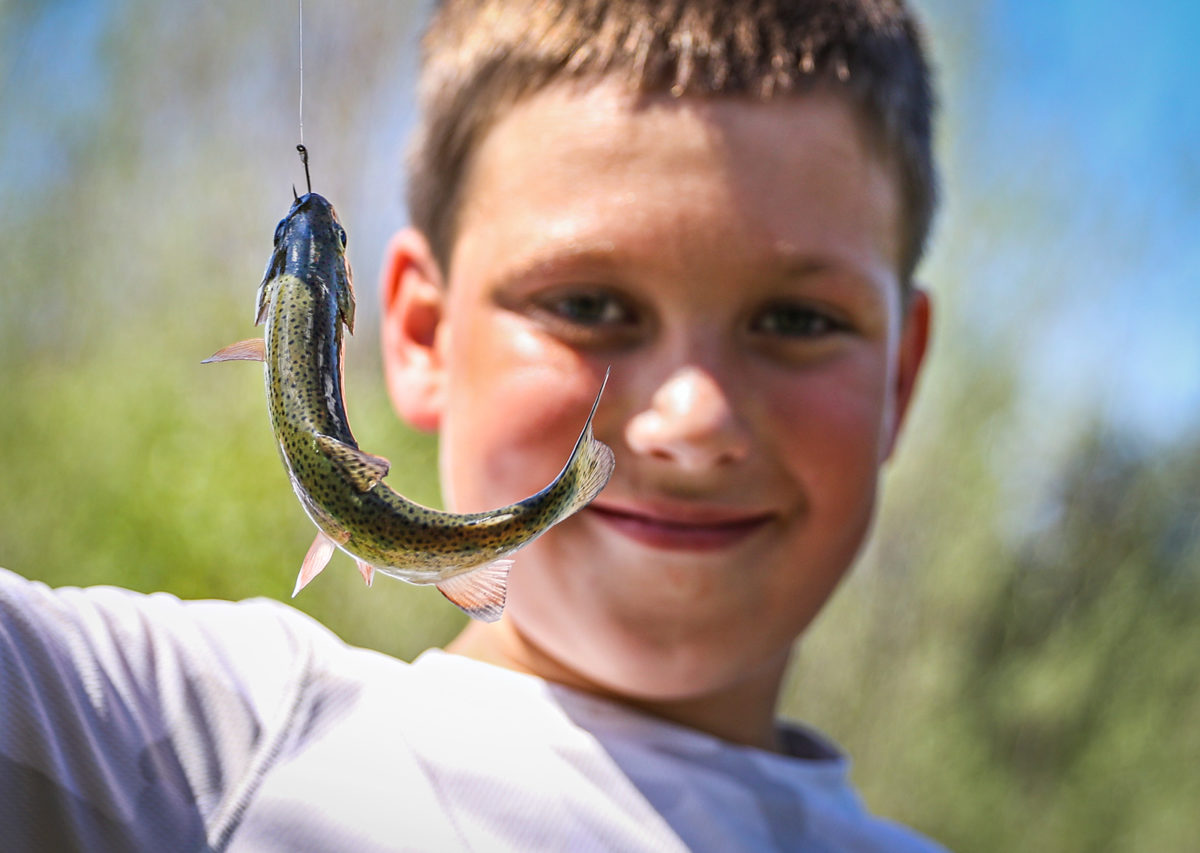
“This is a reminder that one selfish act can erase years of conservation work and take away a special place for kids to fish,” said Dillon Tabish, FWP regional communication and education program manager.
Moving live fish from one body of water to another is illegal everywhere in Montana, where violators can face steep fines, loss of fishing privileges, and restitution costs for the damage caused. Illegal fish introductions harm fisheries and have far-reaching effects. Once a nonnative species becomes established, it can permanently alter the balance of an ecosystem, displace native species, and reduce recreational opportunities.
In recent years, illegally introduced northern pike have also turned up in Shady Lane Pond, a family fishing site in Evergreen that FWP stocks with trout. In that situation, FWP stopped stocking the pond altogether because, according to Tabish, “all we were doing was feeding the pike.”
“All anyone is accomplishing by putting a predatory species like pike in a family fishing pond is taking away fishing opportunities for local kids,” Tabish said. “This is a new low point in the region’s history of illegal introductions.”
Jim Vashro, the former regional fisheries manager for FWP and the current president of Flathead Wildlife, keeps a database of illegal introductions in Montana. He recalls when northern pike were illegally introduced Lone Pine Reservoir near Hot Springs in 1953.
Since then, the populations of pike have exploded, and are now established in 70 waterways west of the Continental Divide.
“Every single one of them is illegal,” Vashro said. “The problem is, pike are very prolific given the right conditions. They can produced thousands of offspring and they are so predatory that they just hammer other fish populations, especially trout. That’s their ideal prey species.”
Two decades ago, Vashro received a report of someone dumping perch into Lake Mary Ronan, which at the time was classified as one of the top fishing spots for westslope cutthroat in northwest Montana, providing kokanee salmon eggs for stocking efforts at more than two dozen lakes in the region. Despite FWP’s efforts to eradicate the illegally introduced perch population using a poison called rotenone, “at least two perch survived.”
“Within two years, perch made up 80 percent of the biomass in Lake Mary Ronan and as a result we gave up on cutthroat planting entirely.”
In order to sustain the population of kokanee salmon, FWP had to delay stocking the fish until they’d grown big enough to evade the perch, which costs more money and disrupts their growth cycle.
“The egg supply diminished, the trout and salmon populations took a hit and it raised the cost of managing that fishery by over $50,000,” Vashro said. “Most of the big lakes in northwest Montana have two or more illegal species. It’s just out of control.”