Chronic Homelessness Continues to Rise Among Disabled, Aging Population in the Flathead Valley
Social service providers recently completed data collection for the annual Point-in-Time survey, which they say has become challenging in recent years as the homeless population resists participation
By Maggie Dresser
Flathead Valley social service providers earlier this month finished collecting data for the annual Point-in-Time (PiT) count, a survey that estimates the unhoused population, as a growing number of elderly and disabled individuals age into chronic homelessness.
From Jan. 29 to Feb. 5, Flathead Warming Center Resource Manager Sean Patrick O’Neill coordinated the data collection and partnered with several community kitchens and attended Feeding the Flathead events from Kalispell to Hungry Horse to conduct the surveys.
“We were really trying to spread our net and catching the frontier, rural and urban homeless,” O’Neill said.
Historically, data has been collected at a Winter Warm Up event at the Gateway Community Center, but in 2024, leaders shifted away from that model as turnout shrunk.
O’Neill said in recent years, homeless individuals are more resistant to participating in the surveys, with some saying they don’t want to draw attention to themselves while others don’t see the point.
“I try to let folks know that we don’t know what the true community needs are if they don’t complete the survey,” O’Neill said.
The data collected in Flathead County is funneled through the Montana Continuum of Care Coalition, a state agency that helps identify gaps in care, and is also sent to the United States Department of Housing and Urban Development (HUD) and becomes part of a national count.
“It’s an antiquated out-of-date way of trying to get a count on our homeless folks – it’s the most accurate tool we have,” O’Neill said. “We know the least amount of homeless we have is this number.”
While the data collection method is already an imperfect system, social service providers say the survey has been especially challenging in recent years and the data doesn’t accurately represent the volume of homeless individuals. As negative rhetoric surrounding homelessness has persisted, the stigma has led vulnerable people to keep a low profile, according to social service providers.
In 2025, there were 154 homeless individuals counted in Kalispell and 199 in 2024, according to PiT survey data, a significant drop compared to 2023 when there were 263 individuals counted in Kalispell and 319 in 2022.
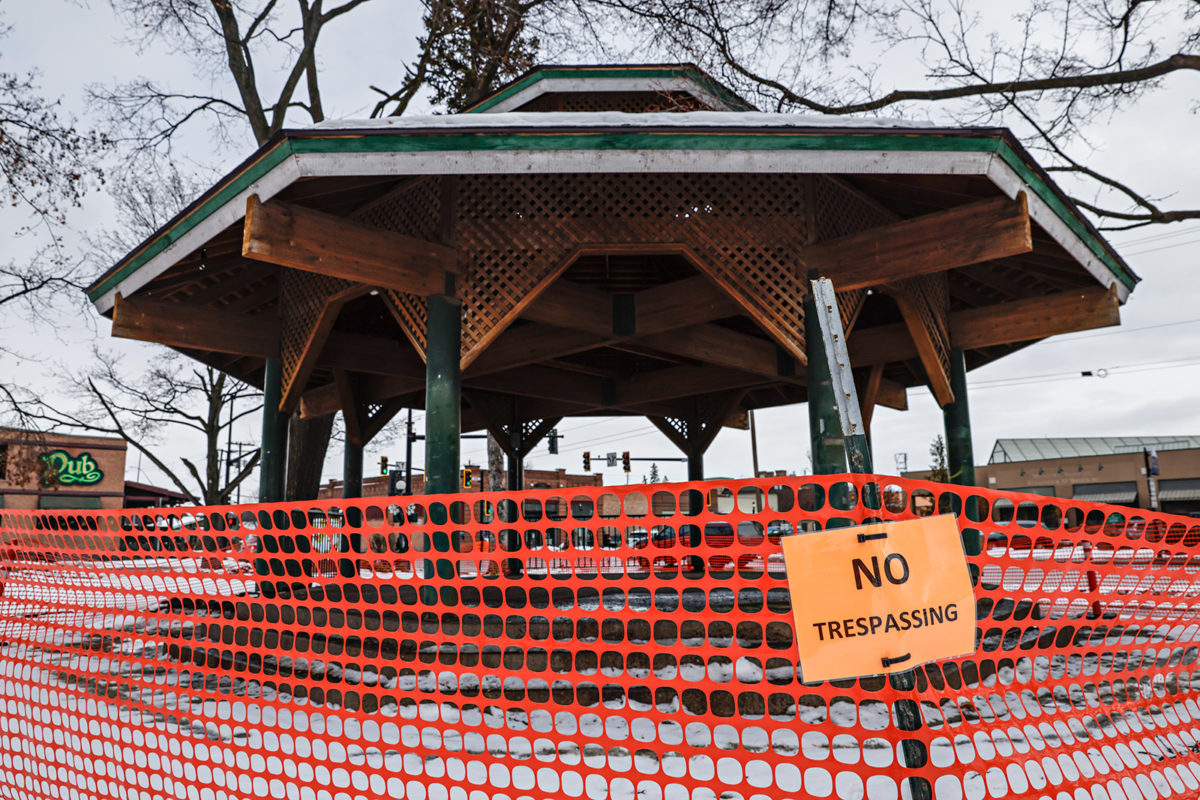
The Kalispell City Council in 2023 passed a package of ordinances aimed to limit activity among the homeless population in Kalispell’s Depot Park following reports of nudity, crime, and drug and alcohol use. The resolutions prohibited personal items in the gazebo, banned tents from being erected in area parks and established time limits for occupying covered structures.
Prior to the ordinance passage, an open letter written by Flathead County commissioners Pam Holmquist, Randy Brodehl and Brad Abell, entitled “Stop Enabling Homeless Population” was published in several media outlets where they described a “progressive networked community who have made the decision to reject help and live unmoored.”
Last year, a 20-year-old man pleaded guilty to deliberate homicide after he admitted to beating a 60-year-old homeless man, Scott Bryan, to death outside of a gas station in the summer of 2023, an incident that service providers say triggered widespread fear.

In 2024, the Flathead Warming Center briefly shut down after the Kalispell City Council revoked its conditional use permit following complaints from neighbors who accused the shelter of attracting guests to the area who exhibited disruptive behavior and displayed psychotic episodes publicly. Following a lawsuit against the City of Kalispell, an agreement was reached to reinstate the permit and continue operations.
Despite the negative rhetoric and challenges surrounding data collection, O’Neill says he’s seeing a high volume of chronically homeless people and aging guests with disabling conditions.
According to Flathead Warming Center data, the low-barrier shelter in 2025 served 410 people, 81 of which were chronically homeless, 101 who were over age 55, and 85 with at least one disabling condition.
“In the shelter, I am seeing a high rate of folks who are chronically homeless and entering homelessness with lots of disabling conditions because they can’t afford current housing,” O’Neill said. “Those folks will age into chronic homelessness.”
O’Neill attributes the rise in homelessness to a lack of mental health resources and affordable housing units designed for individuals on a fixed or limited income.
“Those two are really big components that have led to people aging into chronicity,” O’Neill said. “It’s too hard for them to climb out when they’re on a fixed income or they have the inability to earn a livable wage and so they kind of get stuck in that hamster wheel.”
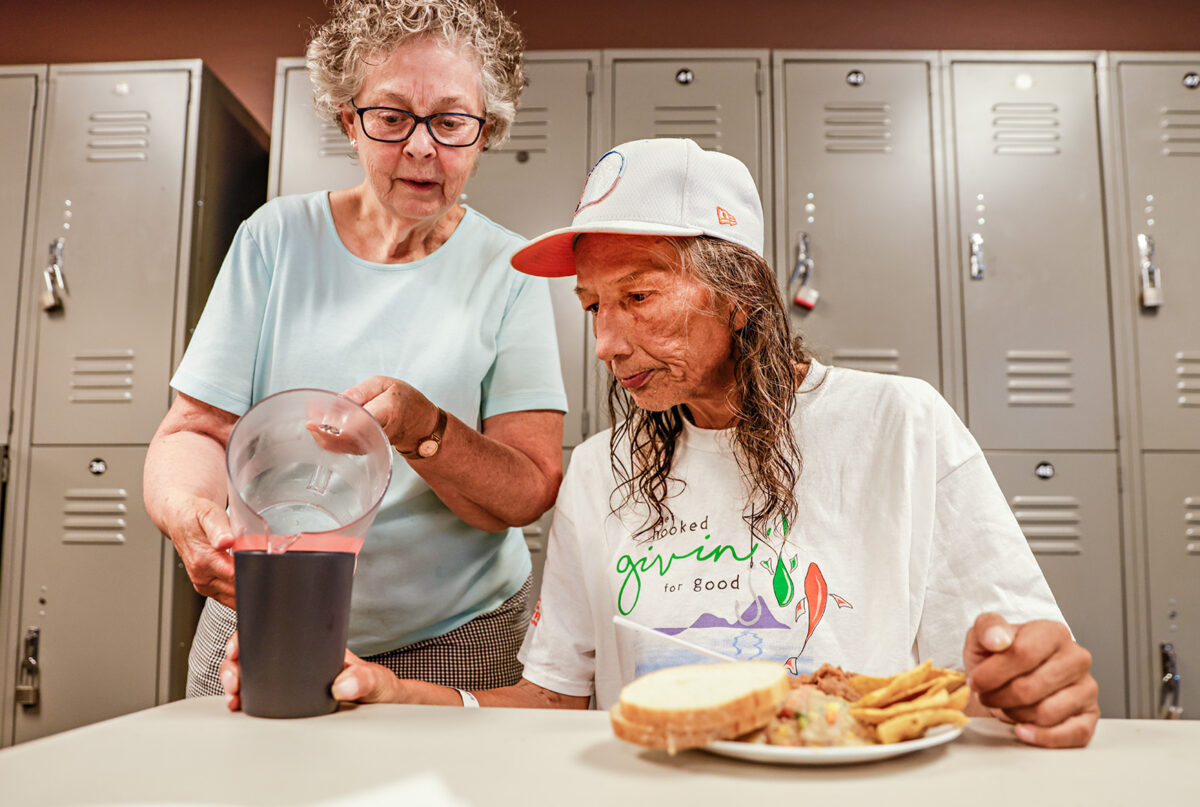
O’Neill says while the warming center did see 29 individuals between ages 18 and 24 last year, that population is typically better equipped to get out of homelessness.
As mental health services shrink and high housing costs have priced renters out of their homes, O’Neill says the warming center is one of few resources available to support vulnerable populations.
“We have turned into our community’s crisis stabilization center, group home and skilled nursing facility,” O’Neill said. “There are no group homes in northwest Montana. We are seeing the folks who can’t really help themselves the way they need.”
“We will continue to see the same people struggle with homelessness,” he added. “They may not be the exact same people, but they are people in the same situations getting squeezed out of their homes. It’s becoming worse and worse. It’s seniors and disabled folks. It’s people who are not able-bodied or of sound mind.”