Produced on the Flathead Reservation, ‘The Water Keepers’ is Nominated For Big Sky Documentary Film Festival Award
The short documentary tells the story of a group of tribal scientists at the backbone of the Confederated Salish and Kootenai Tribes' Water Compact, a historic water settlement between the Tribes, the state of Montana and the U.S. Showings will be held on the Flathead Indian Reservation in March.
By Zoë Buhrmaster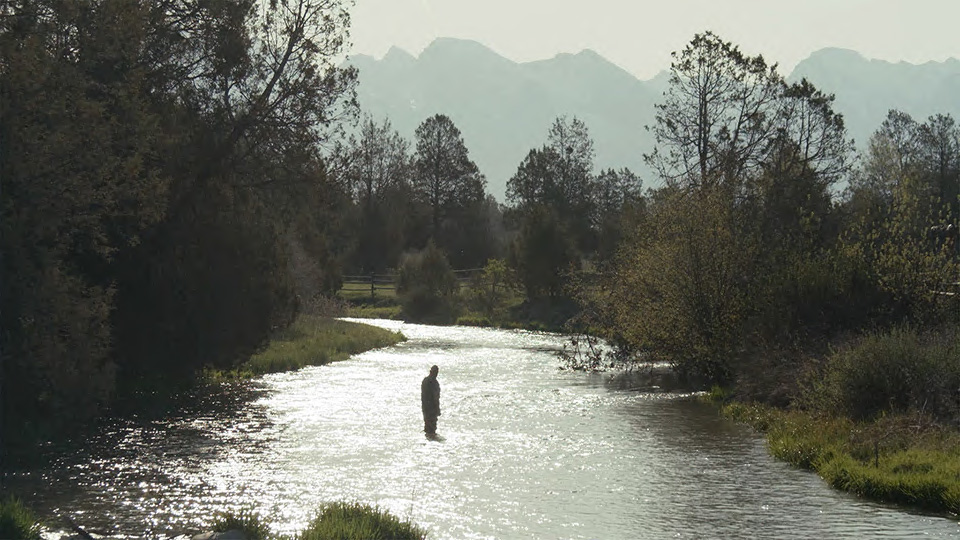
“In our philosophy, in our belief system, everything has a spirit. Everything has a purpose. And everything has a right to exist.”
The voice of Tom McDonald, a former chairman and current Tribal Council member for the Confederated Salish and Kootenai Tribes (CSKT), floats over a scene of rolling water in the opening scene of “The Water Keepers.”
“Those items that provide sustenance to us, you have to give back,” he continues. “So, to have a subsistence fishery in a crick or a river, it can’t be overstated how important that is for the long-term survivability of the Tribes and how important it was in the past. It was that guarantee you were going to survive. That existence and having that debt to the fisheries is paramount to make sure they survive in the future because they’ve kept our people from extinction. They’ve kept our people from starvation.”
The 21-minute documentary tells the story of the CSKT Water Compact, a historic water rights settlement finalized in 2020 between the state of Montana, the Tribes and the U.S., and a small group of tribal scientists who launched a water measurement program in the 1980s. The film has been nominated as one of eight finalists at this year’s Big Sky Documentary Film Festival in Missoula.
CSKT Communications Director Robert McDonald came up with the idea for the film several years ago in his former role working with the Tribes’ Division of Engineering and Water Resources, where some of the hydrologists responsible for the water measurement program have worked since the beginning. McDonald realized he’d heard the story of the scientists behind the Water Compact, but it had never jelled, he said.
“I kept hearing, nobody really quite gets it, it’s kind of complicated,” McDonald recalled. “The legal team knows, the scientists know, but anybody who asks gets buried by the lingo and the story gets lost. And I just went, ‘this is an amazing untold story.’”
With support from his supervisors and funding available to support a project, McDonald called up Daniel Glick, a filmmaker who previously directed “In the Spirit of Atatice: The Untold Story of the National Bison Range.”
“I just remember the impact that had on me,” McDonald said about Glick’s short film on the Tribes’ bison range. “The history I knew, but it was told with such skill and the music and the drama and the voice of the narrator. I thought, he needed to tell this story too.”
Glick initially told McDonald that he was booked up for the next few years. About six weeks later, however, Glick called McDonald back. He had something fall through and had three free months that spring. McDonald and Glick began to gather voices of knowledge in the water measurement program.
“I grew grateful for the opportunity to help tell this story,” Glick said. “But because I’m not from here, it’s important that the story is told from the perspective of the people and the community.”
“I approached my role as like a facilitator,” Glick explained. “There’s just all these threads of story that were coming at us, this long history, and my job was to try and capture as much as that as possible in the interviews, and work with Rob and Casey, our two producers both from the Tribes, to check the story.”
For McDonald, it all began with a question.
“The Compact has gone through the State Legislature, has gone through Congress, it was signed by the President, enacted by the Secretary of the Interior,” McDonald said. “But I couldn’t tell all of that. It really started with a question … how did this Water Compact end up being successful?’”
Water rights had long been disputed on the Flathead Indian Reservation, from the United States’ installation of the Flathead Indian Irrigation Project cutting across waterways in the Flathead Basin. The Montana Legislature established the Water Rights Compact Commission in 1979, which sought to negotiate settlements with Tribes claiming federally reserved water rights.
“Tribal leadership knew that if they didn’t prepare for this challenge they could lose their water rights, so they took action,” the film states.
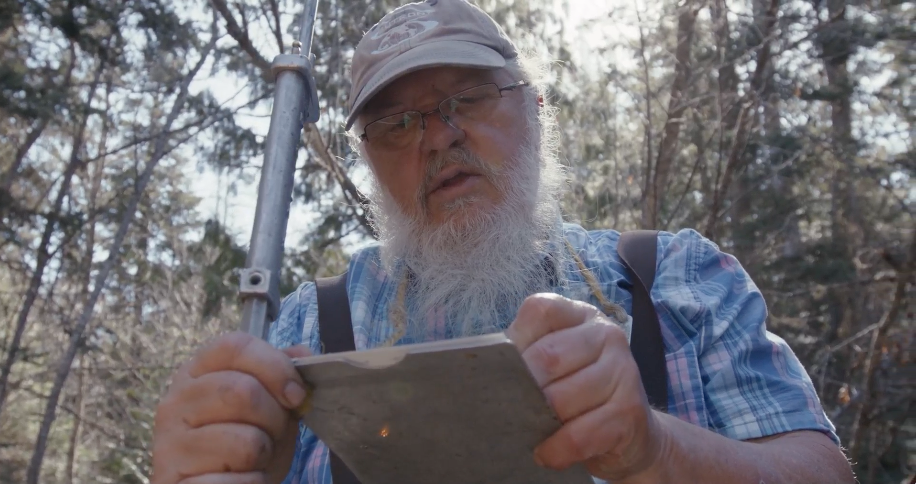
The documentary follows a team of water technicians as they initiate the CSKT Water Measurement Program. George McLeod, a hydrologist since the program’s beginnings who works today as chief of field operations, regales the viewer with stories of measuring streams and canals in varying conditions year-round. Casey Ryan, division manager for the Tribes’ Engineering & Water Resources, depicts some of the history of the waterways and the irrigation system. Hydrographers detail the painstaking science leading the program and it’s continuation in the Flathead Basin today.
The film also touches on some of the hydrologists’ difficult discoveries from their continuous monitoring, including uncovering the way ditch riders, those responsible for opening the headgates of the irrigation system, managed the water at the time.
“That’s kind of difficult to talk about because we have come so far in the relationship since then,” McDonald said. “Not everybody is comfortable sitting in a room hearing some of those tougher times and tough conversations, and we’ll still have challenges ahead of us, but we have come so far. I’m glad there’s a work of our storytelling that touches on that.”
The team’s data-driven science changed the way water is managed in the Flathead Basin, from reliance on projections to empirical evidence. McDonald said they’ve shown the film at a couple of high schools and middle schools, where the film’s simple breakdown of hydrology and the compact’s history has been well received.
“I think it’s an opportunity to celebrate what so many of us treasure about this place,” Ryan said. “I think water is something that can unite us. I think it’s something that is important to everyone that lives here, and it is such an integral part of what makes life here so special – the fact that we do have clear air, that we do have clean water and that we can work together to make sure that our children and their children and their children continue to enjoy those things.”
The film debuts at the Wilma Theatre in Missoula on Feb. 22 and is available to stream online Feb. 22-26 via the festival’s website here. More showings are planned for the Flathead Indian Reservation in March, including a March 6 showing at the Salish Kootenai College in Pablo; March 18 at the Ninepipes Lodge in Charlo; and in late March at a theater in Polson.