Stillwater Christian School Students Selected as State Champs in Presidential AI Challenge
The students’ proposal for the contest would use artificial intelligence to streamline construction projects. They’ll compete at the regional level next, for a chance to move forward to the national finals and earn a trip to Washington, D.C.
By Mariah Thomas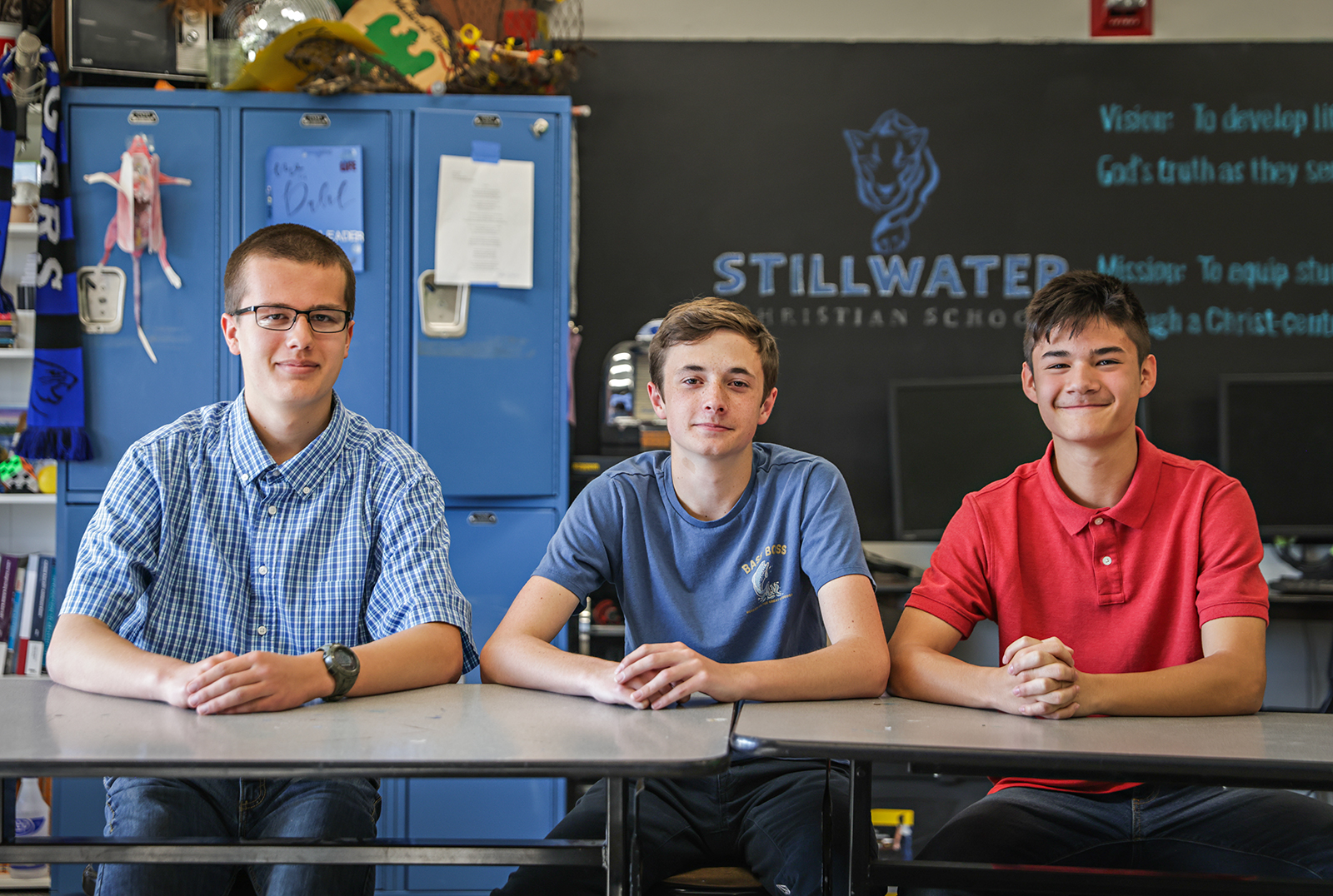
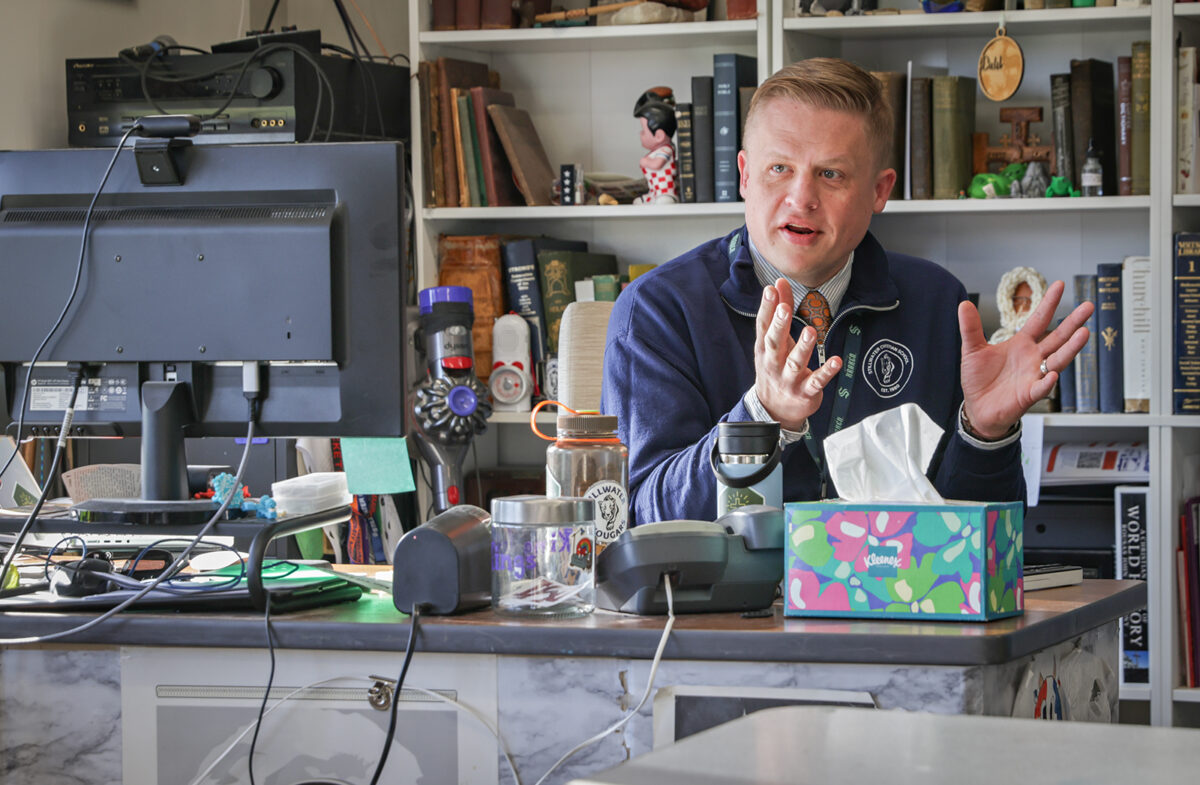
In Stillwater Christian School teacher Bradley Dahl’s classroom, students are often asked to think outside the box.
“I’m always poking around the internet for little competitions, just because if you don’t try, you’ll never accomplish anything,” Dahl said. “… These competitions are what make families and kids excited, especially if you win them, and I think the idea of never entering anything because ‘what if I don’t win?’ Well, you don’t know if you don’t try.”
So, when Dahl found the Presidential AI Challenge, a new initiative launched in line with President Donald Trump’s executive order to advance artificial intelligence education for American youth, he decided to work with his students to submit several projects.
“The President’s national Artificial Intelligence Challenge invites every student in America, from kindergarten to 12th grade, to unleash their imagination and showcase the spirit of American innovation,” said Melania Trump, the first lady, in a video announcing the challenge. “Our educators will guide and empower you through this process to build a brighter, stronger future for us all.”
What Dahl and his students didn’t expect was that a trio of students in the class would come out as contest champs at the state level, earning a chance to move forward to the next level of competition for their proposal.
“It’s really cool,” said Ryder Scott, one of the members of the winning team. “I’ve honestly never achieved something like this, like, actually this good at the state level.”
The challenge asked students to design and present an idea for AI use. Dahl’s winning students — a team of three freshmen at Stillwater Christian School — competed against upperclassmen in the contest.
For Scott, a problem AI might be able to help with was only steps away from the school building.
“It originally came from me going through a construction site to get to school every day and taking about 10 extra minutes to get through it,” Scott said.
Stillwater Christian School is going through a building expansion, funded by a $5 million donation from local businessman Paul Wachholz. But the students described challenges the construction project has thrown up as they go to and from school.
Traffic patterns are changing and require adjustment. It’s difficult to do work on a construction project during a Montana winter. And construction projects have dealt with material shortages and uncertainty when it comes to costs and sourcing across the country and in the Flathead in recent years.
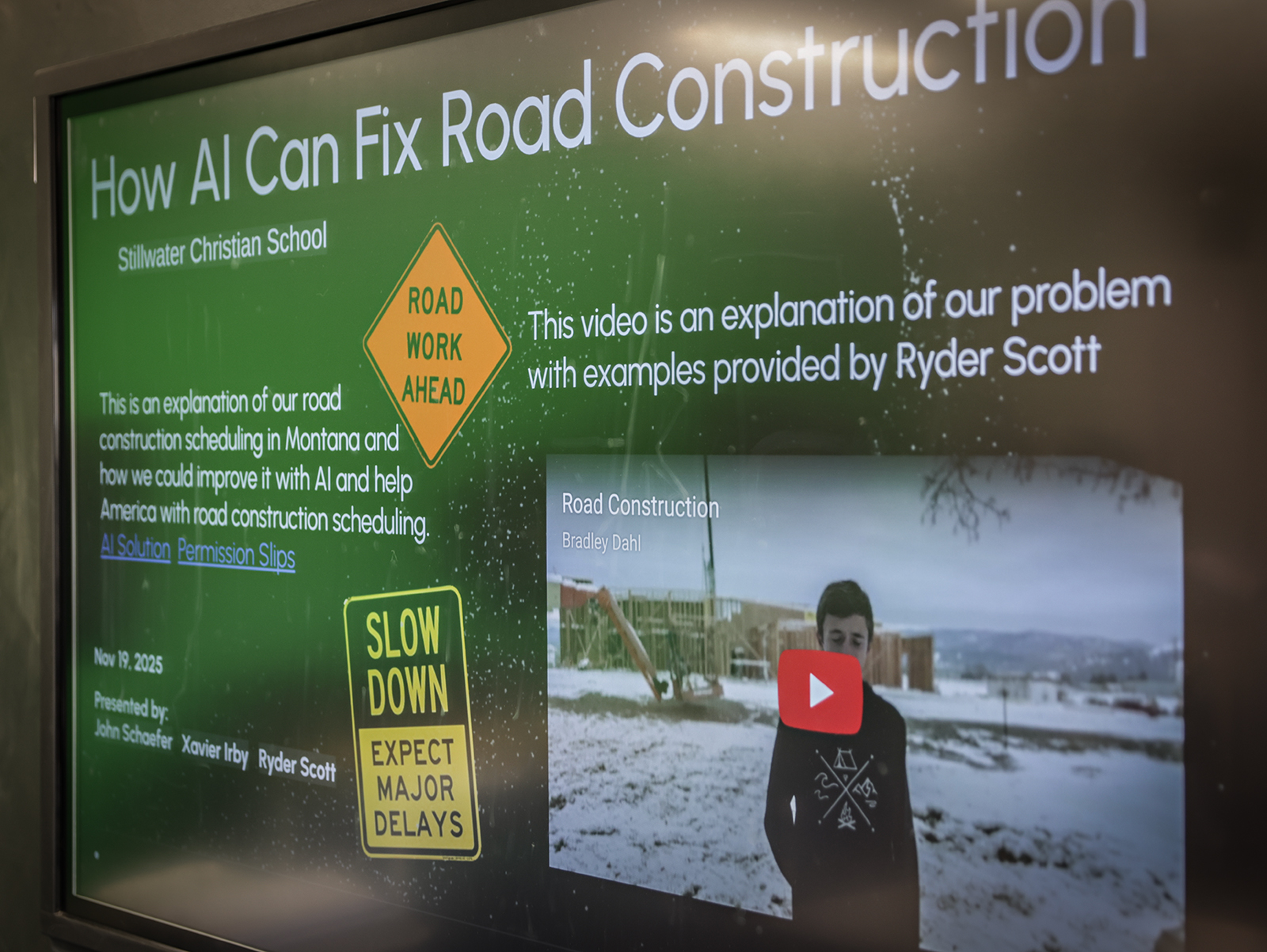
Enter Scott and his teammates, John Schaefer and Xavier Irby. The trio’s proposal, in a nutshell, uses artificial intelligence as a highly efficient project manager.
“What the AI would do is that it would help with not the construction, but the construction schedule, because every time I go through a construction zone, I see no one working, but the lights are still super long, and the person doing their traffic is also taking their time,” Schaefer said. “We decided to have an AI project that would help with the scheduling, and then kind of predict how the project would go based on recent weather predictions and recent traffic patterns.”
Schaefer and Scott explained AI could account for a number of variables, from weather conditions to tourist season to the quickest way to re-route traffic. Then, they proposed using AI to generate the best schedule or plan to make construction projects more efficient and cause the least amount of hassle to the public.
The team spent parts of November and December developing a presentation and paper outlining their proposal to submit to the contest. Dahl said his class submitted four other projects, which did not place. But he credited his classroom culture and students’ willingness to give and accept critiques as part of the reason Scott, Schaefer and Irby’s project was a strong contender.
The next phase of the process consists of a Zoom interview, where the state winners will answer more-detailed questions about their proposal for a regional contest. Dahl said the region they’re competing in includes larger states like California, but thinks the students have a good chance, because they have “a good idea.” Should their project move forward, Dahl said they would travel to Washington, D.C. to present their proposal in the nation’s capital with other regional winners.
Schaefer said they’re spending time prepping for practice questions before their Zoom interview, which is slated for Saturday.
The students heralded their Stillwater Christian School education as a key part of their success in the contest.
“They have teachers that care about us and about our learning, and they really push us to do our best,” Schaefer said.