Flathead Valley Builders Adapt to Rising Costs as Demand Remains Strong
With fuel prices, labor costs and mortgage rates running high, construction remains steady as builders find creative ways to cut costs and recruit workers
By Maggie Dresser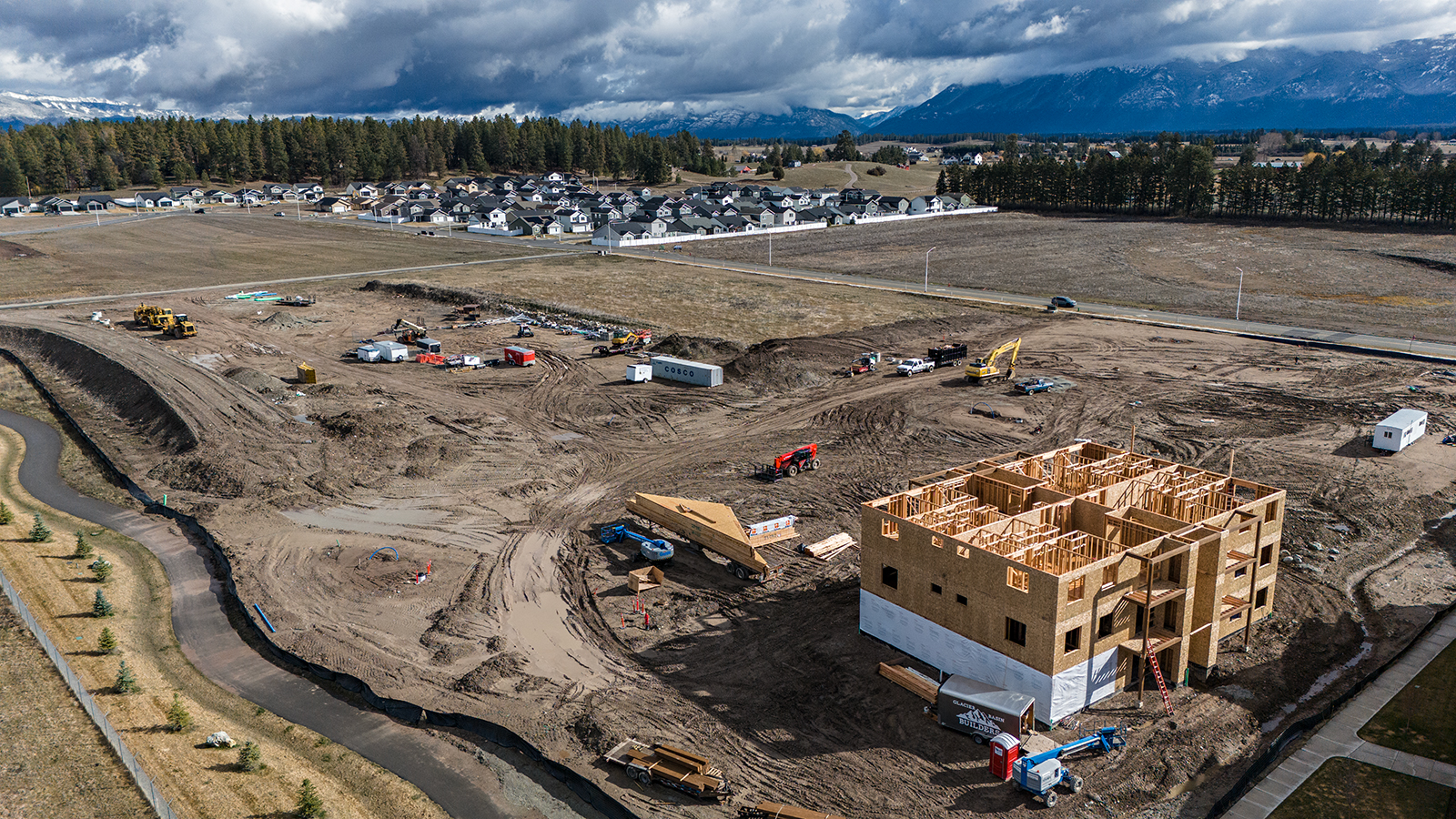
At the outset of 2026, when Iron Star Construction owner Kisa Davison started crunching numbers and preparing for the upcoming building season, she was feeling optimistic: Lumber prices remained low. Her American-sourced materials were protected from rising tariffs. Mortgage rates had dropped below 6% for the first time since 2022.
But as soon as the war in Iran prompted the closure of the Strait of Hormuz at the end of February, petroleum prices spiked, mortgage rates shot back up, and economic uncertainty loomed.
“We started the year off with everyone crossing their fingers and feeling very positive,” Davison said. “All indicators were strong. But since the war started, it seems like everybody is holding their breath.”
By the end of March, mortgage rates were back up to 6.5% as the war shocked energy markets. Diesel prices in Montana have surged to more than $5 per gallon.
It’s already expensive to transport products to the isolated Flathead Valley, Davison said, and the rising fuel costs combined with a 19% increase in petroleum-based products, such as plastic, adds to the company’s overhead.
“I can’t change the cost of petroleum. I can’t change mortgage rates. But what I do have control over is what I’m building,” Davison said.
As the prices rise, Davison is increasing energy efficiency to help her customers cut costs. She’s also designing low-maintenance homes on smaller lot sizes.
“The size of plans are smaller — only because new lots that are being approved are higher density,” Davison said. “We just had to redesign our entire product line because new lots were 5,000- and 6,000-square-foot lots. That means fewer three-car garages and smaller yards. We have to be more creative.”
Despite high costs, building demand remains strong in Kalispell, where 114 building permits were issued for single-family units and townhomes in 2025 along with 406 multi-family units, according to the 2025 Construction, Subdivision and Annexation report compiled by City of Kalispell officials.
Construction values increased dramatically last year, with the total value of all types rising to $249 million compared to $118 million the year before.

At Glacier Precast Concrete, owner Erik Powell said demand is strong this year, but the added costs are stacking up.
While his company works through all seasons, this year’s mild winter allowed extra days of pouring concrete for septic systems, bringing their workload ahead of schedule. But the 30% rise in fuel prices has added thousands of dollars in driving costs each month.
According to producer price index data posted by the U.S. Bureau of Labor and Statistics, input prices for new nonresidential construction in March rose 1.7%, which was a 4.4% year-over-year increase. The jump was the largest one month increase in four years and was driven by the near-record spike in the price of diesel fuel and steadily increasing cost of metals.
Powell is also concerned about the cost of rubber, which is a derivative of oil. While he hasn’t seen those prices rise yet, he expects to soon.
Labor costs, too, have gone up in recent years as a tight market persists. But David Smith, the executive director of the Montana Contractors Association (MCA), said employment numbers are steady with 37,500 construction workers on the payroll in January 2026 compared to 30,500 people in February 2020.
Employment numbers in Montana rose to 38,100 last June at the height of construction season, compared to 37,700 in June of 2024, Smith said.
The gains follow nationwide trends of job growth led by the healthcare sector, which added 76,000 new jobs in March; construction followed with 26,000 new jobs, according to the National Association of Home Builders.
Smith said the MCA has been working to recruit younger generations while also seeking out nontraditional employees like “justice-attached” workers.
“We’re trying to hit it on all fronts,” Smith said. “We’re recruiting in the schools to get young people interested or show them their options. At the same time, we’re trying to let parents know not every kid has to go to college and they can make $60,000 out of high school.”
At the Flathead Building Association, Executive Officer Mark Freidline said his organization is focused on recruiting young professionals as older generations retire.
For every 7% of workers who retire, Freidline said only 1% is replaced with new employees while 80% of construction workers nationwide are over age 45.
Immigration enforcement is also impacting the construction labor market, according to The Construction Association. But local experts say Montana is less reliant on immigrant workers, who only make up 4% of the workforce compared to 26% nationwide.
“It is an issue,” Freidline said. “Our demographic is different than California or even Colorado and we don’t have as much diversity as you do in other states. It does affect our industry, but it may not affect the Flathead Valley as much as others.”