Ninth Circuit Upholds Homeowners’ Right to Build in Glacier National Park
In affirming a lower court's order, the appellate judges ruled that state law does not apply to a California couple who built a home without a permit on the banks of McDonald Creek
By Tristan Scott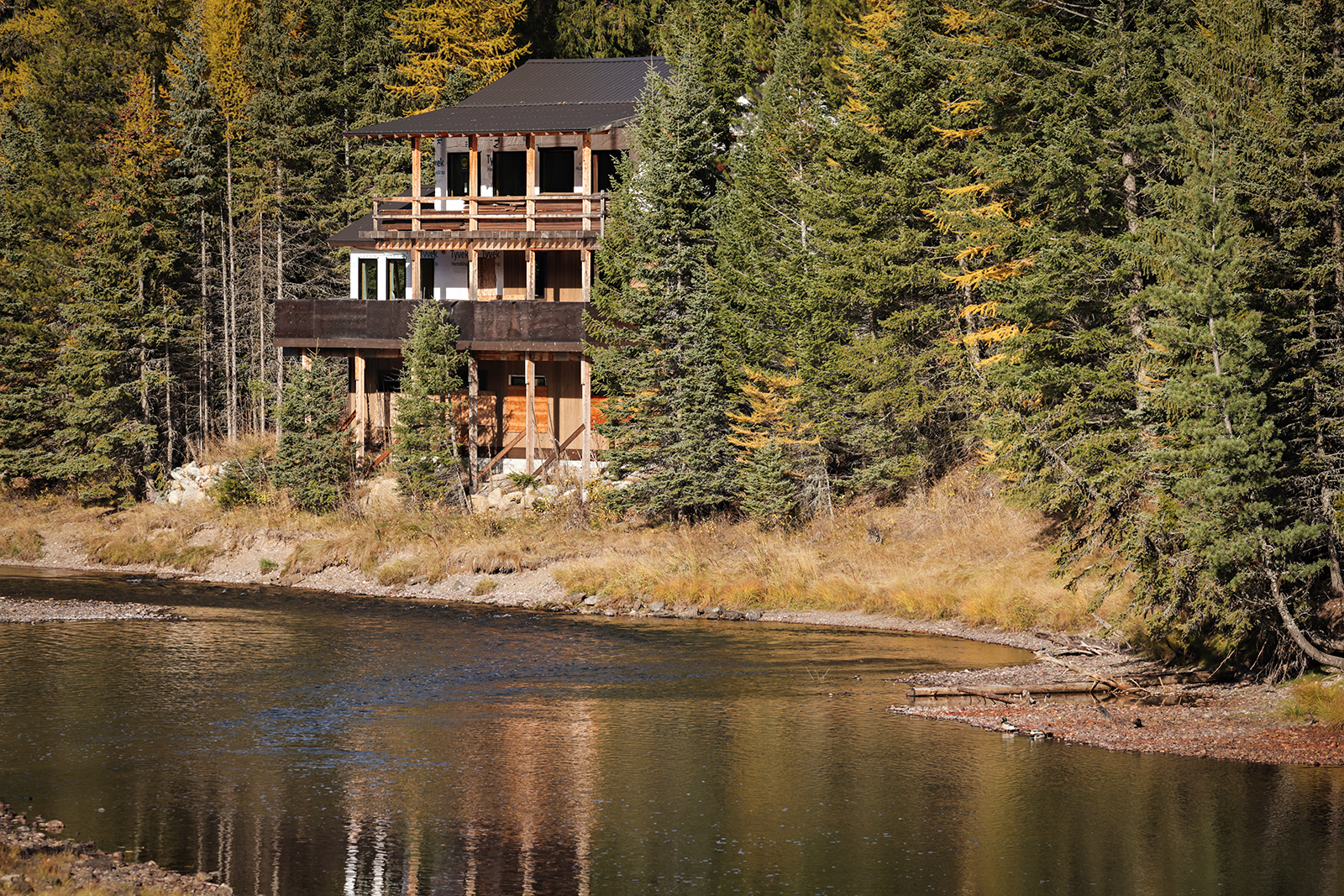
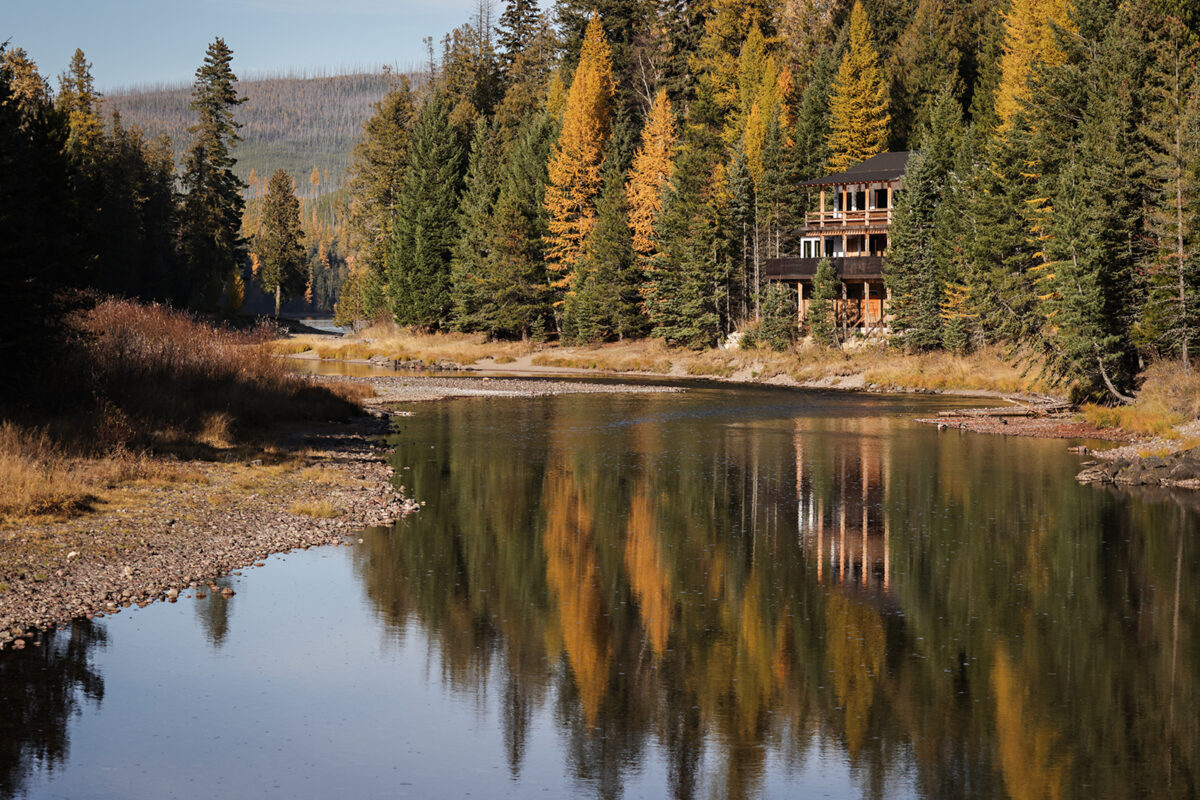
A California couple who built a home without a permit on the bank of McDonald Creek in Glacier National Park did so legally, a panel of federal appellate judges affirmed last week, while a local conservation district that ordered the home’s demolition has no jurisdictional authority to enforce state environmental protection laws.
The April 17 disposition by the U.S. Court of Appeals for the Ninth Circuit delivered another legal victory to John and Stacy Ambler, the plaintiffs in a case that commanded widespread attention as it unfolded against the backdrop of a partially built three-story home in full view of millions of visitors to Apgar Village, one of Glacier’s most popular areas. It also generated a groundswell of local interest — and outrage — from observers who viewed the case as pitting the hallowed principle of property rights against an aversion to out-of-state entitlement.
None of that emotion crept into the years of legal proceedings, however, as a federal magistrate judge in Missoula determined — and the panel of three Ninth Circuit judges affirmed — that in 1911, Montana ceded, and the United States accepted, exclusive jurisdiction over privately owned land located within the boundaries of Glacier National Park.
“Accordingly, federal authority became the only authority operating within the ceded area, including ‘privately owned lands within the described park boundaries,'” the jurists wrote in their memorandum, citing prior case law. “The United States has exclusive legislative jurisdiction over private inholdings within Glacier National Park, except to the extent that Montana reserved powers at the time of cession.”
But that’s not to say that jurisdictional authority was ever clearly defined in a case that began more than three years ago when officials with the Flathead Conservation District, responding to complaints from West Glacier residents, conducted an onsite inspection of the property.

Following the inspection, conservation district officials determined the Amblers had violated the Montana Natural Streambed and Land Protection Act (NSLPA), better known as the 310 law, when they began constructing a home on an immediate bank of McDonald Creek, excavating the stream bank to create a pad for construction — all without obtaining the necessary 310 permit, the statute’s key enforcement provision.
In April 2023, FCD issued a cease-and-desist order and ruled that the Amblers must remove the home and remediate the streambed. However, the couple challenged the FCD’s jurisdictional authority in the case and proceeded to what’s called a declaratory ruling process, which was overseen by a retired bureau chief with the Montana Department of Natural Resources and Conservation (DNRC).
After reaffirming its jurisdictional authority, hearing officer remanded the case back to the FCD, whose Board of Supervisors ruled that the couple must remove the home and repair the streambed no later than April 1, 2024.
Instead, the Amblers sued the FCD, arguing that it overstepped its authority by ordering the home’s removal. Friends of Montana Streams and Rivers, a grassroots group of West Glacier and Apgar residents who joined the lawsuit as intervenors, also submitted an appeal to the U.S. Court of Appeals of the Ninth Circuit, which opened both cases on March 7, 2025.
As the legal saga dragged on, the unfinished home has remained visible to onlookers from the Camas Road near the park’s popular west entrance.
Trent Baker, the attorney representing the Amblers, did not respond to requests for comment before the Beacon’s publication deadline. However, in Ninth Circuit filings and in a motion for the reimbursement of legal fees, Baker has presented a clear-cut case of “federal versus state jurisdiction over the Amblers’ property.”
“At the onset of this dispute, the Amblers confronted a Hobson’s choice: acquiesce to the FCD’s wrongful assertion of jurisdiction and tear down their newly constructed home, or fight the FCD in the administrative proceeding and this action,” according to Baker’s motion for reimbursement. “They were forced into nearly two years of litigation and incurred substantial legal fees against a more powerful governmental entity that was funded in part by the Amblers’ own tax dollars and was wholly unwilling to acknowledge its clear lack of jurisdiction over the Ambler Property. The Amblers also had to endure the stress and uncertainty of potentially losing their home, along with the negative press and backlash from the Flathead community. This dispute was resolved by longstanding Montana and federal statutes and case law, including the clear and binding precedent which the FCD knew or should have known of at the outset of the dispute.”
A federal magistrate judge in Missoula denied the motion for reimbursement.
In a statement to the Beacon, the FCD Board of Supervisors said Tuesday that it “respects the Ninth Circuit’s decision and appreciates the legal clarification provided through this case.”
“The District asserted jurisdiction in an effort to administer the Natural Streambed and Land Preservation Act consistently and to fulfill its responsibility to protect Montana’s perennial streams and natural resources,” according to the statement.
Pointing to the lower court’s order denying the Amblers’ request for $80,986.50 in attorneys’ fees, the FCD board said “jurisdictional authority in this matter was not clearly defined, and the District acted in good faith based on the information available at the time. Throughout this process, we heard strong community support for protecting local waterways and worked to carry out our statutory duties responsibly.”
The absence of local regulation over private inholdings means the Amblers’ partially completed home, as well as other privately owned parcels inside of the park’s boundaries, exist in a jurisdictional limbo and are not subject to state permitting requirements. That regulatory gray area was at the heart of FCD’s argument that the federal government “has essentially abdicated their duty by failing to make and publish rules and regulations adequate for the care, protection and management of the resource on private inholdings in Glacier National Park,” according to FCD attorney Camisha Sawtelle.
In its statement to the Beacon, the FCD supervisors said the board would “encourage the National Park Service to continue working collaboratively with Glacier National Park’s private inholders, using its authority to support commonsense solutions that protect shared natural resources.”
Mary T. McClelland and Monica Jungster, two West Glacier residents who helped establish the Friends of Montana’s Streams and Rivers group that joined the lawsuit as intervenors, told the Beacon that, while the Ninth Circuit’s ruling confirms that FCD cannot enforce the NSLPA within Glacier National Park, “it also makes clear that federal law governs these activities.”
“The few remaining private properties within park boundaries remain fully subject to federal regulations, including long-standing statutory prohibitions on ‘the erection and maintenance of new summer homes or cottages,’ compliance with the Clean Water Act and many other land use policies,” they said in a joint statement to the Beacon. “This decision underscores that compliance with federal law is not optional and must be enforced to protect park resources such as McDonald Creek.”