Glacier’s Awe-Inspiring Landscapes
The stories behind some of our favorite images of the park
By Hunter D'Antuono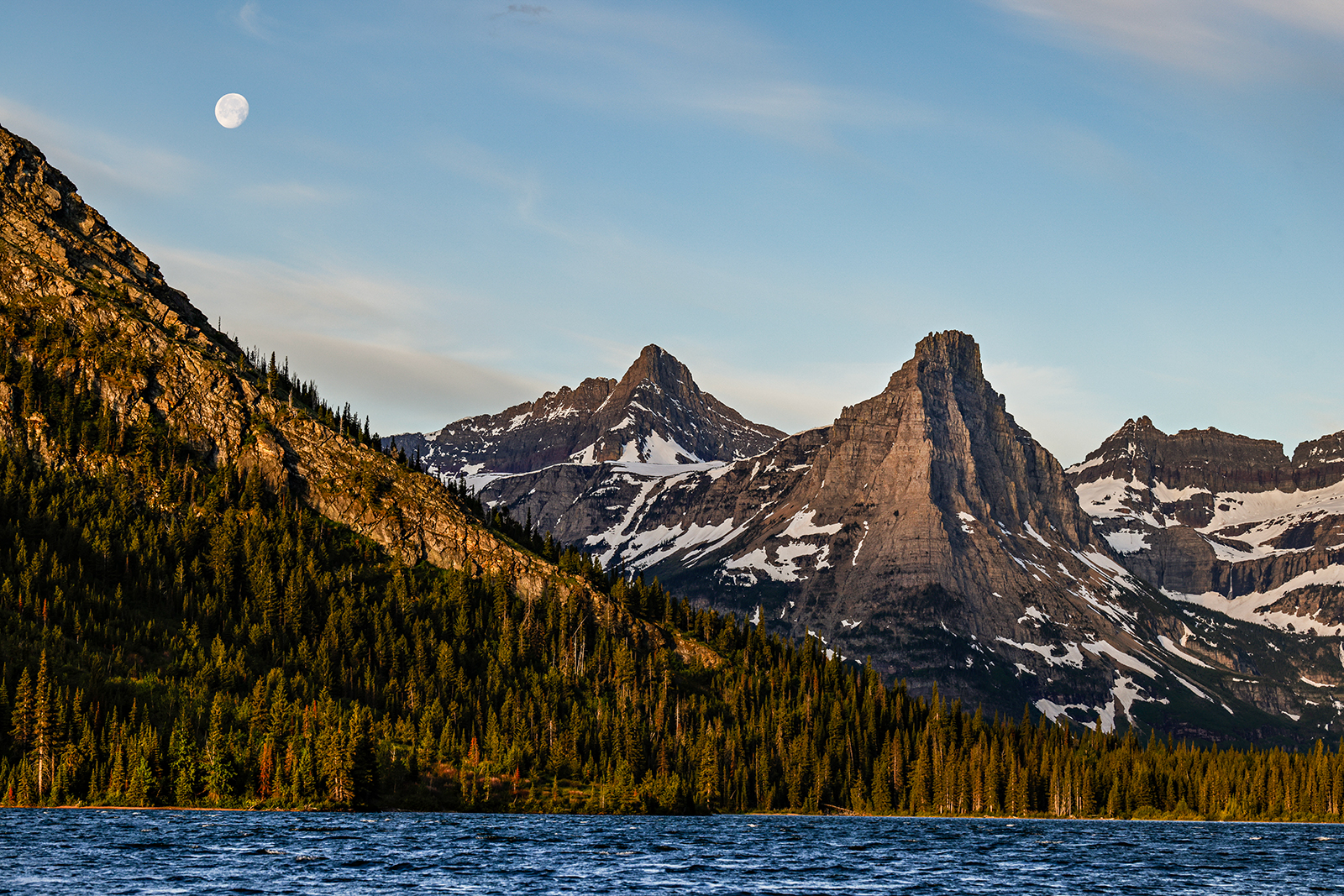
In a world replete with beautiful places, Glacier National Park makes a strong case as one of Earth’s most dynamic and inspiring landscapes.
Snowdrifts deep enough to bury a mansion often persist through the better part of the year. Small bits of its namesake ice formations, vestiges of the last Ice Age, still cling to shaded facets of its high country. The snow gives way during the park’s short summer to vibrant meadows of delicate, yet hardy alpine flowers. Standout flora include yellow avalanche lilies, erythronium grandiflorum, and scarlet Indian paintbrush, castilleja coccinea. The awe-inspiring megafauna cast includes grizzly bears, ursus arctos horribilis, mountain goats, oreamnos americanus, bighorn sheep, ovis canadensis and moose, alces alces.
Over the past seven years as a photographer for the Flathead Beacon, my wanderings have taken me to dozens of mountain peaks and lakes within Glacier’s wild depths. These frames are a handful of our staff’s favorites from the country’s 10th-most visited national park, a place that, in my opinion, is a contender for the list of prettiest corners of the planet.
To purchase a print, see the link in the caption below each image.
Morning Moon Over Cosley Lake
Cosley Lake, pictured above, is nestled in the northeastern quadrant of the park near the Canadian border is a lesser visited, but no less striking, corner of Glacier. The foot of the lake is about 8 miles from the nearest road, ensuring hikers work for the view. Captured at dawn, this image shows a nearly full moon hanging over the summits of Mount Kipp, Pyramid Peak and the lake’s cold, windwhipped waters in late June. The Mokowanis River, a short, 10-mile-long tributary of the Belly River, flows through the lake, which then meanders north across the border. Not pictured is the robust insect life of early summer, primarily mosquitoes, which feast on passersby in earnest as soon as the breeze dies down.
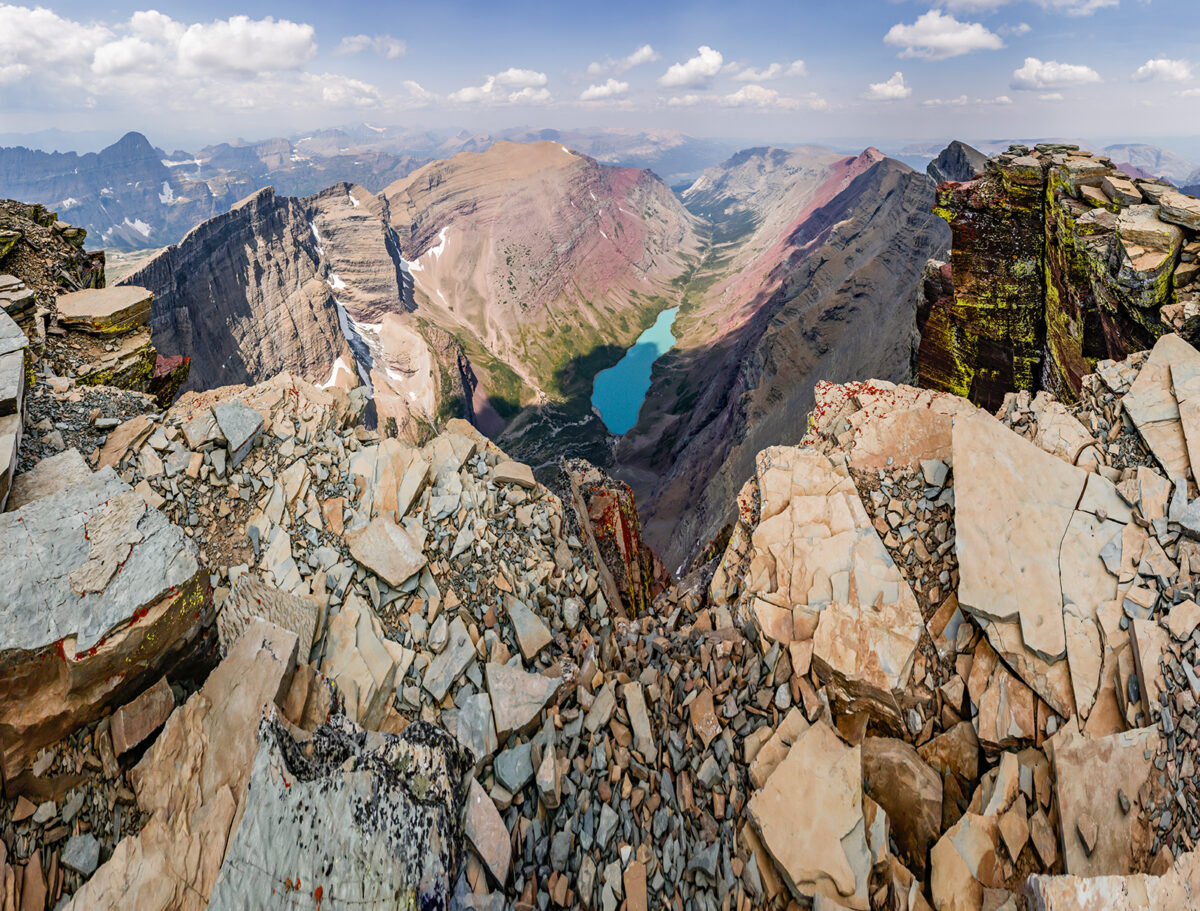
Summit of Siyeh
Siyeh roughly translates to “crazy dog” or “mad wolf” in the Blackfeet language. At 10,019 ft, it is one of six peaks in the park exceeding the five-figure mark in elevation. But the mountain’s sheer north face is its most striking feature. About 2,500 feet of thin air separate the summit from the top of Siyeh Glacier far below, while the turquoise waters of Cracker Lake pool another 1,500 feet below that, making Mount Siyeh host to one of the highest cliff faces in the contiguous United States. Groups of grizzly bears frequent its talus-filled southern slopes in summer to feast on thousands of the fat-rich cutworm moths, which hide among the alpine rocks.
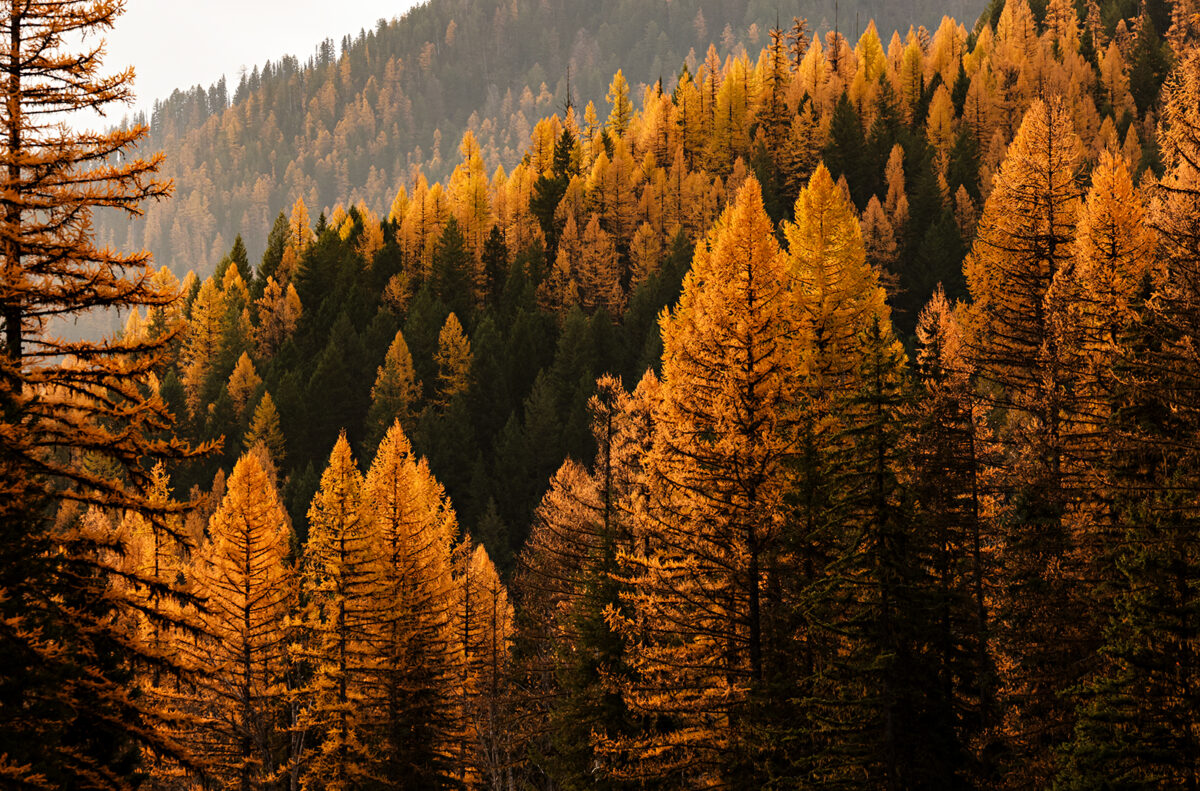
Land of the Larch
Larch are a beautifully peculiar plant. Earth is home to as many as 73,000 species of trees, and of those, only about 20 are considered deciduous conifers, a tiny classification into which the larch, or larix, genus fits. Deciduous conifers have needles and form seed-bearing cones, but unlike evergreen trees, such as pines, they change color before shedding their photosynthesizing parts ahead of winter, mirroring the seasonal cycle of leafy, or deciduous, trees. The turning of the larch in Glacier National Park and the surrounding areas is a stunning study in contrast, making for a mesmerizing backdrop for hikers and shutterbugs. Regional photographers refer to the spectacle as “Larch Madness.” The corresponding hashtag propagates across visual social media channels when the trees’ golden transformation peaks in late October and early November. Pictured is a stand of along U.S. Highway 2 and the Middle Fork of the Flathead River, which form the southern boundary of the park.
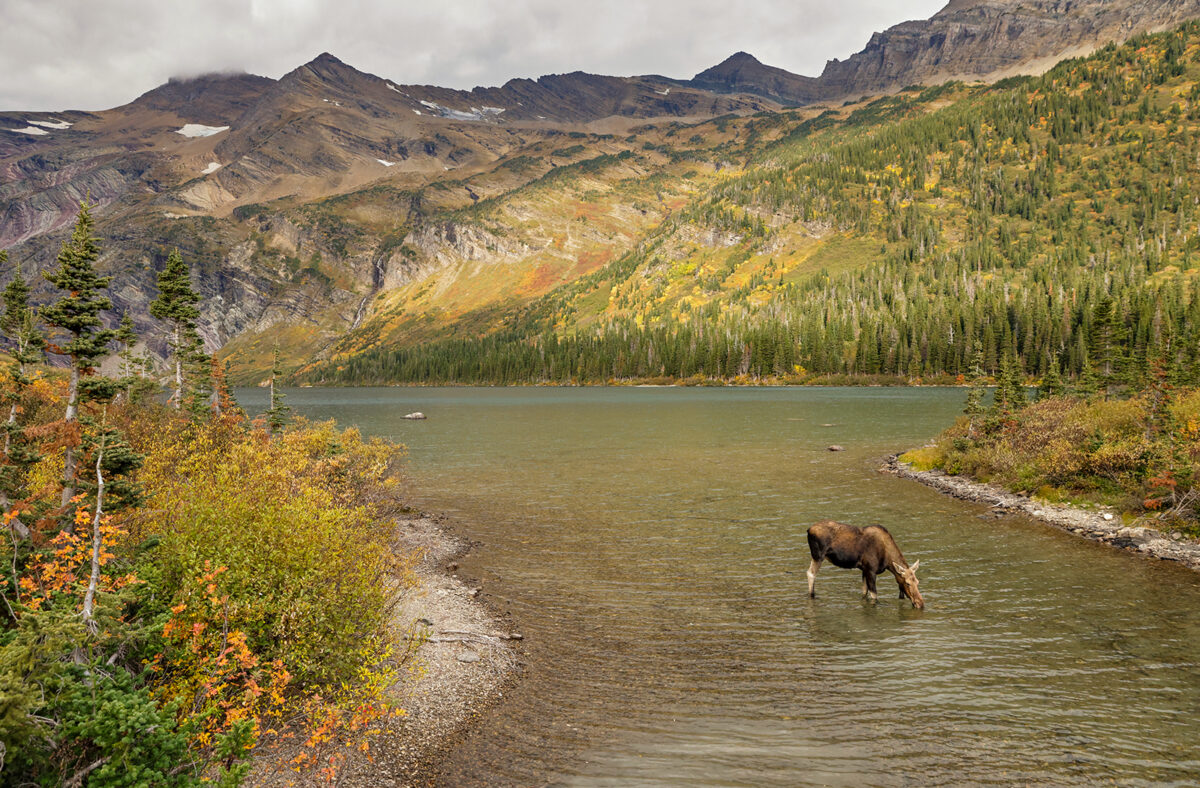
Moose of Gunsight Lake
While this frame of a cow moose wading through the headwaters of the St. Mary River at the outlet of Gunsight Lake possesses all the hallmarks of a tranquil nature scene, the moments leading up to it were anything but. Within seconds of myself and my hiking partner fording the river, this moose, a big bull hot on her heels, and her calf trailing behind, all came thundering full tilt out of the brush. We pull-upped ourselves to safety onto one of the towers for the river’s suspension bridge. The bridge, unfortunately, had already been stripped of its pedestrian deck planks for the season. Meanwhile, the camera, and our shoes, removed for the river crossing, were abandoned on the ground in the course of the evasive maneuvers. The stampede left massive hoof prints in the gravel within inches of the camera’s lens. After gingerly stretching down to retrieve it, I took several dozen photographs from our protective perch of the cow and her earnest suitor, who by then had discontinued his pursuit. He’d become distracted by the sight of the two wide-eyed, opposable-thumbed mammalians clinging to an unnatural looking tree, leaving her to rehydrate in peace.
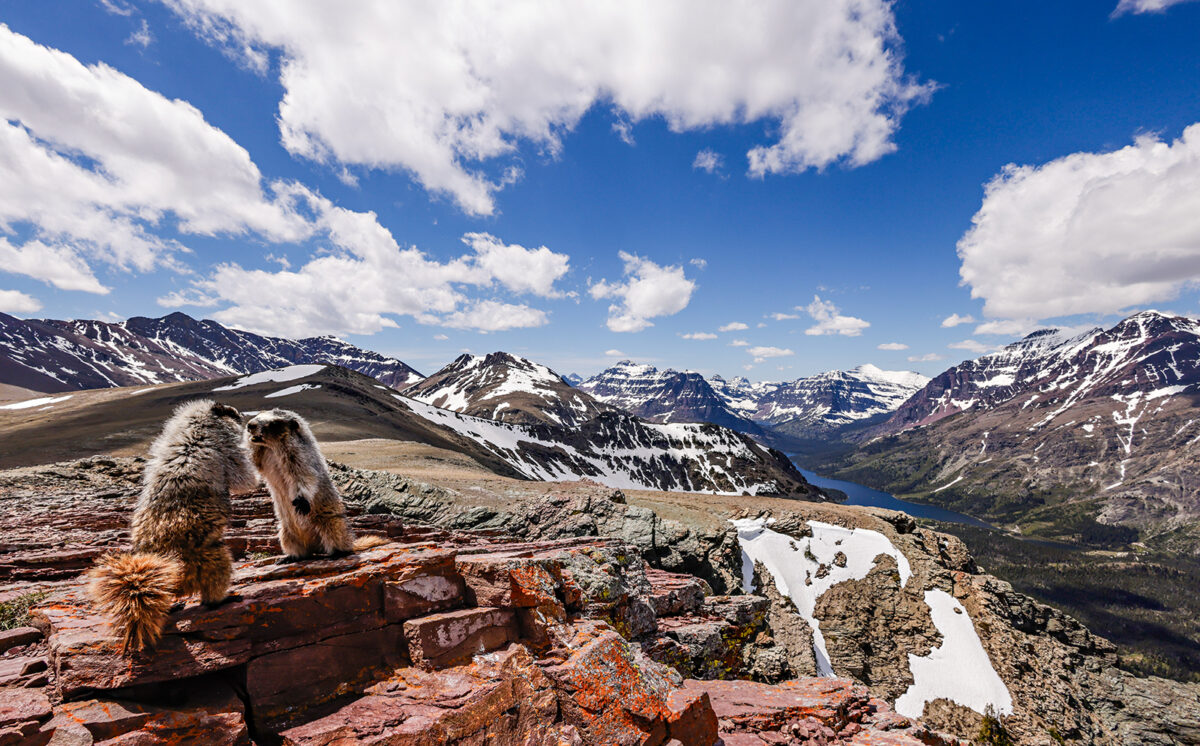
Scenic Marmot Duel
Regular hikers and bikers of Glacier National Park are all too familiar with the mischievous nature of the hoary marmot, marmota caligata, large rodents about the size of house cats who lope about the high country. Marmots have a penchant for destructively gnawing on sweat-laced adventure gear the moment one takes their eyes off of it. I’ve witnessed marmots attempt to abscond with trekking poles, and even an e-bike along the Going-to-the-Sun Road during water breaks. Despite weighing only about ten pounds, a marmot clamped its strong teeth on the handle bar grip and managed to drag the 50-60 pound battery-powered bike nearly a foot within a few seconds before being shooed away. In this image, a pair of snarling marmots duke it out on top of Scenic Point, a popular hiking destination in the Two Medicine Area.
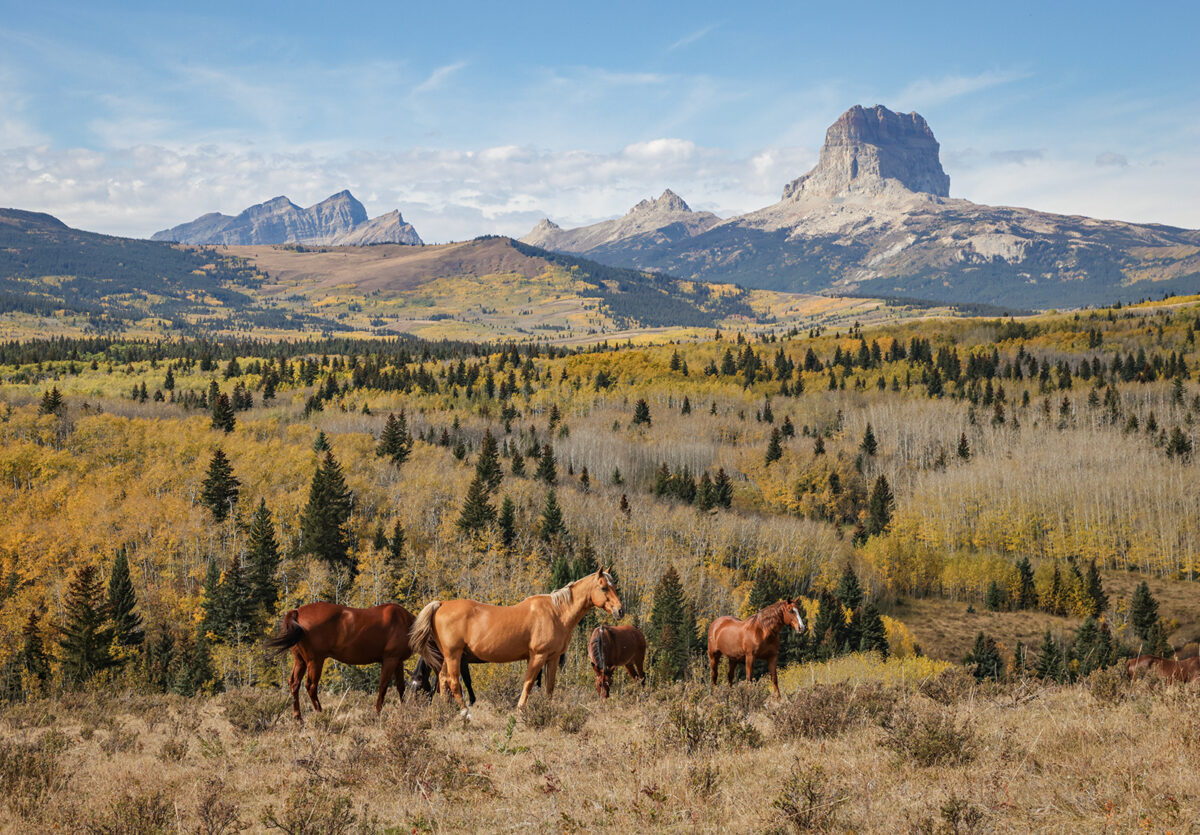
Chief Mountain
The lands from the continental divide in Glacier National Park and east out onto the foothills and plains of the Rocky Mountain Front are the traditional homelands of the Blackfeet Nation. Chief Mountain lies just inside the park boundary north of Babb. It is among the most sacred topographical features on the landscape for the tribe, and is the site of sweating and fasting ceremonies to this day. In recent decades, some of the Blackfeet, with varying degrees of success, have attempted to formalize access restrictions to the mountain for non-tribal members. In this frame, a rancher’s horses graze among the sagebrush and yellowing aspen in early autumn in view of the striking, squareish-shaped peak.
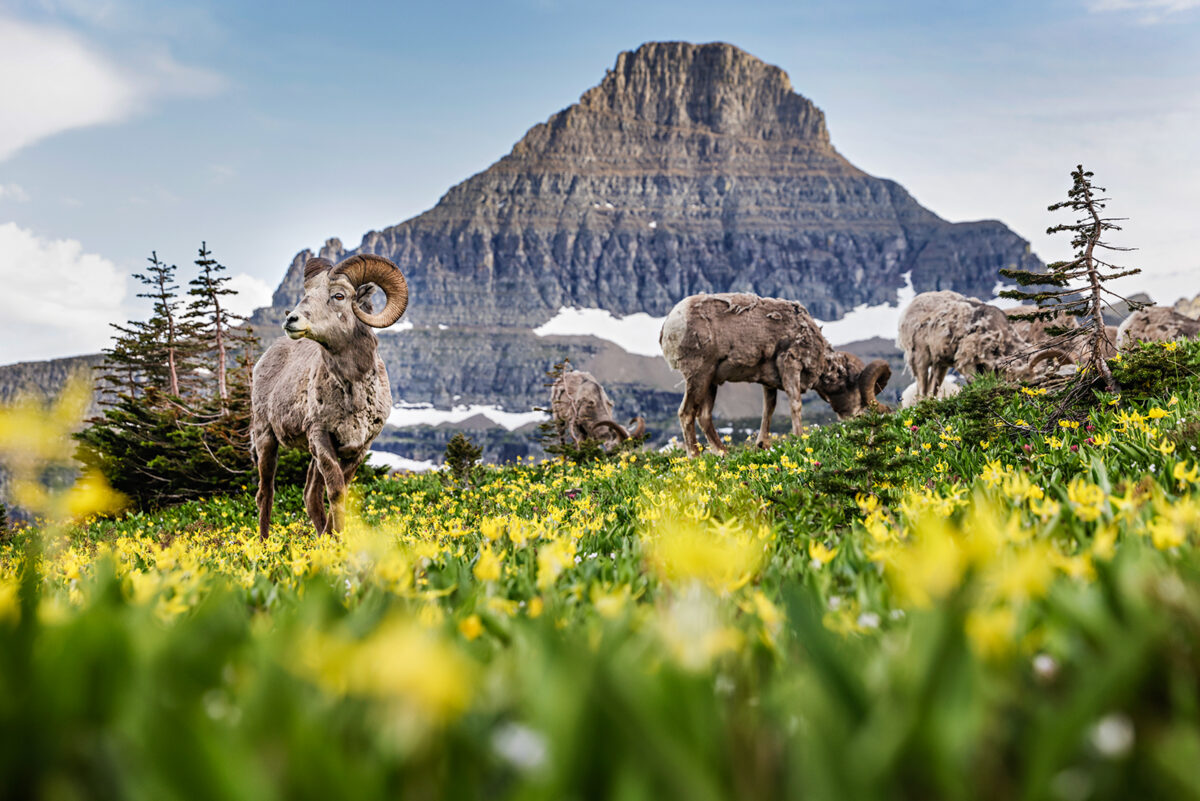
Bighorns Among the Lillies
A herd of bighorn sheep munches on avalanche lilies before Glacier’s iconic Reynolds Mountain, as viewed from the Hidden Lake Trail. The lilies are a traditional source of food for animals and humans alike. Indigenous peoples prepared and consumed them in a variety of forms: raw, dried, roasted, boiled and glazed. The nutrition from the flowers in part fuels the growth of the large, curved horns of the male sheep, or rams, which can weigh as much as 30 pounds. Come mating season, rams will use their armaments to fight for mates by running headfirst into one another at up to 40 mph. The sound of the horns making contact can be heard from a mile away. North American bighorn sheep numbers dwindled to just a few thousand individuals in the early 1900s from deadly diseases contracted from domesticated sheep herds and overhunting. Populations have since rebounded into the upper tens of thousands thanks to conservation efforts.
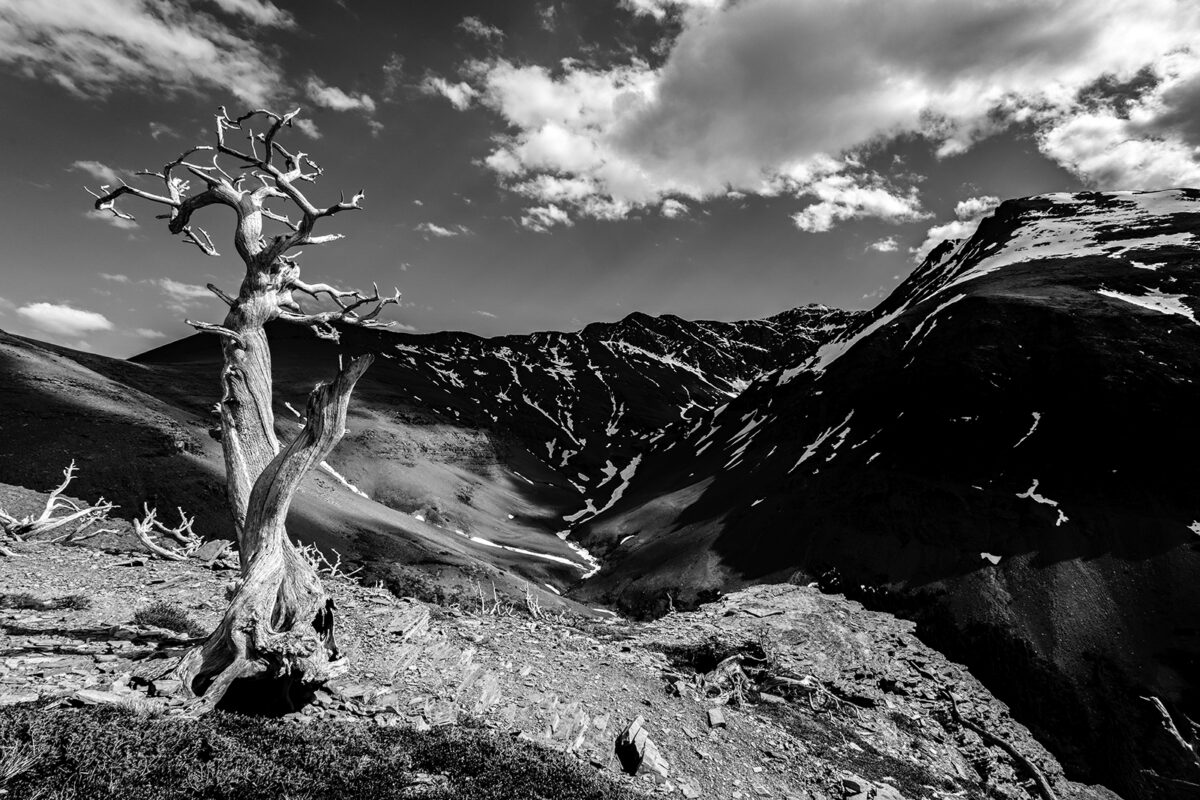
Ghost Trees
In spite of all of Glacier’s vibrant floral color and wildlife splendor, the stark, skeletal geometry of dead whitebark pines is a personal favorite photographic subject of mine. Across their range, the trees are succumbing to a combination of proliferating mountain pine beetle, white pine blister rust, and droughts. Warmer average winter temperatures in recent decades have allowed the ravenous pine beetles to thrive, while a non-native fungus is the source of the blister rust epidemic. Whitebark pine is a slow-growing species adapted to harsh, high elevation climates. When healthy, they commonly live for up to 1,000 years. This ghostly tree is one of many along the Scenic Point Trail in the Two Medicine Area.
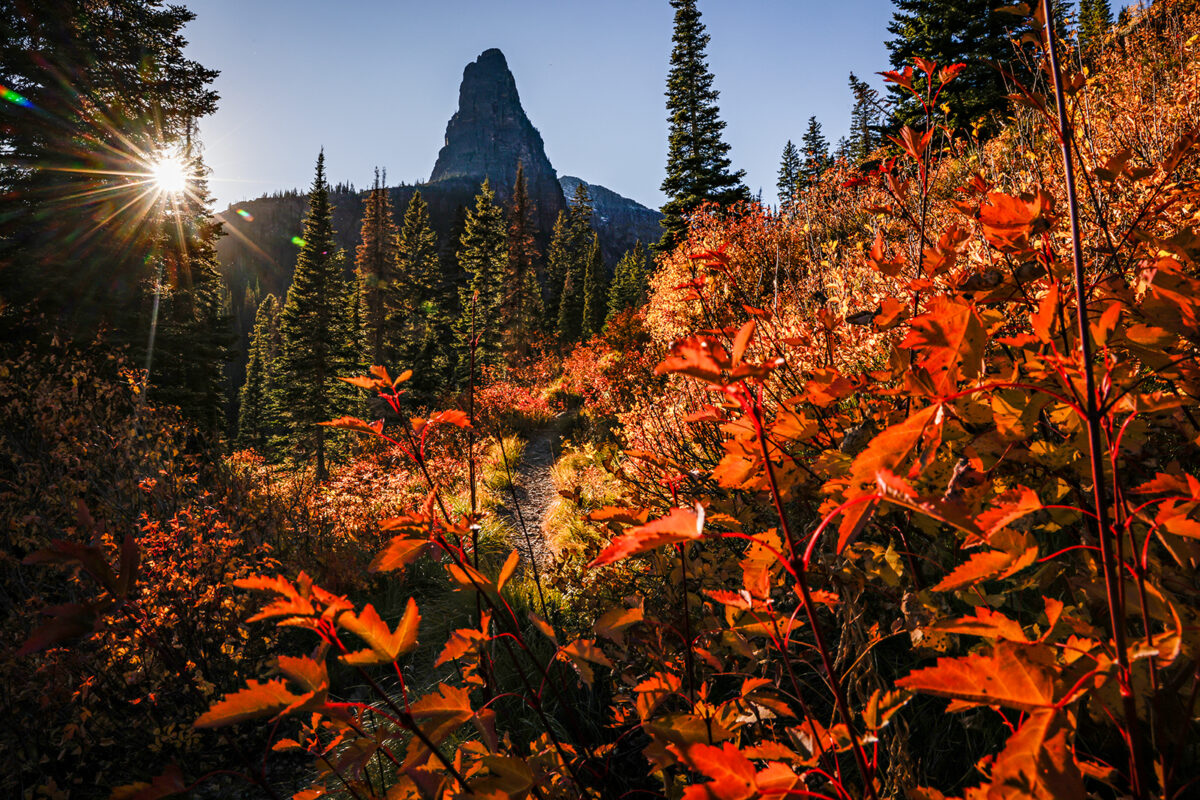
Red October
Pumpelly Pillar Spire rises over the crimson foliage lining the Dawson Pass Trail in the Two Medicine Area on a balmy October day. The trail is part of the 19-mile Dawson-Pitamakan Loop, a popular, but challenging day hike over two mountain passes. As with any part of Glacier, the Two Medicine Area is inspiring any time of year, but autumn is arguably its finest season. Golden aspen leaves and reddening huckleberry bushes against a snow-dusted alpine backdrop is a maximal expression of natural aesthetics. Grizzly bears frequent the low elevation areas of the trail during this time of year, imbuing a wild element to what otherwise might be construed as just a long walk in the park.
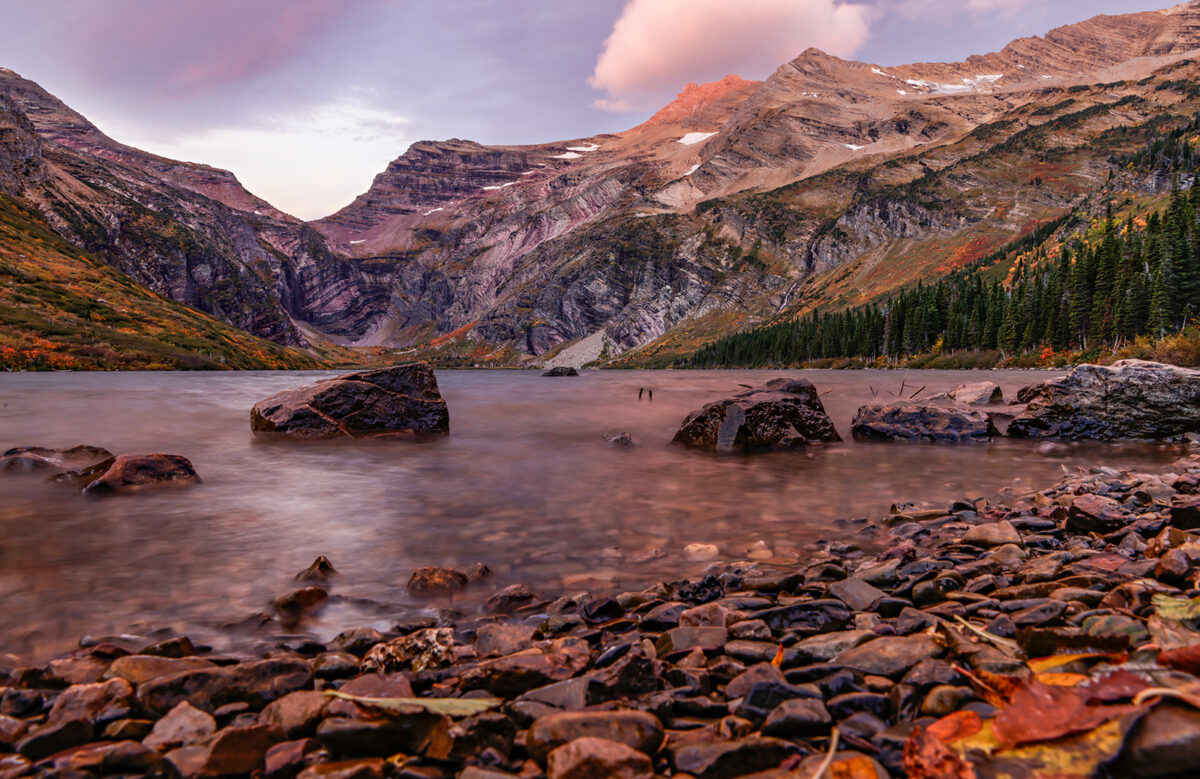
Dawn at Gunsight Lake
The tonality of color brought out only by twilight is the impetus behind late nights and early mornings for the landscape photographer, as illustrated by this autumnal dawn scene of Gunsight Lake. The scene is awash in a perfect secondary color palette of green, orange and purple. The lake is the subject of a conservation controversy in recent years. In 2023, as part of a native trout conservation project, the National Park Service poured the piscicide rotenone into the lake to kill introduced, non-native rainbow trout. The park service then planned to populate the lake with translocated native bull trout and westslope cutthroat trout as a way of providing an isolated, cold-water refuge from hybridization and warming climatic pressures. Two conservation nonprofits sued the government, putting the second phase of the plan on hold. The plaintiffs argued government agencies violated the National Environmental Policy Act and the Endangered Species Act, saying they failed to consider the consequences of collecting and propagating drainage-specific bull trout, precluding public comment. Gunsight is historically a fishless body of water, with no fish species occurring in the lake naturally.