In Northwest Montana, Storm-snarled Trails Test Durability of Wilderness Chainsaw Ban
Forest Service firings that decimated the ranks of seasonal trail crews, combined with historic windthrow, have compounded the challenge of clearing thousands of miles of wilderness trails this summer
By Tristan Scott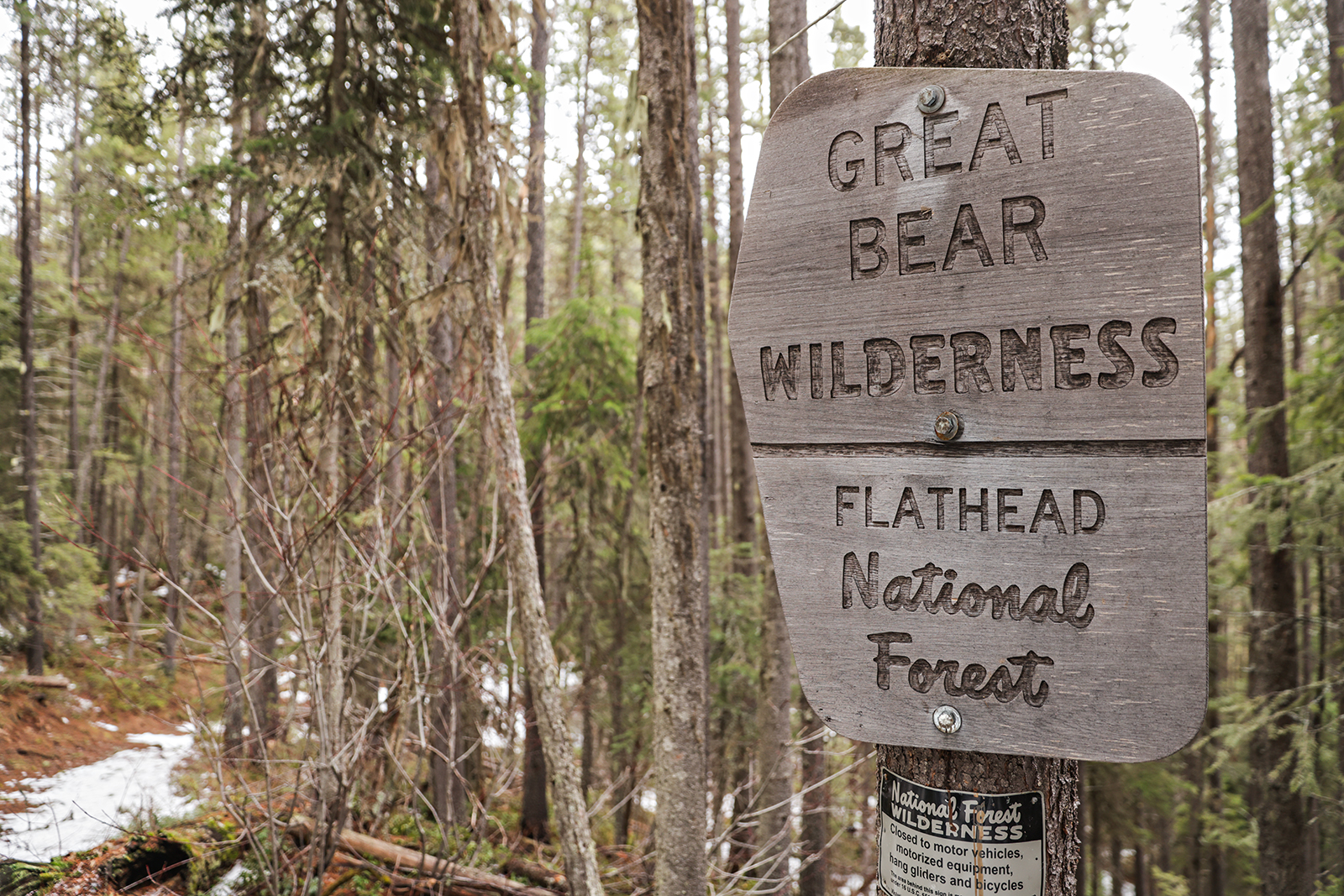
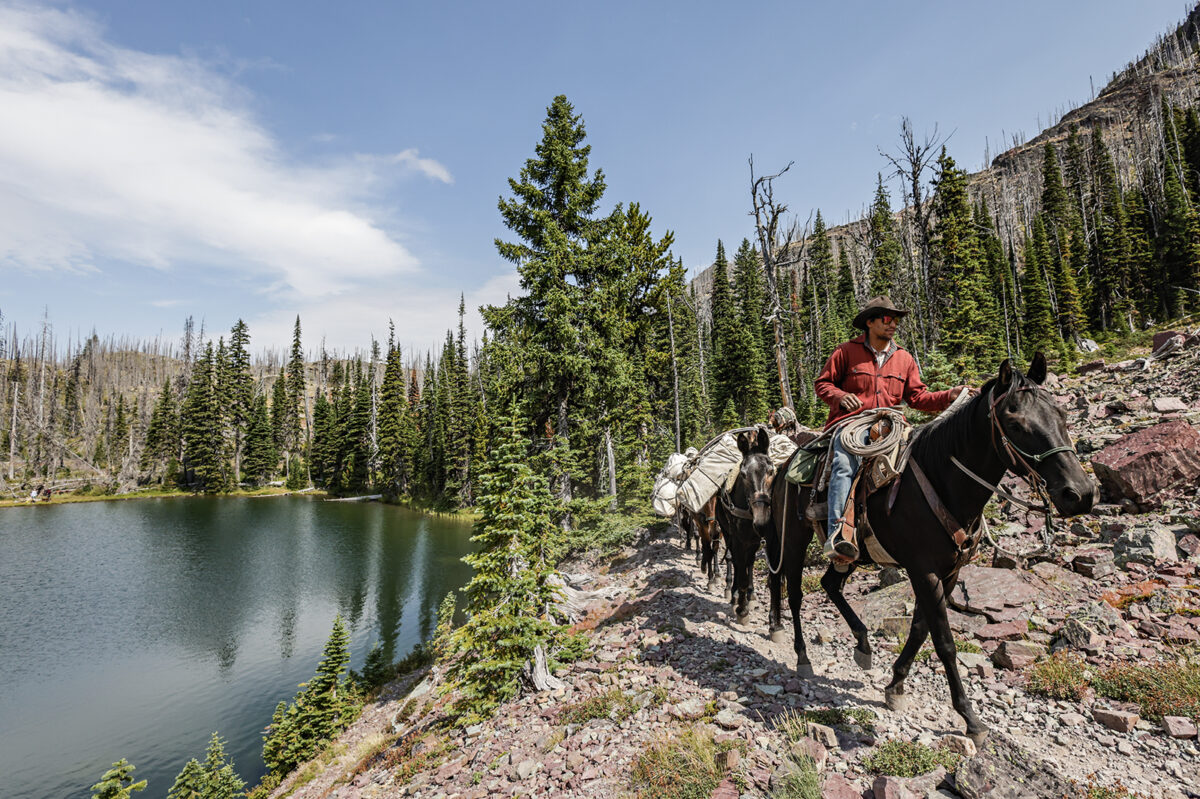
Every spring for the past four decades, as the high-elevation snowpack recedes and the trails melt out, Jack Rich has pioneered a route from his guest ranch near Seeley Lake up and over Pyramid Pass, a prominent western gateway to the Bob Marshall Wilderness Complex. To clear the mainline stock trail, he’s cut through toppled fir and jackstrawed lodgepole, hacking through hazard trees and mangled snags and pick-up-stick piles of windthrown elm. After a really harsh winter of heavy snow and squalling wind, Rich said the spring-loaded tangle of timber can tower 4 feet above the trail tread, requiring a bomb technician’s precision to unsnarl.
“We work like dogs to get the Pyramid Pass trail open,” Rich, whose parents built the family’s outfitting and guest ranch in 1958, said recently. “We have to. It’s the southern portal to the Bob.”
Rich guesses that in about half of his 40 years clearing that trail, he’s punched through before the Flathead National Forest’s trail crews could prioritize it. And, in accordance with the 1964 Wilderness Act’s prohibition on mechanized and motorized equipment, he’s done most of that work (about 90%) without the benefit of a chainsaw.
“It’s 43 miles over Pyramid Pass to Big Prairie Ranger Station and four miles of that is outside of the wilderness,” Rich said recently. “And we do use chainsaws outside of the wilderness. But on the other 39 miles, the only way we can get that open is with crosscuts and axes. We’ve never snuck in chainsaws. But the reality is, conditions are so bad this year and there’s so little manpower that some arterial trails might not open up. And the Wilderness Act does allow them to make exceptions for chainsaws.”
Across the West, and especially in states with vast chunks of designated wilderness that endured a winter’s worth of extreme weather events — namely, Montana and Idaho — land managers, advocacy groups, outfitters and guides, volunteer associations, and other stripes of trail stewards have been debating a key tenet of the Wilderness Act: Whether to provide an emergency exception for mechanized use. On the Flathead National Forest, officials acknowledged that this year’s windthrow event has left an unusually high number of downed trees across the trails in the Bob Marshall Wilderness Complex and beyond.
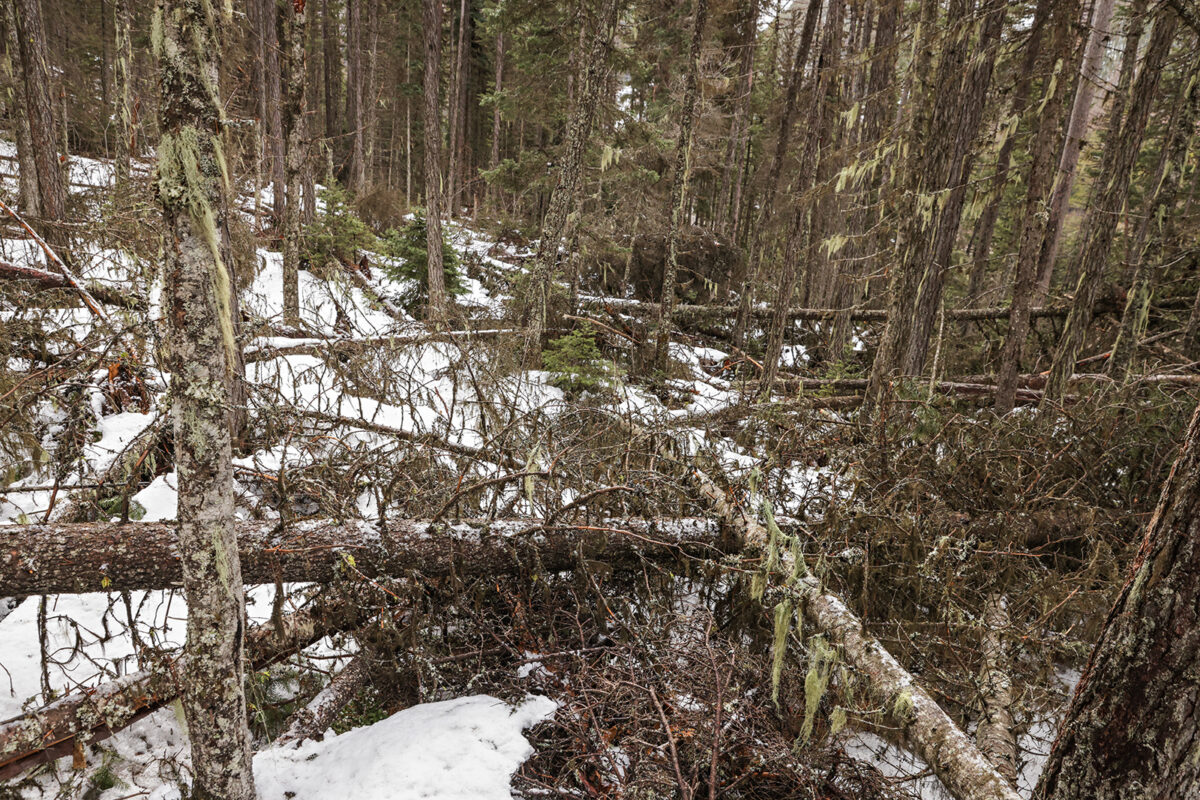
Although the Wilderness Act allows for consideration of motorized tools in rare cases in which they are truly the “minimum necessary tool,” district rangers are stopping short of declaring an emergency.
“While the extent is significant, natural disturbances like windstorms and fires have shaped this landscape for generations, and responding to them is part of our responsibility under the Wilderness Act,” a Flathead National Forest spokesperson, Kira Powell, said in an email. “Wilderness is meant to remain untrammeled — guided by natural processes rather than human control — and our trail work must balance public access with the legal and ethical duty to protect Wilderness character.”
“Based on current conditions, we believe this year’s downfall can be cleared using traditional tools, consistent with long‑standing stewardship practices in the Bob Marshall,” Powell continued. “With snow gone in the lower elevations, our crews and partners are already deep in the backcountry cutting out trail. We are fully committed — ‘all hands on deck’ — to maintaining access while honoring the values that define Wilderness. We’ll prioritize the main through‑routes and most heavily used travel corridors, but visitors should expect to encounter downed trees, step‑overs, jackstraw piles, and sections where navigation skills may be needed. These challenges are part of the solitude and self‑reliance that make the Bob Marshall Wilderness truly wild.”
In 2026, however, “all hands on deck” looks different than it did in 2024, let alone 1964. For starters, federal agencies are still reeling from the consequences of hiring freezes, budget cuts and staffing vacancies that hobbled public land managers at the beginning of 2025, when the Trump administration unleashed its Department of Government Efficiency on federal agencies. On the Flathead National Forest, the vacancies have led to operational gaps and a large-scale loss of expertise and rarefied skills, such as using pack stock to access remote landscapes and cross-cut saws to clear wilderness trails.
Even after the Flathead and Kootenai national forests that encompass northwest Montana’s most prominent wilderness areas — the Bob and the Cabinet Mountains Wilderness — received authorization to add a slate of seasonal employees to the depleted ranks of trail crew workers, they remain overextended and are still operating from a deep deficit.
“It’s going to be a rough year,” Rob Davies, the Flathead National Forest’s district ranger on the Hungry Horse and Glacier View ranger districts, said in February, when the U.S. Department of Agriculture’s Forest Service announced plans to hire up to 2,000 seasonal positions for the upcoming summer recreation season. “We know it’s going to be a workload.”
Davies and other district rangers in northwest Montana were grateful to onboard a cadre of seasonal workers to help clear a backlogged inventory of trail maintenance, which is exacerbated this season due to the series of extreme wind and rain events that buffeted the region in December, causing widespread flooding and blowdown. But even though the authorization to hire 20 seasonal positions on the Flathead National Forest helps offset the hiring freeze and budget reductions, the region’s remote character adds layers of logistical challenges to the recruitment and hiring process.
According to agency officials in Washington, D.C., the Forest Service has expedited its hiring process and shortened hiring timeframes, with a renewed focus on recruiting local workers instead of hiring from the national pool.
“This year, we’re focusing our recruitment within the communities we serve,” U.S. Forest Service Chief Tom Schultz said about the seasonal positions. “Local residents bring invaluable knowledge, pride, and a strong connection to the places we care for. We are excited to offer more opportunities for people who want to work close to home.”
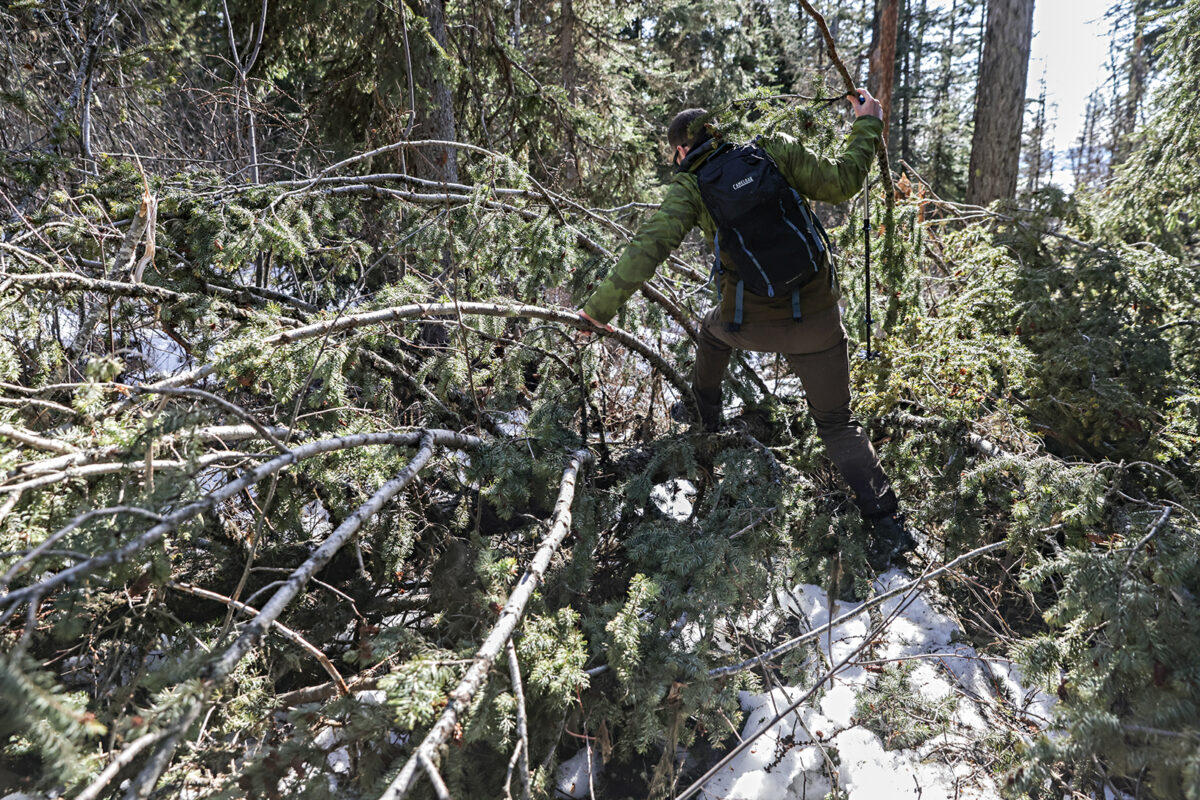
Still, as local land managers brace for challenging conditions across Northwest Montana’s forested landscape, they’re increasingly relying on long-term partnerships with nonprofit volunteer organizations to share the workload.
“Seasonal hiring continues and is going well,” Powell, the Flathead National Forest spokesperson, said in a separate email in late April. “We share the concern over the trail corridors and the amount of windthrown trees throughout the forest but particularly in the backcountry. We are committed to providing safe and reliable access to the Flathead National Forest, but with over 1,100 miles of trail, all but 200 of which is in the Wilderness, our workforce will be up against a significant challenge. Our trail crews will focus first on the main travel corridors along the rivers and to the most popular locations and camps. We’re so grateful to our partners like Back Country Horsemen, Bob Marshall Wilderness Foundation, and outfitters who are all working alongside us to clear and maintain as many trails as possible.”
To help augment the staffing on local forest districts and replenish the generational skills that are being lost in the woods, the Back Country Horsemen is bracing for a full season of volunteer projects. So are volunteers from the Bob Marshall Wilderness Foundation, and the Montana Conservation Corps, and any other volunteer group with resources to spare.
Greg Schatz, a long-time member and leader of the Back Country Horsemen of the Flathead, said he’s encountered severe blowdown and trail damage on the Flathead National Forest this spring. As always, his group has a full docket of summer projects.
“We’ve had a full summer of projects for 30 years. We can’t add more projects,” Schatz said. “But this year, it’s a mess out on the trails. Thirty years ago, we would clear the side trails. Now, we’re clearing the mainline trails, and so are the other volunteer partners.”
“To be fair,” Schatz continued, “there were no trail crews last year; there were forest employees cutting trails that have other job titles, and there were volunteers, but there were no employees with the title, ‘trail crew.’ And we got lucky because the trails were in decent shape. But that won’t be the case this year.”
To lessen the strain on agency resources last year, the Montana Conservation Corps assigned “cut-and-run” trail crews to the Bob Marshall Wilderness. This year, they’ll employ a similar model specifically to deal with blowdown.
“We’ve got a power crew for 11 weeks in the Bob Marshall that’s going to help clear blowdown specifically,” Gavin Wisdom, regional director of Montana Conservation Corps, said. “They are a crew of six that we will divide into two pods of three. It’s a model we started last year that was born out of the Forest Service’s cuts to resources. But this year’s emergency is the blowdown.”
Cliff Kipp, executive director of the Bob Marshall Wilderness Foundation, said his organization recently led a crosscut saw training exercise in the Great Bear Wilderness, clearing the popular trail to Stanton Lake. He said his organization is preparing for a busy summer working with the Flathead National Forest and other partners to help with emerging needs, just as it has for 30 years. But even with a few more seasonal workers in the woods, Kipps said, “there’s still no closing that gap in terms of workforce and technical expertise.”
“We will facilitate whatever lift we possibly can given our capacity,” Kipp said, explaining that the Bob Marshall Wilderness Foundation is working with the agency to fill additional seasonal position, including trail technicians “who are in the hopper to start May 11.” Three of those jobs are professional-grade trail positions; one of them will be assigned to Hungry Horse Ranger District and the other two to Spotted Bear Ranger District.
“We have been fortunate enough given the job market to find people who already have considerable trail experience, and through this partnership they’re able to make a good wage,” Kipp said, adding that their positions are predicated on Forest Service funding. Meanwhile, the nonprofit organization facilitates two and a half weeks of training for chainsaw certifications, cross cut training, wilderness first aid, and more.
“Then we cut them loose in the district for 20 weeks,” he said.
The Bob Marshall Wilderness Foundation also has more than a dozen “trail stewards” who provide similar skills as trail technicians and fill 14-week positions.
“Having that field presence, that’s another peg in the board,” Kipp said. “Last year, we had 16 trail stewards and they got a stipend; this year, they’re receiving a wage and are budgeted for overtime work. Anyone who is going to be in the field in the Bob is going to be working their butts off because of what’s out there.”
Despite what’s out there, however, the question of whether to allow chainsaws in the capital “W” Wilderness is a hard no for Schatz, of the Back Country Horsemen.
“It’s a myth that chainsaws are faster than crosscuts,” Schatz said. “I’ve cut thousands of trees with a chainsaw and I’ve cut thousands of trees with a crosscut, and in the wilderness, you can cut more miles of trails and more trees with a crosscut. A chainsaw overheats or doesn’t start. It needs bar oil and maintenance. With a crosscut, you make two cuts and roll the log off the trail.”
For Kipp, it’s important that “we adapt to the Wilderness and what’s out there.”
“There are no shortcuts, and that is okay,” he said. “A lot of the conversations taking place right now are whether using chainsaws would allow us to get through the blowdown faster. I like running a chainsaw, but it’s not about the tool. It’s about the manpower. The workforce. And that’s where the Forest Service continues to make the case that we need people.”
Bill Hodge, a Flathead Valley public lands advocate whose conservation credentials include turns as executive director of the Bob Marshall Wilderness Foundation and as state director of The Wilderness Society’s Montana chapter, the chainsaw-versus-crosscut dispute isn’t a debate worth having.
“Chainsaws won’t solve the problem,” Hodge said recently on his podcast, “The Wild Idea,” during an episode about the revelation by the organization Wilderness Watch that U.S. Forest Service officials were considering allowing the use of chainsaws in designated wilderness areas.
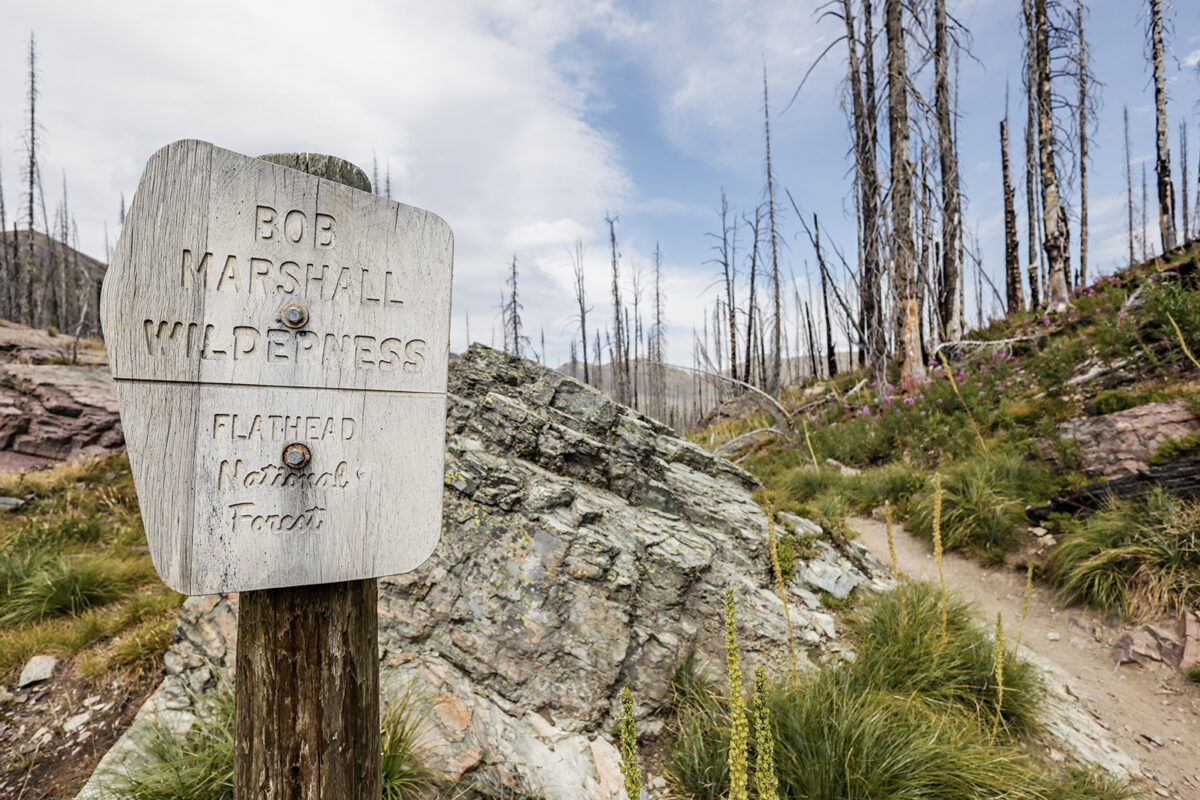
Although the agency has been clear that chainsaws are a measure of last resort, Hodge said years of pressure from outfitters and guides has resuscitated the issue.
“As someone that has spent years using crosscut saws to clear wilderness trails, and using chainsaws outside of wilderness, this idea that chainsaws are going to solve a trail maintenance issue is absurd,” Hodge said. “The challenges to keeping trails open is not a horse power issue. It is a human capacity issue. You see, before you ever start to cut that tree from across the trail you’ve already expended 90% of the time on other logistics. So to fight over the last 10% of the work misses the mark. In an era where we are cutting the agency staff to levels well below minimum it is laughable to argue that the problem is the tool. On top of that, it is so antithetical to the Wilderness Act’s intent, which is our humility — that this resources is not about our convenience.”
But for outfitters and guides, for whom a single season of canceled trips can trigger an existential business crisis, providing the public opportunities to access the wilderness is a central tenet of the Wilderness Act that rivals its prohibition on mechanized tools.
“I have a business to run. It’s an economic reality for us, because we’re already committed to our clients,” Rich said. “So if we don’t get the trails open it alters how people can experience the wilderness.”
According to Rich, affording the public access and showcasing the value of wilderness, while building social tolerance for landmark environmental safeguards like the Wilderness Act, is just as important as preserving the land itself.
“If you look at the purpose of the Wilderness Act, accessibility is one of the mandates. If it’s not accessible, the Wilderness itself has less value,” Rich said. “And outfitters play a big role helping people see a place they can’t ride into on mountain bikes or snowmobiles. So if we want to die on this sword, that’s fine. But it will have downstream social consequences. The Wilderness Act isn’t in our Constitution. It’s a law passed in 1964. And yet some people hold onto it like it’s the 11th commandment of the Bible. And it’s not.”
Moreover, Rich said that a single skipped season of trail maintenance can compound downfall and degradation and lead to trail deterioration.
“I don’t blame the Forest Service, I admire them. They do an admirable job despite being underfunded and understaffed,” Rich said. “But they have a difficult decision ahead of them. They can barely get the trails open as it is. And this year, it could be that a lot of trails don’t get open at all.”