2026 Primary Election: Three Republicans Hope to Advance to Run for Public Service Commission’s District 5 Seat
The experienced three-way field includes the incumbent commissioner, who has held the seat for four years, as well as a Republican activist from Helena and the PSC's former executive director.
By Mariah Thomas
Editor’s note: David Sanders, one of the candidates running as a Republican for the state’s Public Service Commission, responded to the Beacon’s questionnaire on May 17, after he initially missed a May 8 deadline. His responses can be found below.
The three-way race for the Republican nomination to run for the Public Service Commission’s District 5 seat includes three experienced candidates who have either run for the office before, held it or worked at the PSC in Annie Bukacek, Joe Dooling and David Sanders.
The state’s Public Service Commission serves as Montana’s utility regulator, and the five commissioners who sit on the body are tasked with balancing ratepayer interests with utilities’. Montana is one of only a handful of states where commissioners are elected to roles on the commission, rather than appointed.
Montana’s PSC maps were redrawn in 2023 and, after a long legal process, a map that split each of the state’s most populous cities stands today. District 5 contains parts of the following counties: Toole, Pondera, Glacier, Flathead, Lake, Missoula, Granite, Powell, Teton, Lewis and Clark and Cascade. This year will be the first election with the new map in place.
In this year’s election, incumbent Commissioner Bukacek, a physician who formerly served on the Flathead City-County Board of Health where she cemented a position as an ardent anti-vaccine advocate, will face off against two fellow Republicans hoping to clinch their party’s nomination for the seat.
Joe Dooling, of Helena, ran against Bukacek for the Republican nomination for PSC’s District 5 seat in 2022. The longtime Republican activist is a farmer and rancher who has served as the chairman of the Lewis and Clark County GOP. According to his campaign website, Dooling’s priorities, should he advance to the general election and win a seat on the PSC include transparency, protecting ratepayers first and ensuring fiscal responsibility.
David Sanders, the third candidate in the mix for the Republican nomination, formerly served as the PSC’s executive director. Also hailing from Helena, Sanders most recently served as chief of staff for Montana’s state auditor, James Brown, formerly the president of the PSC. His campaign platform consists of efforts to make the PSC and utilities affordable, accessible and accountable.
The Beacon shared questionnaires with the email addresses listed on the Secretary of State’s filing website for all three candidates. Bukacek’s responses can be found below. Neither Dooling nor Sanders responded.
Candidate questions
- Why are you running for the PSC, and how might your experiences inform your work, should you win election to the role?
- One large issue on the horizon for the commission is a potential merger between Northwestern Energy and Black Hills Energy, based in South Dakota. What impacts do you see from this merger, and where do you stand on it?
- With the rise of AI, several data centers have been proposed in Montana, with potential for Northwestern Energy to service them. What, in your eyes, is the PSC’s purview as the state braces for these centers, and what might the impacts be on consumers? How can the PSC help prepare the state for these developments?
- The PSC has, for years, been scandal plagued. In the past five years, it has weathered office culture issues, high staff turnover, lawsuits about the redrawing of PSC districts and an investigation into the workplace conduct of one member. How would you, as a PSC member, work with you fellow commission members and manage conflicts?
- In recent years, there have been suggestions to replace PSC elections with an appointed commission, which would align Montana’s PSC composition with most other states in the country, which appoint rather than elect members. What are your thoughts on the idea of an appointed PSC, rather than an elected one? Are there alternative changes to the PSC that you’d support?
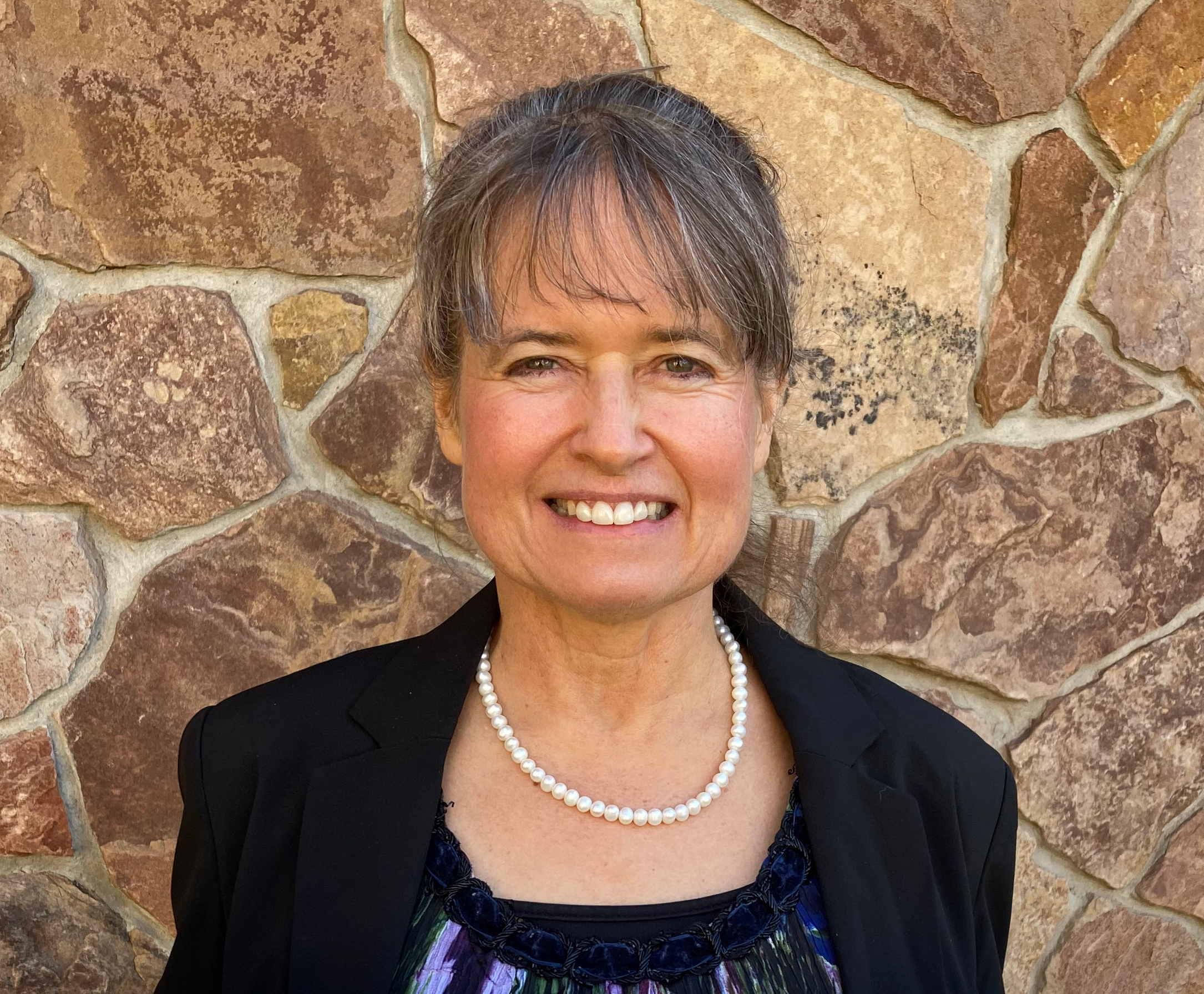
NAME: Annie Bukacek
AGE: 68
HOMETOWN: Residency in Helena, regularly travel back and forth to Helena and Kalispell
EDUCATION LEVEL: Medical Doctor degree from University of Illinois College of Medicine
OCCUPATION: District 5 Public Service Commissioner, runs a small medical practice
PREVIOUSLY HELD POLITICAL OFFICES: District 5 Public Service Commissioner
1. I am running to ensure that my friends, neighbors and all Montanans continue to have access to dependable utilities; in my fourth year in this position, I understand PSC policies, procedures, laws and rules. I work well with PSC staff and the current commissioner leadership. To do the PSC commissioner job properly, an individual must have a great work ethic, and go above and beyond the call of duty to serve all Montanans. That is me. A commissioner must be a good listener, be engaged with the citizenry, avoid bias, think for themselves, do independent research, and be capable of applying analytic tools to large volumes of complex information in order to make informed, reasoned decisions and solve problems. As a medical physician for over 40 years, I have learned these skills. As a commissioner, I have applied those skills to every issue that comes before the PSC requiring a decision.
2. We have a hearing on this topic May 12 through 14 because it is a contested case. PSC commissioners and staff are not at liberty to discuss pending contested issues. Our job is to keep an open mind, study the pre-hearing testimony, attend the hearing to gather more information, then make a decision based on the evidentiary record.
3. The PSC has three open dockets on the topic of data centers, including the recent large load tariff provided to us by Northwestern Energy. I have given two presentations that can be found on my website anniebukacek.com, both of which demonstrate my understanding of potential impact on customers. The large load tariff has provisions for protecting current customers from adverse rate or reliability effects. Press buzz words are data centers and the Black Hills merger, but the bottom line concern is will they negatively impact the affordability and reliability for current customers. It is the PSC’s job to balance affordability and reliability. As these are open dockets and contested, I am not at liberty to discuss specifics.
4. Negative headlines for the PSC go back to 2007. They are not new. Staff turnover is not new and preceded my term. PSC leadership has been working on a strategic plan since 2021, starting two years before I began my term. Part of the strategic plan has been the development of an internal policy manual. Our policy manual covers many topics, including policies and procedures for dealing effectively with human behavior. The PSC is a great place to work in part because of the high quality of the majority of the people who work there. Many good improvements have been made at the PSC through strategic planning, and there is more work to do. I am pleased to be part of the process to improve the performance and reputation of the PSC.
5. Legislation to change to appointed commissioners has come up during many sessions preceding my PSC term. There has never been a time in history more important than right now, for PSC commissioners to be directly answerable to the citizens of Montana who elect them. I have experienced the problems firsthand with elected commissioners, and there would be a different set of problems if the commissioners were all appointed. A hybrid model might offer a way to keep the problems mitigated that arise from fully elected and fully appointed commissioners, provided the majority are elected. PSC leadership has been working on a strategic plan since 2021 to mitigate some of the problems with commissioners being elected. Many good improvements have been made and there is more work to do. I am pleased to be part of the process to improve the performance and reputation of the PSC.

NAME: David Sanders
AGE: 66
HOMETOWN: Helena
OCCUPATION: Chief of Staff, Office of the State Auditor and Commissioner of Securities and Insurance
PREVIOUSLY HELD POLITICAL OFFICES: None
1. I am running for the PSC to reform and refocus the agency on its core missions of affordability, accountability, and accessibility rather than the political infighting that currently occupies the commission. As the former Executive Director of the Montana PSC, a former official at the U.S. Department of Transportation, and in my current role as Chief of Staff in the Office of the Montana State Auditor, I bring extensive experience as a regulator and policy professional to this role.
2. I am concerned by the recent late submission of thousands of documents regarding this stock-swap buyout, which left insufficient time for proper review before hearings concluded. I worry that a lack of public scrutiny could lead to a decision that favors a multi-billion dollar, out-of-state corporation over Montana ratepayers. This buyout may weaken the position of monopoly utility ratepayers, and I would apply a critical eye to the merger to protect Montana’s economic interests.
3. I have studied the impact of massive data centers on power grids and water resources in other states. I believe that for-profit companies proposing these centers must not be allowed to shift the costs of the additional resource burdens onto residential and small business ratepayers.
4. In just the last two weeks, we saw the worst of the PSC’s dysfunction on full display. Two weeks ago, Commissioners (Annie) Bukacek, (Jeff) Wellborn and (Jennifer) Fielder, having failed to get the Governor to remove another Commissioner from office, voted to admonish one of their duly-elected colleagues by banning him from entering the PSC building. That Commissioner had to get a court order from the U.S. District Court for the District of Montana to simply attend the hearing on the Northwestern/Black Hills buyout, perhaps the PSC’s most important contested case in a generation, in person. This dysfunctional behavior must come to an end.
The current state of the PSC is unacceptable. Recent legal conflicts between commissioners demonstrate a lack of professional leadership. It is time for sober, sane, adult leadership at the Montana PSC to ensure the commission functions effectively for the people of Montana. I know how to build consensus on the Commission to achieve results for Montanans and that’s what I plan to do as a Public Service Commissioner.
5. I don’t think that structural changes to the selection of Commissioners is any panacea for the dysfunction that currently plagues the PSC. The Commissioner just needs new leaders who understand that the first two words in “Public Service Commission” are “public service.” I think the most important reform would be to have Commissioners who can prove qualifications for the office. For example, being a retired legislator or doctor is fine, but it doesn’t make one qualified to be a Public Service Commissioner.