Glacier National Park’s First Fatal Bear Attack Since 1998 Underscores Anomaly of Lethal Encounters
In the days after a Florida man's death from a bear attack, parkgoers assess — and accept — the inherent risks of hiking in grizzly country as experts emphasize "bear aware" education
By Tristan Scott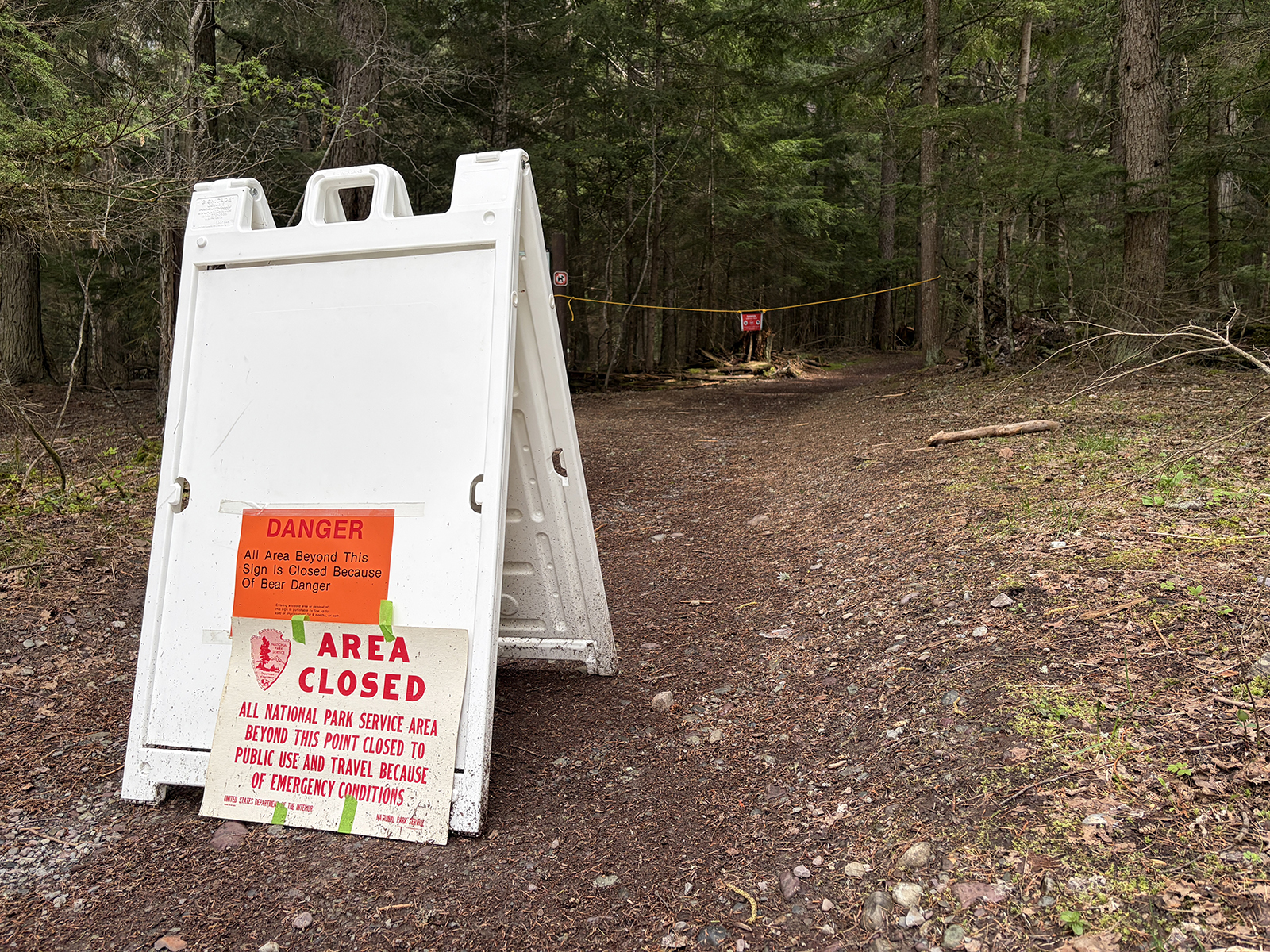
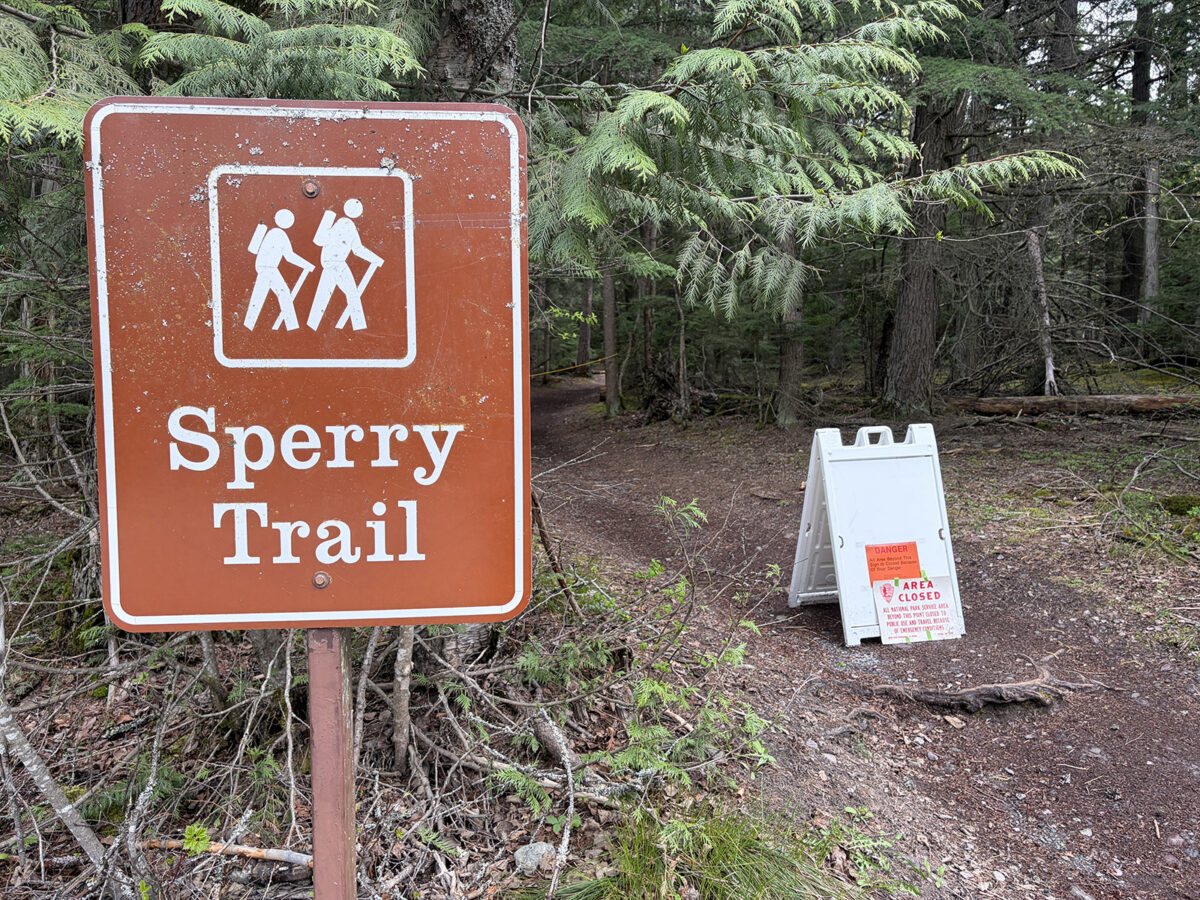
The slate-gray sky over Glacier National Park hinted at rain on Friday afternoon, but it did not deter a steady stream of hikers and bikers from exploring the Going-to-the-Sun Road. Neither did the nearby orange-and-red safety signs warning of bear danger at one of the park’s most popular west-side trailheads, nor the yellow rope barrier restricting access to the site of a recent fatal bear attack.
Across the road from the cordoned-off trailhead, Sophia Fairchild, 24, and James Potts, 23, both of Austin, Texas, rested in the Lake McDonald Lodge parking lot midway through a bicycle ride. Having traveled more than 50 hours by Amtrak’s passenger train to visit Glacier Park, they’d been alarmed to learn that morning about the tragic circumstances prompting the trail closures — a 33-year-old solo hiker, reported missing earlier in the week, had been found dead on Wednesday afternoon about 2.5 miles from the trailhead. The man’s injuries were consistent with a bear attack, according to park officials, though details on the circumstances are limited.
“The sequence of events leading to the bear encounter remains under investigation; however, evidence suggests that this was a surprise encounter,” park officials said in a press release on Saturday, which identified the victim as Anthony Pollio of Davie, Fla.
Although Fairchild said she was devastated by news of the man’s death, which marks the first bear-related fatality inside Glacier Park’s boundary since 1998, it did not hinder her plans to explore the park’s 1-million-acre interior. The hotel where she and Potts stayed even provided them with complimentary canisters of bear spray, which they stowed in water bottle cages attached to their bike frames.
“We know that it’s a risk,” Fairchild said of bear encounters. “The timing of this doesn’t change my perception of that risk.”
The perception of that risk was on Chuck Haney’s mind, too, as he unloaded his bicycle from his Subaru a few dozen yards away from the trailhead. A renowned Whitefish-based photographer, Haney has been visiting Glacier National Park for nearly four decades, drawing wide acclaim for his portraits of the park’s rugged landscape, as well as its wildlife.
The longtime local distinctly recalled the last time a bear killed a person in the park, in part because it’s so unusual; far more people drown or die in motor vehicle accidents in Glacier than from bear encounters.
“I’ve been hiking solo in the park for more than 36 years, and I’ve had lots of bear encounters. Bears are part of the fabric of living here,” Haney said. “I’m always making a lot of noise, singing, yelling. And I always carry bear spray. You can do a lot to minimize the risk. You can’t ever eliminate it, but you can minimize it.”
Even as close-range conflicts between bears and humans increase in Montana and across the West, experts say fatalities are rare. Since 1910, bears in Glacier — home to one of the highest concentrations of grizzlies in North America — have killed 11 people, including Pollio. Nearly all attacks on humans result from a bear’s defense of its cubs, its food, or itself, said Chris Servheen, who retired in 2016 after working as the U.S. Fish and Wildlife Service’s grizzly bear recovery coordinator for 35 years.
“Bears behave themselves pretty well considering how many millions of people we unleash across the landscape every year,” Servheen said. “From a bear’s point of view, they very rarely get a day off from having to worry about people around here. And they’ve already got a tough job trying to make a living on this landscape. These events are tragic, but they’re rare. The fact that it’s been almost 30 years says a lot.”
Still, as human pressure grows, and bear populations continue to recover, conflicts have risen in Montana. On May 4, the day after Pollio was fatally attacked in Glacier, two hikers were injured in Yellowstone National Park. The hikers were flown by helicopter to a hospital.
Last year, a woman was injured while hiking near Lake Janet when a bear, accompanied by two cubs, emerged from the brush and swiped at her. The bear ran away after the woman’s hiking partner deployed bear spray. Across the state in 2025, Montana wildlife officials reported that six grizzly bears were killed by people in self-defense.
“There are more people recreating in bear habitat, and that increases the likelihood of running into a bear at close range,” Servheen said. “I don’t think we’re ever going to reach a point where these incidents don’t occur. This is one of the few places where grizzly bears can still exist. I wish we could eliminate the risk for people and bears. But it comes with the territory.”
In northwest and north-central Montana, that territory is defined as the Northern Continental Divide Ecosystem (NCDE), which is home to one of the largest grizzly bear populations in the contiguous U.S. With an estimated 1,100 bears, the region spans Glacier National Park, the Bob Marshall Wilderness Complex and surrounding public and private lands.
As park officials investigate the circumstances surrounding the fatal encounter that led to Pollio’s death, they’ve released few details. A search and rescue team located some of the victim’s personal items, but officials have not said whether bear spray or other deterrents were among them. They also have not determined whether the incident involved a grizzly or black bear, or whether there were cubs involved.
“Park staff are working to determine next steps on field assessments and wildlife behavior monitoring,” according to the release.
Glacier Park officials declined the Beacon’s requests for an interview.
“We are not available for an interview at this time. All the information we have available is in the news release,” according to an email from a park spokesperson. Park officials continue to encourage visitors to be “bear aware” while hiking in grizzly bear and black bear country, publishing tips to its “bear safety” page.
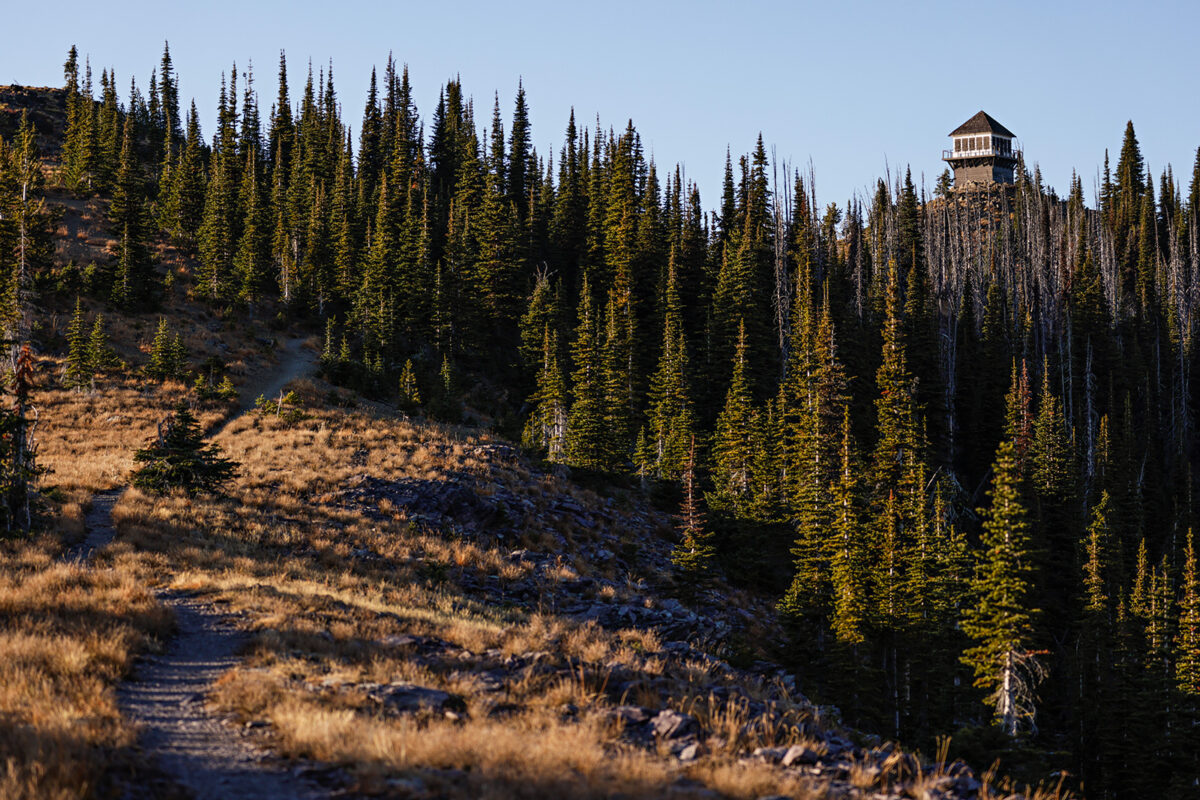
According to the news release, the search for Pollio began after he was reported missing on Monday, May 4, having reportedly communicated plans to hike to the Mount Brown Fire Lookout in the Lake McDonald area. He was last heard from at 8:20 p.m. on Sunday, May 3.
The search ended Wednesday, May 6, when Pollio’s remains were discovered 50 feet off of the trail to Mount Brown Fire Lookout, about 2.5 miles from the trailhead in a densely wooded area littered with downed timber.
“Wildlife and law enforcement personnel are currently assessing the area for bear activity and any ongoing public safety concerns,” the release states.
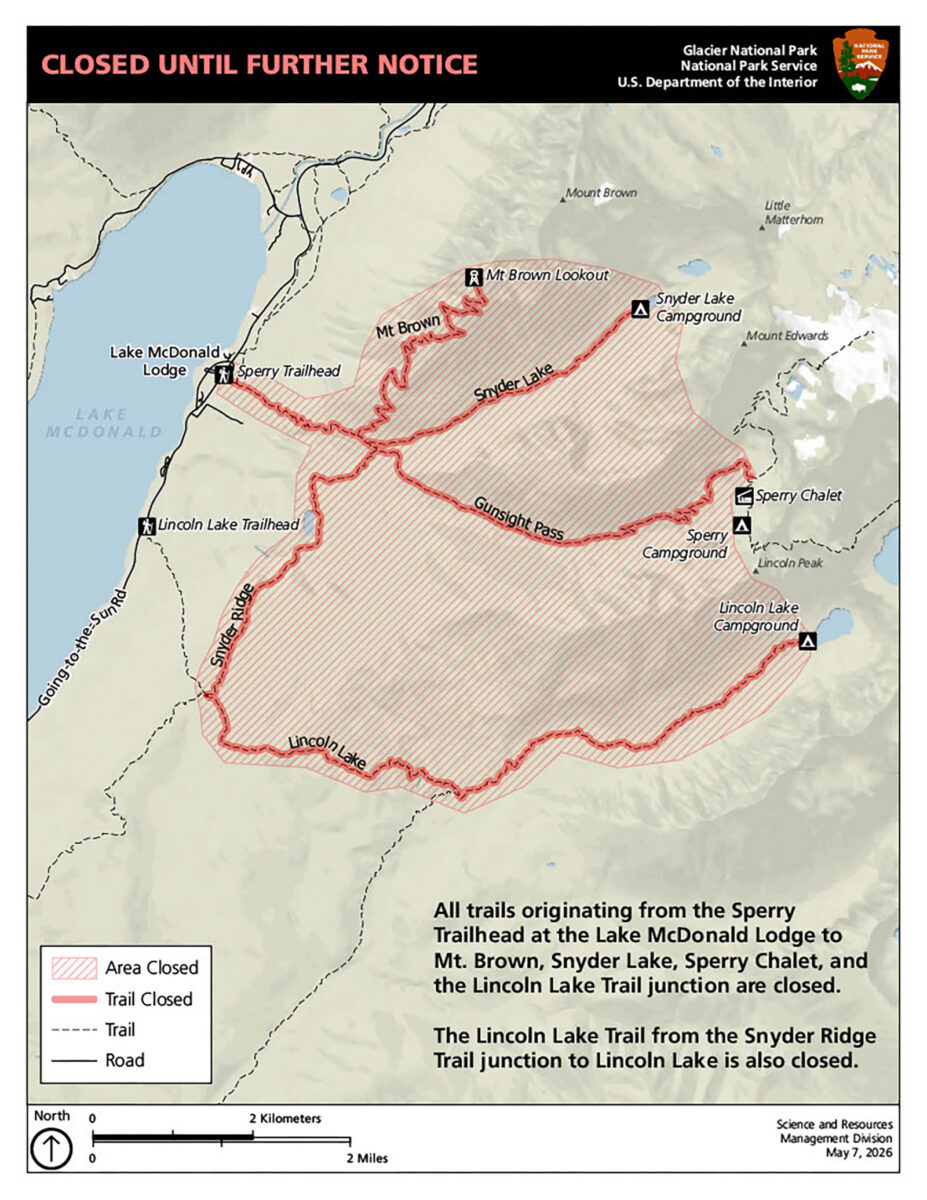
Officials have temporarily closed area trails while the investigation continues, including the trail to Mount Brown Fire Lookout, which begins at the Sperry Trailhead at Lake McDonald Lodge. The route that Pollio was hiking climbs 5,000 feet over 5 miles in one direction, beginning along the Snyder Creek drainage near Lake McDonald before a spur trail branches left, tracing Mount Brown’s southwest ridge and switch-backing more than two-dozen times to the alpine lookout.
Somer Treat, who was born and raised in West Glacier, guessed that she runs the trail to Mount Brown Fire Lookout between 20 and 25 times per year. A popular early-season trail for locals, the route was strewn with more than 50 windthrown trees when Treat traversed it last month, although she said the top was mostly clear of snow following the region’s historic mild winter. She’d planned on making the trip last Sunday, May 3, the same day as Pollio’s fatal encounter, but plans shifted, so she ran to Apgar Lookout instead.
“I have a small obsession with Mount Brown, probably because it’s a love-hate trail,” she said. “You love it when you’re done with it, and hate it while you’re doing it. But I do it at least once a week in the summer. I spend more time on Mount Brown than anyone I know.”
Treat is also more bear aware than anyone she knows, a byproduct of both having grown up in West Glacier and having suffered through the tragedy of losing her husband, Brad Treat, to a fatal grizzly bear mauling nearly a decade ago.
On June 29, 2016, he was mountain biking on U.S. Forest Service trails near the park’s West Glacier entrance when he negotiated a blind curve and collided with the side of an adult male grizzly bear. According to an investigation into the incident, he only saw the animal for one or two seconds before striking it with his bike and sailing over the handlebars. Startled by the collision, the bear fatally attacked him before running off. A Kalispell native and law enforcement officer with the Flathead National Forest, Brad Treat was 38.
Somer Treat, a homebuilder and designer, was working near Whitefish when she received the phone call. As news spread of Brad’s death, Somer and her family began planning a memorial service. The following morning, she set out for a trail run, as she has every day since 2007 — a streak that continues today — to help process what had happened.
“For my entire life, bears were just part of living in West Glacier. Obviously, Brad’s death had a huge impact on me and my family. But it wasn’t the bear’s fault; it was a one-in-a-million chance encounter. And it hasn’t kept me away from the trails,” she said. “Running is my mental therapy. I’m always on high alert, but I’m also enjoying the flow.”
Upon learning of Pollio’s fatal encounter, Treat said she was overcome with compassion for the victim’s family, both for their loss, and the high-profile attention that attends something as shocking as a fatal bear mauling. Treat’s death, which at the time marked the region’s first fatal grizzly encounter in 15 years, captured national media attention.
“I certainly have a different level of empathy for this man’s family, because they’re experiencing the shock of it on top of the grief,” Treat said. “After Brad’s death, it was hard to deal with for me, because people only wanted to talk about how it happened. The fact that it’s so shocking is testament to it being such a rare occurrence. People focus on it because it’s so rare.”
“I mean, the fact that it hasn’t happened inside the park in almost 30 years is amazing, right?”

When it does happen, details often don’t become public for many months. Under federal recovery guidelines, an inter-agency board of review convenes to investigate bear-related injuries and fatalities. After Treat’s death, Servheen chaired that board, as did biologists from the Flathead National Forest, Glacier National Park, and Montana Fish, Wildlife and Parks.
The report concluded that neither Treat nor the bear had time to react during the surprise encounter; there were no bicycle tire skid marks on the trail tread, nor any evidence to suggest the bear jumped off the trail to avoid the oncoming bike, the report states. It also published recommendations for how land managers can use signage at trailheads and public land access sites to warn the public that they’re entering bear country.
“I’ve chaired eight boards of review and I think they are really valuable because, tragic as they are, there’s so much to learn from these events,” Servheen said. “We don’t want to scare the public, we want to educate them. We might not be able to teach the bears, but we can hopefully teach the people.”