In Fire-prone Flathead Valley, the Cost of Insuring the Future Comes at a High Premium
With the Flathead Valley leading the pack in wildfire risk and home insurance challenges in Montana, fire officials, insurance industry experts, lawmakers, and other stakeholders are searching for solutions to extinguish the ever-spreading problem of insurance unaffordability and scarcity.
By Lauren FrickOn a sunny day in early June, as droves of people converged on the Flathead Valley for another busy summer tourism season, a Bigfork Fire Department ambulance idled at a red light on Main Street in downtown Kalispell, waiting to head south roughly 20 miles to its home station.
North along U.S. Highway 93, a Columbia Falls Fire Department truck turned onto East Second Street, passing Whitefish City Hall on its 10-mile journey back to its constituency on the east side of the valley.
As population sizes and visitation numbers continue to grow and fire department resources strain under the demand, this never-ending jurisdictional jigsaw puzzle of piecing together mutual aid between cities and towns across the Flathead isn’t new for fire officials.
“It doesn’t take much for this valley to get off kilter with calls, where Whitefish’s ambulance is up the canyon, West Valley’s busy, so maybe we need to move the Kalispell ambulance up to Whitefish for a call,” DC Haas, the executive director of the Whitefish Fire Service Area, said. “We’re always backfilling on these calls. We don’t have enough resources to go around.”
“I listen to the dispatch a lot, and it’s so frustrating that 911 dispatchers are pretty much doing triage on the phone to see what the greatest need is with the resources available,” he added.
In recent years, however, a new challenge has crept to the forefront — one which seasoned local fire personnel never thought they’d have to consider in their careers: home insurance.
“For my entire career, we were trained to render aid when there were all sorts of emergencies. We just never thought about the implications on insurance,” said David Yeh, the fire chief of the Star Meadows Fire District, which took shape in the former jurisdictional footprint of the Whitefish Fire Service Area last year following struggles from prospective homeowners to obtain insurance.
Since 2019, home insurance premiums in Montana have increased roughly 40%, in addition to a 70% increase in home values, according to the American Property Casualty Insurance Association (APCIA).
Coupling this with the 63% of homes in the Treasure State that are inside the wildland-urban interface (WUI) — the area where structures and other human development meet or intermingle with undeveloped wildland or vegetative fuels — Montanans, especially in the northwest part of the state, are facing obstacles in both affordability and availability when it comes to their home insurance.
“I see underwriting guidelines changing where what used to be an area that I could have three or four carriers compete, I’m lucky to now have one because they restricted how far or what willingness they have to insure homes in the wildland urban interface,” Scott Countryman of Kalispell-based Goosehead Insurance said. “As they restrict their appetite in the WUI, we have fewer carriers underwriting it, so they’re able to command more premium. Less competition, higher prices.”
Few know the struggles of scarce fire suppression resources, rising premiums and a decrease in providers more intimately than residents in the Whitefish Fire Service Area (WFSA) — one of the only remaining fire service areas in the state that is responsible for roughly 75 square miles outside city limits, servicing residents through contracted work with the Whitefish Fire Department.
“People are losing insurance,” Marshall Friedman, a WFSA resident, said. “People are keeping insurance, but they won’t insure a buyer of your house, so a lot of people can’t sell their houses. People are having their premiums raised, tripled, quadrupled.
“You keep hearing about it. You can’t live anywhere near that area and not help but hear horror stories.”
The problems, however, aren’t isolated to residents in the WFSA and greater Flathead Valley — and those holding the state’s purse strings are starting to take notice.
“It’s not just here,” Lincoln Chute, Flathead County’s fire service area manager, said. “Big Sky’s having the same problem; Oregon, Washington. It’s all across the West.
“The insurance companies really took notice after some of the big fires here in the last four or five years in California and some of the other areas, and that is really when that issue came to the forefront. We’ve been saying it for years and years, you’ve got to prepare for wildland fire. It’s always been here and always will be, but now, all of a sudden, it’s hitting people’s pocketbooks, so now people are much more aware of it.”
With home insurance and its connection to wildfires set to be a top focus in the 2027 state legislative session, fire officials, insurance industry experts, lawmakers, and other stakeholders are in search of a variety of solutions to extinguish the ever-spreading problem of home insurance unaffordability and unavailability.
WORRIES IN THE WUI
The Flathead Valley, which is the highest rated area for wildfire risk in Montana, is one of the regions in the state where State Auditor James Brown has seen “significant” homeowners insurance challenges in two distinct ways, he said.
“One is, of course, increased premiums, but also coverage issues,” Brown said.
A main catalyst behind these challenges in the valley, according to Brown, is the rapid population growth across the state.
“I’m going to put on my native Montana hat here,” Brown told the Beacon. “We have seen such growth in the state in the last 15 years that many Montana communities were not prepared to address. So, a number of the issues that we’re seeing are the result of large growth without pre-planning.”
Although the upward trajectory has softened following the pandemic-era boom, the Flathead Valley is still one of the fastest growing areas in the state, with some communities continuing to add to their populations at a 1-2% annual rate.
This upswing has sparked even more growth, specifically in relation to home prices and land value.
Between 2019 and 2024, Flathead County saw a more than 80% increase in median residential sale prices, jumping from $325,000 to $587,000, according to the Montana Regional MLS. Whitefish saw the biggest jump in price with a 125% increase, seeing median prices rise from just over $433,000 to $975,000.
With increased home costs comes increased rebuilding costs, Brown said, which insurance companies must decide whether to absorb.
“The Flathead … it’s a very desirable place in Montana to live,” Brown said. “What that does is puts pressure on home values, which drives up the value of homes in terms of replacement costs for insurance policies. So, someone who may have bought a house for $200,000 ten years ago, the house is now worth $800,000. You can imagine that the replacement value of the house is based on $800,000, not the value you bought it.”
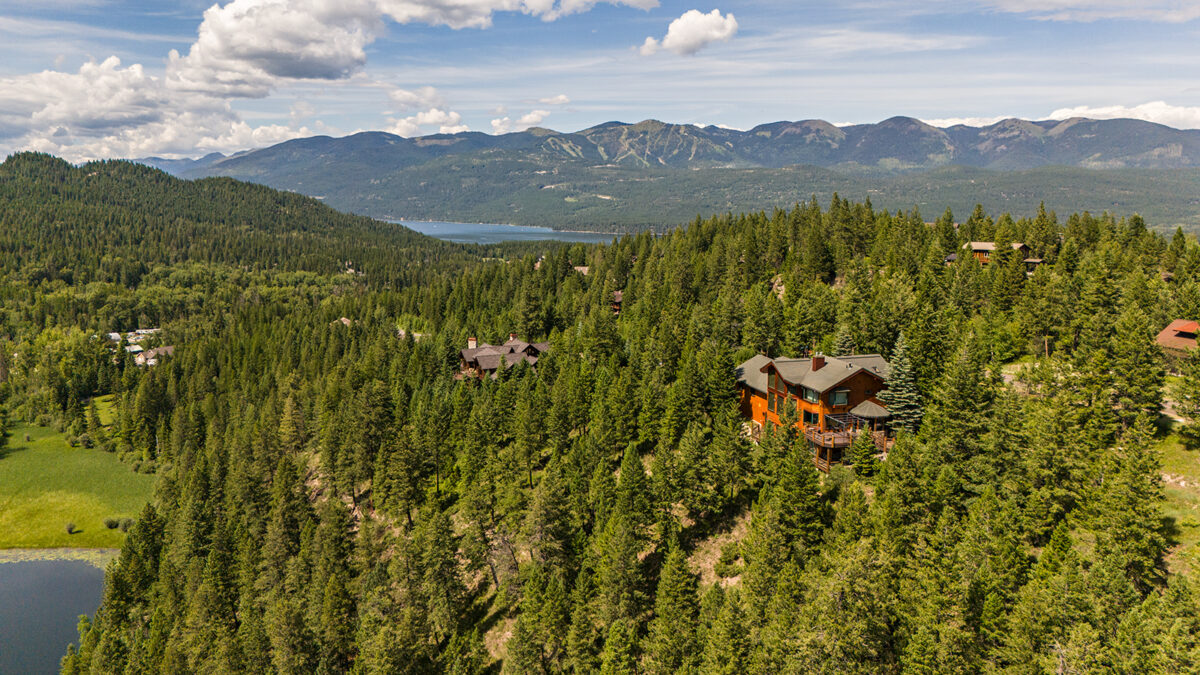
Another main culprit complicating the home insurance landscape in the Flathead is location — large swaths of the population are living in the wildland-urban interface, or WUI, which is categorized by heavily forested, fuel-dense environments primed for wildfire.
The WUI is one of the fastest growing land-use categories in the U.S. — nearly 10% of the country’s land area and 32% of its homes are in the WUI. In contrast, only 1.5% of the land area in Montana is in the WUI, despite nearly 65% of its homes falling under the land designation, according to the National Association of Mutual Insurance Companies.
“Flathead County is a very forested county and a lot of the folks are building into the forest,” Brown said. “Of course, insurance companies rate risk, particularly wildfire risk, as to where the location of your home is. So if you’re building in a forested area or an area that’s tied to wildfire risk, then of course your premium is going to go up.”
When determining pricing and coverage for a homeowner, insurance companies make their calculations based on a variety of factors, Brown said.
“One of those factors is local community planning and development,” Brown said. “Number two is fire suppression, which is a shared effort between local, state and federal resources. Then the third thing would be insurance companies properly rating risk both at the community level and at the individual house level.”
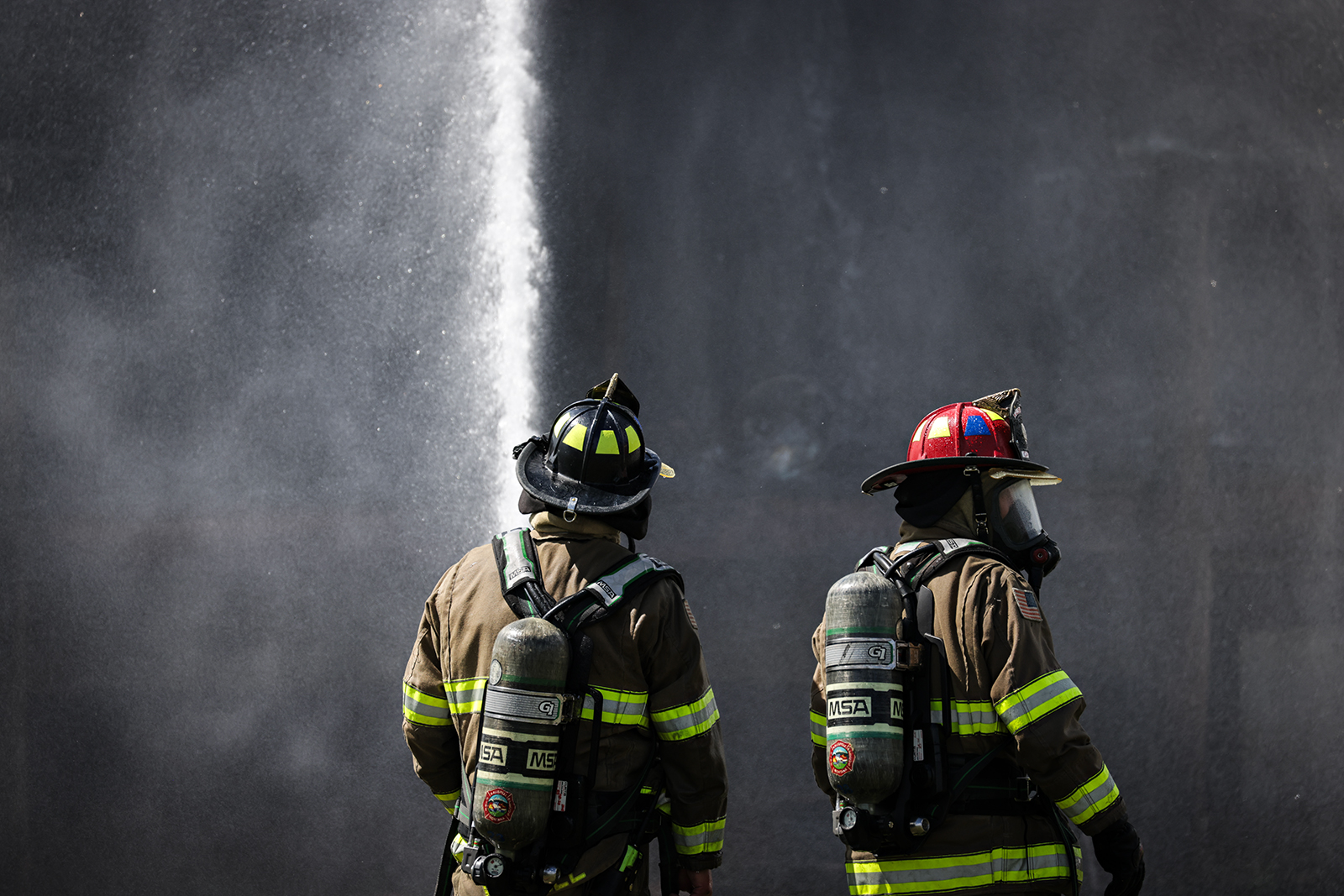
More specifically, insurance companies use a Public Protection Classification (PPC) and a wildfire risk score, Brown said. The PPC is a score assigned to the homeowner’s local fire district that evaluates its ability to suppress a fire once it starts, considering factors such as proximity of the fire department to the community, emergency dispatch capabilities and first alarm response. Wildfire risk scores are assigned to properties based on risk and likely exposure to wildfires. While these scores aren’t standardized, the higher the score, the riskier the property, often translating to a higher premium.
The risk associated with wildfire by insurance companies, however, has felt, well, riskier as of late, said Countryman, who has worked as an insurance agent for nearly a decade.
While the Flathead Valley hasn’t had a costly, highly destructive wildfire in recent memory, major fires across the West in states like California and Washington over the last decade have indirectly correlated to the struggles facing valley residents, he said.
“The carriers are adjusting premiums and, more importantly, adjusting their underwriting guidelines based upon wildfire risk, where they really hadn’t done that before,” Countryman said. “I saw it first in 2018 with the Paradise fire in California; that was a wildfire that erased a town of 29,000 people.
“I think the carriers realized that, hey, if we just rate a home’s risk based upon how far they are from the fire department, we still have exposure, because there were fire departments in Paradise, California. Still, the town was wiped out. That’s when we started to see some of the adjustments happening. The insurance industry moves slow, so here we are eight years removed from those devastating fires, and we’re still seeing some adjustments happening in the industry.”
Countryman said there’s been a shift in underwriting guidelines to capture more risk outside of a fire starting inside a home, with insurance companies now considering the slope of a property, access to and through the property, and fuel density, in addition to the property’s distance to a fire department and an adequate water source.
SUPPORT THE WHOLE FUTURE OF THE FLATHEAD VALLEY
Bolster your Flathead Beacon newsroom as we follow stories past the headlines and into the impacts on our communities by making a donation of any amount. With you, we can stay resilient, focused on solutions and committed to the future of the Valley.
While Countryman believes the post-pandemic market is stabilizing, tough conditions for homeowners insurance will remain, especially for those in Northwest Montana, as he’s seeing few underwriters “opening up their risk appetite for the homes in the woods.”
“I still have homes where I don’t have a carrier that will write, even though the market is softer and rates are better,” Countryman said. “I’m still running into situations, just as happened to me in west Whitefish the other day, to where I couldn’t insure a place. Those conditions remain.”
Brown echoed a similar sentiment, saying his office has heard of entire areas in the state being denied coverage because of wildfire risk.
“We’re seeing a lot of this in Ravalli County, more so, I think, than other places,” Brown said. “They may just take an area of a county because of a wildfire risk in that particular area; you know, ‘we’re just going to take that out of our risk pool. We’re just not going to offer coverage in that area regardless of the value of the house.’
“If you had a house that you built in 1988 or whatever and you have existing coverage, or that sort of thing, they’re more likely to insure you because of your history with that. It’s kind of a case-by-case basis.”
‘OPTIONS WERE LIMITED’
Richard Wolpert and his wife moved to the Flathead Valley just over five years ago after purchasing a lot in a gated community outside of Whitefish city limits.
As the building process began, Wolpert worked with a local broker to obtain construction insurance — a process where he had six companies willing to offer him policies. When construction was complete nearly two years later and Wolpert was ready to transition to homeowners insurance, his choices dwindled from six carriers to two.
“It was pretty much a rollover in terms of price, but the options were limited,” Wolpert said.
When it was time to renew his policy a year later, Wolpert’s pick from the pair of carriers had dropped him, leaving him with the one final option from his broker.
“When we moved here, we worked with the bank to get a construction loan and we have a mortgage on the place so we always knew we needed insurance, we just didn’t think it would be a bottleneck or a challenge,” Wolpert said.
Serving on the board of the Whitefish Hills homeowners association for the last three years, Wolpert knows his situation isn’t unique, saying several of his neighbors have experienced challenges getting their policy renewed or even trying to sell their property.
“One of the owners was offering his property for sale,” Wolpert said. “He thought he had a sale, but the new prospective owners were not able to get insurance, so obviously, they were gonna make the purchase with the loan involved and so we had to pull it off the market.
“I think he’s still interested in selling, but what he chose to do was install a cistern on his property. I think he’s trying to either make it more palatable to insurance companies or so prospective owners have that asset that is now one of the attributes of the property.”
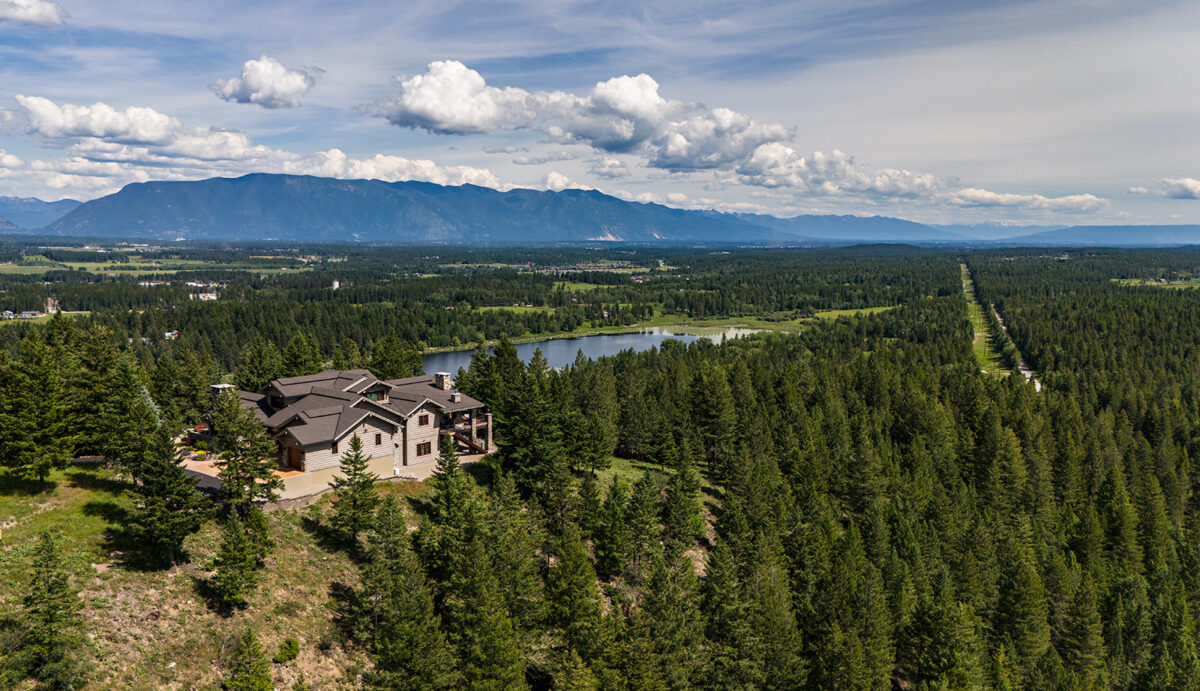
Wolpert and his neighbors in Whitefish Hills are some of the more than 3,000 residences served by the Whitefish Fire Service Area (WFSA). Created by the Flathead County Commission in 1989, the WFSA contracts all its fire suppression services through the city of Whitefish to cover nearly 50,000 acres surrounding city limits.
Rising concerns from the WFSA constituency regarding homeowners insurance now stack up alongside long-time struggles plaguing the rural fire service entity. Having to fully rely on personnel from the city of Whitefish, the WFSA just doesn’t have enough resources to cover such an expansive stretch of land, leading to response times that can be more than 30 minutes, Executive Director DC Haas said.
“I’m trying to keep the wheels on and hold people’s hands on many aspects of the issues within the fire service area, and it is very contentious,” Haas said. “There’s a lot of people with diverse opinions as to what we should do, and it’s a challenge to get these folks with these diverse opinions on the same sheet of music, because everybody wants a fire station, and everybody wants a fire station close to them with the theory that will help their insurance, but there’s not enough resources to cover 75 square miles. There’s not enough money. So, what do we do?”
One of the biggest limitations the WFSA must navigate is being a fire service area, which Haas described as an “antiquated” model compared to a fire district structure.
A key difference between a fire service area and a fire district is the revenue source — fire districts get funding though a voter-approved mill levy based upon constituents’ property’s values, while fire service areas bring in money through a flat rate charged to its residents. WFSA’s rate is set by the Flathead County commissioners.
Haas said the flat rate structure has resulted in the WFSA being “one of the lowest-funded fire EMS entities in one of the highest-valued areas,” with some homes surrounding Whitefish city limits ranging from $4 million to more than $20 million.
“It doesn’t seem fair to me when all these other districts have gone to a mill rate,” Haas said. “If you looked at what we brought in annually, that puts us at about 9.4 mills, where 40 mills is about average for Flathead County, with what other districts bring in. Some are less. Some are more than that. We are woefully behind the funding we should be at.”
Over the last year, Haas and the WFSA have worked to gather signatures from residents to begin the transition to a fire district, but with the fire service area struggling to obtain the required number of scribbles, the board has begun to explore options to raise the flat rate.
Simultaneously, state agencies and legislators have also felt deepening unease surrounding home insurance and have begun to work toward solutions of their own.
‘NO ONE SILVER BULLET’
“The insurance today on my home is on par with my property taxes, same dollar amounts, so it’s plausible that insurance costs will continue to go up and cause people to get insured out of their home because they can’t afford the insurance, just like we dealt with the property tax issue,” Countryman said regarding the state of home insurance over the next 25 years.
While the 2025 state legislature heavily focused on property taxes, leading to sweeping reform, Countryman and Brown said homeowners insurance will “absolutely” be a big focus in the 2027 session.
The push toward remedies for Montana’s homeowners has already begun, with studying the homeowners insurance market selected as a top priority during the interim period between sessions, Brown said.
“You can imagine, as the insurance commissioner and the agency which regulates insurance, we’re participating deeply in those conversations,” Brown said. “The legislature is looking for solutions.”
A number of bills that passed last session take some of the first steps toward solutions, such as House Bill 136, which allowed premium discounts for verified mitigation efforts, and House Bill 533, which requires an insurance company that uses a wildfire risk score to give the policyholder that score — although the legislation is still in its implementation phase.
Brown said his agency will continue to look for a variety of “incentive-based” and “free market” solutions.
“We bring in community planners, real estate agents, legislators, etc., to have discussions about how we can all partner together to keep insurance both available and affordable in Montana,” Brown said. “There isn’t one silver bullet for climbing homeowners insurance.”

Trevor Graff, Brown’s government affairs director, told the Environmental Quality Council at its March 25 meeting that the agency plans to bring some form of a mitigation grant program to the floor as an agency bill for the 2027 session, noting mitigation grant programs are a “well-trodden path” for several other states.
“These programs are funded in about any way you could come up with, a hybrid of private and public money, state appropriations or premium taxes in other states,” Graff told the council. “Some of them mandate that with participation in the program a homeowner gets the discounts, and often they are very targeted.”
Long before home insurance and wildfire mitigation became entangled, fire professionals have constantly voiced the importance of personal fire reduction practices, prioritizing education for homeowners and even providing home checks to ensure a property is ready for wildfire season.
“We’ve always had wildland fire, and we’ll always have wildland fire,” said Lincoln Chute, who’s worked as the Flathead County fire service area manager and fire warden for nearly 20 years. “That’s just reality, so you might as well plan on it. The shame is, it’s not that hard to prepare for it.”
Chute said the biggest problem he’s noticed with insurance companies is a lack of information and transparency on whether mitigation efforts on a property can make a difference.
“In a perfect world, you could go out and do proper mitigation … and then you could show that to the insurance company, and you could keep your rate, get a rate break, or whatever,” Chute said. “I hope in the future it will be that if you don’t want to cut any trees, that’s your prerogative. You’re gonna pay more for insurance. You do the mitigation factor, you can save money.”
Michael DeLong, a research and advocacy associate for the Consumer Federation of America, echoed similar sentiments to the Environmental Quality Council during its March 25 meeting, saying wildfire risk scores are “frustratingly opaque” for consumers, who are “often denied very basic information.” He added that the organization supports the creation of a grant mitigation program, as long as individual mitigation efforts translate in guaranteed savings.
“A lot of consumers want to take actions to improve their wildfire risk scores and reduce their risk, but they can’t easily get concrete action information on what actions will improve their scores, and also how much money those actions will save them,” DeLong told the council.
Brandon Vick with the National Insurance Association of Mutual Insurance Companies also noted to the council that mass participation would be needed in any type of mitigation program in order to see the macro-level change desired by the legislature.
“If we get to a level where more houses are mitigated than not, that’s when we start seeing that massive shift,” Vick said. “That’s when availability increases. That’s when more insurers move into Montana. That’s when rates start plummeting, is when that competition is reintroduced.”
Jay Hunston, who lives in the WFSA and serves on the Elkhorn HOA board, believes the widespread mitigation practices completed by the majority of his neighbors throughout the year to maintain the subdivision’s National Fire Protection Association’s Firewise USA certification has helped the community avoid home insurance availability obstacles. Hunston noted, however, that his premium has still continued to climb, nearly doubling over the last few years.
“We are the only community I’m aware of out west [of Whitefish] that has for 25 years maintained that status, and I really believe that is what makes our insurance available,” Hunston said.
ARE YOU IN OR OUT?
With home insurance set to be a centerpiece in the upcoming legislative session, Countryman is spending the interim talking with lawmakers about a solution he thinks will address both the insurance challenges facing Montanans, as well as the emergency service gaps in the state: funding for more fire stations.
Countryman described fire departments as “the backbone of the insurance industry in the state of Montana and in any state in the West.”
“When we come back to the five factors that insurance companies are looking at — distance to the fire department, distance to water, slope of the property, access to the property, and fuel density — what of those variables can local city control?” Countryman said. “What can the state control?”
“From a Helena state legislative perspective and a local perspective, fire stations, when I say control the controllables, that’s a controllable,” he added.
Fire stations — and how far a residence is away from one — has proven critical to insurance affordability and availability.
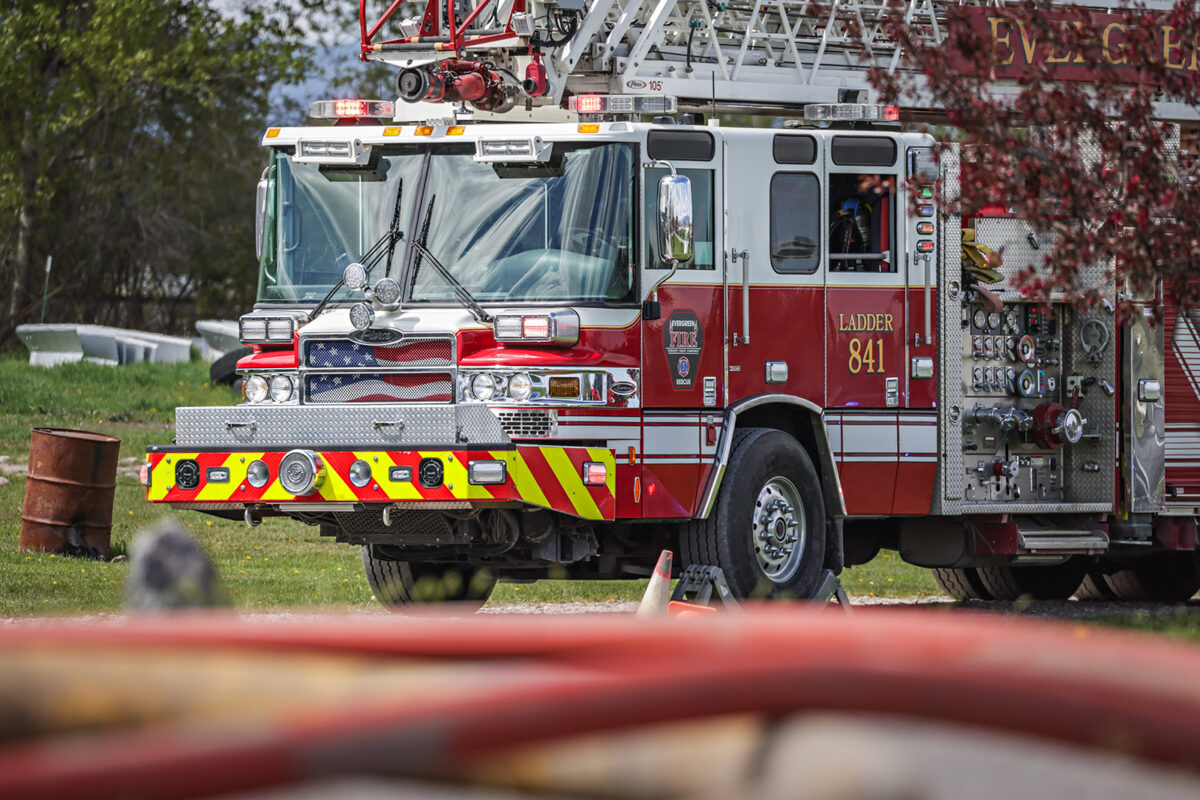
The Insurance Service Organization (ISO) collects information on municipal fire-protection efforts in communities throughout the U.S. and assigns each one a classification 1 through 10 known as an ISO rating — also synonymous with the Public Protection Classification (PCC). Class 1 generally represents superior property-fire protection, while Class 10 indicates that the area’s fire-suppression program doesn’t meet ISO’s minimum criteria.
“It doesn’t matter how well-protected and how well-staffed and trained a fire department is, when a home is more than five miles away, according to the ISO that isn’t credible coverage,” said Yeh, the Star Meadows fire chief. “That means that the distance that it takes, or the time it takes to travel that distance, the chances of saving a particular structure that’s under the threat of fire decreases dramatically.”
For residences within the city of Whitefish and the WFSA, properties within five road miles of either of the entities’ two fire stations are rated as a Class 5, while properties beyond five road miles of either station are rated as a Class 10, according to the city.
Nearly 15%, or 1,208, of the 8,915 residences located within Whitefish city limits and the WFSA are more than five road miles away from a fire station, according to March 31 GIS data from the Montana State Library Cadastral Database.
This map shows residences within the Whitefish Fire Service Area and the city of Whitefish and their distances from the jurisdiction’s fire stations. The map was created by Grigory Namyasenko using publicly available GIS data. Read more about the making of the map here.
The significance of the five road miles couldn’t have been made clearer for home and property owners at The Homestead, a roughly 1,700-acre gated community northwest of Whitefish — formerly part of the WFSA — located 14 miles from the nearest fire station.
After the subdivision’s developer struggled to sell lots due to owners’ inability to obtain insurance, Yeh was hired to help build up a fire department and station from scratch to serve the community, he said. Searching for a more widespread solution, surrounding neighbors joined the effort, eventually petitioning Flathead County to create the Star Meadows Fire District, which was approved by county commissioners in December 2025.
“It’s certainly not going to solve all the problems, but for those people who are within our five-mile driving distance, which is how we determined the boundary of our fire district, they’re going to see significant improvement,” Yeh said.
Homeowners in the area quickly started to see dramatic savings in their policies, even as firefighters were still being trained, Yeh said.
“[A resident] just came up on renewal in April, and year-over-year, they went from $50,000 to $15,000,” Yeh said. “That doesn’t even take into account that we weren’t technically in service.”
While both Yeh and Countryman are advocating for additional fire stations as a key solution, especially in the Flathead Valley, it’s not a simple road.
“It’s amazing how fast the fire station fixes the problem for the insurance for the people inside that area,” Countryman said. “It is the fastest way, bar none, to solve an insurance problem, but it’s still hard, right? Because you’ve got to find people to work it and you’ve got to find the revenue to pay for it.”
‘THEY DON’T GIVE TRUCKS AWAY’
All the costs associated with creating the Star Meadows Fire Department and repurposing an existing building into a fire station were covered by the developer, Yeh said. A mill rate will be set by voters later this year, but with much of the development still being raw land, the developer will also cover any financial shortfall during the department’s first three years, he added.
“If not for a developer who was willing to put forth the massive investment to make this happen, we would not have this,” Yeh said.
Existing fire entities, cities and completed residential developments will likely have a trickier time replicating The Homestead’s blueprint, as they will be forced to foot the bill, or find other means, for the multi-million-dollar endeavor — one that is only getting more expensive.
“Building a hall is expensive,” Chute said. “They don’t give trucks away. They’ve doubled in price in the last 10 years, but you still need somebody to get in the trucks. The probability of having full-time fire department members in every department … taxpayers won’t foot the bill for that. It’s very, very, very expensive. That’s why nationwide, not just out West, nationwide, over 70% of the firefighters are volunteers.”
Funding — not just for additional fire stations — has been a central concern for the WFSA, which currently charges its constituency a flat rate annual fee of $180.
“The trailer house pays $180 and the $7 million trophy home on the lake pays $180,” Haas said. “That’s pretty crazy.”
If the rate remains unchanged, the WFSA will head toward a deficit in the next three years as its contract with the city continues to increase annually, Haas said.
“Whitefish hasn’t had that opportunity to grow with staffing, and a lot of that is … we haven’t really paid our fair share to the city,” Haas said. “We pay $360,000 a year for the calls in our area, and you can’t run a 75- square-mile district for that amount of money.”
The WFSA in July 2025 began a petition effort to transition to a fire district, similar to The Homestead. The fire service area needs to collect signatures from the owners of at least 40% of the real property within the boundaries, representing 40% or more of the taxable property value. Haas said this equates to roughly 1,300 qualifying signatures.
“We may have 250 on hand,” he said.
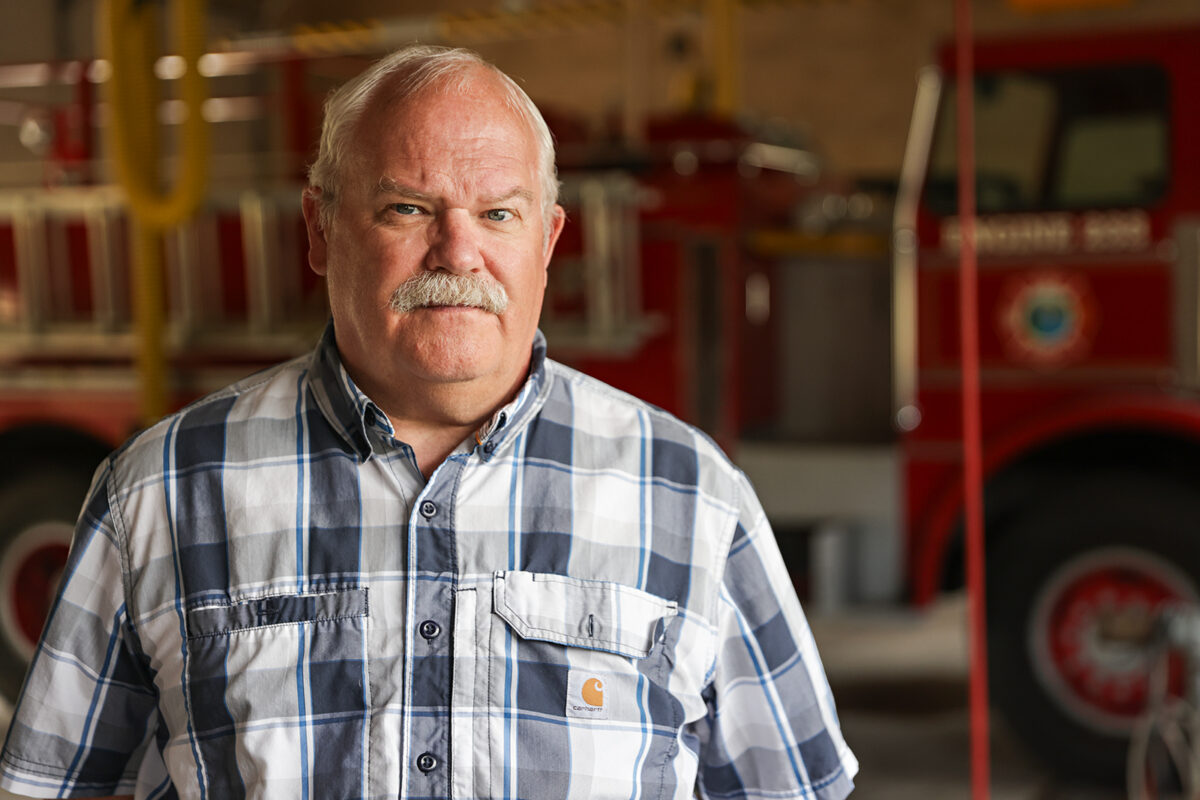
During the petition process, Marshall Friedman, a longtime WFSA resident, said he and many of his neighbors “heard what [WFSA] wanted to do, but there was no plan,” especially for any long-term solutions.
“That is the most important thing for us that they have not done, that needs to be done; it’s a strategic plan,” Friedman said. “If you ask me what the priority is, is it firefighters? Is it Hodgson [fire station]? Is it putting a station out west? I’ll tell you, I don’t know. I can’t tell you until we sit down and look at all sides of each one.”
Haas, however, asserts the WFSA does have a plan — fund six new firefighters for the city and begin appropriating money and planning efforts for a remodel of Station #22 on Hodgson Road to be available for those additional firefighters.
Whitefish Fire Chief Cole Hadley told the Beacon that increasing staffing is the most “immediate and effective way” to enhance service, directly improving response times to areas within the WFSA, “including the west of Whitefish area where there have been discussions about a future fire station.”
“While I agree that a staffed fire station in that area may ultimately be needed to fully meet long-term demand, the cost is substantial,” Hadley said. “Land acquisition and construction alone are estimated at $5-7 million, not including the ongoing cost to staff that station.
“In contrast, adding personnel at our existing Whitefish station requires no capital investment and would cost approximately 10-14% of the upfront cost of building a new station while providing an immediate and measurable improvement in service delivery.”
To achieve its goal, the WFSA created a proposal for Flathead County commissioners, who have the final say on any rate increases, to shift its flat-rate system to a graduated increase, which would step up the WFSA annual fee according to an agreed-upon schedule based on property value.
The WFSA board submitted the proposal to be considered for a county commissioners’ regular meeting agenda in May, but Haas said the request was denied. Still in desperate need of additional funding, Haas said the WFSA will work with its residents and the commissioners to get a suitable rate increase proposal in place to make a future agenda, as well as continue its petition efforts.
“The fact that they wouldn’t give us the audience is perplexing,” Haas said following the agenda omission. “No one wants to get their fingerprints on a rate increase.”
“Whitefish is so understaffed,” he added. “We need to be paying our fair share. How do we do it? How to keep the most people happy and not tax people out of their homes? It’s a difficult balance.”
CONTINUED CONVERSATIONS
Even if the WFSA had the funding — or if the Montana Legislature decided to foot the bill for additional stations in the state — where would new fire stations go?
It’s this question that WFSA resident Jay Hunston believes is a catalyst keeping the WFSA from achieving their petition benchmark and ultimate goal of becoming a fire district.
“There’s no way that somebody who lives south of Whitefish is going to want to pay anything more to have a fire station built west of Whitefish, so they’re going to vote no,” Hunston said. “It’s hard to convince a voter to vote to impose a levy upon their residence when they’ve got what they need. Why would they want to vote to have a higher tax so somebody else can have a fire station. It just doesn’t work.”
Hunston believes dividing up the WFSA may be the solution, letting the voters in each smaller section decide if and where they want another fire station. But Haas isn’t so sure, saying each smaller area would run into the same funding issue, now with even less people to bankroll the construction and staffing.
“It’s a hard sell, and I hear that a lot; break it up,” Haas said. “How are you gonna pay for it? The numbers aren’t there. You’re not going to get the funding you need, especially in this area where it’s more rural.”
As stakeholders move forward trying to address gaps in coverage and home insurance challenges, Chute, who works with each of the valley’s departments and service areas, said putting arbitrary boundaries on the backburner will be key to creating strategic solutions that make the most sense for the most people.
“You’d hate to throw quite a bit of money into something you build and go, ‘dang, I sure wish we would have put it a mile down the road,’” Chute said.
“We can never take 100% of the politics out and the finances out and stuff, but realistically, if we drop that stuff, don’t worry about the boundaries, let’s just look at the big picture from a 10,000-foot view,” he added. “What is best for the citizens that need response? Look at that, identify that, then we put the lines back on and the finances and now we evaluate and see what we could do. I don’t think it’s that much different than what some of the lines are.”
Despite the obstacles with funding, building consensus and crafting a solution, a silver lining has been the collaboration between people and groups that wouldn’t have been working together even 10 years ago.
“There’s a great group in the area called Firesafe Flathead, and that group has evolved so much,” Haas said. “It was almost non-existent in 2003, and now today on the agenda we typically have one or two insurance agents talking or listening. That was unheard of 20, 30, 40 years ago.
“Now we’re working with those local brokers that help interpret their needs of what they need to write a policy, then they hear what our shopping list is. It’s refreshing to see. There’s an immense amount of work to do, but those conversations are happening.”
The next step now is getting more residents involved in those conversations and their local fire entities, and not just after they get their insurance policy quote.
“I want people to get involved with the fire departments,” Countryman said. “I want them to understand that they’re benefiting from the guy down the street that’s willing to wake up at midnight to go fight a fire, that’s willing to go deal with a head-on accident on Highway 93.
“It takes all of us to be involved in that process. You can put a fire station up and you can put trucks in it, but without people, it’s meaningless. Involvement is so important.”