Bull Trout Spawning Study Could Aid in Recovery of Imperiled Swan River Basin Population
Chemical analysis of ear bones reveals which tributaries bull trout originate in, helping biologists identify streams and habitat critical to the species' future
By Tristan Scott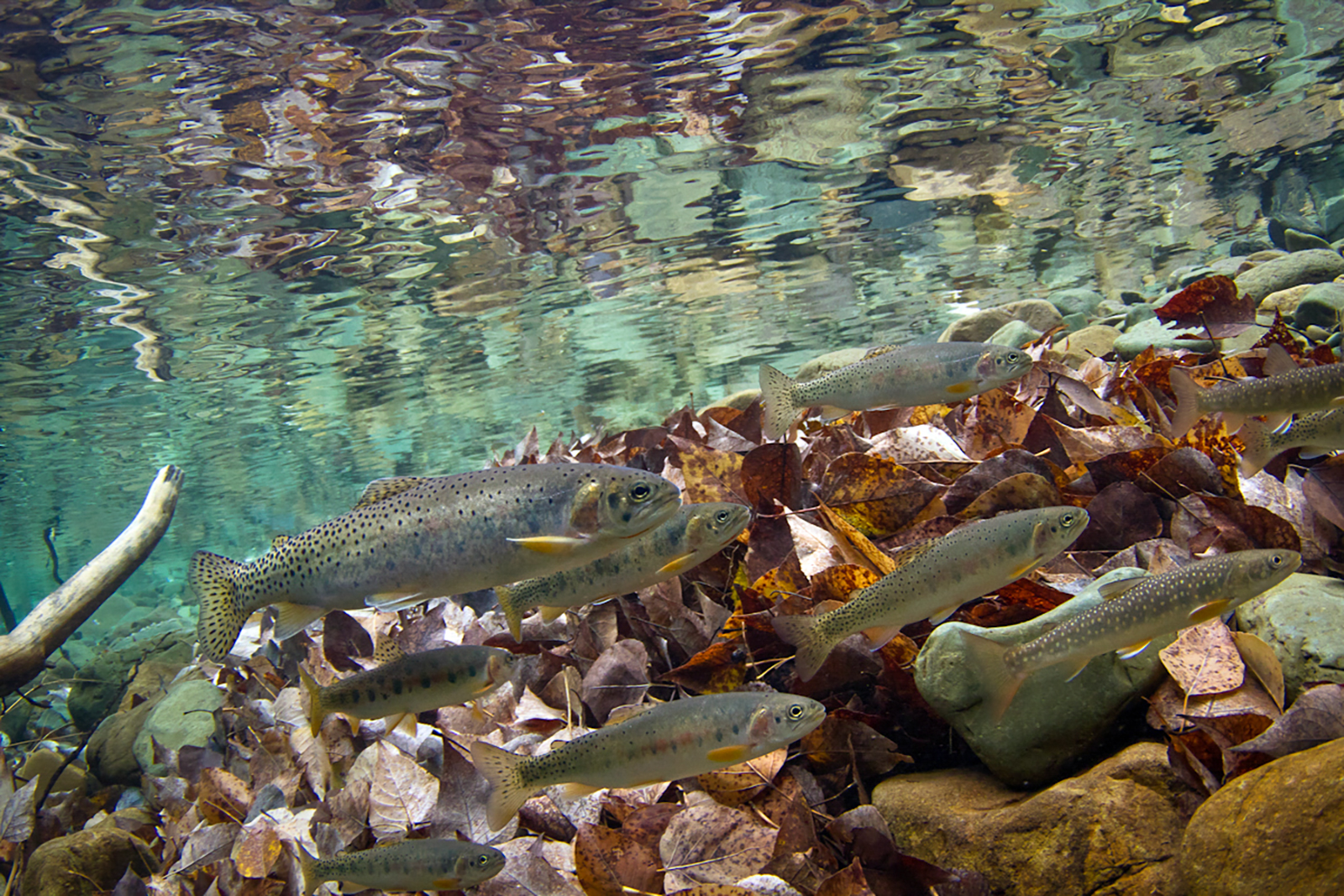
Although northwest Montana and Glacier National Park have historically remained one of the best strongholds for native bull trout in the state, the region has seen its wild populations of the threatened species decimated by the explosion of invasive lake trout, as well as through hybridization with other nonnative species. Fisheries managers also blame reduced stream flows and warming water temperatures as among the most critical stressors threatening the species’ long-term survival, which depends on cold, clear and connected aquatic habitats.
Bull trout in the Swan River basin, specifically, represent a key indicator of the species’ health and distribution in the upper Columbia River basin, largely due to the ecosystem’s interconnected web of cold water habitats and its robust population sizes.
Bull trout spend much of their lives in Swan Lake, but they hatch in mountain streams throughout the watershed before moving to the lake for adulthood. For years, biologists have counted bull trout redds to estimate how different streams contribute to the overall population.
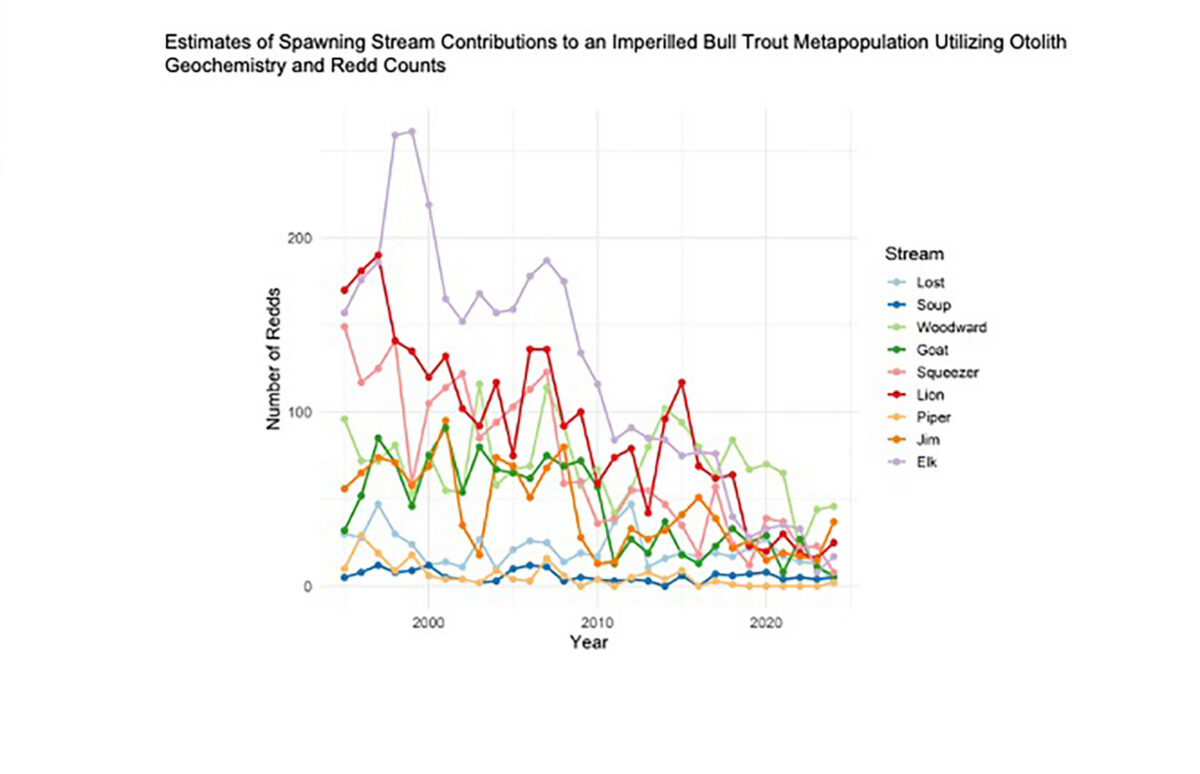
In the past decade, however, adult bull trout abundance in the Swan has dropped by approximately 90%, a precipitous decline that state fisheries biologists have tracked by counting bull trout redds, or spawning nests. Using these annual monitoring reports and field surveys, they can infer metapopulation data and draw conclusions about the health of a drainage-specific population, as well as about how those constituents support the overall population.
But what if redd counts alone aren’t capturing the complete picture?
That’s the question that state fisheries biologist Sam Bourret posed recently. Reasoning that there were more factors contributing to a population’s ecological health than evidence of spawning success alone, Bourret decided to zoom in on the drainage-specific demographic dynamics of bull trout among the individual spawning tributaries in the Swan River basin.
Bourret, who works for the Montana Department of Fish, Wildlife and Parks (FWP) as a fisheries biologist in Region 1, said the objective is to provide resource managers with the tools and information to prioritize effective mitigation strategies and guide the species to recovery. The new study is unique because it gives resource managers a better understanding of where bull trout in the Swan River basin originate, and which streams are most important to the species’ future.
“Everyone assumes that redd counts are the Holy Grail of assessing ecological health, but in the end we know there are a lot of things that happen between when a fish lays a redd down to when it spawns again,” Bourret said. “The hypothesis is that more redds equals more fish, but in reality it’s more nuanced than that.”
The study, “Estimates of Spawning Stream Contributions to an Imperiled Bull Trout Metapopulation Utilizing Otolith Geochemistry and Redd Counts,” uses decades of bull trout spawning data and new research methods to see which streams produce the most bull trout in Swan Lake, which is an important waterbody for the threatened native trout. Along with the monitoring research, FWP operates a lake trout suppression program to limit predation of bull trout by nonnative species in Swan Lake.
To that end, local agency administrators were supportive of Bourret’s work to analyze the finer-grained details of bull trout spawning stream contributions.
“We continue working hard to ensure bull trout persevere in the Swan Lake system,” FWP Region 1 Supervisor Amber Steed said. “Sam’s research is an important piece of that effort.”
Bourret’s new study builds on that work by employing microchemical analysis. By analyzing small, bone-like calcium carbonate structures located in a fish’s inner ear, he can trace individual fish back to the streams where they hatched. The bone, called an otolith, acquires a new ring every day of the fish’s life, much like a tree’s concentric growth rings. All fish have them, and for decades scientists have counted the bands of the bone to determine the age of a fish, as well as to estimate population growth.
The bone also contains a record of its migration pathways — a kind of geochemical diary of where the fish swims on a given day, which can be used to map the entire life history of a fish within a lake or river network. As the otoliths grow, they record the unique mix of naturally occurring minerals found in the water where the fish first hatched.
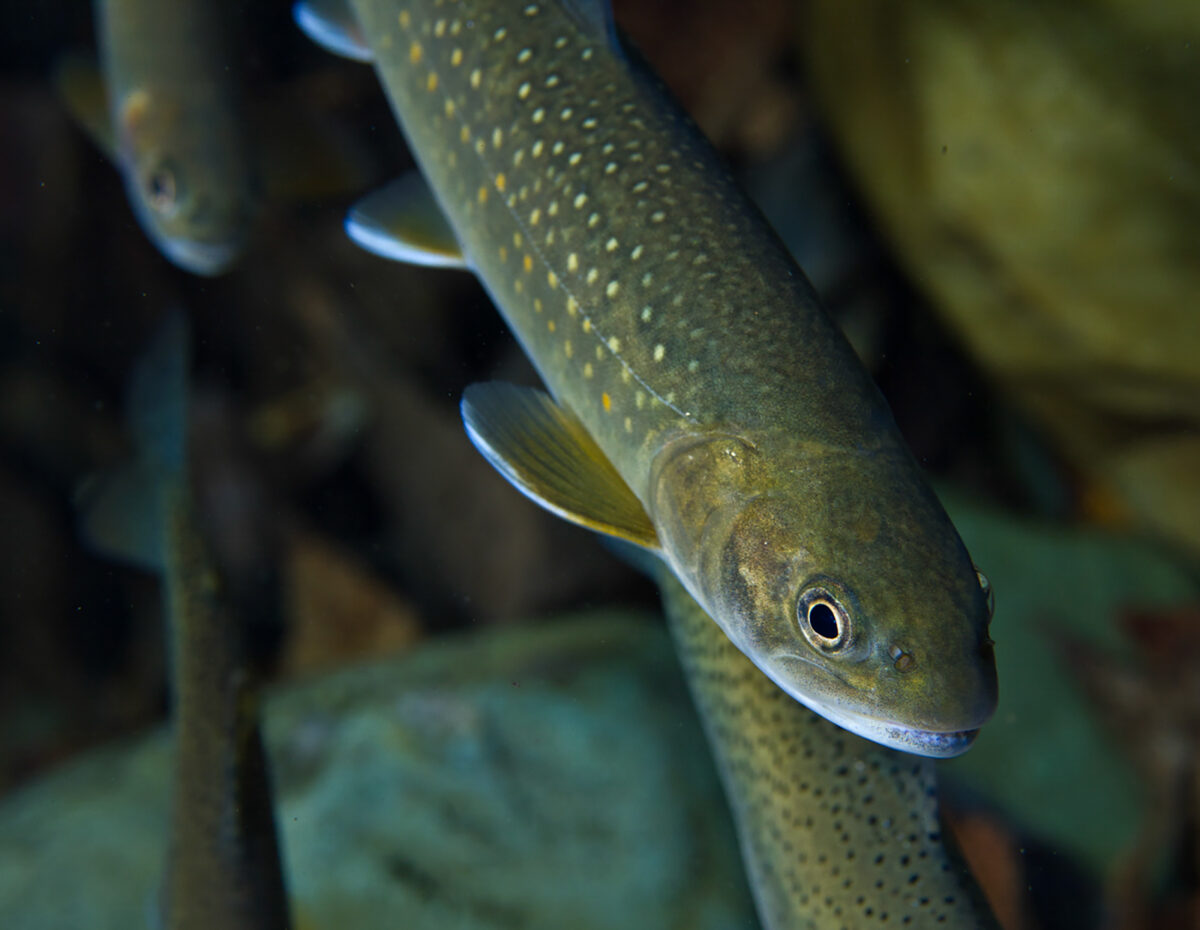
Using otoliths collected from bull trout that were unintentionally caught during ongoing lake trout suppression efforts in Swan Lake, Bourret discovered that some streams in the Swan produce more surviving bull trout than redd counts alone would suggest, while others contribute fewer fish despite similar spawning activity.
“We’re not going to depart from using redd counts, but this is an interesting tidbit that tells you that redd counts don’t tell you the whole picture,” Bouret said. “And when you’re working with an extremely imperiled population like bull trout in the Swan, we need to look at all the nuances if we hope to improve their ecological health. If redd counts are checking your oil, this otolith microchemical comparison is like going under the hood and really taking a more detailed look at the engine and all its parts. Because if the engine dies, if the population crashes, we’ll be out of options.”
The findings give fisheries biologists a clearer picture of which streams are making the biggest contributions to the Swan Lake bull trout population. That information, while often bleak, will help guide future habitat restoration, monitoring efforts and conservation work where it can have the greatest benefit.
The study demonstrates how combining long-term monitoring with new research tools can help biologists make more informed decisions about where to focus conservation efforts and improve the outlook for one of Montana’s iconic native fish.
“Protecting the right tributaries today can help to ensure that future generations continue to see bull trout in the Swan River system,” Bourret said.