The Cost of Crossing
For nearly a century, Glacier and Waterton have shared a connection beyond borders. The National Park Service’s new non-resident fee policy might represent a turning point.
By Jules Lingenfelter
“The bargain about Glacier is that once you get into the park, you have relatively few expenses,” said Susan Higgins, co-owner of Two Sisters Cafe. Located on the Blackfeet Reservation near the east side of Glacier National Park, the restaurant has been a staple for park visitors over the last three decades.
The park, Higgins said, is the biggest draw for tourism in the otherwise remote area northwest corner of Montana. Comparing the financial burden of visiting Glacier to what she calls the typical American vacation to Disney World, Higgins sharpened her point. Sure, flights, rental cars, and lodging up here may be expensive, but without the hardship of purchasing Mickey Mouse ears and jacked-up in-park snacks, Glacier National Park proved the superior summer destination for international visitors coming to experience the U.S.
“But,” she added, “not at $100 per person to get in.”
On Nov. 25, 2025, the Department of Interior announced a new non-resident fee for the National Park Service; the announcement followed an executive order in July, in which President Donald Trump called for a series of changes to the parks.
Described by Interior Secretary Doug Burgum as “America-first entry fee policies,” foreign tourists would be required to pay a $100 surcharge on top of the standard entrance fee at 11 of the most popular national parks including Glacier. Alternatively, foreign tourists could purchase an annual America the Beautiful Non-Resident Pass for $250 — compared to the $80 resident pass — which covers entrance to parks for four non-residents or one personal vehicle.
Six weeks later, on Jan. 1, the non-resident fee policy went into effect.
Unlike the 10 other affected parks, Glacier National Park is unique in that its northernmost boundary extends to the border of another country. And because the northern Rockies that give the park its signature mountainous terrain don’t acknowledge international boundaries, they overlap with their Canadian neighbor, Waterton Lakes National Park in southern Alberta. In 1932, the U.S. and Canada combined the two parks to create the Waterton-Glacier International Peace Park — the first of its kind. For nearly a century, the two national parks and their gateway communities have enjoyed a steady stream of residents crossing their respective borders to visit the other side.
For Shameer Suleman, president of the Waterton Chamber of Commerce, the announcement of the non-resident fee policy came as a shock. “When all the business owners first heard about it, we were taken aback,” he said. The surcharge represented a stark contrast from how he had always understood the relationship between Waterton and Glacier.
“For us, it’s been a natural transition, or a natural gateway, for all of our visitors,” he said. Visitors to one park often found themselves traveling to the other, both by dint of geographic proximity as well as convenience.
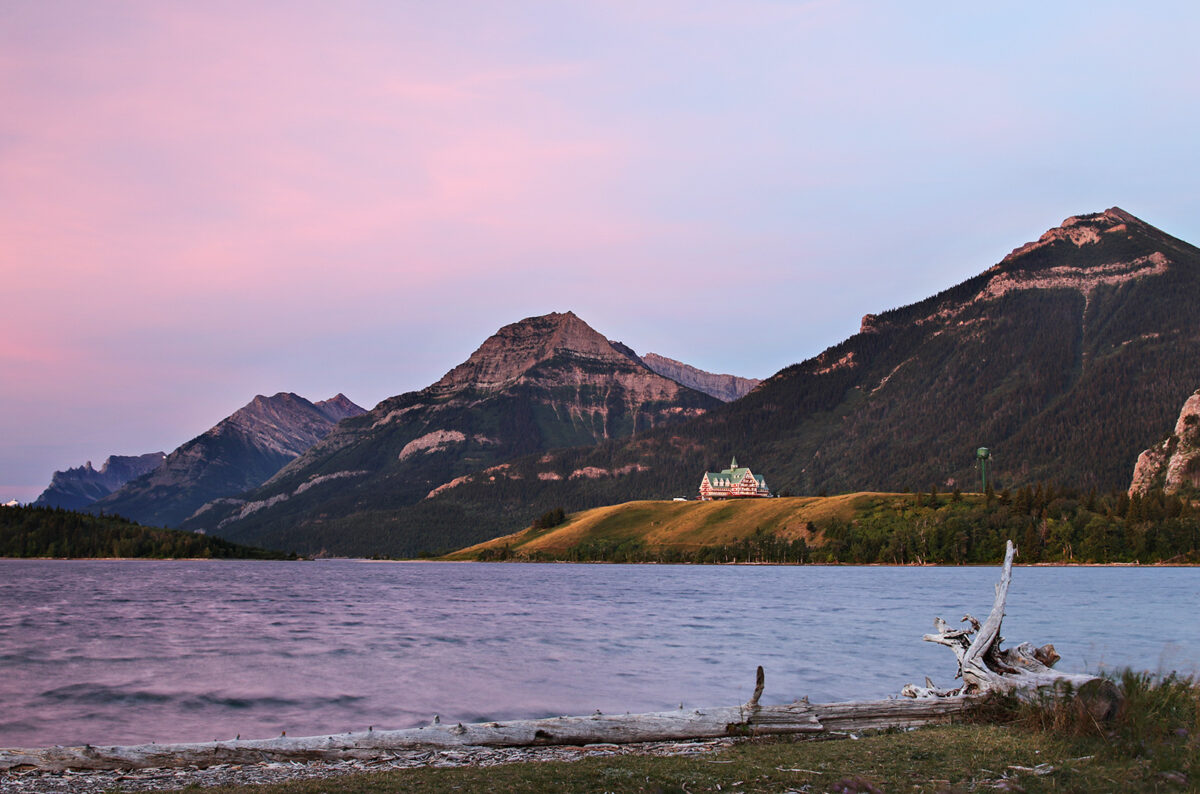
While Waterton tourism has been up both domestically and internationally (Suleman described it as their best year yet), the non-resident surcharge presents a potential deterrent for Canadian citizens hoping to make the trip down to Glacier. Suleman referenced the non-resident annual pass, which runs for about $350 in Canadian dollars. “Well that’s a huge chunk of change to visit that national park, right?” he said. “So yeah, I bet you that’s a huge reason that Canadians are probably skipping Glacier Park this year.”
For Suleman personally, making the trip down to Glacier was a typical summer activity. And when he had guests visiting, he would take them to both parks, describing it as an opportunity to proudly show off his area.
“This year, we’re obviously not doing it,” he said. “And I haven’t come to Montana once, because it’s hard to justify that cost to visit that national park.” Instead, he has opted to stick close to home and visit Canada’s other national parks that bolster free admission to domestic and international travels alike.
Across the border, at Two Sisters Cafe, Higgins has been feeling the lack of visitors from up north. “Any given day, you could look out in our parking lot and see 25 to 30% of our vehicles in our parking lot would have Alberta plates,” she said. “They are few and far between right now.”
Higgins felt fortunate that the restaurant has remained steadily busy this season, but she remained concerned about how this will impact many of the Canadian visitors who previously frequented the area. She also noted that she’s seen very little international tourists in general.
The cause of the decline, she feels, begs the question: “How much is political? How much of it is cost?”
For Denny Gignoux, vice president of Glacier Guides & Montana Raft, issues with international tourism may have been less noticeable, but they are still present. He said a few European guests have expressed shock at the new fee but ultimately paid it.
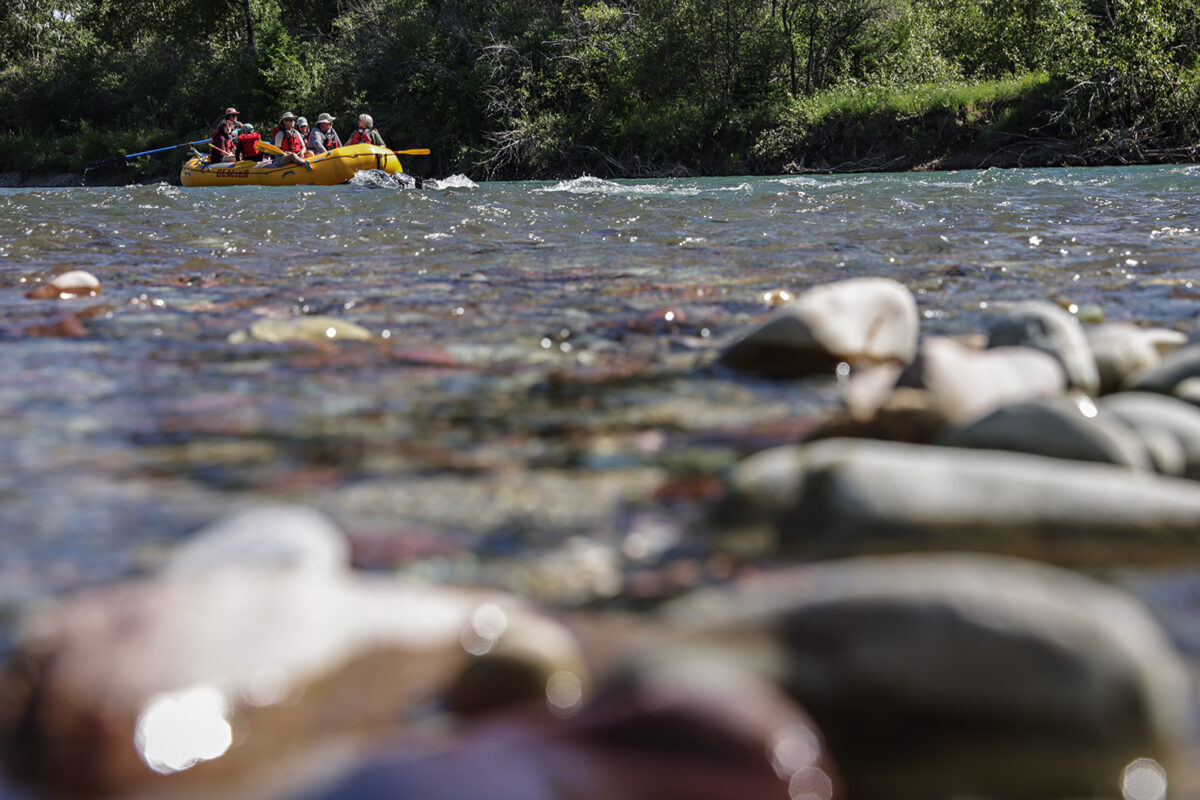
“It doesn’t seem that it’s been that major of an issue,” he said. “But we’ve also received a couple calls from Canadians, Albertans, who have been very upset.” Gignoux believed that it’s too early to tell what kind of effect the surcharge is having on international tourism.
International tourism, as a whole, is trending downwards in the U.S. The surcharge for national park entrance fees is only one barrier for foreign travelers that the Trump administration has enacted — a $250 “visa integrity fee” and potential social media reviews have also impacted the industry. International tourists are increasingly choosing other countries to spend their time and money. According to the World Travel & Tourism Council, foreign visitor numbers in the U.S. fell by 5.5% in 2025 despite increased international travel globally.
“We are not a popular country in the world right now,” said Sarah Lundstrum, the Glacier Program Manager with National Parks Conservation Association (NPCA). “In terms of keeping international travel down, this is probably a very, very tiny factor in what is keeping international travelers away.”
However, Lundstrum acknowledged that she has heard reports from colleagues based at other parks that international travelers have turned away at entrance stations after learning of the fee. Though she cannot speak of the actual impact at Glacier National Park, she echoed concerns over how this will affect Canadian tourists, and, in particular, that they are much more likely to drive to the park with foreign plates than other international tourists who fly in and rent cars. Lundstrum stated that there’s been a local concern that the fees are “actually going to end up impacting our International Peace Park friends more than others.”
In July of 2025, and before the DOI’s announcement of the non-resident fee policy, Rep. Ryan Zinke introduced a bill that would codify Trump’s executive order. The Protecting America’s Treasures by Raising Inflow from Overseas Tourists (PATRIOT) Parks Act proposed enacting an entrance surcharge for foreign visitors in an amount to be determined on a park-by-park basis to guarantee that it “maximizes revenue” while “retaining international visitation.” The act, which has not been voted out of committee, also exempted national parks that have been granted International Peace Park status by congress, effectively shielding Glacier National Park from the surcharge.
Following the DOI’s announcement last November, Rep. Zinke issued a joint statement in support of the non-resident surcharge while urging lawmakers to pass the PATRIOT Parks Act.
Currently, the America the Beautiful Act in the Senate contains similar language that would codify the ability for national parks to implement a foreign surcharge and exempt International Peace Parks.
The National Park Service (NPS) has long struggled for adequate funding. At the end of 2025, NPS estimated that it required $24 billion for much-needed repairs and to clear a maintenance backlog at park units. Glacier’s own maintenance backlog sits at around $132 million. Amid the Trump Administration’s proposed budget cuts, parks have increasingly come to rely on revenue from visitation fees to sustain themselves.
In the initial press release, Burgum stated that the non-resident policy fee would “ensure that U.S. taxpayers, who already support the National Park System, continue to enjoy affordable access, while international visitors contribute their fair share to maintaining and improving our parks’ future generations.”
Charging out-of-towners a bit extra is not without precedent. Many countries have an upcharge for foreign nationals visiting their public attractions: A visit to the Taj Mahal runs 1,100 rupees for internationals compared to 50 rupees for locals; New Zealand plans to charge an extra 20-40 New Zealand dollars for entrance to their most popular national parks by 2027; Ecuador’s Galapagos National Park, South Africa’s Kruger National Park, Egypt’s Pyramids of Giza, and more all have dual-priced entrance fees. Even in the U.S., many states charge non-residents extra to access their state parks and for hunting and fishing licenses.
Critics of the DOI’s decision, however, question the flat-rate non-resident surcharge and the short timeline given for the 11 parks to implement the new policy. In December of 2025, a group of five senators requested that Burgum reconsider the policy in a letter that listed potential shortcomings, including that it could greatly affect international tourism and add stress to already under-staffed national parks. In February 2026, the NPCA demanded that Burgum halt the policy after reports of increased congestion and confusion at parks, concern over tourism for gateway communities and tour companies, and fear of law enforcement involvement when showing ID at entrances.

For Glacier National Park, the concern again lies in the well-established relationship with Waterton and Canada. According to the Daily Inter Lake, Superintendent Dave Roemer expressed concern over the policy. He stated at a Dec. 9 Columbia Falls Chamber of Commerce meeting that, “We’re the first peace park on Earth … So, the idea of charging an extra $100 a head to people from Canada and other countries — it’s a hard thing for those of us in the gray and the green to get our heads wrapped around.”
In an emailed statement, Autumn Sifuentes, a spokesperson for Glacier National Park, wrote, “The updated fee structure reflects the significant investment made by the U.S. taxpayers to support these public lands, while still welcoming international visitors who help sustain local economies and share in our nation’s natural and cultural heritage.”
She further stated, “Glacier National Park continues its longstanding collaborative relationship with Waterton Lakes National Park as the world’s first International Peace Park. The new entrance fee policy does not affect that partnership or ongoing cross-border coordination.”
As Suleman reflected on the connection between Glacier and Waterton, he reiterated his hope for a continued friendship between the Americans and Canadians. “For us it’s always more about people before politics,” he said. “Governments come and go, but the people are the people.”