How Two Kalispell Women in Their 50s Became Record-setting Powerlifters
Darla Meadors and Julie Robertson found strength – and community – through Logan Health’s Barbell Strength class
By Lauren Frick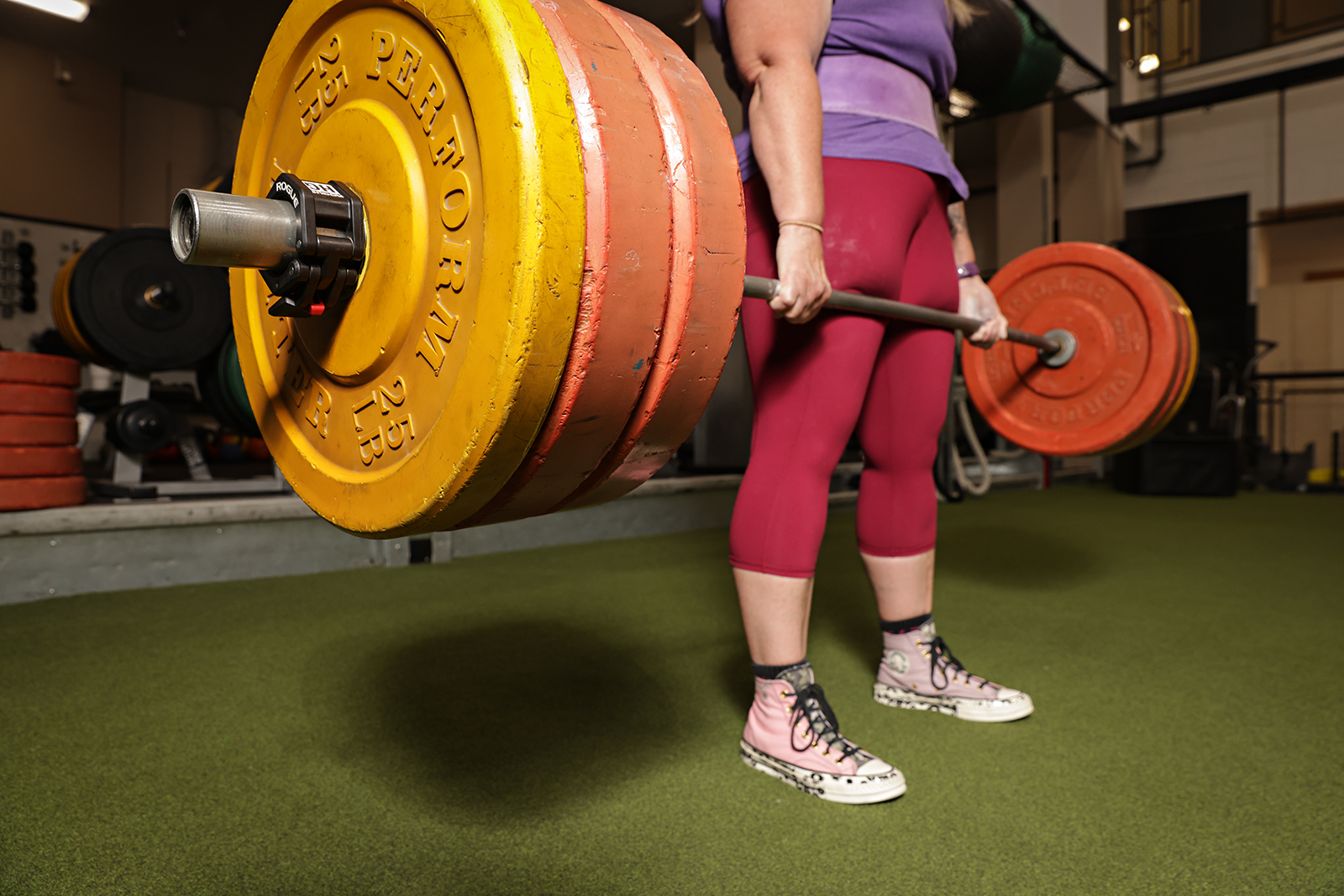
When Julie Robertson, 56, was faced with a partial knee replacement roughly five years ago, the physical therapist worried she was heading down the path of becoming a “frail adult” after losing a lot of muscle in the wake of her surgery.
To push back against this fate, Robertson signed up for Logan Health Fitness Center’s “Barbell Strength” class. By February 2024, she was competing in her first powerlifting competition.
“It’s empowering,” Robertson said. “We will look at each other, and we’re like, we just did that.”
“Five years ago, I never would’ve imagined … I mean, literally, when I had had my knee replacement and just lost so much muscle, I was just like, oh my gosh, I’m an old lady now,” she added with a laugh. “Now I’m like, oh heck no.”
Like Robertson, Darla Meadors, 55, has been a longtime member of the Kalispell gym on 205 Sunnyview Lane, even touring the facility over two decades ago during its construction — back when it was called The Summit.
It wasn’t until Meadors started working with a personal trainer a few years ago that she even considered powerlifting, she said.
“That’s where they said, ‘No, you should really try this class out,’” Meadors said, referring to Logan Health’s barbell strength class. “I was like, ‘I don’t think so. That’s for really strong people. I can’t do that.’ They were like, no, you really should try this class.”
Just over two years later, Robertson’s broken 15 state records, a national record, and a world record, and Meadors has 13 state records and a world record for their respective sex, weight and age classes.
The two also made their first appearances at the United States Powerlifting Association’s Ultra National competition in Anaheim, California, earlier this summer. Robertson set a national and world record in deadlift, while Meadors set a world record in the same discipline at the multi-day competition that brings together more than 800 powerlifters from across the country.
“I mean, there’s nothing like the feeling of hitting the platform, especially at nationals,” Robertson said. “They call your name, they say platform ready. I mean, when they say platform ready, like I just got goosebumps saying that right now, you have 60 seconds to get on there and perform your lift. The lights are on you and everyone’s out there cheering and it’s just such a cool feeling.”
While empowerment is the overwhelming feeling for Robertson and Meadors when hitting the gym these days, that wasn’t always the case.
Apprehension, hesitation and doubt were more fitting for the two as they began their powerlifting journey. For Robertson and Meadors, the sport simply felt like something they shouldn’t do — something they couldn’t do.
“It was all new and all different and all like wow,” Robertson said. “There’s a lot involved as far as learning all the rules and all the equipment and all the commands. So yeah, it was very intimidating.”
Despite the fear, the two took the leap out of their comfort zone, ultimately getting hooked on the sport as soon as they stepped on the platform — an outcome that wasn’t surprising to coach and class instructor Michael Staudenmayer.
“The sport catches a lot of people off guard, but once they get in it, they’re pretty pumped up,” Staudenmayer said.
Once a source of anxiety, powerlifting now serves as a place of solace and therapy.
“Life is crazy,” Meadors said. “The last few years have been quite a roller coaster in my life, but this is the place where you can come and truly do it for yourself. It’s just you and the weight.”
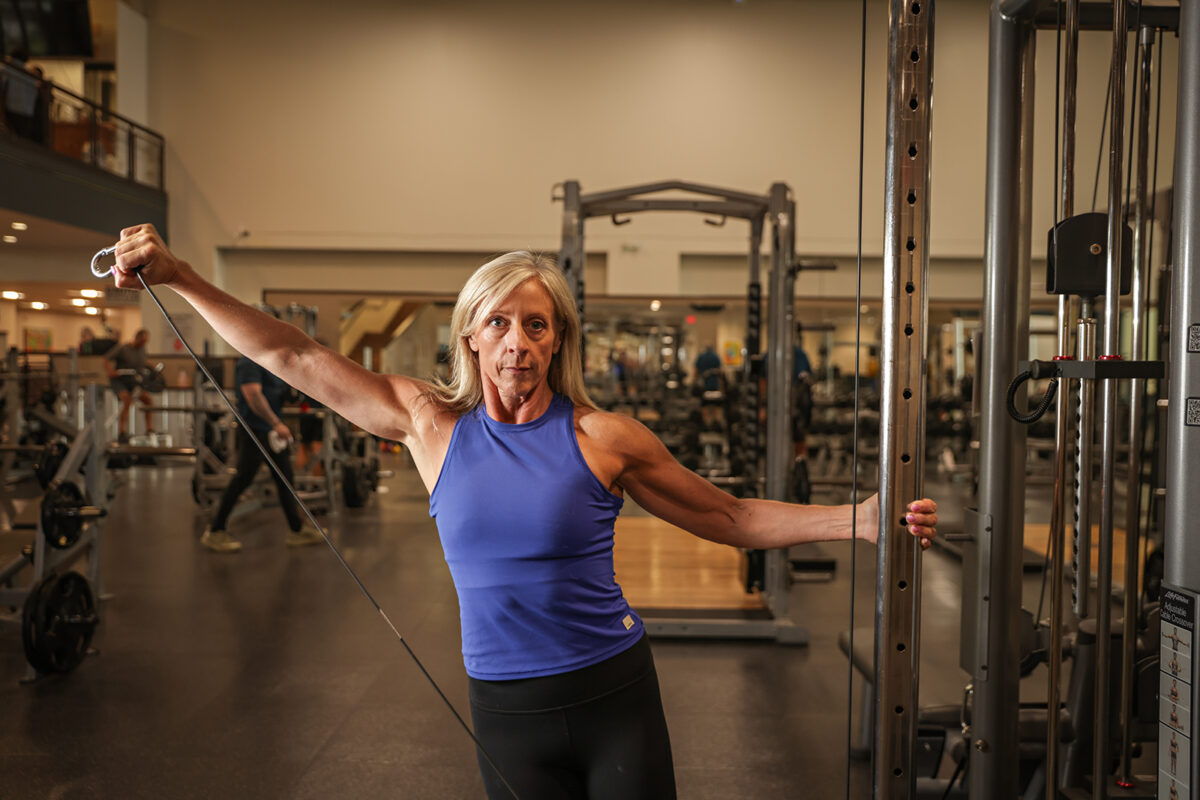
Powerlifting competitions, which include three attempts of bench press, squat, deadlift, or all three lifts, have historically been a male-dominated affair — although an influx of women like Robertson and Meadors into the sport is starting to change that.
“For USPA, it’s about 46% women; it’s almost 50-50,” Staudenmayer said. “Ten years ago, it was not. It was not at all. 95% men.”
Despite the scales starting to even out in competition, public perception hasn’t quite done the same. While the weight room has become a place of comfort for Robertson and Meadors, the notion of women in powerlifting — especially women over age 50 — is still decidedly uncomfortable for the broader public.
“People always ask me if I have to put a bikini on to compete, like bodybuilding versus powerlifting, so you have to do a little education on what powerlifting is and what your goals are and how it’s different,” Robertson said. “There’s a lot more women in the sport now, but kind of outside the sport, people don’t truly understand.”
Educating people on the difference between powerlifting and bodybuilding isn’t the only thing Robertson is trying to teach. The physical therapist and Flathead Valley Community College professor also preaches the importance of women lifting as they age, especially as they approach menopause.
“For women our age, there’s still this kind of misconception of, well, I can’t lift heavy weights; I don’t want to get bulky,” Robertson said. “But there’s more and more education out there, speaking as that era of a menopausal woman, is that you need to build bone density, and you need to build muscle for longevity and for health.”
“In your 30s is when you start losing muscle if you don’t strength train, so you’re going to lose 3 to 8% of your muscle mass every decade,” she added. “The older you get … you have to do more load to get the muscle that you used to when you were younger. My soapbox as a physical therapist and as a powerlifter is like, come on, you’ve got to do this; eat your protein and lift some weights.”
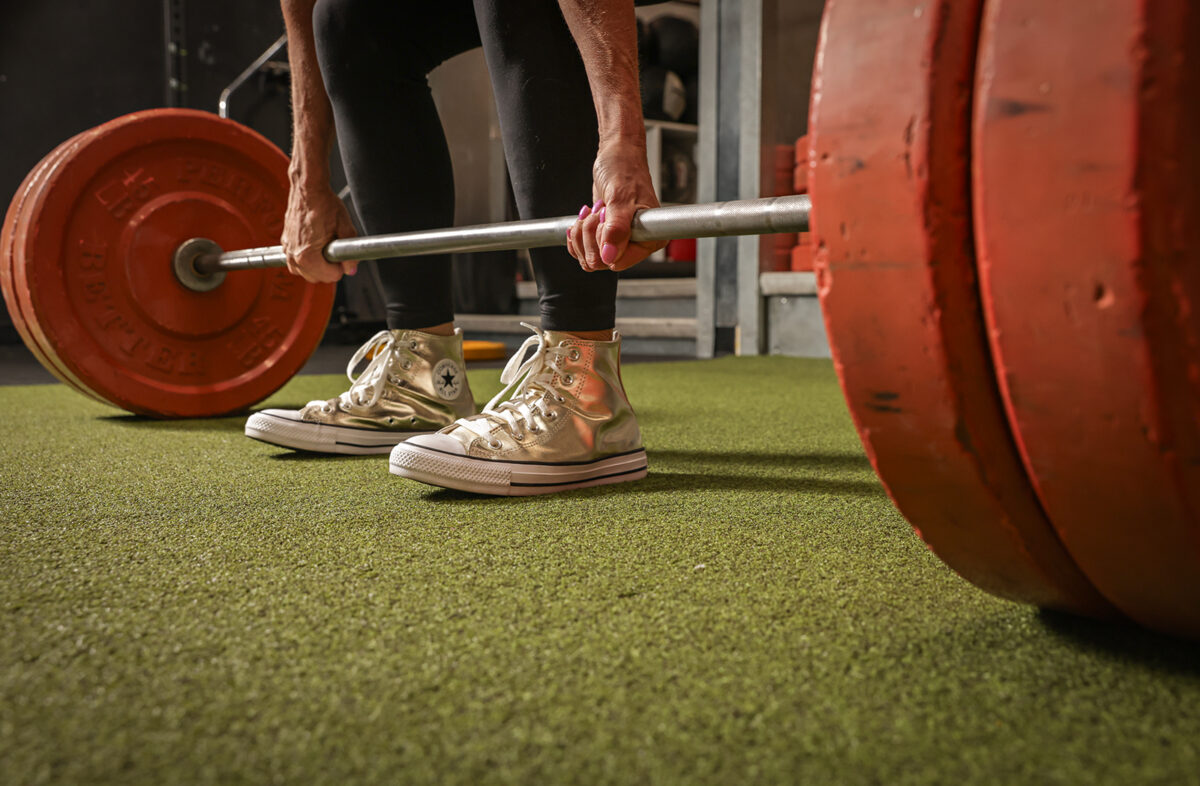
The perception of women in powerlifting is one Meadors often sees firsthand, experiencing a stark contrast between her and her husband, who also competes.
“Technically, I have a higher PR than him right now, which is my point,” Meadors said. “Because we will come back from a competition and we’ll be standing side-by-side, and people will be like, ‘Oh, congratulations, Larry! You did such a great job!’ And I’m there like, hmmm.”
Once Meadors hits the platform at a competition, however, all the noise fades away — whether that be the lack of external acknowledgement or her own internal doubts.
“I think the competition takes that right out because, well, you’re walking up there in a singlet in February with pasty white skin,” Meadors said. “Everyone’s gonna watch.”
Now, Meadors welcomes the eyes on her.
“Let them watch. Because you don’t know how many people you might be inspiring,” Meadors said. “It’s important for them to see you fail and do it again. It’s not only about success. It’s about failure. Muscle is still built on failure.”
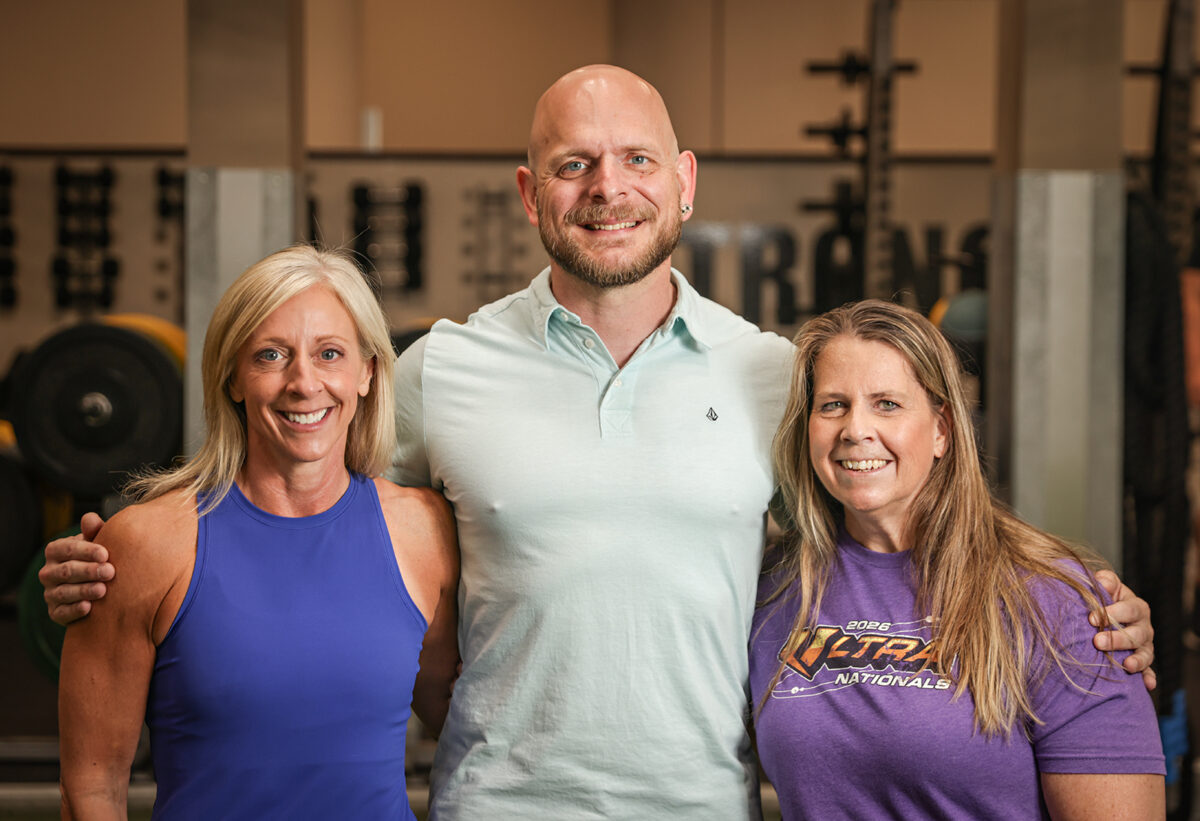
Although there may only be one name next to each state, national and world record, it’s the community behind Robertson and Meadors that lifts them to success, they said.
“It really is an incredibly supportive community, and definitely in Montana, we’ve all made this Montana connection throughout the whole state and support each other,” Robertson said.
“There’s just something about the powerlifting community,” Meadors added. “You compete against each other, but not really. You’re really just competing against yourself. You might be competing against their numbers, but you’re competing against yourself. I think my last attempt at the national record, the person that was cheering the loudest for me was the current holder of the record that I was trying to break.”
Meadors and Robertson also train with nine others who are part of the barbell strength class at Logan Health Fitness Center and participate in powerlifting competitions. The group, who are all over age 50, with one teammate being 83 years old, have set a combined 104 state records.
“It was on nobody’s radar until all of them all just wanted to do it,” Staudenmayer said. “I feel like a good majority of the team are still surprised that they are here.”
Class instructor and trusted leader Staudenmayer, however, is one of the most important pieces of their powerlifting community and success, Robertson and Meadors said.
Staudenmayer, who participated in his first powerlifting competition in 2018, didn’t even step foot into a gym until he was 30, going from “completely sedentary to strength training” about 10 years ago, he said.
“It was very cathartic to lift; the gym was my therapy,” Staudenmayer said. “I just fell in love with that, and then there was a competition locally. I knew nobody. I knew nothing about the sport, and I just signed up for it and went by myself. No coach, no experience, and after that I was hooked.”
After competing in a couple of meets of his own, Staudenmayer quickly made the decision to transition to coaching, slotting in as one of the instructors for the barbell strength class.
“I connect with my clients very well, so their successes are my successes,” Staudenmayer said of to why he prefers coaching. “I am more hyped for their wins than I am for my own. I love this team, and honestly, this is probably the job I would do for free if I didn’t get paid for it. I love the sport, and I love the people I coach.”
In addition to training, Staudenmayer becomes even more vital once his athletes hit the platform, with Robertson describing him as their “manager” at the meets, carefully selecting their next weight attempts and keeping their confidence high.
“Mike will have a whole spreadsheet saying, ‘All right, you feeling good that day? That moved really fast. We’re going to go for your higher number on that range,’” Robertson said. “Or, that didn’t move very well; you struggled with that. We’re going to maybe shoot for one of the lower numbers, you know give you confidence kind of thing because you never want to overshoot and then miss it.”
“So that’s a big piece of that, right there at the platform, making those decisions,” she added. “It’s huge to have an experienced coach.”
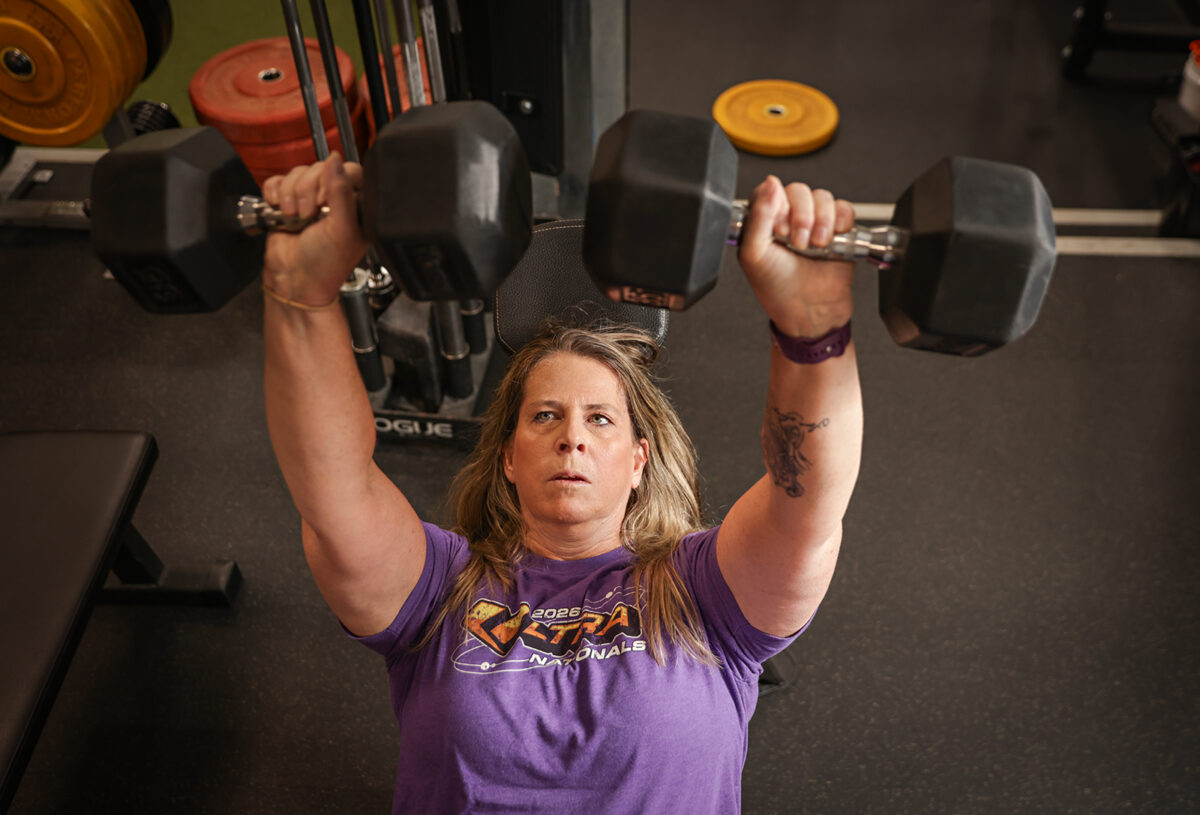
While Staudenmayer pushes his athletes to be their best, Robertson, Meadors and the rest of the team do the same — inspiring him and so many others.
“Honestly, they’re an inspiration in getting more people to sign up for competitions,” Staudenmayer said. “We have two new people who are going to compete in February who never thought about it until nationals and seeing these two in the gym. I just started training my mom three weeks ago because she saw [them] at nationals. She’s 63 now. She’s getting into it too.”
Growing the team and getting more people involved with the sport is a key goal for the three going forward. With Robertson and Meadors training only for about an hour or so three times a week, the two assert powerlifting is accessible to everyone, no matter the stage of life they’re in.
“The class is welcoming to anybody, brand new beginner, or if you’ve got years of experience under your belt,” Staudenmayer said. “Three hours a week is all it takes for you to make some big gains and get ridiculously strong.”
For those who might be on the fence, just as Robertson and Meadors once were, their message is a simple one: push past the uncomfortable.
“People get intimidated because they’re like, oh, well, I can’t go do that like these guys are, but we were there a few years ago,” Robertson said. “I literally started with the bar, and struggled with a bar. Forty-five pounds used to be very heavy.
“It pushes you out of your comfort zone. You learn to live with a little discomfort, which is a good thing.”