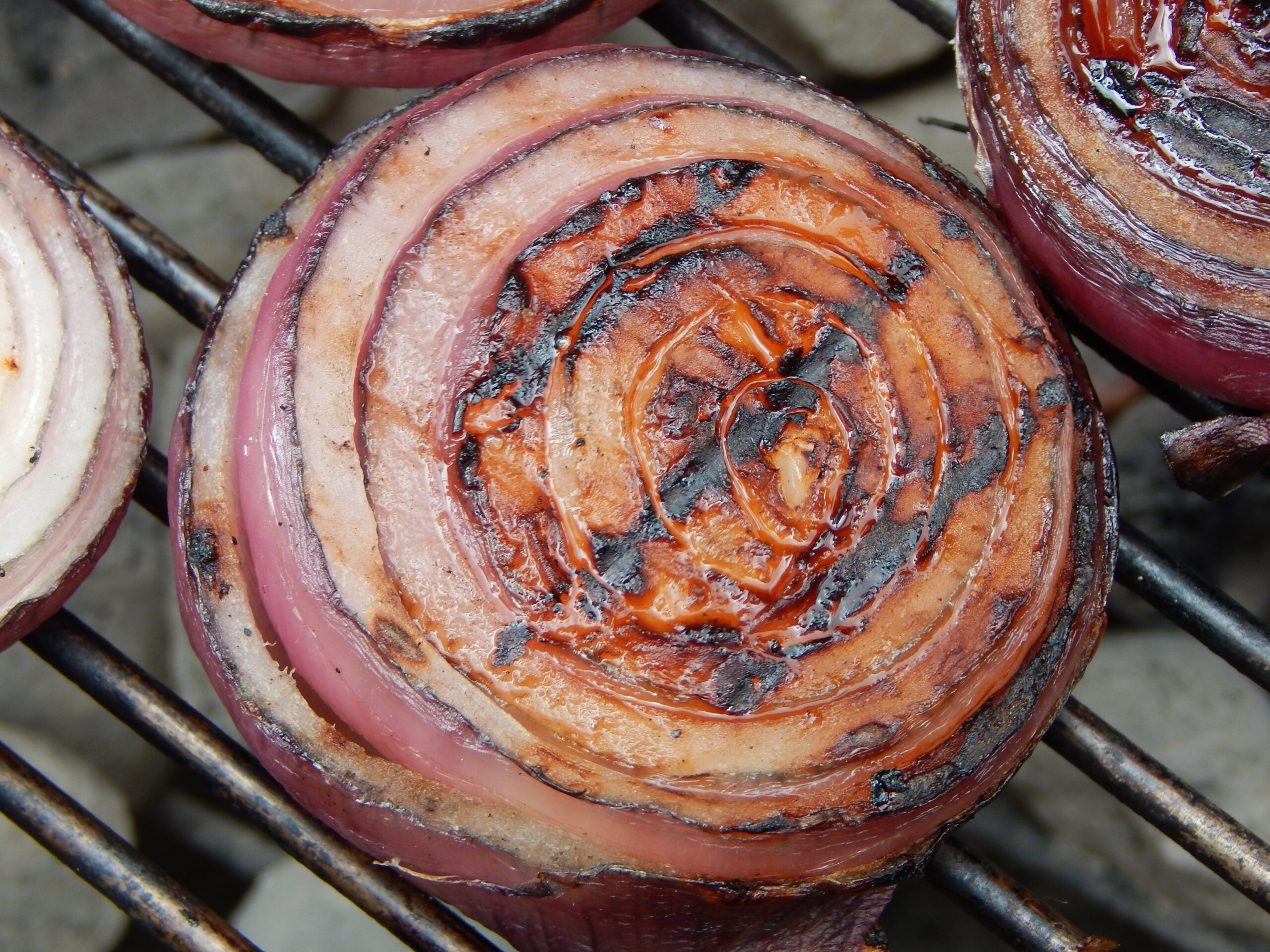
When I cook homegrown vegetables in the summer, I often grill them. Charring enhances their freshness, rather than masking it, and brings out their natural sugars.
Grilled vegetables taste so delicious that I crave their flavor throughout the year. On some summer nights, you’ll find me firing up our charcoal grill to char as many tomatoes, tomatillos, peppers, onions and garlic heads as possible before the coals die out. A few form a late dinner, but most I freeze or use in home-canned salsas and sauces. Because they’re already cooked, they speed up meal prep on busy nights.
Alliums like bulb onions and garlic dry-store well – if you have an ideal space. When I first started storing homegrown onions, they rotted over winter because my storage spaces had uneven humidity and temperatures. Until I learned to cure them properly and found their preferred storage space, I grilled and froze almost every onion I grew.
Other alliums don’t keep well unless frozen. Grilling not only adds flavor but also draws out some of their excess water, helping to reduce freezer burn and make them less soggy when thawed.
Here’s how I grill and freeze different types of alliums:
- Onions: Onions grill best when trimmed, peeled and cut in half crosswise. Sear the widest cut side first, and then flip each half when it starts to soften. Freeze the halves on a rimmed baking tray for about 1 hour, just until they start to firm up. This makes them easier to chop. Once chopped, load them into a freezer-safe zip-close or vacuum-sealed bag, laying it flat in the freezer.
- Garlic: I leave room for a head or two of garlic every time I grill. A whole head, in its skin, set on one side of the grill and turned occasionally softens nicely while everything else cooks. Grilled garlic’s texture is less appealing after freezing, so use it as a spread or pull it from the grill early enough to mince and freeze in an ice-cube tray.
- Garlic scapes: Scapes last for weeks in a cloth bag my refrigerator’s crisper drawer, and I grill a handful at a time on a copper grill mat so that the curls don’t fall through the grate. I eat them on their own or slice them for recipes or to freeze.
- Scallions and spring onions and garlic: Remove any dirt and trim the roots and thinnest green tops from delicate alliums, and then place them straight on a grill grate or mat. They’re best eaten fresh.
- Leeks: Leeks are easiest to clean when halved. Grill small ones raw, but blanch large ones in boiling water first for more even cooking. Slice them before bagging and freezing.
- Chives: Regular chives don’t grill well, but large, thick ones can be used as ties for leaf-wrapped fish. Garlic chives grill better. They’re tasty chopped onto other grilled food as a garnish.
Julie Laing is a Bigfork-based cookbook author and food blogger. Learn more about this month’s pickling workshops at TwiceAsTasty.com.