Flathead County District Court Rules in Favor of State in Lakeside Groundwater Permit Case
Citizens for a Better Flathead and the Confederated Salish and Kootenai Tribes had challenged the state’s approval of a wastewater-to-groundwater discharge permit for Lakeside, citing environmental concerns
By Zoë Buhrmaster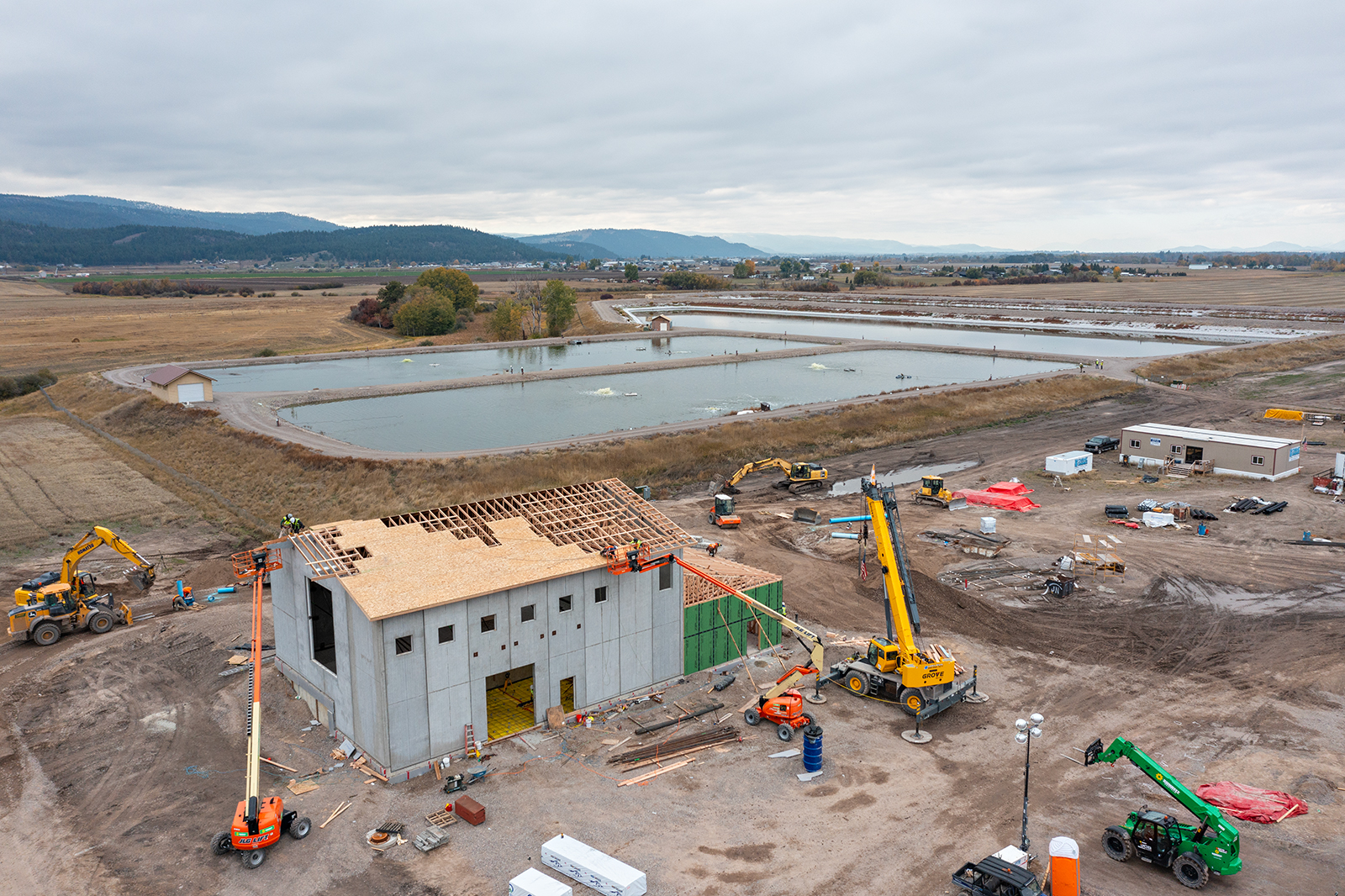
A ruling by a Flathead County District Court judge last week affirmed the state’s approval of a wastewater-to-groundwater permit for the Lakeside County Water and Sewer District (LCWSD) after a lawsuit challenged the state’s permit approval process.
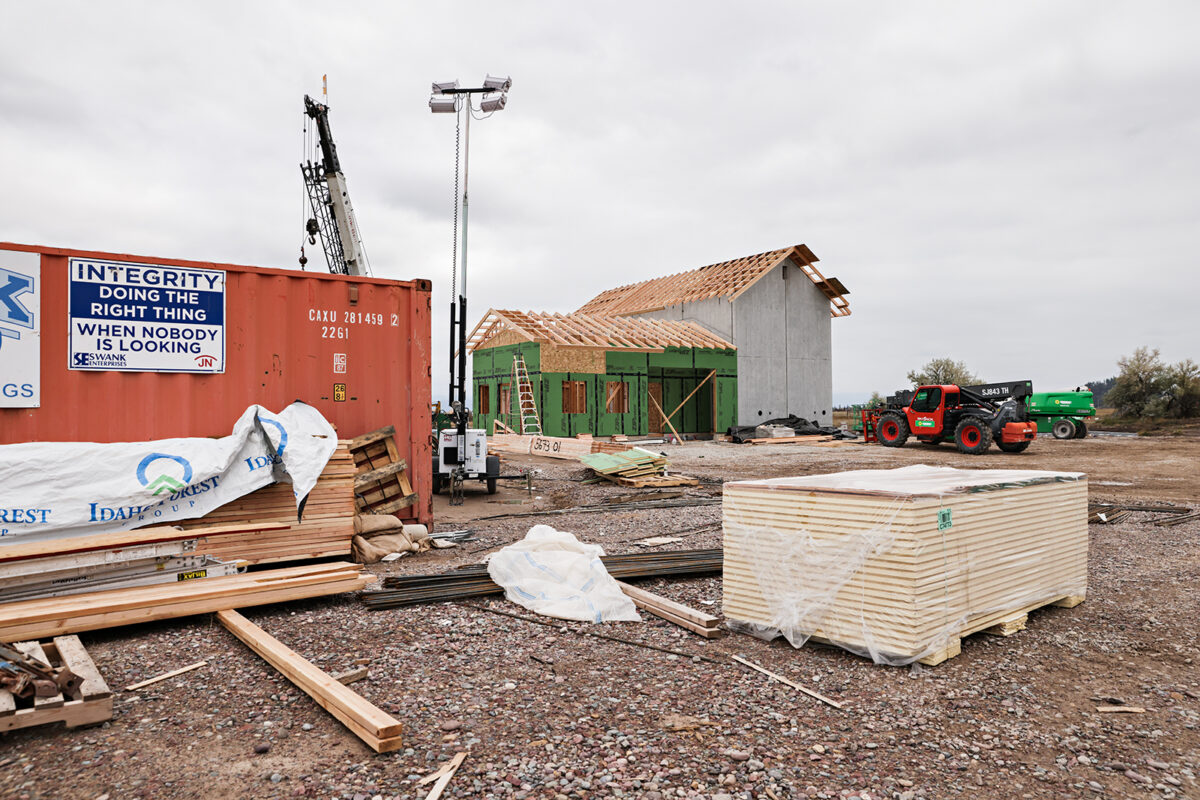
The LCSWD is currently in the process of upgrading its wastewater treatment system with a new septage receiving facility to take on septage from Flathead County and additional capacity to meet the needs of the growing town. The district split the expansion project into two phases — the first phase included the wastewater-to-groundwater permit, which Montana’s Department of Environmental Quality (DEQ) approved last year, and the second phase, which DEQ approved earlier this year, includes construction of the district’s treatment plant.
Lakeside officials have said the regulated permit is an upgrade from the district’s current system, which relies on aerated lagoons and does not require regulatory oversight from DEQ. The discharge permit allows treated wastewater to flow into groundwater via three rapid infiltration basins (RIBs) that each require a specialized treatment and groundwater mixing zone, along with consistent monitoring by the district and DEQ. The DEQ’s environmental assessment (EA) of the discharge permit found no significant environmental impact based on the limitations of the permit.
Local watchdog group Citizens for a Better Flathead (CBF) and the Confederated Salish and Kootenai Tribes (CSKT) filed a lawsuit in May challenging the state’s decision to provide the Lakeside district with a discharge permit. The plaintiffs along with DEQ sought summary judgment in lieu of proceeding with a full trial. That judgement came on Aug. 10 with an order from Flathead County District Court Judge Danni Coffman.
CBF and CSKT challenged the finding under Montana’s Water Quality Act, arguing that the state failed to consider the cumulative effects of proposed discharge for the district’s expansion project as it has been reviewed and approved in phases. The plaintiffs argued that DEQ’s review didn’t account for the 900,000 gallons per day (gpd) of effluent capacity that is being built into the new facility as the approved permit is only for 200,000 gpd.
In her Aug. 10 ruling, Coffman said DEQ’s report appropriately analyzed the effects of the approved permit. She noted the higher amount of effluent referred solely to the facility’s design parameters, and “not any confirmed plan to process that amount of effluent.”
“If the LCWSD seeks to discharge more than 200,000 gpd, even up to the system capacity of 900,000 gpd, it will need a separate environmental review that will consider what the actual effects of that additional discharge will be,” Coffman wrote.
Three expert reports commissioned by CBF and presented during public comment on the permit argued that DEQ failed to give the permit a “hard look” and that the discharge might have a higher likelihood of reaching surface waters than the state’s EA provided.
Reviewing DEQ’s decisions based on the administrative process “rather than the decision itself,” Coffman deferred “technical and scientific expertise beyond the grasp of the court” to the agency. She wrote that the state acknowledged and responded appropriately to the expert reports and other public comments provided on the permit.
“Plaintiffs have not shown as a matter of law that DEQ failed to explore the cumulative and synergistic impacts of the permit,” Coffman said. “Under the (Water Quality Act), DEQ has shown as a matter of the law that the record supports its determination that the pollutant discharge limits set by the permit are nonsignificant.”
The local watchdog group and the tribes also challenged DEQ’s adherence to the Montana Environmental Policy Act (MEPA), claiming the state failed to consider secondary or cumulative impacts and should have required a more comprehensive environmental impact statement instead of an EA.
Seeking to determine “whether the agency considered relevant data and articulated a reasoned decision,” Coffman said that DEQ provided evidence in the EA that state officials had determined the ambient nutrient load on the Delta Aquifer — the shallow groundwater system in the project’s area — and properly explained and identified other sources of potential pollution.
In response to plaintiffs’ concerns that DEQ failed to consider aquatic species and public concerns, Coffman pointed to a letter from state officials responding to CSKT’s concerns about tribal fishing rights. Officials wrote that the permit contains “effluent limits and conditions” that will protect tribal water and protect fish species.
CBF and CSKT also raised concerns that splitting the lakeside water and sewer district’s project into multiple phases failed to consider the full breadth of significance of the project under MEPA. Coffman wrote that the DEQ’s decision to grant the discharge permit did not set anything into “irreversible motion,” and that separate environmental reviews for both phases ensure that “there is no risk that the EA is failing to consider the cumulative effects of both phases because they have the same cumulative effect.”
“Finally, there is an independent justification for considering this project in multiple phases,” Coffman wrote. “As DEQ has articulated, phase 1 developed the discharge limits. Only upon the approval of phase 1 was LCWSD able to take those authorized discharge limits and engineer the mechanisms required to treat the discharge in accordance with phase 1.”
Coffman denied CBF and CSKT’s request to add phase two of the district’s project — which DEQ issued a separate EA for in June – into the legal proceedings on the phase one’s permit, noting that they are “better suited as two independent challenges under MEPA.”
“DEQ took a hard look at the direct, secondary, and cumulative impacts of the Permit and came to a reasoned determination that there was no significant impact on the physical environment and on the human population in the area to be affected by the proposed action,” Coffman wrote in the summary judgment, ruling in favor of the state and the district.
Coffman did agree with the plaintiffs’ contention of DEQ’s note in the final EA that the district’s project would result in a “net reduction in total nitrogen in the watershed.” Although DEQ’s claim “makes sense,” she said, there was no analysis provided to support the statement. Coffman noted the EA still met MEPA scrutiny without the statement.
“We worked closely with the DEQ in determining what the environmental impacts would be as a result of this expansion project,” Rodney Olson, general manager for the LCWSD, said in a prepared statement following the court order. “Following the proper process is important. We are thankful that the judge looked at the testing methodology used and the scientific data and agreed that we did our due diligence when creating this Environmental Assessment.”
The local watchdog group and the tribes are currently weighing their options to appeal the ruling to the Montana Supreme Court, according to a statement from CBF Monday. The nonprofit Flathead Lakers joined them in filing a new lawsuit Aug. 14 challenging phase two of the district’s project.
“We fully recognize that our growing region needs modern, effective wastewater infrastructure to handle septage and future development,” Mayre Flowers, CBF’s executive director, said in a statement on the ruling. “However, the science is clear that placing a massive discharge facility over this vulnerable floodplain aquifer is a grave risk. CBF is actively urging all parties — including state regulators, local districts, and county leaders — to come together and work collaboratively to find a better, safer site that protects Flathead Lake for generations.”