Trail Crossing Ahead: Montana’s E-Bike Debate Picks Up Speed
As e-bikes explode in popularity, the mountain biking community continues to grapple with whether the new technology should be shunned or embraced
By Jules Lingenfelter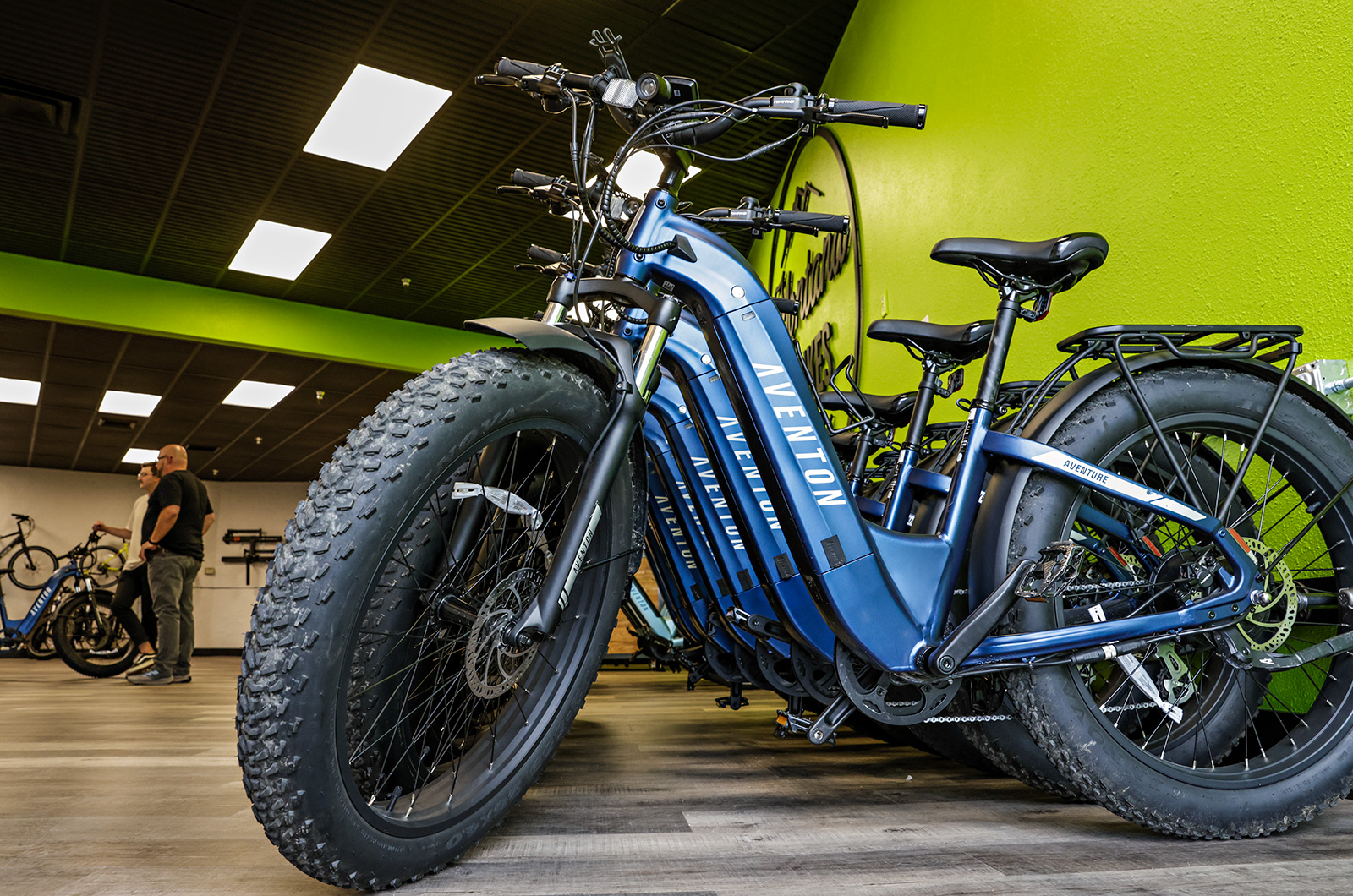
Not unlike riding a bicycle itself, restricting e-bikes on natural surface trails is a delicate balancing act in Montana — one that’s become increasingly polarizing. On one side, e-bike opponents raise concerns about trail degradation and undermining access agreements. On the other side, proponents push for more accessibility as e-bikes multiply on the landscape.
For years, both factions have continued to lock horns.
University of Montana doctoral student Abi Fuesler has spent the better part of her graduate career in the middle of that fight, not as a rider on either side of the divide, but as a social scientist whose dissertation is dedicated to picking the e-bike debate apart. In the process, she’s immersed herself in the Montana mountain biking community and become something of a sounding board for e-bike opponents and proponents alike.
“Sometimes, when I’m not talking to visitors as much, I get worried I’m blowing it way out of proportion and nobody cares,” Fuesler said. “But then, when I go talk to mountain bikers or non-mountain bike users, I’m reminded how fraught it is.” When the University of Montana published an article highlighting Fuesler’s work, she received an email describing all e-bike users as “fat and lazy” — a take she said is both a vast oversimplification and an example of what the worst sides of the discussion have to offer.
Fuesler described herself as having no stake in the e-bike impasse, though she’s still personally conflicted. It’s a hard-won neutrality that balances the tension between two hardline views — “People that want to ride e-bikes are in it for the wrong reasons and are just trying to cheat,” she said, framing the two sides of the debate in caricatured extremes, “and then, that people who don’t want e-bikes are purists who only want to protect the outdoors and keep it for themselves.” The former perspective, she acknowledged, wasn’t far from the side she used to take.
While completing her master’s degree at Western Carolina University, Fuesler discussed the issue with stakeholders, including professional cyclists and bike outfitters, and heard some of the rhetoric she once believed repeated back to her in a new context. “I started to hear [the comments] as like, oh, I actually think some of the perspectives I’ve held are really ableist or fatphobic or ageist, or whatever,” she said. “I just thought these were a bit more discriminatory than I realized.”
Fuesler, who was introduced to the world of mountain biking during her undergrad years in North Carolina, where she also worked for a private trail system that allowed limited e-bike use, had held generally anti e-bike sentiments. But, as her research threw her into the pits of the debate, she found her perspective continuously expanding and the arguments never ending.
The Flathead Valley, with an abundance of forest and mountains ripe for cycling-based exploration, has increasingly become a high-profile hub for the e-bike feud to deepen.
“It’s definitely a topic that the mountain bike community is talking about here in the Flathead Valley,” said Drew Loring, one half of the best-friend duo that owns Montana E-Bikes, an e-bike outfitter in Whitefish. At age 13, inspired by the stunts pulled by professional mountain bikers, Loring picked up the sport that has become a staple of his life.
In the past few years, he’s noted an increased interest in e-biking in the area. Like many advocates, he believes accessibility is a key feature. “One of my favorite things about [e-biking] is that we have quite a few customers in their 80s and even 90s who are still getting out and riding bikes because the pedal assist makes it possible for them,” he said. “I think that’s one of the coolest things about e-bikes, they can allow people to keep doing something they love even when they might not be able to ride a traditional bike anymore.”
But for Loring, the valley has proved particularly resistant to that growing interest, even as other communities have come to tolerate e-bikes. Though he typically opts for “acoustic” mountain biking (a term he uses to describe traditional riding, without a pedal assist), much of that choice stems from limited access to test out e-bikes on local trails. While traveling with his wife in search of flexing his mountain-biking muscles, he’s found communities throughout the West much more receptive to the electric version of the sport. In neighboring states like Idaho, Wyoming, and Washington, he’s encountered a friendlier attitude that he considers more welcoming to the burgeoning segment of e-bikers.
“In many of these destinations, class 1 e-mountain bikes have access to many of the same trails as traditional mountain bikes,” Loring said, “and we’ve seen firsthand that these communities are able to accommodate both types of riders.”
In that respect, he believes Montana has fallen behind the curve, due in large part to statutory inertia.
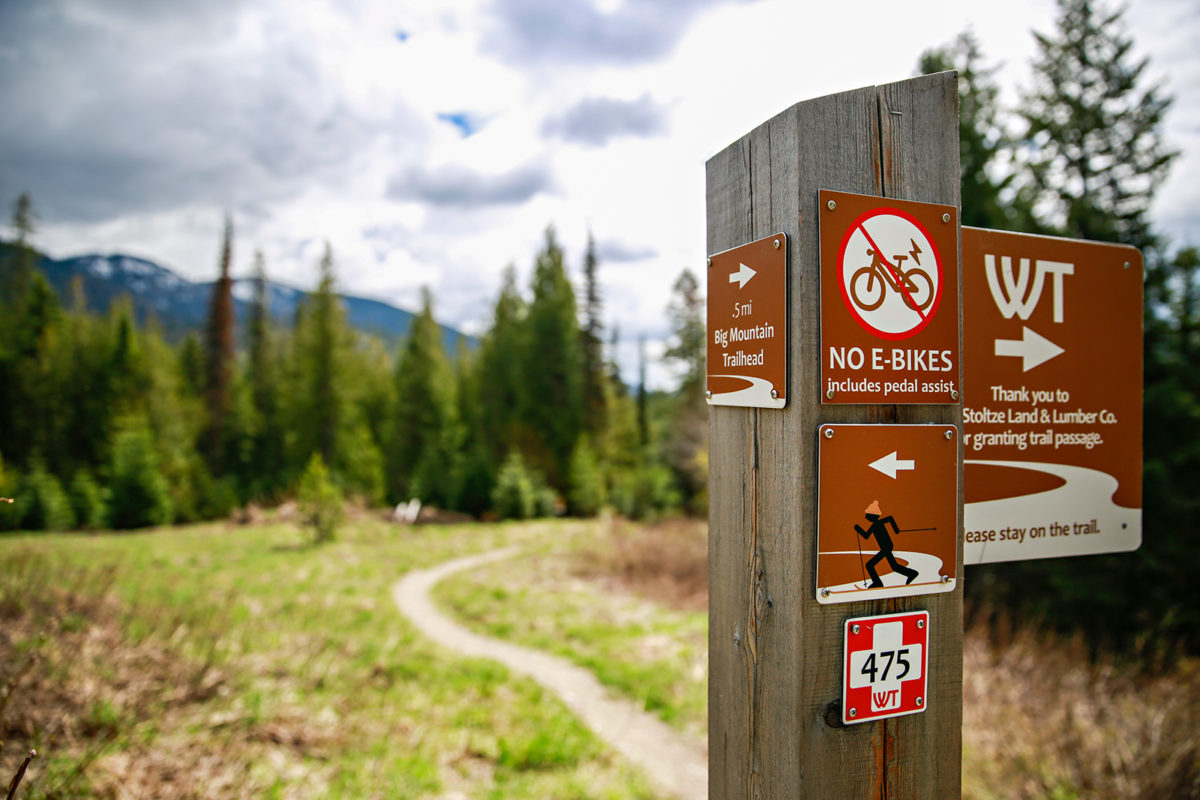
The Montana Department of Natural Resources and Conservation (DNRC), which oversees recreation on state trust lands, considers all e-bikes motorized vehicles, regardless of the e-bike’s class. Montana’s regulations on e-bikes lean toward the more conservative side — like other motorized vehicles, they’re allowed on public roads, but unless posted as “open” by the DNRC, they’re forbidden in the backcountry.
Other states, including the ones Loring mentioned visiting, have adopted the popular three-tier classification system, which draws a legislative distinction between pedal-assisted e-bikes (class 1) and those equipped with a throttle. Federally, however, the U.S. Forest Service has designated all classes of e-bikes as motorized vehicles. While National Forests can consider allowing e-bikes on non-motorized trails through a formal process outlined in the Travel Management Rule, e-bikes are generally prohibited.
Making that distinction, both Loring and Fuesler said, is vital in breaking down barriers to e-bike access. A class 1 e-bike is pedal-assisted, meaning the cyclist still has to physically power the bike, and carries a maximum speed of 20 miles per hour. Compared to a class 3 e-bike, which has a motor that can reach up to 28 miles per hour, Loring said the difference is vast.
“When you really think about it, a class 1 e-mountain bike isn’t that different from an acoustic mountain bike,” he said. “You still have to pedal, you’re still riding the same trails, and you’re still putting in effort. The biggest difference is that you can get up the hills faster and cover a lot more ground.” Most of the pushback Loring described receiving focused on kids flying up and down the streets of Whitefish on e-motos — electric mopeds or motorcycles which are equipped with higher-powered motors. Loring said he was pleased to see officials crack down on that sort of two-wheeled activity.
Legislating e-bikes, however, has proved a herculean task in the state of Montana. Throughout the valley, trails are often a hodgepodge of state trust land, national forests, and easement agreements with private landowners, requiring any regulation around e-bikes to satisfy a variety of stakeholders.
In 2023, two state bills sought to overhaul the system and expand e-bike access across the state; House Bill 261 and Senate Bill 342 would have seen class 1 e-bikes redefined as non-motorized vehicles, allowing them to go wherever a traditional bike could. Both bills failed on their third reading, as critics cited concerns about the blanket rule further complicating trail management.
WHAT DO THESE CHANGES MEAN FOR NORTHWEST MONTANA?
We’re committed to highlighting our great outdoors and the policies and conversations shaping it. And you can help! Become a member to support more reporting on public lands and keep you and your neighbors in the loop and on the trails.
The DNRC has since reopened the class 1 e-bike conversation. This past March, a public survey aimed at identifying potential spots for improvement in recreational use rules found a nearly even split over whether to define class 1 e-bikes as non-motorized vehicles — the arguments remain the same, a debate between conservation of natural land versus access for all.
To receive further feedback, the department has created an ongoing e-bike specific survey. “DNRC has been seeking public input on recreational use rules. Information provided through this process may or may not result in any proposed rule changes,” wrote DNRC spokesperson Moira Davin in a statement to the Beacon. “The department will consider public and stakeholder input, department rulemaking authority, and fiduciary duty of state trust land management. Any proposed changes would require Land Board approval.” The public can comment on the issue online.
On a national level, the U.S. Forest Service announced on Aug. 21 its intent to perform an environmental impact study on a list of potential changes to the Travel Management Rule, one of which would see class 1 e-bikes defined as non-motorized vehicles and allowed access to trails on federal lands. The public comment period is open for 30 days, and comments can be sent online.
“The existing travel management scheme creates unnecessary barriers for Americans to enjoy the national forests and grasslands that they own,” USDA Under Secretary for Natural Resources and Environment Mike Boren said in a press release. “By simplifying regulations and aligning them with the mission of the United States Forest Service, we are providing the necessary tools for local leaders to ensure that roads, trails, airfields, trailheads and other access routes are open and appropriate for public use.”
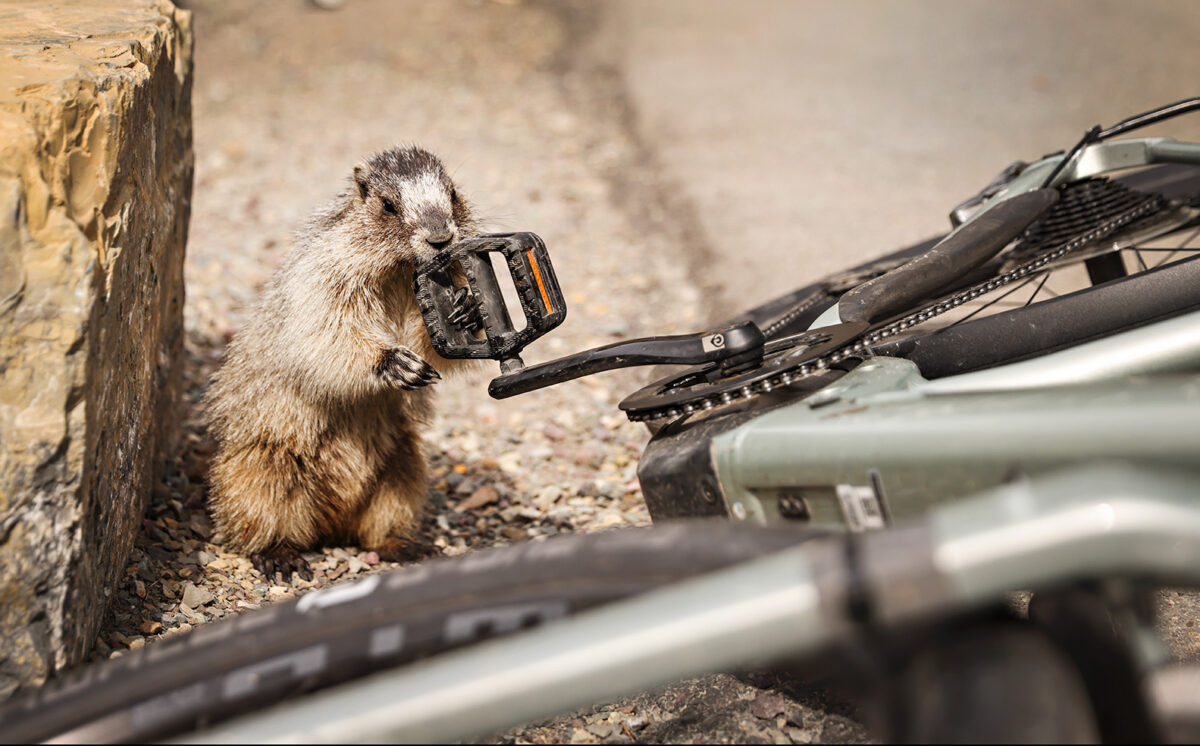
But e-bike access to private lands remains tenuous, even as the state and national levels may take steps forward. Lead-footed teenagers zipping through busy downtown streets aside, e-mountain bikers have garnered an unsavory reputation in part because some users appear to flout the rules regarding recreational use.
F.H. Stoltze Land and Lumber Company in Columbia Falls implements an open-land policy allowing public access across its nearly 40,000 acres of forest, including sections of single-track that are part of the 55-mile Whitefish Trail system. In line with the state, Stoltze considers e-bikes motorized vehicles. “We do not have any trails on our property that are legal other than the WF Trail. E-bikes are not allowed on the WF Trail,” wrote Cameron Wohlschlegel, Stoltze’s lands and resource manager, in a statement to the Beacon. “As long as e-bike use is limited to our system roads and properties where we continue to allow motorized use, we have no problems with their use.”
However, illegally constructed trails have popped up across sections of the private land, ones that Wohlschlegel suspects have been used by e-bikers. “It’s a major issue we deal with as a landowner that allows public access and one that is ruining conservation values of our properties and leading to total area closures of motorized use to protect those properties,” he wrote.
“The public has now lost privileges because of likely a few folks who feel entitled to doing whatever they want on our property,” he wrote. “Some areas have been entirely closed due to disrespectful use and degradation of our property.”
As the e-bike industry continues to grow and people take the technology to new frontiers, legally or not, impassioned trail users have claimed a stake on both sides of the divide.
“Truly everybody cares and I can almost never predict which way they feel about them,” Fuesler said, acknowledging that her foray into the social world of e-mountain biking is only one facet of the equation. Fuesler was quick to point out that other stakeholders are attempting to answer questions related to the environmental impact of e-bikes and their rising profile in accessibility justice.
She stressed the importance of communities — municipalities, academics and mountain bikers — engaging in earnest conversation about the issue. E-bikes, she said, are not going away.
“I think, because there’s so much money behind them, it’s probably just a matter of time before they’re being ridden in a more widespread manner.”