Lone Pine State Park Reopens Comment Period on Forest Thinning Plan
Two years into planning, park officials hope to start removing dwarf mistletoe-infected Douglas firs by October
By Jules Lingenfelter
Montana Fish, Wildlife and Parks (FWP) has released a second supplemental environmental assessment for a proposed forest thinning project at Lone Pine State Park after on-site surveys revealed new information about tree health.
First proposed in 2024, the Lone Pine State Park Forest Health Improvement project initially called for removing up to 30% of Douglas fir trees per acre to address a rampant spread of dwarf mistletoe, a parasitic plant that has primarily attacked the park’s Douglas fir population. After surveying the park earlier this year, officials determined that a flat 30% removal rate was too restrictive.
“It was like, you’d have 10 infected trees and you would only be taking three of them per acre,” said Brian Schwartz, the park’s recreation manager who is overseeing the project. “The new Douglas fir seedlings are coming up and they’re already infected with it, because the dwarf mistletoe spits out these sticky seeds and if it lands under the right conditions, it will just infect and kill that tree.”
The new assessment, prepared by Schwartz, reflects that updated data, stating that “the amount of infected Douglas-fir removed per acre will vary, depending on what is determined necessary to meet the project goals.”
The project also aims to bring the park closer to the species mix outlined in a 2024 forest management plan drawn up by a private forester. According to all three environmental assessments, decades of fire suppression and timber harvest have pushed the park’s tree population to skew toward Douglas fir, crowding out other native species.
Under the plan, felled Douglas fir would be piled and burned on site, and western larch and ponderosa pine seedlings planted in their place. Schwartz described the goal as a forest “mosaic” — a mix of species and ages that creates natural breaks and provides barriers against disease and wildfire.
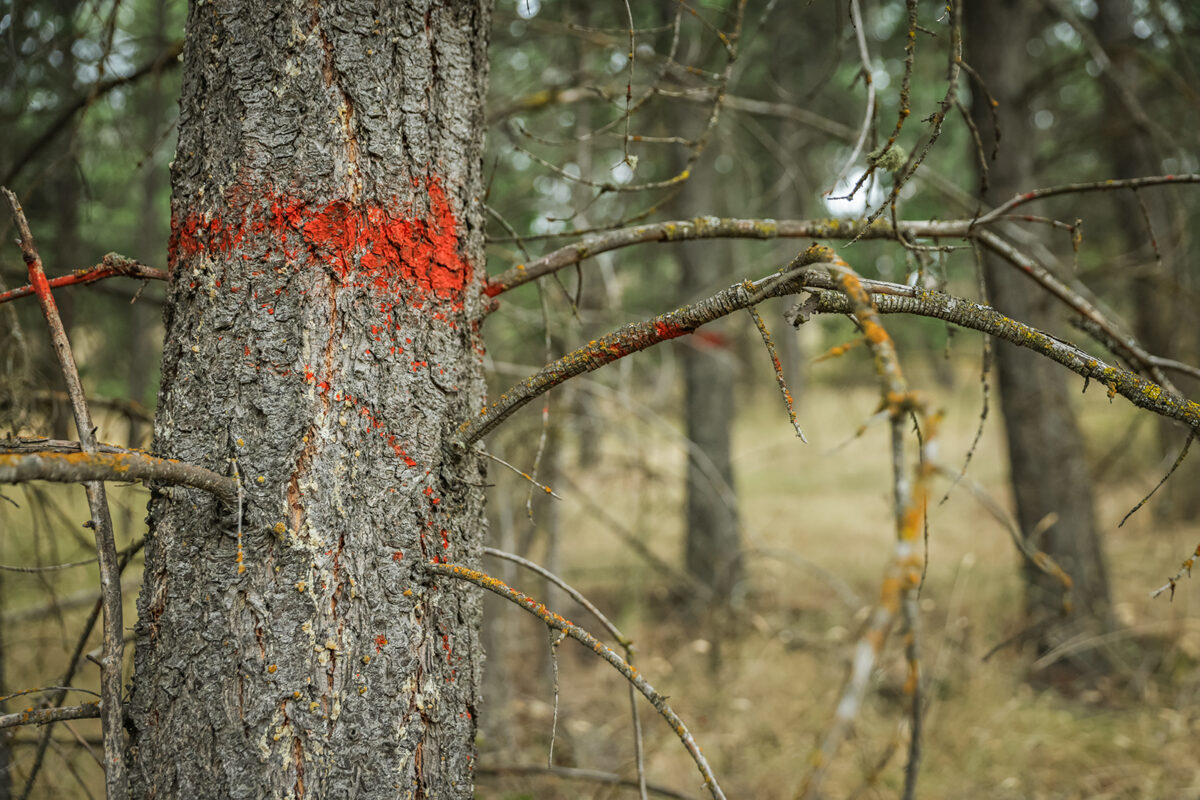
“Over the years, the Doug firs have kind of been crowding out a lot of the other native species, creating a canopy, and it takes a lot of nutrients,” he said. “It would just be good to get other tree species going in there that makes it more difficult for disease such as dwarf mistletoe to spread.”
Since the 2024 public scoping notice, Schwartz has produced one environmental assessment and two supplemental environmental assessments. Even so, he said, the project is “not a done deal.”
After the first public comment period raised questions about the project’s goals and action items, FWP required a supplemental assessment to address them. A second round of comments focused on how felled logs would be hauled out of the park.
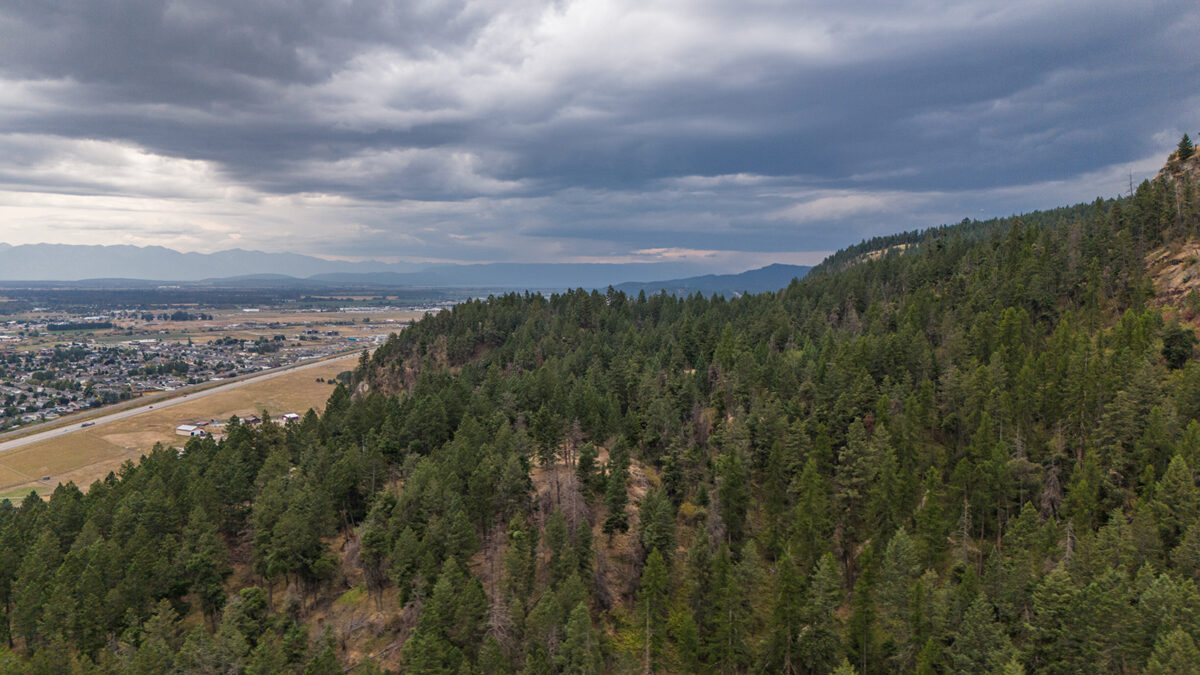
Working with local loggers, Schwartz revised the removal route to send logs out the north end of the park via Quarry Road, which connects to the Lone Pine Trail — a change he said would save both time and money. While drafting the second assessment, Schwartz visited the properties along Quarry Road to explain the plan. “There was support from all of them,” he added.
If the current comment period doesn’t surface major concerns, Schwartz expects FWP to adopt the project. “If there aren’t any big issues that we haven’t thought of or addressed adequately, if there’s nothing big there, then we’re going to start in October.” Work is projected to wrap by November 2027. Crews will work mainly on weekdays, and the park will stay open on weekends, with any trail closures posted in advance. The park’s east side, including the conservation easement managed by Flathead Land Trust, will remain open throughout the project.
“I definitely don’t want to surprise anyone. I mean the forest is going to look different,” Schwartz said. “But, I mean, I would say the majority of people that I’ve crossed up here that — you know, I hike in and out and I ask them if they have any questions — a lot of times the feedback I get is ‘It’s about time you did something.’”
The second environmental assessment, along with its predecessors, is available to read online. The public comment period is open until Sept. 11. Comments can be emailed to Brian Schwartz at [email protected].
Schwartz said he’s happy to talk with anyone who wants to learn more or walk the project site. “If someone wants to walk the project area,” he said, “I’d love to walk with them and talk with them about it and explain it further.”