Brown Trout Detections Prompt Emergency Kill Order in Flathead Fishing Regulations Proposal
The proposals, which include eliminating limits on lake trout and northern pike, go before the Montana Fish and Wildlife Commission next month
By Jules Lingenfelter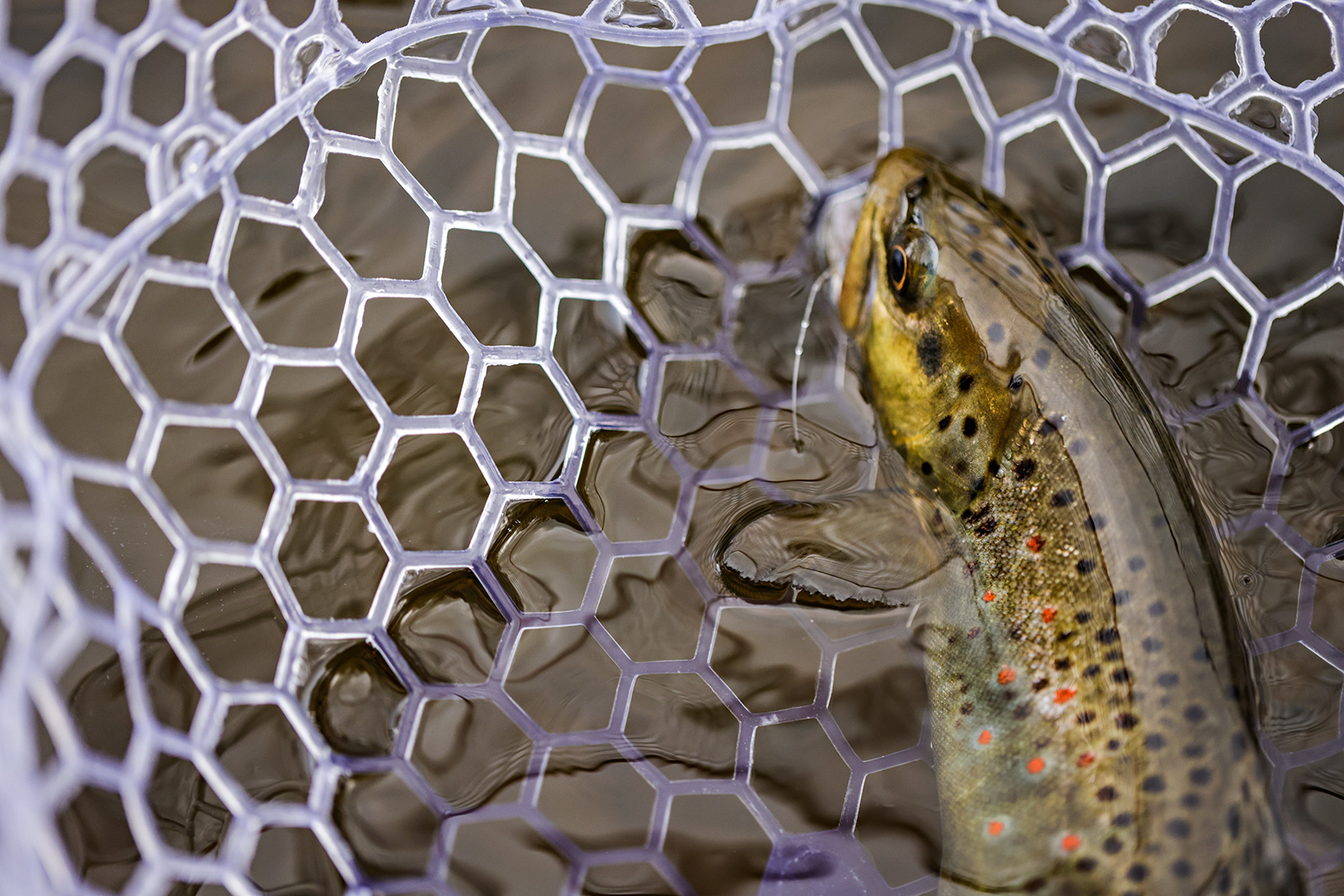
Montana Fish, Wildlife and Parks (FWP) has proposed an emergency catch and kill order for brown trout in the upper Flathead River, codifying the department’s call earlier this summer for anglers to kill and report any brown trout they catch. The last-minute regulation follows the agency’s broader proposed updates to statewide fishing regulations, which go before the Montana Fish and Wildlife Commission during its October meeting.
Together, the two proposals reflect FWP’s ongoing struggle to manage an increasingly crowded fishery, cracking down on new invasive threats like brown trout while easing limits on longer-established nonnative species that compete with native bull trout.
Statewide fishing regulations are developed on a biennial cycle.Through public scoping conducted in the spring, FWP prepared 44 regulation changes for the 2027 and 2028 fishing seasons. But recent reports of brown trout in the Flathead River prompted the agency to take a stronger approach to investigating their presence, which it has attributed to illegal introductions.
Following a detection earlier this summer, FWP issued a press release urging anglers to immediately kill and report any brown trout caught in the river system. FWP has already confirmed two reports of the nonnative species in Ashley Lake and deemed reports in Church Slough “likely legitimate,” according to the proposed regulation.
“The detection of a brown trout anywhere in the Flathead Drainage is something we take very seriously,” stated FWP fisheries biologist Kenny Breidinger in a July press release. “In Ashley Lake and Church Slough, brown trout will compete for resources with and prey upon other sportfish. More concerning, both waterbodies provide a source for brown trout to spread throughout the Flathead Drainage.”
“Our goal is to prevent them from becoming established before they have a lasting impact,” said Breidinger. “Anglers are our best partners in that effort, and reporting any brown trout they catch will help us respond quickly and effectively.”
The proposed regulation would require anglers to kill brown trout caught in the Flathead Lake and bodies of water upstream. The kill must be reported to FWP within 24 hours and the fish presented to a regional office within 10 days. Angler reports would aid the agency in determining the distribution and population of the fish in the river system, according to the agency’s rationale.
Alongside the brown trout crackdown, FWP has also proposed loosening harvest limits in the 2027-2028 fishing regulations for illegally introduced species and lake trout.
On the Flathead Lake, a series of proposals would eliminate daily or possession limits for northern pike, smallmouth bass and rainbow trout. Northern pike and smallmouth bass populations in the lake stem from illegal introductions; removing limits on all three species, according to the regulations’ rationale, would align with the Confederated Salish Kootenai and Tribes, with whom the agency co-manages the lake.
Conserving bull trout populations in northwest Montana waters is a constant point of pressure for the fisheries division of FWP; the area is home to one of the healthiest bull trout populations, which were listed as federally threatened in 1998. The agency must engage in a careful balancing act between protecting the fish that rely on its cold, clean waters and preserving popular angling opportunities.
To limit competition with native bull trout, FWP proposed eliminating possession limits for lake trout in the Western District. “Lake trout have altered the abundances and size structures of native and sport fish populations, especially in western Montana,” stated the regulation proposal. “For example, in the Flathead and Swan lakes, lake trout may have altered threatened bull trout populations to the point where active removal of lake trout may be needed to reduce impacts to bull trout. Prevention of additional unauthorized introductions and associated impacts is a management priority in western Montana.”
The potential rescission of lake trout possession limits proved controversial during the May public scoping. Public comments expressed concern that the regulation would negatively impact angling opportunities in the Western Districts’ waters by allowing the potential for overharvesting sport fish, and questioned whether lake trout suppression was an effective strategy for conserving the bull trout population. Public comment on the proposal further revealed a broader trend of dissatisfaction towards FWP’s management of Flathead Lake, with some voicing frustration that the agency was skewing towards conservation over angling opportunity. FWP addressed the concerns, stating that they would be noted for the future, but fell “outside the scope of this district-standard proposal.”
Another proposal would set a 28-inch minimum length and a shortened fishing season for bull trout in the Hungry Horse Reservoir, in addition to the existing one-fish harvest limit. The restrictions aim to address a historic low in bull trout redd counts in the reservoir; FWP suspected angler pressure has contributed to the decline in spawning nests.
Public comment for Flathead River Drainage Brown Trout Regulation and 2027 – 2028 Fishing Regulations is open until Sept. 24 and can be sent online. The proposals will appear before the Montana Fish and Wildlife Commission on Oct. 14.