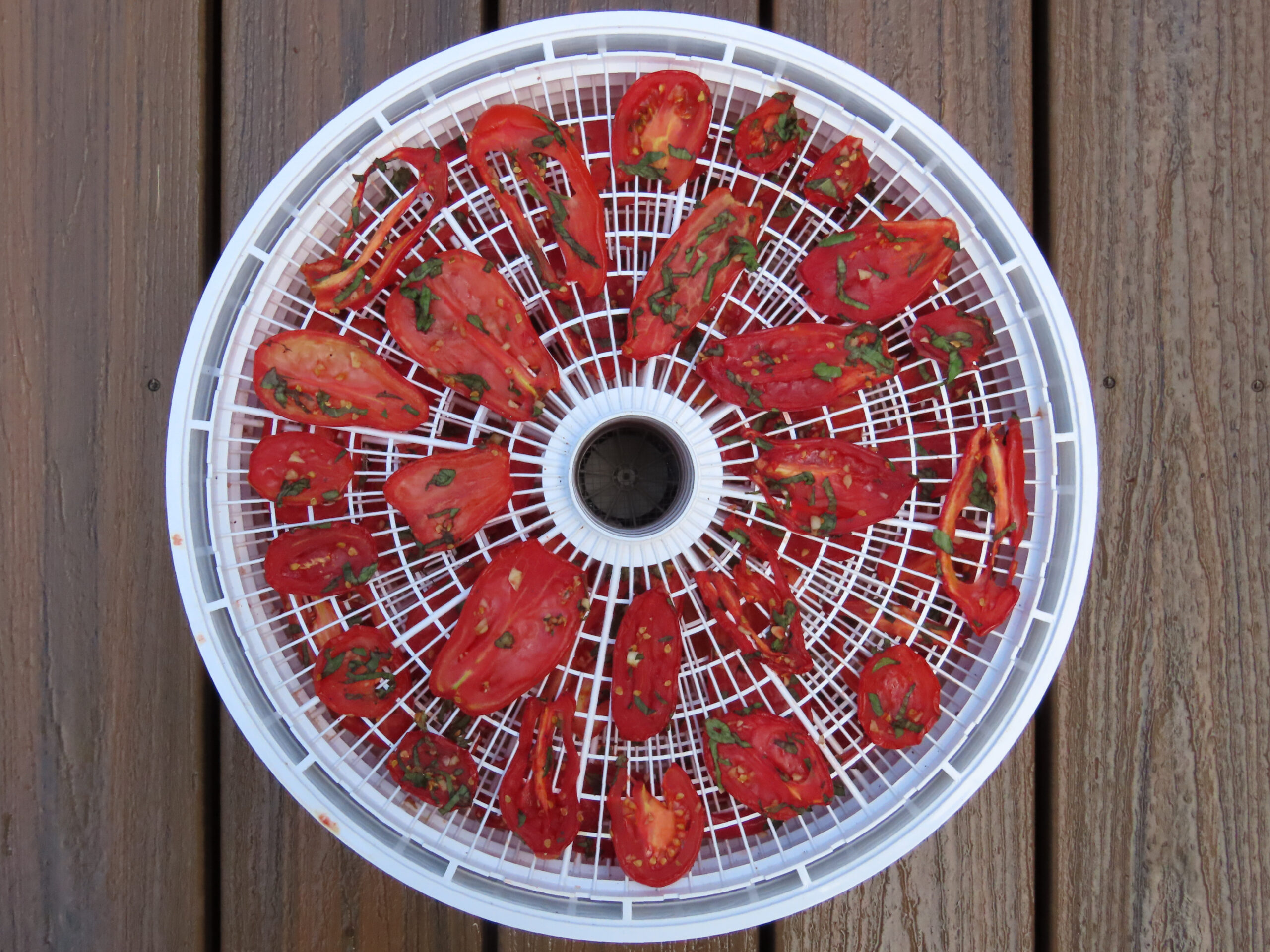
Sun-dried tomatoes were one of those 1990s food fads that faded through overuse and flavor-zapping mass production. But the core reason for their popularity remains: drying tomatoes concentrates their flavor and natural sugars into an intensely umami addition to many meals.
Tomatoes dehydrated in a food dehydrator don’t develop the same depth as those dried for days in hot, direct sunlight, but they still develop more umami and taste less acidic than fresh tomatoes. Marinating before dehydrating reduces their juiciness and infuses the flesh with bonus flavor.
Thinly sliced paste or sauce tomatoes, which are fairly firm and fleshy compared with large slicing varieties, dry more quickly and yield more cups of dehydrated pieces. They’ll still shrink to a fraction of the space taken up by whole tomatoes in your freezer and be just as versatile for winter use. Completely dehydrated tomatoes also travel well, so they’re staples in my meal kit for front-country camping and sailing adventures.
I dry tomatoes until they crackle when broken so that I can store them at room temperature. If you dry them for less time, just until they bend instead of snap, keep them in the fridge to use within three to four days. You can instead freeze them to stave off mold, but they’ll be mushier when thawed. The commercial processes that create shelf-stable oil-packed dried tomatoes can’t be safely replicated at home.
Drop dried tomatoes into soups or stews, or rehydrate them briefly in hot water to blend with cream cheese, top pizza or toss with hot pasta. Crumble dried tomatoes over salad or grain bowls as garnish or grind them into powder as seasoning. The leftover marinade makes a tasty salad dressing or grilling marinade base.
Marinated Dried Tomatoes
Makes about 2 cups
4 pounds Roma or other paste tomatoes, cored
1/2 cup fresh basil, slivered, or 3 tablespoons dried basil, crumbled
1 tablespoon fresh oregano, chopped, or 1 teaspoon dried oregano, crumbled
4 cloves garlic, minced
1-1/2 tablespoons balsamic vinegar
1-1/2 tablespoons maple syrup
Salt and freshly ground black pepper to taste
Cut the tomatoes lengthwise into three or four thin slices, placing them in an extra-large bowl. Gently fold in the basil, oregano and garlic. Toss the tomato mixture with the vinegar, syrup, salt and pepper until coated. Let sit for 30 minutes, until the flavors combine.
Briefly drain the tomatoes through a colander, just until they start to drip; set aside the liquid for another use if desired. Spread the tomatoes on open-weave dehydrator trays, ensuring they don’t touch. Dehydrate at 125°F to 145°F (your machine’s fruit setting) for eight to 24 hours, until the tomatoes feel crisp.
To check for dryness, let the tomatoes cool to room temperature and then attempt to break them in half; they’re completely dry when they crackle and snap easily. When completely dry, gently pull the tomatoes off of the dryer trays and store them in small zip-close bags or glass jars in a cool, dry place out of direct light.
Julie Laing is a Bigfork-based cookbook author and food blogger. Learn more about this month’s dehydrating and freezing workshops at TwiceAsTasty.com.