A New Age of Montana Politics
The Flathead has six members of Generation Z running for office this fall — the highest number anywhere in the state. Their experiences running for office, serving as leaders, and the issues they’re focused on, help illustrate how the next generation could shape Montana’s future
By Mariah Thomas
When Finley Warden talks to voters, his age is “an elephant in the room.”
The 20-year-old Republican (he’ll turn 21 in October) and fifth-generation Polson resident is mounting a run for his local legislative seat in House District 13, which contains parts of Lake and Sanders counties. The Liberty University student, who attends school virtually and lives in Montana, earned the Republican nomination in June. He’s set to graduate later this year.
Warden and his primary opponent, two-term Republican state Rep. Linda Reksten, were on separate sides of a Republican Party divide between lawmakers willing to approach their work with pragmatism, versus those who think Montana’s rightward shift in recent years signaled a desire from voters for a more hardline approach. Warden, whose political profile began rising the more he spoke out about what he called “indoctrination” in the public school system, hit Reksten during the primaries over her support of a pair of controversial property tax bills that cleaved the Republican Party and garnered bipartisan support during the 2025 session, among other critiques of her conservative bona fides.
But age was another area where Warden could draw distinctions between himself and his opponent.
“I mean, you don’t normally see people my age running, so people always ask me questions about it, even if I don’t necessarily bring it up on my own,” Warden said. “But what I found is that people are honestly just ecstatic that a young person is stepping up to do something like this. I think, regardless of how old you are, I think people are kind of tired of especially what we’re seeing in our national Congress, of people dying in office, people being obviously too old to serve.”
In an era where politicians have held onto power with a death grip (in some cases literally) many have in recent years taken issue with America’s “gerontocracy,” a term that refers to the high number of 70- and 80-year-olds in the upper echelons of government. Congress’s median age sits at 64 years old in the Senate and 58 in the House; in contrast, the country’s median age is 39.4 years old. While there are limits on young people running for federal offices, a maximum age limit doesn’t exist, though imposing such a limit is a position most Americans favor.
At the state level, Montana’s laws differ from the national landscape. In the Treasure State, 18 year olds are eligible to run for state office.
No region in the state has fielded more candidates from Warden’s generation this fall than the Flathead. Two of the four incumbent legislators who are part of Generation Z — Republican state Reps. Lukas Schubert and Braxton Mitchell — hail from Flathead County. They’re poised to add Warden to their ranks as he runs against Democrat Dalton Bradford in a red district that has sent Republicans to the state legislature for more than a decade. They’re among six candidates from their generation running for office in the Flathead Valley this year.
On the Democratic side of the aisle, Mitchell has drawn an opponent in Luca Welle, another member of Generation Z, setting up their race to be among the most youthful in the state. And both Maeve Kintzler and Dakota Adams, Democrats running in ruby-red districts, also identify as members of Generation Z.
“It’s been a fact for a while now,” Warden said of the trend of people his age running for office in the Flathead. “It’s been growing, but I don’t know that there’s really been much attention on it.”
By comparison, Generation Z candidates are a more rarefied commodity in the state’s other urban areas. Gallatin County and Missoula County each have two Gen Z candidates running this fall; Lewis and Clark and Yellowstone counties have one each; and in both Cascade and Butte-Silver Bow counties, there are no members of Generation Z running for the state legislature.
Several factors can contribute to young people’s lack of representation, according to George Quinn, the lead graduate research assistant on Rutgers University’s Young Elected Leaders Project. The project has tracked young elected leaders — which it now defines as millennials and Generation Z — serving in state legislatures across the country since 2002. Quinn, a 26-year-old member of Gen Z himself, said those factors include a lack of resources and, simply, life choices. Young people, Quinn explained, have a lot of opportunities to pursue, from college to beginning a career. Many opt to build in those ways rather than running for office, which they may choose to do later in life.
Still, young people’s voices being represented in government is important, Quinn said. He said society is changing at a fast clip, and the consequences are landing more quickly than Washington, D.C. — or Helena, for that matter — can keep up with.
“The social epidemic, this sort of social collapse, that’s affecting people in their thirties,” Quinn said. “You know, getting on the ladder to buy a home is affecting people in their thirties. AI is affecting people in their thirties. Reproductive rights is really affecting people in their thirties. These are all things that, I think, we need a Congress or a state legislature that could personally understand. You could get it downwind from your constituents, but you’re not gonna see the same type of chaos that you’re seeing if you’re in your thirties today.”
According to Quinn, the lack of young people in politics is exactly why it’s important to study their participation. Their experiences running for office, serving as leaders, and the issues they’re focused on, offer a glimpse about how the next generation could shape Montana’s future.
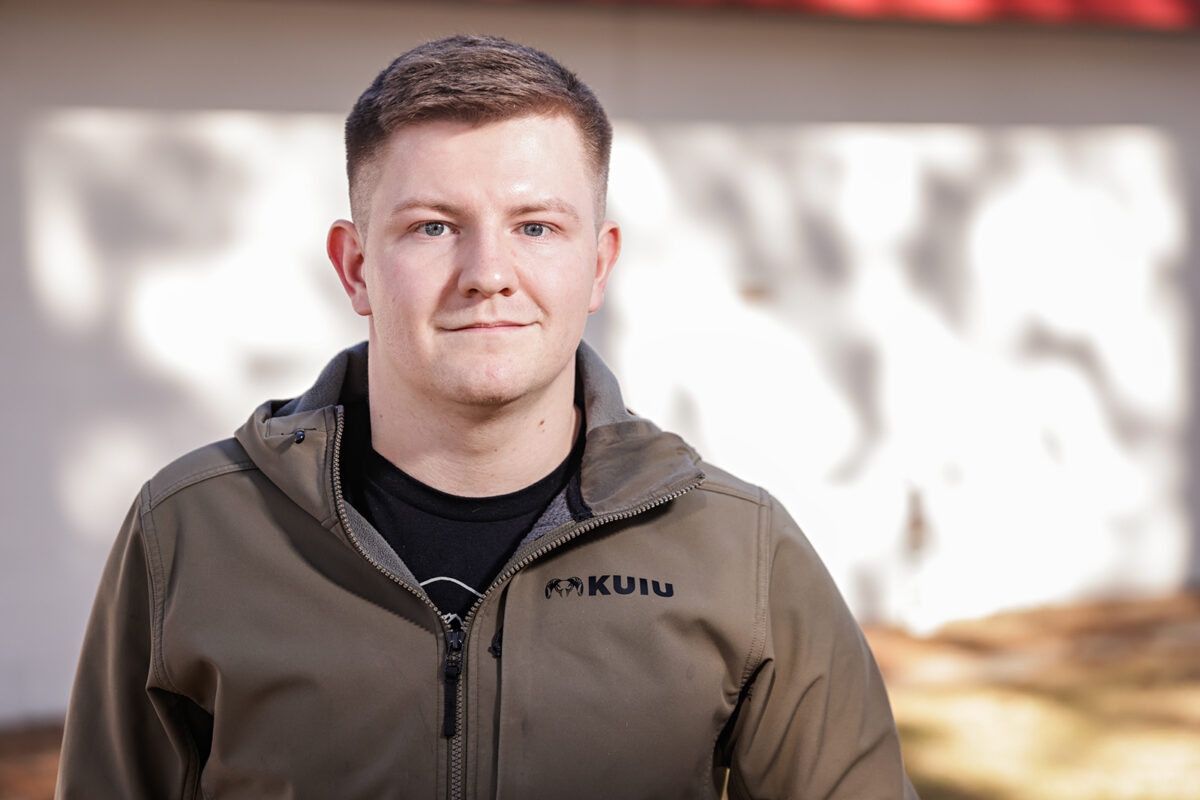
The 26-year-old Braxton Mitchell never thought he’d be a politician.
“All right, so, my dream job aspiration growing up was trying to become a football scout,” Mitchell said. “So, obviously, different direction, right?”
Mitchell’s life path was altered during his senior year of high school, when Florida’s Parkland school shooting became a political flashpoint in 2018. Mitchell organized a walkout at Columbia Falls High School. Instead of doing so in conjunction with the March For Our Lives — the group Parkland students formed to advocate for gun control in the wake of the mass shooting — Mitchell’s walkout both called attention to the importance of the Second Amendment and endeavored to honor the victims. The move went viral, and landed Mitchell on the radar of Turning Point USA, where he became an ambassador for the organization that helps engage young conservatives in politics.
But Mitchell still didn’t consider running for office. Or, at least, not until two years later in 2020, when then-chair of the Montana GOP, the Flathead Valley’s own Don “K” Kaltschmidt, recruited him to run for a seat held by a Democrat in the north valley.
“I knew what the legislature was and it was like, ‘all right, is this something I want to get into?’” Mitchell said. “How would I be perceived as a young guy?”
As he ran for the first time, Mitchell found people were excited at the prospect of a young person running for office during his campaign, even if he didn’t explicitly speak about age when talking to voters.
He won the seat, besting Democrat Debo Powers, and joined the state legislature in 2021. Mitchell has continued to serve since, winning reelection in 2022 and 2024 and working his way into a legislative leadership position as a majority whip. During his time at the legislature, he said he has felt respected by his colleagues, though he still finds it important to have young people like himself in the mix.
“The amount of guys I’ve taught how to use their computers that are elected — you know, Republican and Democrats too — but it’s like, you need people that actually resonate and resemble all generations of people, because the decisions we’re making are going to impact my generation more than likely the most,” Mitchell said. “It’ll have the trickle-down effect on us.”

Mitchell’s run for office inspired other young people in the Flathead, including 21-year-old Lukas Schubert.
Schubert, a Glacier High graduate who, like Mitchell, grew up in northwest Montana, first became involved in politics in 2021 and 2022 via volunteering for the local Republican Party and legislative candidates in the area. In 2024, at age 18, he decided to mount a run against incumbent Republican Rep. Tony Brockman for a legislative seat in House District 8.
Schubert knew he didn’t like what he was seeing from Brockman. Brockman took a more pragmatic approach to legislating, while Schubert has since earned a reputation as one of the members of the legislature’s more conservative flank. And having watched Mitchell serve in the statehouse as a 20-year-old, Schubert knew it was possible to successfully run for office as a young person. He cited Mitchell’s service as part of the reason he chose to jump into the race.
Schubert won the seat in 2024, besting Brockman in the Republican primary and Democratic challenger Beth Sibert in the general to represent Evergreen in 2025. Like Warden and Mitchell, Schubert didn’t necessarily emphasize youth as he ran.
“Well, you know, it just, it is what it is,” Schubert said. “I think generally speaking overall, I think it’s good to have young people get involved in politics. We have a unique way of seeing things that other people might not have, and just a unique life experience, growing up with … this, the digital sort of world that we live in. But I guess, you know, I’m a candidate, and I think that you need to just tell people what you’re gonna do, what you support, what you stand for, and people will make the judgment off of who they think is the best person.”
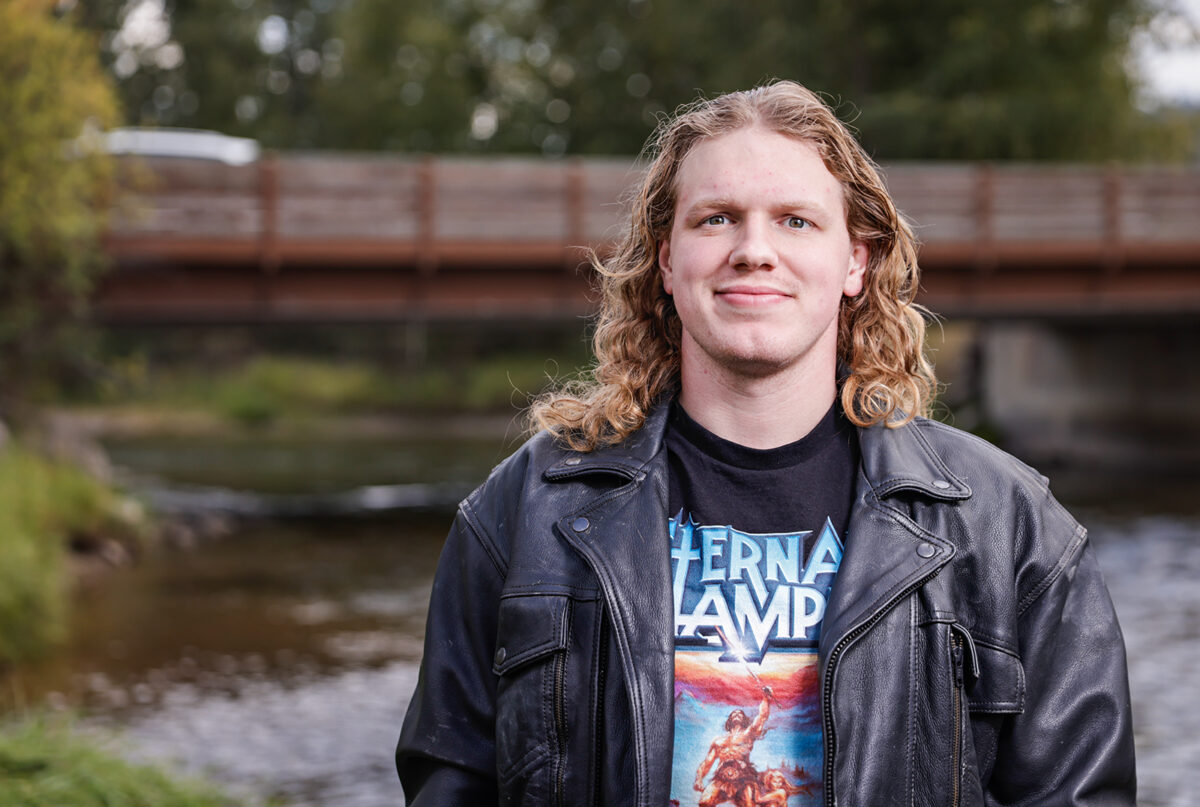
While Schubert and Mitchell both described their age as tangential to their candidacies, for Dakota Adams, youth was a critical factor in his decision to run.
Adams, 29, is the son of Stewart Rhodes, the founder and leader of the Oath Keepers, a far-right, anti-government militia that was based in northwest Montana for nearly a decade. Adams described a childhood in a “deeply political household, to the point of dysfunction.”
But the events of Jan. 6, 2021, in which a mob of Trump supporters stormed the U.S. Capitol to stop the certification of Biden as president, forced Adams to go through a personal reckoning. Adams’ father, Rhodes, was convicted of seditious conspiracy for organizing his supporters to attack the Capitol. His 18-year prison sentence was commuted and he was released, along with the more than 1,500 people charged in connection to the riot who received pardons or commutations, when Trump took office in 2025.
For Adams, the event signaled an inflection point prompting him to question his long-held belief system. In 2022, the volunteer firefighter dedicated his time to supporting Democratic candidates in Lincoln County. By 2024, Adams had decided to mount a run for office as a Democrat himself. He hadn’t initially planned to run again this year after a campaign finance issue with his 2024 bid became a stressor. But the stakes of the race for young people felt, to Adams, like it forced his hand.
“Ultimately, I had to decide — because I did have a primary opponent this time around — so with the ballot not being blank, I had to decide, ‘do I believe it’s important enough for there to be a young person on the ballot that I will go up against this other candidate?’” Adams said.
He bested his primary challenger, Roberta McCanse, in June, and is now set to face Republican Michelle Bianco in the general election in November.
And the stakes Adams sees as so critical for young people that he chose to jump back into the mix? A cost of living and housing crisis, which he says is disproportionately impacting young people.
“If you have leadership who have not directly lived the struggles and in the circumstances of the young generations, then you’re going to have a harder time navigating crisis or just correctly steering the ship,” Adams said.
While the solutions Adams might prescribe for that issue differ from the trio of Republican Gen Z-ers running in the Flathead this fall, Warden, Mitchell and Schubert all identified affordability as the defining issue for members of their generation headed to the ballot box this year. In fact, every Generation Z candidate in the Flathead, along with Quinn and other experts on young people in politics, pointed to the issue of affordability as among the most critical facing young people in Montana — and beyond — today.
Alice Boyer, the executive director of Forward Montana Foundation, the largest youth engagement organization in the state, named affordability as the largest barrier to getting young people involved in politics at all levels, from showing up at the ballot box to running for office. When you’re working multiple jobs to make a living and grappling with the outsized influence of large corporations on elections to boot, it can be difficult to feel like your vote makes a difference, Boyer said.
“It seems like we’ve been having conversations for years and years and years about how it is unaffordable to live in Montana … in the U.S.,” Boyer said. “People have been talking about this for, it feels like, ever. And continuously not seeing elected officials sort of make or at least be able to even communicate big shifts that they’re making to actually try to have an impact on that affordability piece is absolutely a big thing that we see consistently when talking to young people. It’s hard to make a case sometimes of why should you continue to show up when it feels like the folks who are getting elected maybe aren’t always making the big changes that we want to see.”
But Boyer said that issue underscores the reason why young people need to be in the statehouse. On an issue like affordability, it’s young people who will be affected for generations to come, and who can speak to the contours of how that issue is touching them.
Warden, for instance, said one perspective he looks forward to bringing to the state house should he win election this fall is that of a renter. The Polson resident said he hopes to live in the state for the rest of his life and to start a family here. But doing that feels like a more difficult dream as Warden has watched home prices soar, rent climb and costs go up. And while property taxes have been at the center of debate in recent legislative sessions, Warden suggested a renter’s perspective in the statehouse could offer important insights for legislators to consider as they craft housing policies, too. And Adams hopes, should he win election to the statehouse, he can use his voice to draw attention to the fact that wages have remained stagnant when compared to the rate of inflation and soaring housing costs, all factors that compound to create barriers for young people aiming to find permanent housing.
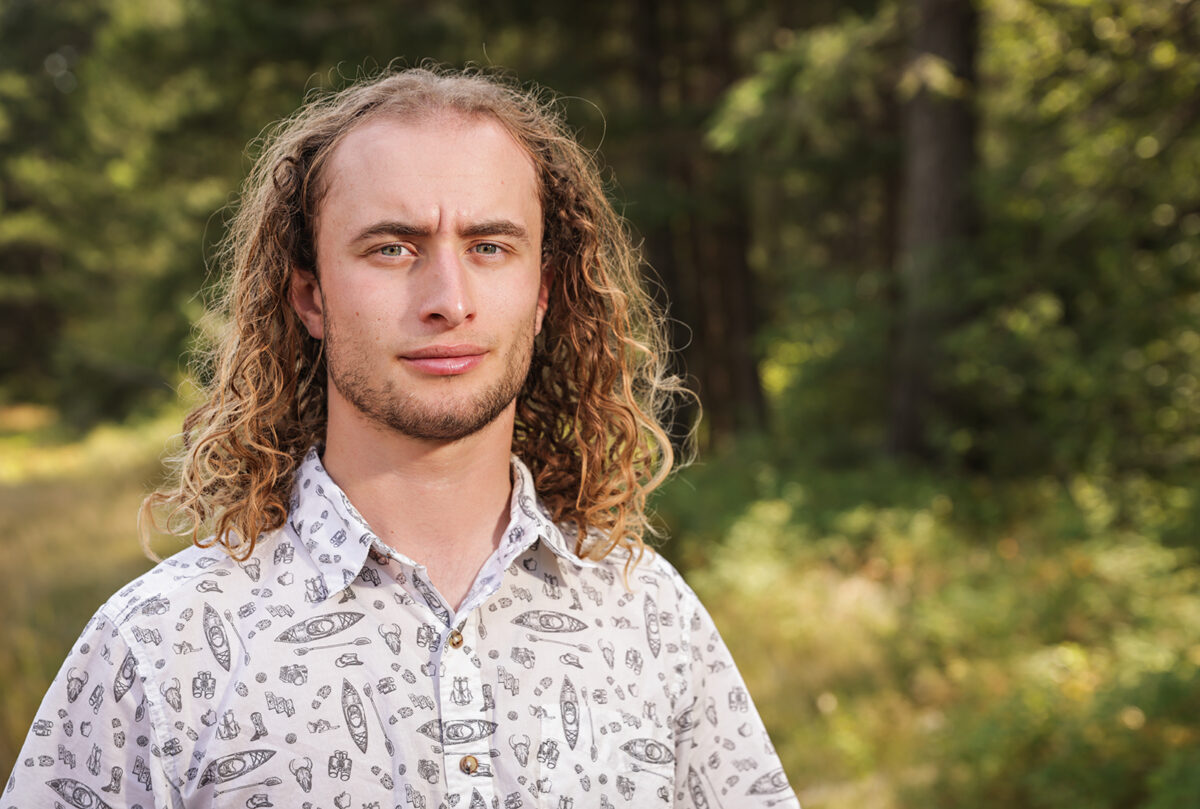
Luca Welle, the Democrat running against Mitchell in House District 5, and Maeve Kintzler, a Democrat running in Creston also view affordability as a critically important issue, both in Montana and among members of their generation.
“I think it’s because it’s changed so drastically,” Kintzler said, about the reason affordability has become an outsized issue. “You know, my parents, fortunately, were able to buy a house here in about 2008, 2009. I cannot afford an apartment. I can’t afford a private room in somebody’s house, I can’t afford a studio, and it’s mortifying knowing that I’ve lived here most of my life and I can’t buy my own house. Make that make sense.”
Kintzler, a 21-year-old student at Flathead Valley Community College, has lived in the Flathead Valley since she was 3 years old. Welle, too, has deep roots in the Flathead Valley, having grown up in Kalispell and gone to school in Whitefish, where his mother is a teacher.
As both young people run for office as Democrats this fall, they face a slew of factors stacked against them. While each counted themselves as longtime advocates for issues they care about, neither has experience running for office, a factor they’ve said has made it challenging at times to understand the process. And both are running in deep-red districts against incumbent Republican legislators. Still, each framed their candidacy as an important alternative for residents in their districts to have a choice on the ballot.
Welle, whose run against Mitchell in House District 5 is the most youthful race in the state this year, emphasized several contrasts distinguishing him from his opponent — even if age wasn’t among them.
While Mitchell got his political beginnings advocating for the Second Amendment, Welle started his advocacy journey focused on the issue of climate change. By his own account, Welle’s focus on the environment began when he was in middle school, when he pushed for the Whitefish City Council to add idle-free zones to their Climate Action Plan. Welle was recognized by Climate Smart Glacier Country for his work on the issue. His passion carried him through his time at the University of Montana, where he graduated in spring of 2025 with degrees in environmental studies and sustainability science.
“People, I think, tend to see the environment as something that’s separate from all their concerns, but really, everything — especially economic concerns — are precipitated by whatever’s going on in the environment,” Welle said. “If we don’t take care of that, then we’re not going to have any of the things that we [value]. For example, our tourist industry … without the conservation and the preservation of Glacier National Park, without the snow on Big Mountain for a ski resort, that takes away from our tourist economy.”
Welle hopes that as he runs for office this fall, people will consider his candidacy regardless of the letter by his name in the deep-red district where Mitchell won election with three-quarters of the vote in 2024. He brings an important quality: a willingness to listen and show up, something he said he doesn’t think Mitchell has done effectively in the district.
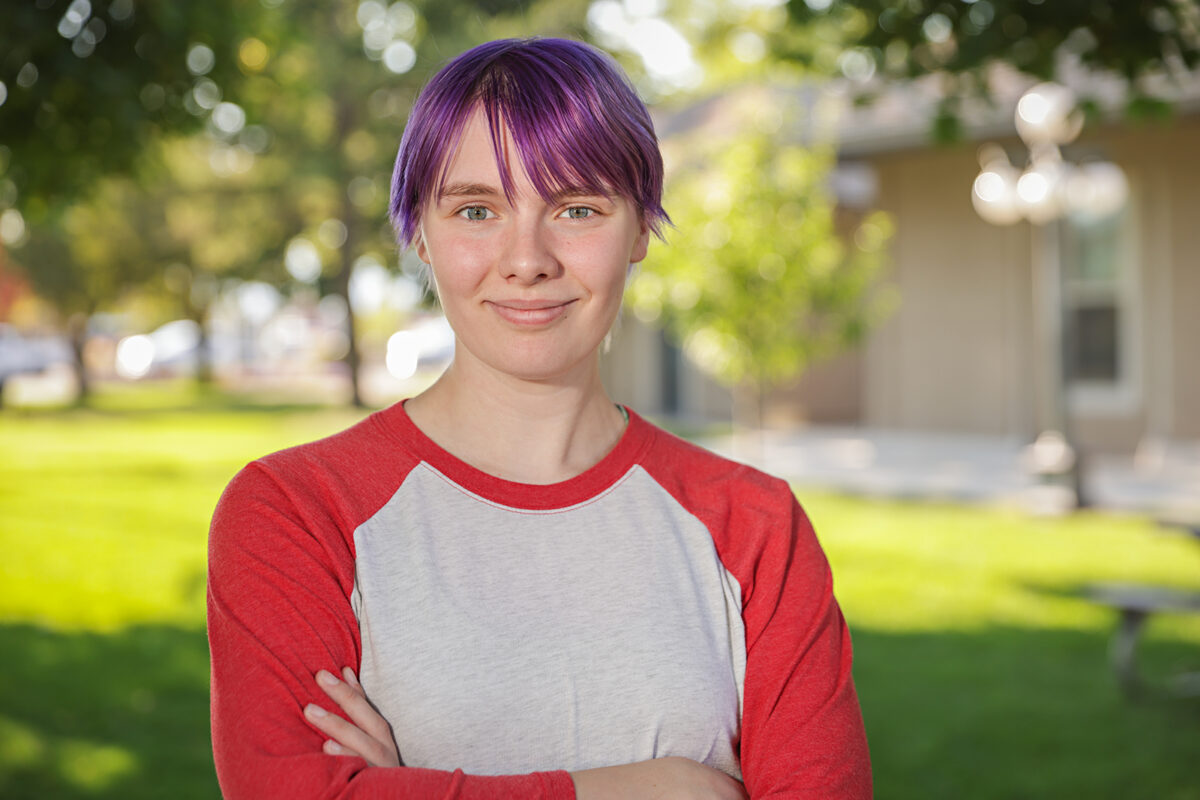
Kintzler is peddling a similar message in her bid for House District 11, where she’s pitted against incumbent Republican state Rep. Ed Byrne, who won his seat in 2024 with 76% of the vote.
The college student is open that she doesn’t know a lot about running for office. She’s never done it before and has found the learning curve to be steep. Still, she said, she has had a strong sense of justice for a lifetime, particularly when it comes to disability rights.
As she’s grown up, that sense of justice has bloomed into care about a wide swath of issues, from women’s rights to mental health. She chose to put her name on the ballot because she doesn’t like the way things are going, pointing to actions like recent cuts to Medicaid and the state’s high suicide rate as examples. And for Kintzler, putting her name on the ballot is a way of taking action. Should she win her race, Kintzler, like Welle, hopes she can be a good listener and voice for those in her district.
Not to mention, her young age is something she sees as an asset as she runs for office this fall.
“Being young does not make you stupid,” Kintzler said. “Being young does not make you less qualified. In fact, being young adds perspective. It makes people think, and it gives people in that demographic, in that age demographic, a chance to feel represented.
“If anything, it’s better to have all sorts of walks of life in an office,” she continued. “I feel very deeply about that, because my whole life, as I’ve become a voter, I’ve never had people in my age range who’ve represented me. And it gets really frustrating, because when you try to talk to somebody, or when you try to speak out and make your issues heard, not a lot of them really listen because I’m young.”
But young people deserve to be listened to. That’s something that, unilaterally, the members of Generation Z in the Flathead doubled down on.
“I just think it’s important that we have more young people involved, and whether it’s Republican, Democrat, independent, we need people from all sides,” Mitchell said. “We just need all young people at the table from all sides, because like I said before, the decisions being made are going to impact us the most.”
SUPPORT THE WHOLE FUTURE OF THE FLATHEAD VALLEY
Bolster your Flathead Beacon newsroom as we follow stories past the headlines and into the impacts on our communities by making a donation of any amount. With you, we can stay resilient, focused on solutions and committed to the future of the Valley.
Adams agreed with that assessment. As the country faces down what Adams sees as the crises imposed by climate change and by the cost of living, he hopes young people can band together to take meaningful action and address those challenges.
“We have, in the past as a nation, pulled it together and done incredible things in times of crisis instead of falling apart, and the test of young generations — millennials, Gen Z and Gen Alpha — is whether we have the capability to get it together during this time of crisis,” Adams said. “In our nation’s history, we are right about at the dawn of the next version of the Republic, where we’re on a roughly 80- to 100-year cycle of old systems failing and collapsing into chaos and instability before a new system is built.”
Adams pointed to several examples of those eras: the creation of the Constitution to the Civil War; the Civil War to the New Deal era; and the New Deal era to the present. He argued the country is on the precipice of starting its next cycle, and that young leaders’ voices will be important determinants of what that may look like.
“We are entering an environment of uncertainty and instability and chaos, but also, tremendous potential to build this next version of America that will be with us for the next 100 years,” Adams said. “And being part of that, in whatever small way, is what it means when a young person signs onto getting involved in electoral politics right now.”