Whitefish Park Board Plans to Reenvision Gazebo Area in Depot Park
The decision follows months of public engagement after a group of community members, some involved in arts and performances, pitched the idea of a permanent stage at the park to the board earlier this year
By Lauren Frick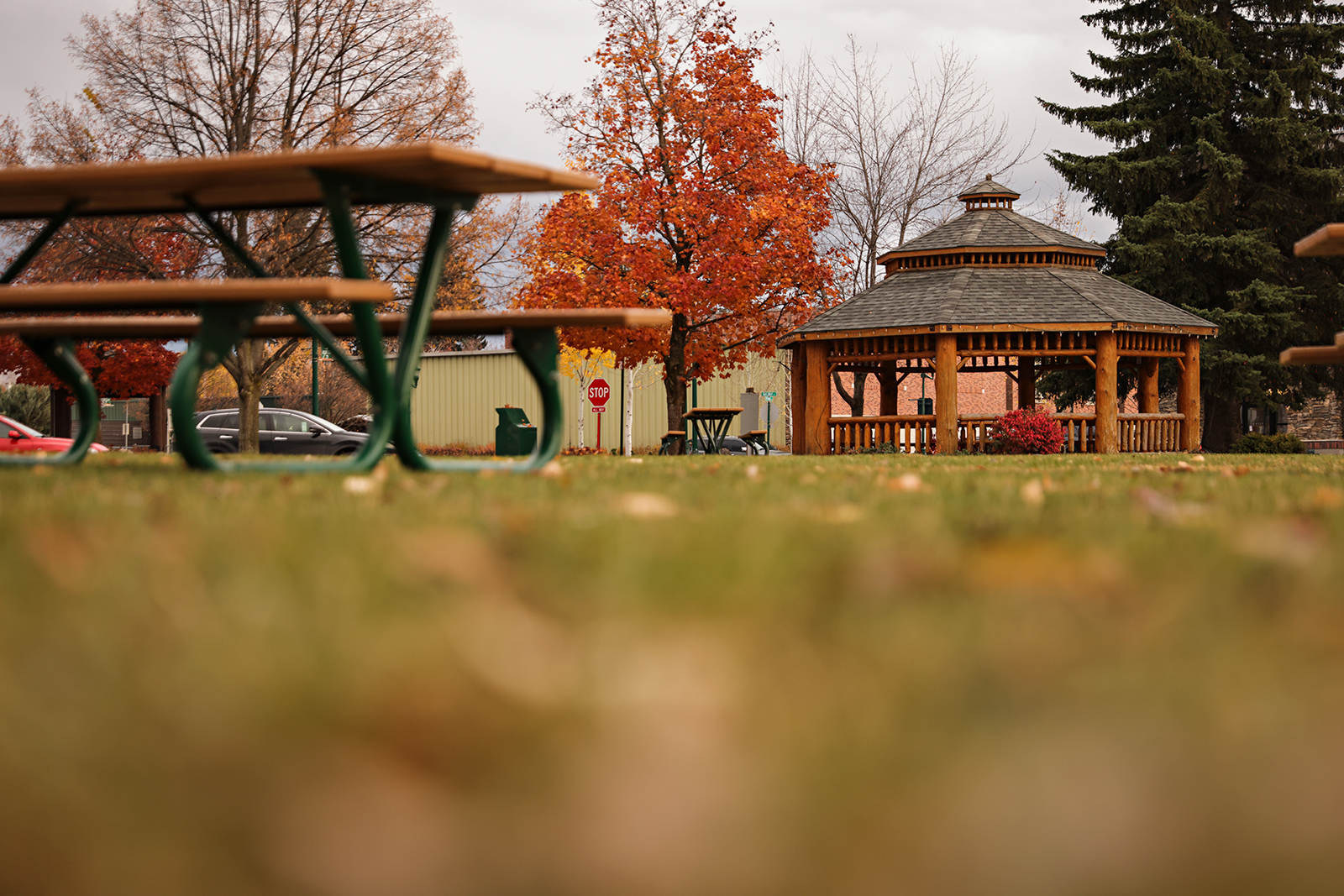
After receiving “split” feedback from the community about a permanent stage in Depot Park, the Whitefish Park Board this week decided to split the difference in its path forward as well.
Instead of beginning the process of amending the Depot Park Master Plan to allow for another permanent structure on the premises, park board members unanimously voted to reenvision the existing gazebo area in the southeast corner of the park to be better suited for performances. The current gazebo would likely be retrofitted or moved to another spot in the city.
The decision follows months of public engagement over the matter after a group of community members, some involved in arts and performances, pitched the idea of a permanent stage at the park in April. The proposal is sponsored by the Whitefish Lions Club, which says it has donors ready to financially contribute.
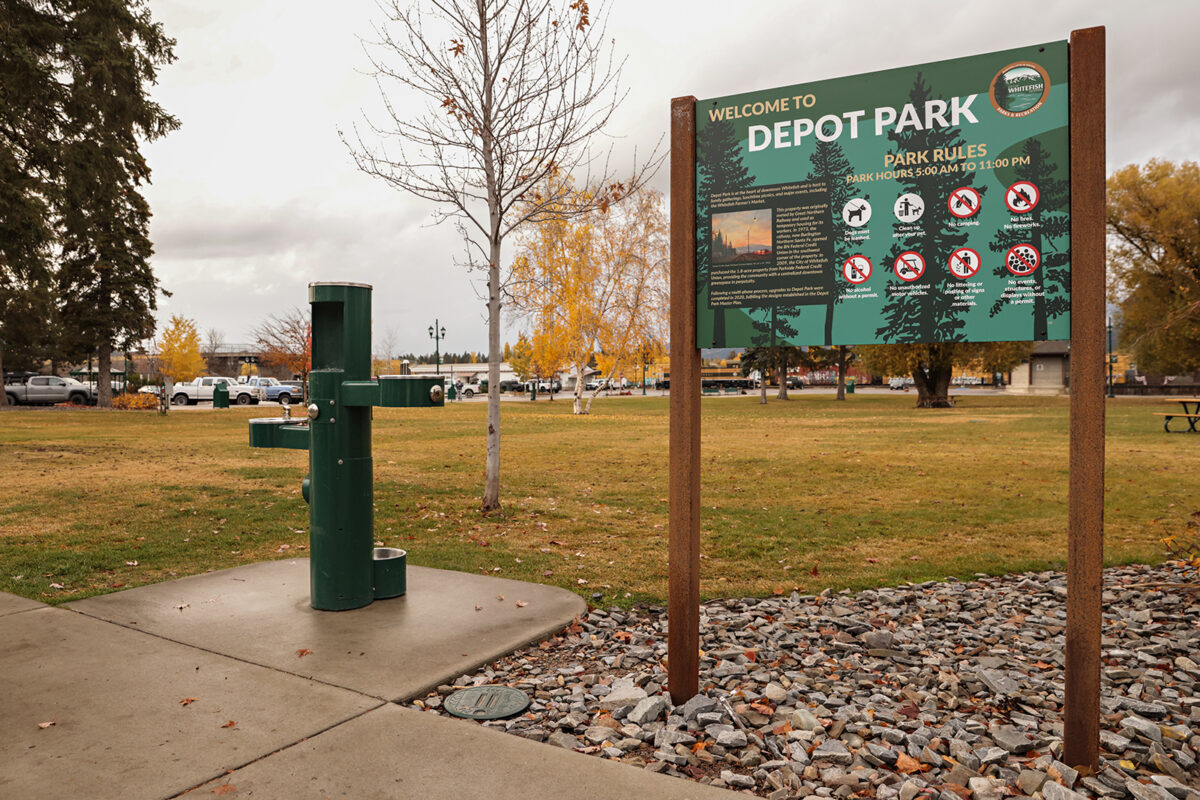
Depot Park, a 2-acre park acquired by the city of Whitefish in 2009, hosts several popular events throughout the year, including weekly farmers markets, art festivals and Great Northwest Oktoberfest. Many of these events create their own temporary performance area consisting of a portable stage and tent.
Ed Boggs, a local musician and vice president of the Lions Club who has spearheaded the proposal, has advocated for a more permanent stage better equipped for live performances, whether that be greater protection from weather or access to power. The proposed stage didn’t have a finalized design or location, but Boggs has advocated for a simple and small three-walled structure in the northwest or northeast corner of the park.
Over the last few months, the city has collected feedback through online forums, surveys and public meetings to gauge the community’s interest in a permanent stage in the park.
At Tuesday’s park board meeting, Parks and Recreation Director Maria Butts said the results tell a divided story.
“When we asked people to rate the following statement, ‘Depot Park should be prioritized as a community space for special events,’ what you will see is this pretty split,” Butts said.
While 20 survey respondents leaned toward “strongly disagree” regarding whether Depot Park should be prioritized for special events, 22 respondents leaned toward “strongly agree,” with 15 people sitting right in the middle. A consensus also couldn’t be determined by survey respondents over whether the park already has “adequate facilities for outdoor performances,” and they were relatively split over whether they prefer temporary rather permanent facilities for performances in Depot Park.
The one matter that gained the most consensus was that Depot Park should be prioritized as open space for the public, Butts said.
“In that respect, we had a ‘strongly agree’ side,” Butts said. “That was pretty clear. Certainly, there were people who disagreed with that, but this one was probably more of the clearer numbers that we saw without too much division.”
Park board member Jim DeHerrera also took note of the divided response from the community as he made his way through the abundance of public comments, he said.
“After I read every single public comment that came in, even the ones that came in today … there was just no clear message to me whatsoever,” DeHerrera said. “The comments were spread across the board, so it was kind of like, wow, what do we do now? Because there are a lot of good points made on every side of this issue, and it puts us in a very difficult position and kind of a no-win situation.”
But from the public comments given at Tuesday night’s meeting, DeHerrera started to see a path forward: reimagining the existing gazebo space in the park.
Rhonda Fitzgerald, who organizes the Whitefish Farmers Market and is with the downtown advocacy group Heart of Whitefish, warned against amending the Depot Park Master Plan to allow for another permanent structure, saying crafting the plan was “a very long and arduous process” that took a lot of time and money. Instead, the park board can deliver on the event space parameters already listed in the master plan, she said.
“I would urge you to look at the fact that the southeast corner, which was called for a small performance space and a gathering space, was not built out to do those things that are called for in the master plan,” Fitzgerald said. “I would suggest that rather than go through this huge, long, multiyear process, you just relocate the gazebo to another park or other option, and look at building something that works as an event space and gathering space, which is what the master plan calls for.”
City Councilor Frank Sweeney, who represents the council on the park board, echoed a similar sentiment of reenvisioning the gazebo into a new event space area, so “it could be reconstructed to what everybody wants, and so that it functions for everybody.”
“If we had talked to folks in the survey session and said, look, we can do one of two things: we can either add a stage, or we can reenvision this, and it can serve as a stage. What would you prefer? I think I know the answer to that,” Sweeney said.
To align with the Depot Park Master Plan, the new event space structure would have to be “an expanded hard surface area and a 24-foot-wide gazebo structure. The gazebo [would] serve as an informal covered space for daily activities [gathering/picnicking] and as a small performance space,” according to city documents.
When the city designed the current gazebo back in 2017, a more performance-centric design was initially considered, but the estimated cost, which was about $350,000, proved to be too steep, Butts told the park board.
“The park board at that time felt that that was excessive for what we were getting out of that [design], and so we went back to the drawing board,” Butts said. “The gazebo that is there now is what came out of that conversation. So I want to set that expectation because in 2017, it was around $350,000. That’s not counting consultant fees, which could be $30,000-ish.”
While the Lions Club has expressed an intention to fundraise the necessary costs to build a stage then donate it to the city, those funds so far have been largely predicated on high-dollar donors who had a certain vision for the stage, Boggs said Tuesday.
“All I know is we have a couple of donors who are willing to donate a large sum of money that pretty much takes us there right away, but they have a very specific vision of what the stage should be, so we would have to discuss,” Boggs said. “I can’t say right now, but I would imagine if it came down to putting it there or no stage, it probably would be putting it there. But I can’t answer that until after we have our next meeting.”
In addition to unanimously agreeing to pursue a reenvisioning of the gazebo area in Depot Park, the park board also agreed to review the matter again at its January meeting to give the Lions Club time to reassess its plans. Regardless of whether the community organization decides to join the effort, Sweeney said it’s still crucial to reevaluate the space in the park.
“Regardless of whether the Lions Club wants to participate or not, I think we as a board, given what we now know and given the interest that’s been expressed on some level with the public, that we owe them the idea that we’re going to reenvision this gazebo area and say, OK, is it working for us or is it not?” Sweeney said. “If it’s not working for us or the master plan’s purpose, then we create … a plan or concept that we would like to pursue one way or the other.”