As the United States blew out the candles for its 250th birthday this year, many Americans reflected on the moments and milestones since 56 delegates gathered in a hot, humid assembly room in Philadelphia to declare independence from the British crown.
Maintaining the original promise of freedom crafted by the country’s founders has been a journey as sprawling and varied as the landscape in which more than 340 million people now call home.
From one of the first public readings of the Emancipation Proclamation under a winding oak tree in Hampton, Virginia, in January 1863, to Apollo 11 Commander Neil Armstrong placing the first human footstep on the moon on July 20, 1969, the story of America is a complex one filled with innovation, resistance, pain, joy and everything in between.
Simply put: memory lane for the stars and stripes is a roadway stretching further than its iconic Route 66.
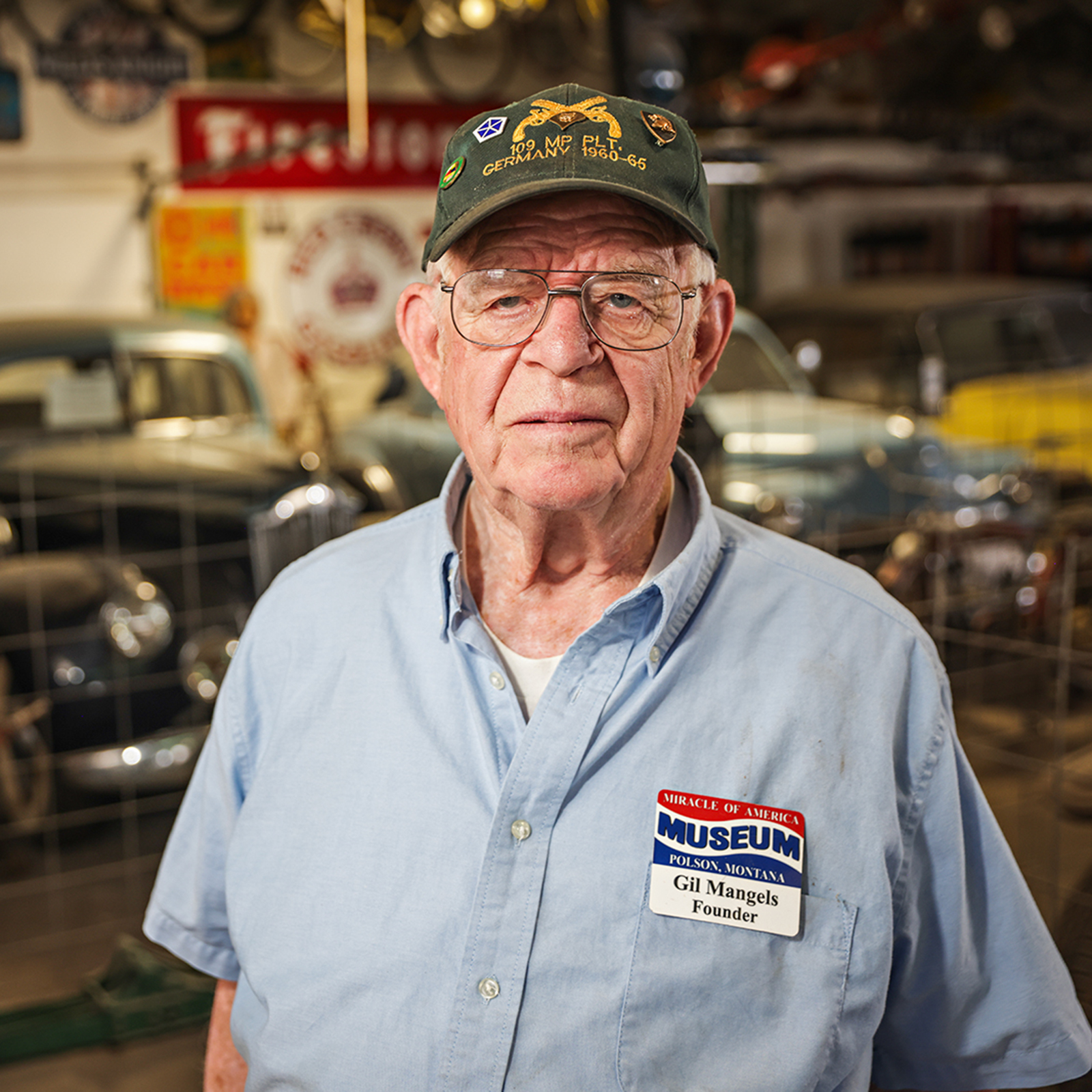
Luckily for those living in or passing through the Flathead Valley, this trip down memory lane — specifically 36094 Memory Lane — comes with a tour guide: Gil Mangels.
Upon making the trek to the Polson address, you’ll find a series of metal sculptures and aged vehicles and machinery displayed in front of an otherwise unsuspecting white building — well, aside from the 65-foot logging towboat dubbed the “Paul Bunyan” serving as the structure’s centerpiece.
Continue through the building’s entrance, which is carefully guarded by a Statue of Liberty replica up above, and you’ll likely be greeted at the front desk by Mangels, the proud founder, CEO, collector, restorer and curator of the Miracle of America Museum.
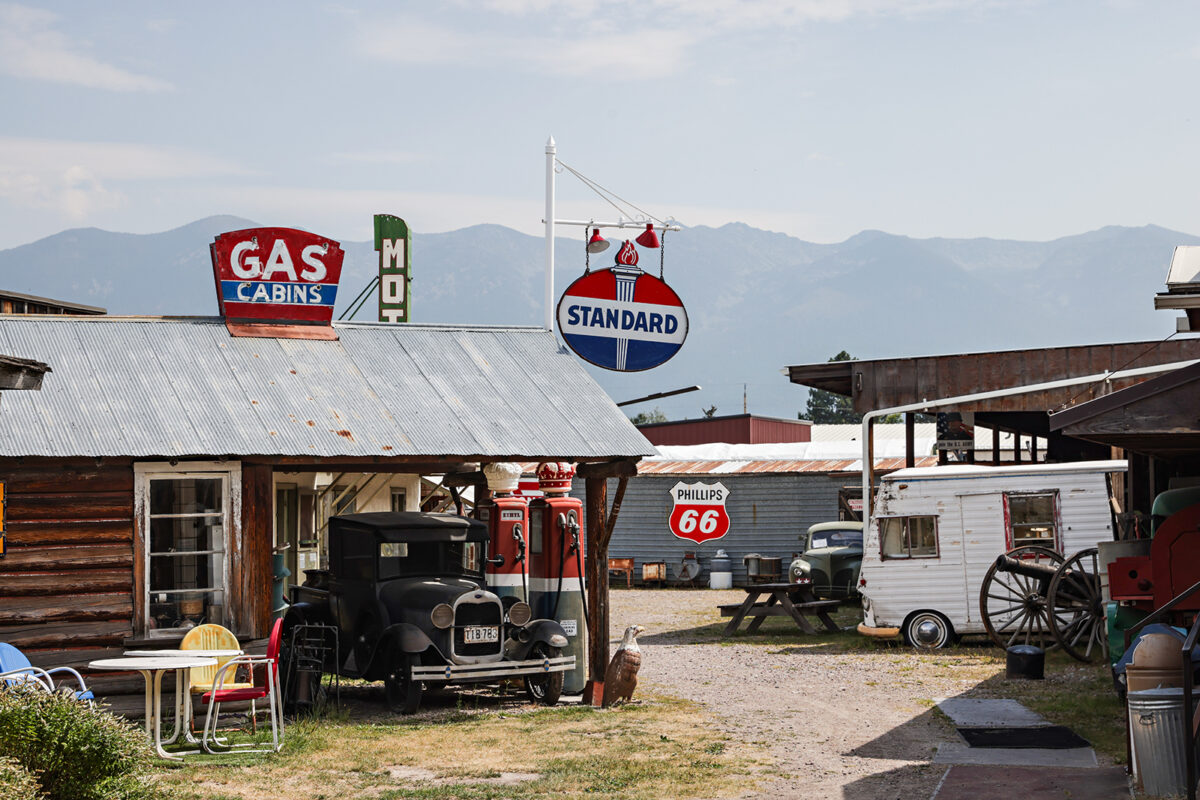
The Miracle of America Museum is home to hundreds of thousands of items encased in a series of buildings across nearly 5 acres of land tucked into an empty stretch along U.S. Highway 93. Founded by Mangels and his late wife, Joanne, in 1981, the museum is representative of Mangels’ personal collection of antique pieces that he says all add to the sum of America’s history and innovation — from hat pins, to a restored 1912 Harley Davidson, to dozens of cast iron tractor seats in various stylings.
If the giant boat protruding from the roof didn’t already give away that the Miracle of America Museum isn’t your typical repository, one look at the laminated map at the welcome desk will seal the deal on the notion.
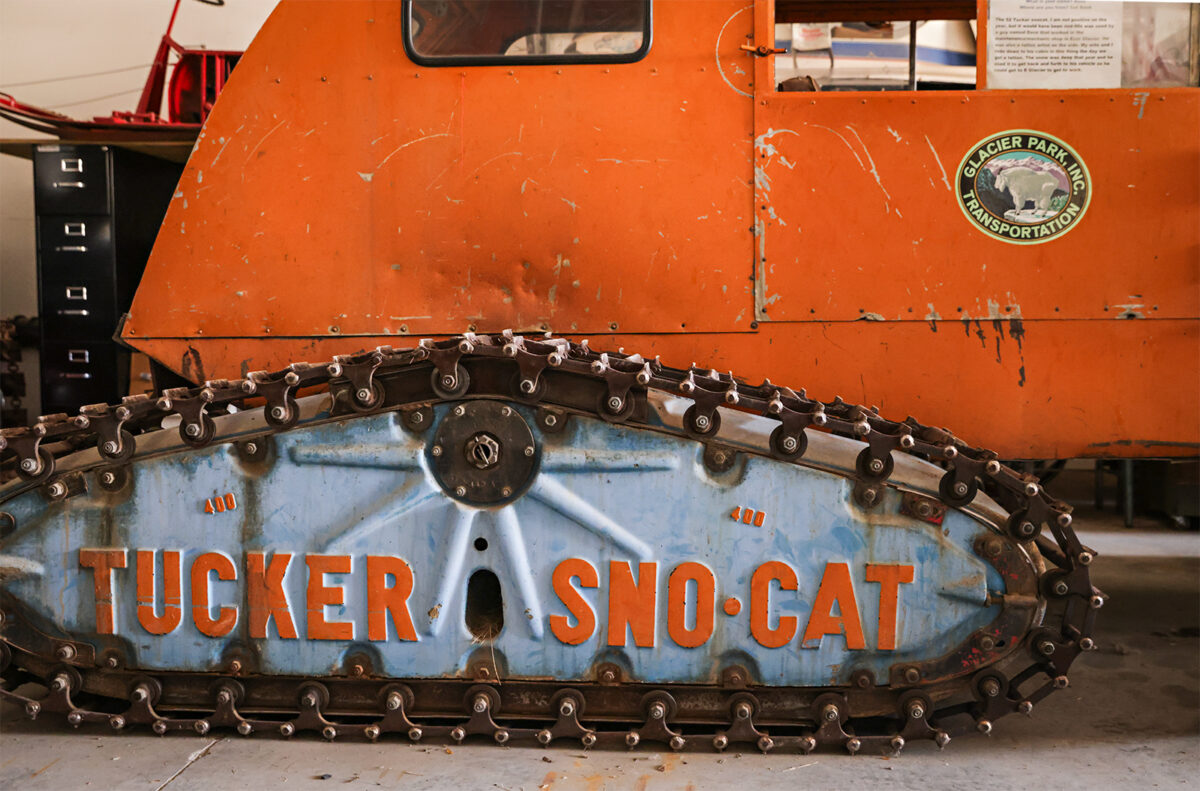
Hidden behind the lot’s main building is a courtyard with about 40 more structures, each with a different theme and housing a range of pieces from American history and culture, including an antique Glacier National Park snowplow, a 1940s-era “Fly-o-Plane” amusement park ride, and a collection of dozens of vintage pesticide sprayers.
“We’re a lot different than most museums, in that we’re not a sterile museum,” Mangels said. “So, in a sterile museum, artwork’s maybe three to five feet off the floor at optimum viewing level, and then you’ve got to walk about another 10 to 15 feet to see another sculpture or another painting. In this museum, you can stand in one spot and not see everything in half an hour.”
“There’s an awful lot of people who like our museum because they get up close to something, and in some cases even touch it. Maybe they shouldn’t touch everything they touch,” he added with a laugh.
In the museum’s self-published book, “So You Want to Start a Museum: A Guide for Future Museum Founders,” Mangels asserted there’s nothing wrong with “sterile” museums, noting there’s a place for every type of museum: “Different strokes for different folks,” he concluded.
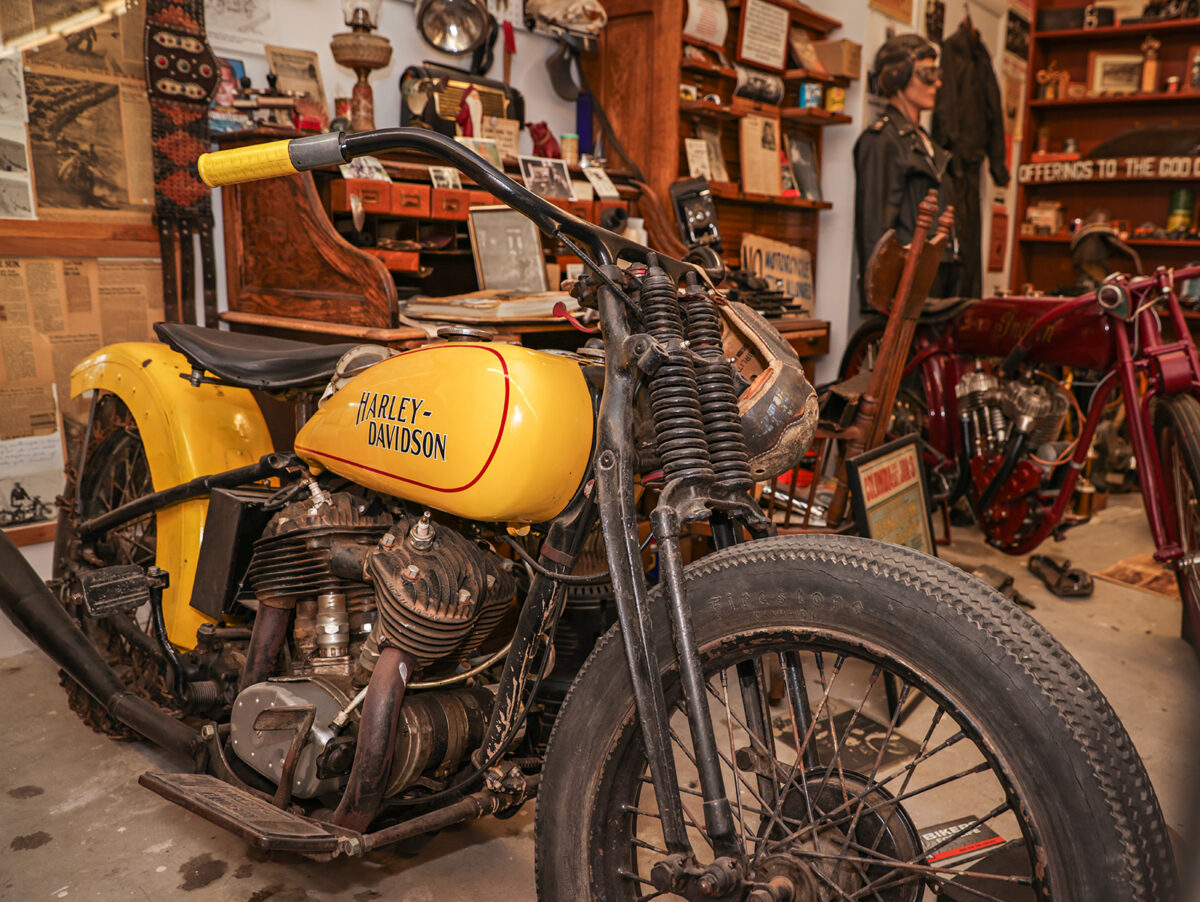
But for Mangels’ museum, there’s only one path down America’s Memory Lane — and it’s a “bit cluttered.”
“Even with 40 buildings in the pioneer village section, there just never seems to be enough space,” Mangels wrote in his book. “Sometimes items are donated, even left on the doorstep that you must immediately deal with. I may throw things over the security fence, so to speak, to get it into its correct category until I can work it in at a later date.”
Ultimately, however, it’s not about how the collection is arranged, but rather the meaning and purpose driving the desire to open it to the public, Mangels told prospective museum founders in his book.
“A good purpose comes through thoughtful preparation,” Mangels wrote. “It is something that will sustain you through the hard times and give you a roadmap for the future. It should be something that you felt strongly would make the world a better place because your museum is in it.”
Mangels’ drive to preserve and promote America’s story stems back to his time in the military when he was stationed for two years in Germany in the mid-1960s — an experience that fueled him in the early days of the museum when it was opened for 12 hours a day, seven days a week, in an effort to get as many visitors as possible. To this day, Mangels still doesn’t take a salary for his work at the museum, saying it’s a “labor of love for America.”
“I was off duty, so I was in my civilian clothes, and I went through Checkpoint Charlie and the difference between the free Western sector and the enslaved Communist-controlled sector was like night and day; like black and white. It was very depressing,” Mangels said while sitting in a booth that is part of the museum’s 1950s-era soda shop display.
“I got out of the service, and then Vietnam War protests started, and a lot of them were protesting against the war,” he added. “I don’t think anybody wanted a war that we couldn’t win, but they were being anti-American as well, and I thought, America is better than that. The feeling came over me to use my antiques to teach, so we used a lot of symbolism to tell about the good things of America.”
Since then, Mangels’ main mission has been to share the miracle of America. But what is the miracle, you may wonder?
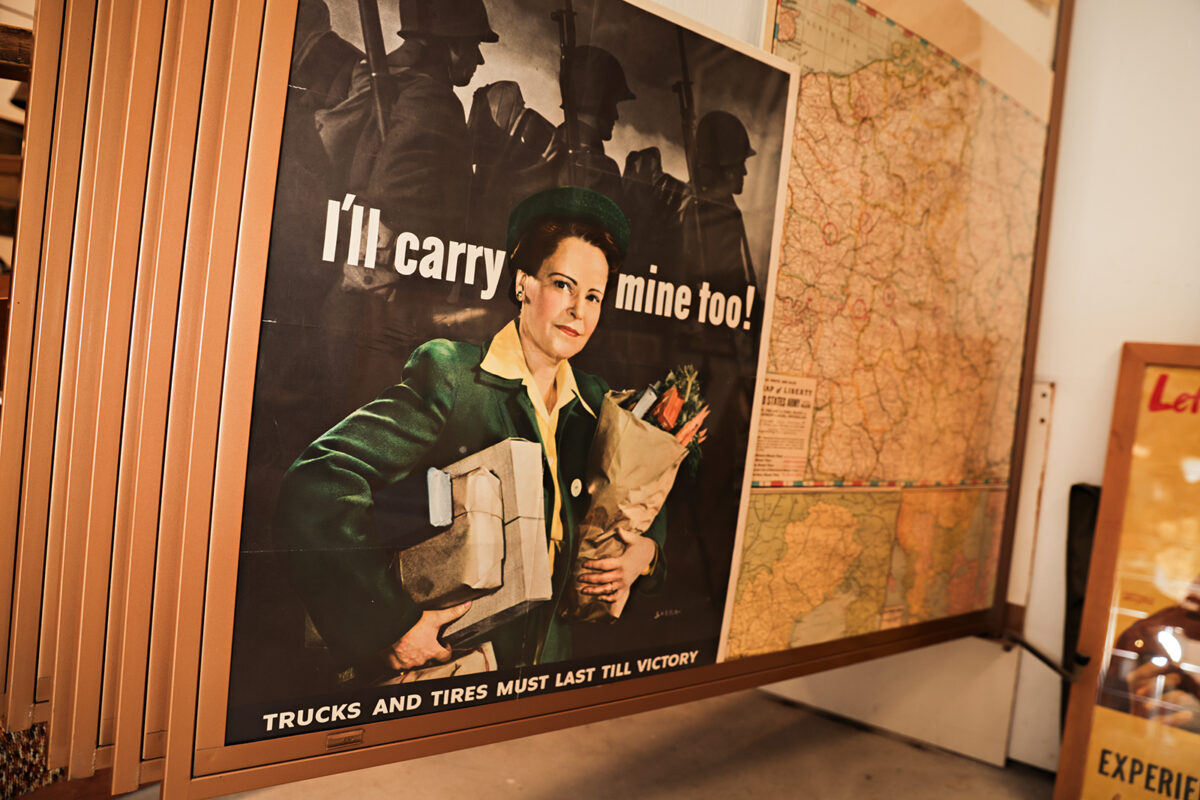
To Mangels, it’s the countless examples of free enterprise and the freedoms preserved through the tremendous responsibility of the country’s inhabitants. The museum’s namesake itself comes from the Constitution, which Mangels said was referred to as “the miracle of Philadelphia.”
“We just want to tell the good things about America, and along with the freedoms, I tell the youth, well, I’ll tell anyone that’ll listen, that it comes with a huge responsibility,” Mangels said.
“It’s a volatile time now,” he added. “I don’t get into partisan politics, but I’m all for the Constitution and free enterprise and the thousands of objects you see here. I mean, see a collection of can openers, there must be 20 or 30 of them, or the collection of almost any of the irons out there in the tailoring shop. So many different ones. Somebody had a little better idea, or maybe they had a little different design, and they had a right to do that; the freedom to do that. So, thousands of objects you see are a result of free enterprise and people able to put their thoughts to something that maybe will benefit them or benefit mankind.”
Just as the Constitution wasn’t written in a day, Mangels’ meticulous collection wasn’t amassed overnight — or even over half a century.
Mangels, who is now in his 80s, has been a collector nearly all his life, ever since he was 3 years old and found an arrowhead on the beach, he recalled.
“I’ve been collecting for many, many years,” Mangels said. “My dad used to bawl me out for dragging junk home. If we’d go to the dump, I’d ride along. I’d find some interesting piece that I thought I should have. I started out with old wrenches and horseshoes from my grandparents’ farm. Both of my grandmothers, one gave me a pistol and one gave me an old rifle when I was about 10 years old.”
For Mangels, a curious spirit, combined with a lifetime of collecting, has yielded a trove of antique artifacts comprising what some have described as “The Smithsonian of the West.” But just how large is this repository of miracles? Even Mangels doesn’t have a precise answer to that question.
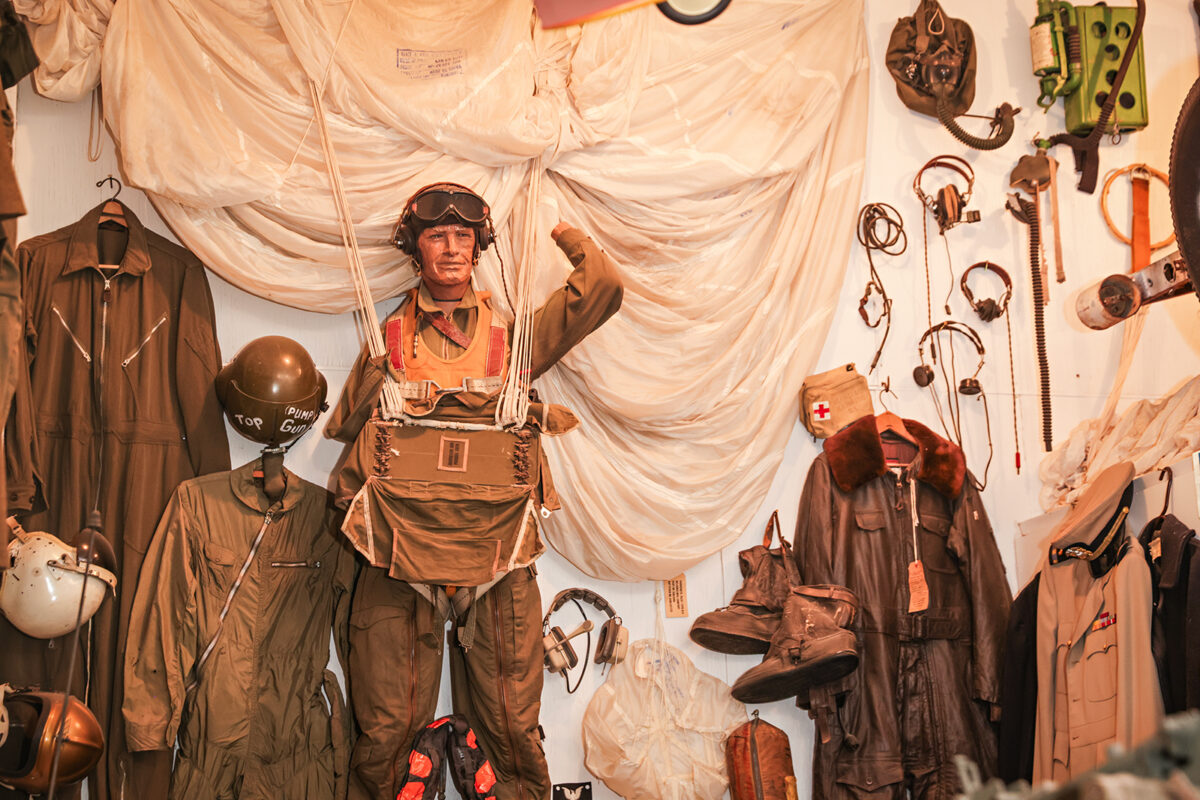
“I don’t know,” Mangels said with a perplexed laugh. “Inventory would be a tough one. I just put a couple more things out last night, and I’ve got more things to put in. I’m just waiting on time.”
While it may be hard to find a number to round to the nearest thousand for an accurate estimate of pieces housed in the museum, make no mistake, Mangels knows the story behind every item in his collection, as well as how it got there.
Many pieces in Mangels’ array have been acquired through traditional methods, such as finding an antique item listing, calling its current owner, then negotiating a price or deal — although the nitty gritty of this process has certainly changed since the start of Mangels’ journey as a collector, with him noting the internet is both “a blessing and a curse.”
Several items, however, have also come into Mangels’ possession through more unconventional and unexpected means.
“Some things have come into our possession just miraculously, if you will. We’ve got some very rare scouting things,” Mangels said, motioning to a display in the museum’s main building. “That silver beaver there was the highest award given to a scout leader, and this grouping here, this eagle and order of the arrow stuff, came from a dumpster in Missoula. Somebody had seen the family cleaning out the grandparents’ house and was throwing boxes of stuff away, and he happened to look and see the stuff. I mean, it’s almost priceless, but to the children, they didn’t understand or it didn’t mean anything to them.”
As Mangels made his way past the Boy Scouts of America display, a wooden treadmill caught his eye, causing him to halt. With a large taxidermy sheep, which was donated to the museum by the president of Rocky Mountain Sheepskin Co., in Kent, Washington, resting atop the peculiar structure, it didn’t take long to realize the contraption was no ordinary exercise gizmo.
“A first prize dog or sheep power is a labor saving and money earning combination hard to beat,” the treadmill’s advertising tag stated. “Sheep Anxious for the Work.”
“We went to an antique store in Seattle one time, and on the top floor, they had that very machine right there, but he would only trade it. He wouldn’t sell it,” Mangels reminisced. “He wanted to trade it for a motorcycle sidecar. Well, he was talking to probably the biggest motorcycle collector in Montana at the time, and I found an extra sidecar. I have 10 sidecars myself.”
Some items have found a home in Mangels’ collection not by way of dumpster diving or beneficial bargaining, but through familial friction.
“Sometimes a museum can settle a family feud, although then some of the parties might be angry at you,” Mangels documented in his book. “Case in point was when we were approached by a woman who wondered if we would be interested in accepting her aging father’s boat. In the interest of anonymity, let’s just say it was a very beautiful, rare, and desirable boat among boaters. She said that the grandchildren were fighting over it so bitterly, that she felt none of them deserved it. We were honored to accept it.”
Many donated items, though, are often paired with a sweet sentimentality, as opposed to the bitterness of a family quarrel — something exceedingly evident in the museum’s myriad displays dedicated to veterans and military service.
As Mangels made his way through his collection on a warm, sunny August day, making sure to chit-chat with any visitor he came across, he admired a series of carefully removed scrapbook pages scattered throughout the museum’s World War II display, each tacked with rare photographs from Pearl Harbor. The pages belong to a woman who worked in a photo lab there at the time, producing extra copies of the photos officers needed printed, then adding them to the scrapbook, he recounted.
After the war, she retired and moved to Hamilton, Montana with her husband, keeping her prized photographs close at hand throughout her life. When her final days were nearing, she feared what would become of them, Mangels said.
“At 96 years old, she was agonizing over what would happen to her scrapbook,” Mangels said. “She was afraid it would get thrown out, so the caregiver said, ‘Well, I’ve been in the Miracle of America Museum. Why don’t we ask Gil to come down?’ And so, we went down. She was overjoyed that we were interested in it, and showed us and recited some history and so forth, and sent us home with the scrapbook.”
“After we left, there’s a letter there that the caregiver sent us,” he added, motioning toward a framed piece of paper filled with delicate scribbles. “She said, ‘Now I can die in peace.’ Two weeks later, she did, knowing that her scrapbook would be enjoyed.”
Some military displays, such as the memorial tribute to Staff Sergeant Robert A. Needham, serve not only as a looking glass into the past, but as a means of bringing people together in the present.
Needham, a Ronan High School graduate who served in the U.S. Army Air Corps during World War II, was flying in a Douglas A-20 Havoc over the English Channel in July 1944 when his aircraft was hit, causing him to bail out over the water, Mangels said.
With Needham declared missing in action, the Miracle of America Museum, years later, offered a chance for one final message for his family.
“His older sister would come out and visit the museum every summer,” Mangels said. “One day, she was coming through that doorway down the ramp, and she heard two men down here saying, ‘Look, there’s an A-20.’ She came running down, and said, ‘Were you talking about the A-20?’ They said, ‘Well, we served on one,’ so they invited her to an A-20 reunion, and she went to it, and she met some of the barracks mates of her brother. Then she … went back to another one, and they met the pilot of the airplane. He was the last one to see [Needham] alive. He said a big wave came over and engulfed his life raft.”
“You know you can call that a miracle or coincidence, but if that woman hadn’t come through that doorway at that very instant that they recognized that airplane, it never probably would’ve had any closure,” he added.
For Mangels, a veteran himself, the museum has afforded him a share of his own reunions — one nearly 45 years in the making after two veterans stumbled upon the 1952 U.S. Army Jeep Mangels restored after finding the exact model he used during his time in the service.
“I didn’t know the man that I was assigned with over in Germany had moved to the Saint Ignatius area; we didn’t keep in contact,” Mangels said. “In 2007, he and another buddy from Seattle and their wives came through the museum. I was over in my shop, and he saw the markings on the jeep, and he got excited. He ran up the front, asked my wife, he said, ‘What’s the deal with that Jeep down there?’”
“‘Well, my husband restored it just like when he had it Germany,’” Mangels recalled his late wife responding. “‘Well, who is he? Where is he?’ So, the following year, we had a reunion and I worked all night to get this Jeep out, and then I gave him a ride the next morning.”
While many items in the museum are meant to evoke a range of emotions and reflections from the roughly 18,000 visitors from around the world who pass through annually, some pieces are just there for the sake of good old-fashioned fun.
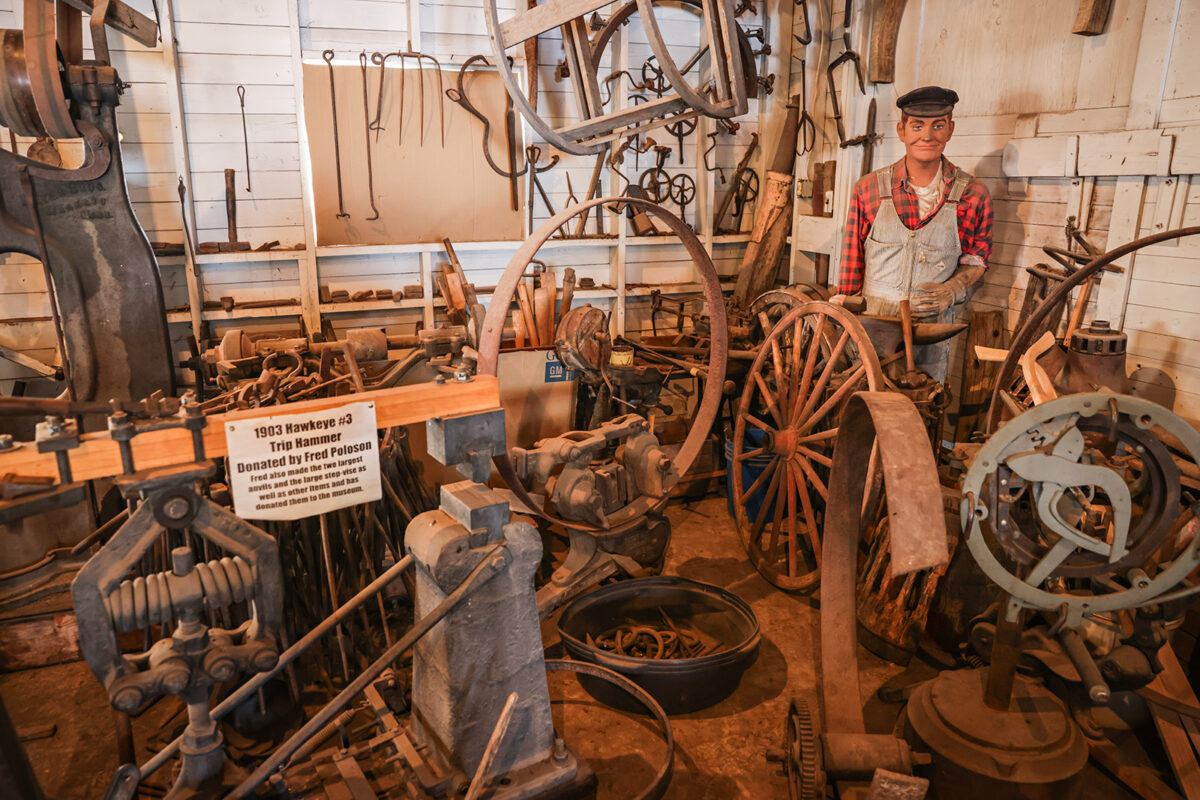
Several such pieces were created by Mangels, who had a welding and machine shop in the Flathead Valley for about 15 years. With a shop on the museum’s property, an assortment of metal sculptures of all shapes, sizes and subjects are sprinkled throughout the premises for visitors to interact with and enjoy.
“When I got out of the service, I started farming again, just over the hill here, and then I decided I had some vehicles that needed body work, and I thought I’d like to go to a body school under the G.I. Bill,” Mangels said. “I couldn’t find any body shops around, but there was a machinists and welding program in Helena, so that wasn’t that far.
“Every time we’d get off school early, there were businesses like Pacific Island for recycling that were still open for a couple hours, and I’d go through there. I hardly ever came home empty-handed.”
Mangels said he’s naturally drawn to “functional art,” like chairs or tools, but also appreciates restoring loose parts of a once-functional sum to a new, amusing life.
From the towering rat replica of Chef Remy from Disney’s movie, “Ratatouille,” to a space-themed metal sculpture playground complete with UFOs and a life-sized A.T. (Another Terrestrial), Mangels’ sense of humor and creativity stays on display throughout the museum — although he still isn’t ready to add “artist” to his long list of titles.
“I didn’t do well in art class, but sometimes working with metal, a piece of metal I would like, would speak to me, if you will,” Mangels said.
With personal touches littered throughout the collection, it’s clear there’s no Miracle of America without Mangels — something he is realizing as he plans for the future of the museum.
“We’ve got a board of directors, we’re a 501(c)(3) nonprofit, and our plan is to have a family member that’s able to take over and keep it going,” Mangels said. “We’ve got to enlarge our endowments somewhat. Our endowment is invested with the Montana Community Foundation in Helena, where the dividends or interest off of that would pay for staff to replace me.”
“I suppose that because I’ve had my hand in all of the assets of it, it would take more than one person to replace me,” he added with a laugh.
In the meantime, Mangels will continue collecting, creating and curating just south of Flathead Lake, all for the sake of sharing America’s miracle with the world and offering visitors a trip down 36094 Memory Lane.