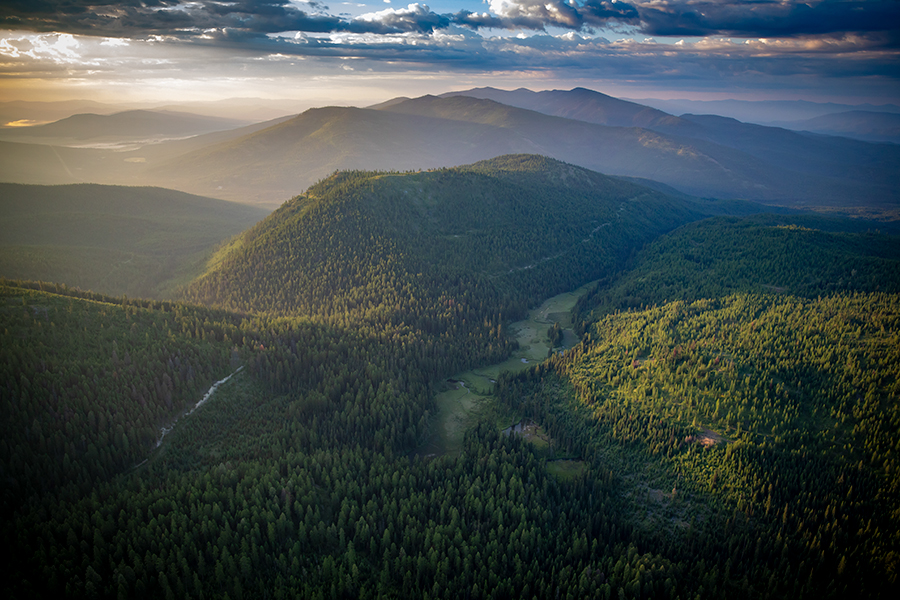
The top-ranked conservation project in America may be one of the most obscure — and because it’s situated in a far-flung corner of northwest Montana, where it would permanently protect hunting and fishing access on 150,000 acres amid unprecedented development pressure, it’s also among the most endangered.
Despite its relative anonymity, or perhaps because of it, the Montana Great Outdoors Project is getting some much-deserved recognition from one of the biggest hunting celebrities in the world.
Earlier this month, the digital media company and lifestyle brand “MeatEater,” which was founded by outdoor television and podcast personality Steven Rinella and is best known for its hit Netflix reality hunting show of the same name, announced it was awarding $200,000 to the Montana Great Outdoors Project in an effort to prevent development “and ensure continued access to hunting and fishing in perpetuity.”
According to a Jan. 3 post to its website, the MeatEater Land Access Initiative received close to 500 submissions for funding, but the Montana Great Outdoors Project, as well as its partnership with the nonprofit Trust for Public Land’s (TPL) “Forever Montana” fundraising campaign, distinguished itself as a landscape-scale conservation project that knits together existing easements spanning hundreds of thousands of acres.
With full-throated endorsements from private and public interests, including Green Diamond Resource Company, a family-owned timber firm, the Montana Great Outdoors Project has been making steady gains toward its goal of furnishing permanent protections on 150,000 acres of wildlife habitat stretching from Kalispell to Libby. The project would not only preserve key migration corridors between Glacier National Park, the Thompson Chain of Lakes and the Cabinet Mountains Wilderness, but it would safeguard public access for hunters and anglers who have used the land for generations.
But the conservation forecast wasn’t always so sunny for this forested region of Montana, where three years ago, in December 2019, the Washington-based timber giant Weyerhaeuser Co. announced it was selling all 630,000 acres of its remaining Montana land holdings to a private investment company for $145 million in cash. News of the sale sent shockwaves across the region, unnerving the hunters and fishers who for generations have traipsed through its forests, as well as the environmental organizations who were already laying plans to preserve the land.
Formerly owned by Plum Creek Timber Company, a succession of landowners had for decades honored the long-standing practice of allowing public access to the vast swath of timberland, a tradition that many feared was about to dissolve under the Weyerhaeuser sale.
“A collective shudder ran down all our spines, not just for those of us in the conservation community but also for land managers and the timber and outdoor recreation industries, because all those private lands have been de facto public lands for decades and they were suddenly at risk,” Dick Dolan, TPL’s Northern Rockies director, told the Beacon at the time.
With an unprecedented degree of development pressure bearing down on the region, the picture darkened when the buyer emerged as Southern Pine Plantations (SPP), a Georgia-based land investment firm that intended to parcel off the land and sell it to multiple buyers. With a track record of flipping large chunks of private forestland in the western and southeastern U.S., including selling parcels for private development in Idaho, SPP’s sudden presence on the Montana landscape wasn’t immediately met with open arms.
For example, in 2016 SPP purchased 172,000 acres of forestland in Idaho’s Payette River Valley and sold it to private buyers who stopped logging, locked out the public and blocked access to the national forest. And within a year of its Montana land purchase from Weyerhaeuser, SPP sold 475,000 acres through 49 separate land sales, ranging in size from 4 acres to 291,000 acres, with most falling in the 350-acre range. The second-largest sale was to a private individual who bought 125,800 acres between Flathead and McGregor lakes, dubbing the sprawling parcel Flathead Ridge Ranch. The largest transaction was a sale to Green Diamond, which bought 291,000 acres in January 2021, including an 85,860-acre segment of the Montana Great Outdoors Project footprint.
The project initially consisted of 28,091 acres of SPP ownership and 85,860 acres of Green Diamond ownership, but SPP recently withdrew from the easement agreement. However, the project dovetails with other tracts of Green Diamond land that comprise the 150,000-acre project area, including the 43,000-acre Upper Thompson River Connectivity Project and the 38,000-acre Lost Trail Conservation Area, which SPP still owns.
Last year, the Montana Great Outdoors Project ranked No. 1 among 47 projects submitted to the federal program, which awarded the Montana Great Outdoors Project $20 million in funding, the largest amount ever given to a single project. Similarly, the Upper Thompson River Connectivity Project earned a No. 1 ranking.
Now, the nonprofit Trust for Public Land is looking to raise an additional $10 million to complete the contractually obligated deal with Green Diamond by the end of 2023.
Enter MeatEater, which is has been headquartered in Bozeman since 2018 and, according to its press release, selected the project because of the unique suite of wildlife species it helps protect, as well as the existing chunks of protected lands it adjoins, knitting together 300,000 acres of previously conserved land, including the 111,000-acre Thompson-Fisher Conservation Easement, while also increasing public access.
However, “the clock is ticking,” according to MeatEater’s Ryan Callaghan.
“This is a once in a lifetime opportunity that won’t be here for long.”
According to FWP’s project proposal, “the threat status of this project is imminent” and it represents “a one-time opportunity” to protect the land in a single transaction and at a highly discounted cost per acre.
“Otherwise, much of this project area will almost assuredly be sold and divided into smaller tracts,” the FWP grant application explains, “increasing the number of landowners on this landscape and the cost per acre of a conservation easement, while fragmenting the wildlife habitat and decreasing the likelihood of ever achieving a conservation outcome.”
Chris Deming, a senior project manager at TPL who has been instrumental in the negotiations, said the partnership with MeatEater puts the conservation easement one step closer to completion. “From our perspective, we’re thrilled by the partnership with MeatEater and thank them for the generous contribution to the Montana Great Outdoors Project, which ensures permanent access for public recreation,” Deming told the Beacon. “That’s where the missions of our organizations are really aligned — to ensure the public has places to go hunt and fish.”