Extreme Drought Tests Resilience of Ranchers on Blackfeet Reservation
The desperation of livestock and agriculture producers reflects a broader crisis on the Blackfeet Reservation, where reports of extreme drought conditions led the Tribal Business Council to declare a state of emergency last month
By Katie Bartlett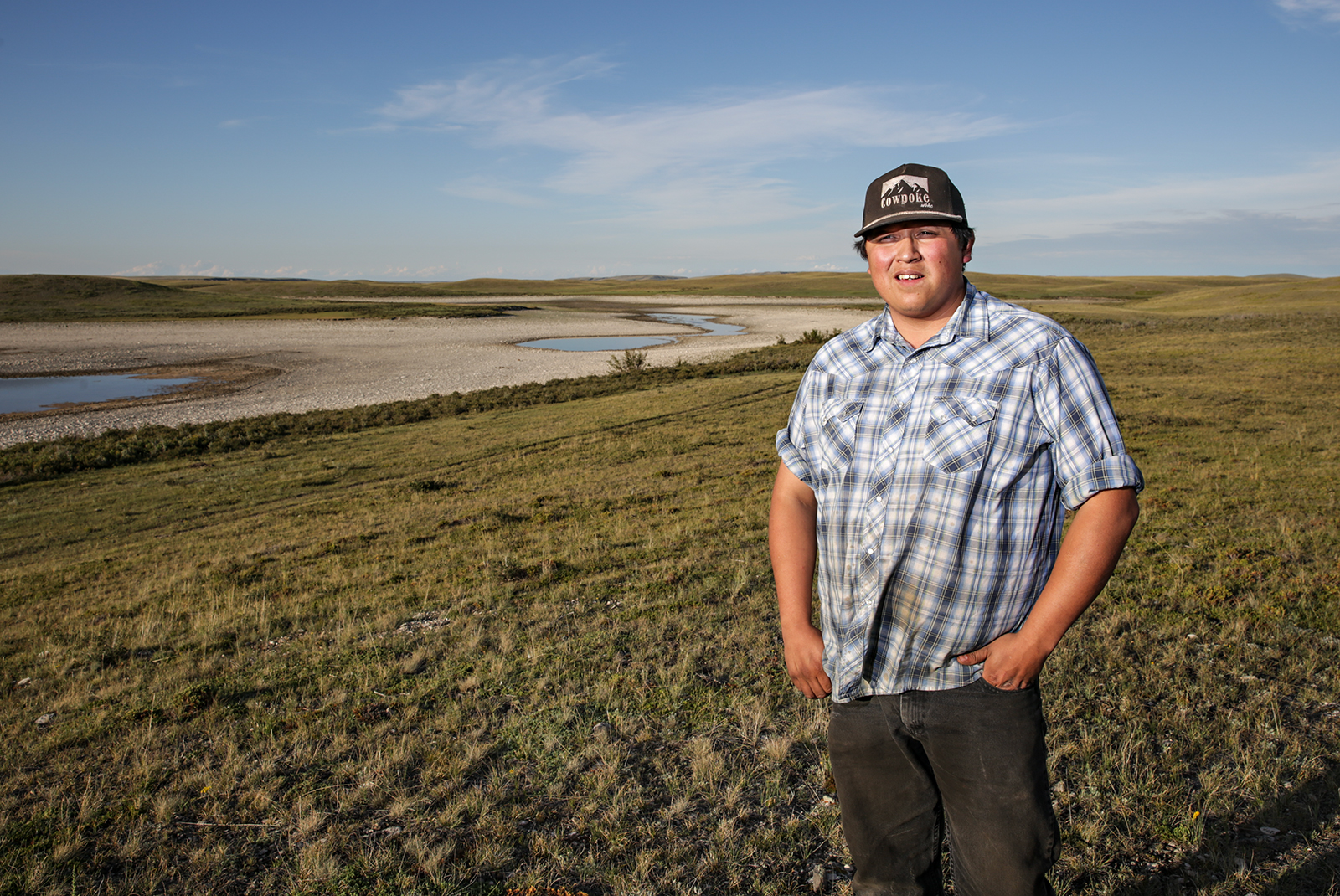
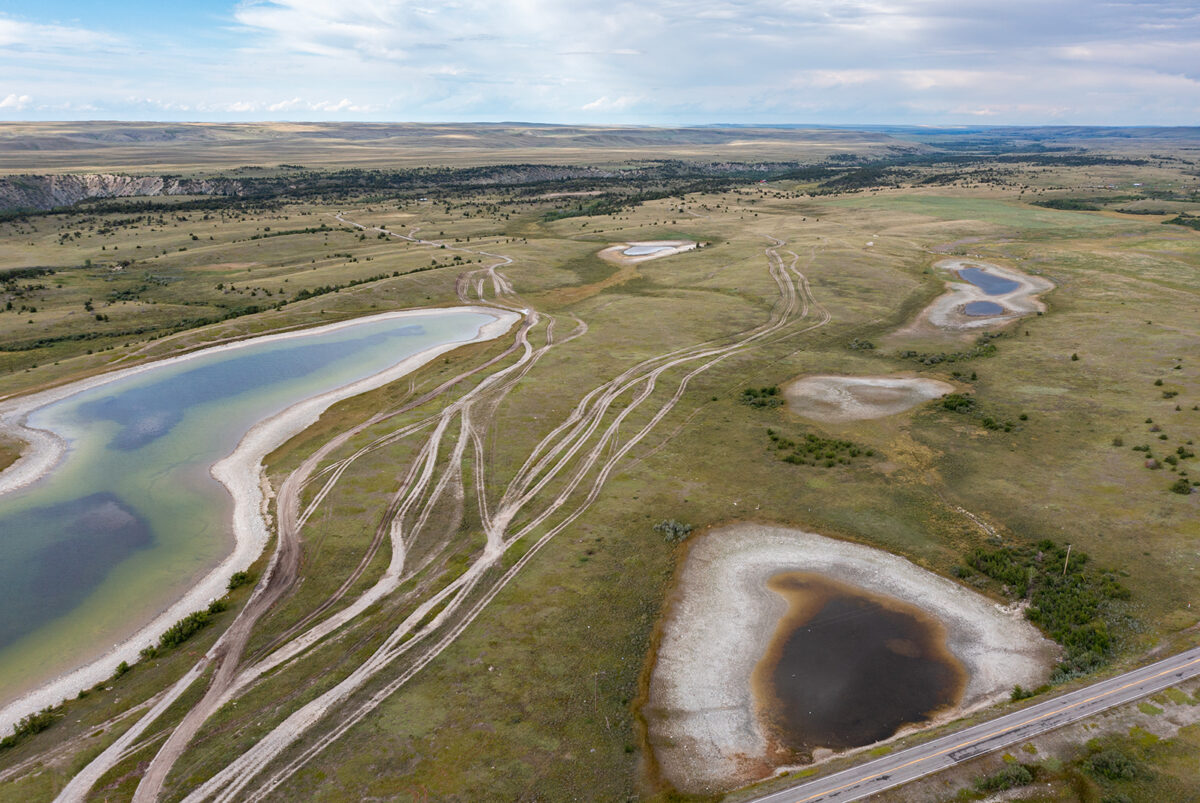
The lake that rancher Lance Williamson depends on to keep his cattle alive is nearly dry.
Chain Lake, located on Williamson’s lease in Heart Butte on the Blackfeet Reservation, is usually “booming with fish.” This year, it’s the lowest he’s ever seen.
“Last year the water was low, but there was enough to get the cows through late August,” he said. “This is the first time I’ve seen the lake dry up into a puddle.”
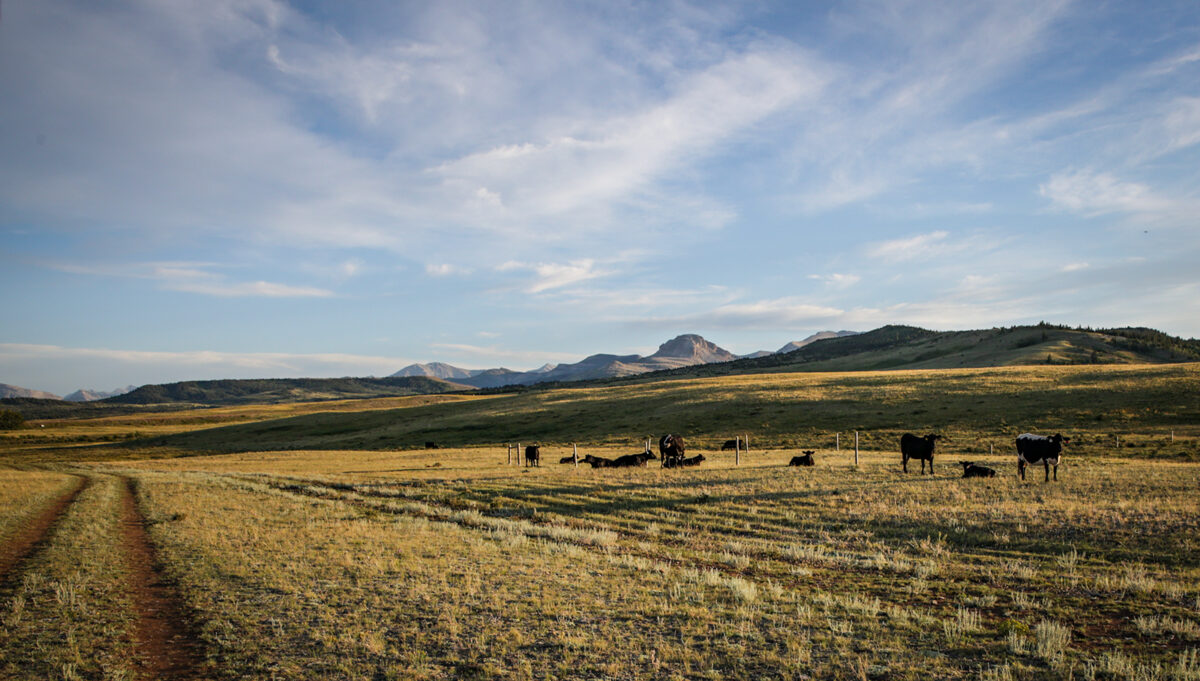
He’s already moved his herd to a spring-fed pasture that usually stays wet through summer. But even that’s beginning to go.
The cattle are drifting toward a nearby creek they wouldn’t normally reach until August. For the first time, Williamson left the beaver dams intact — they help hold moisture. But the change in grazing routes could expose his youngest calves to grizzly bears that frequent the area.
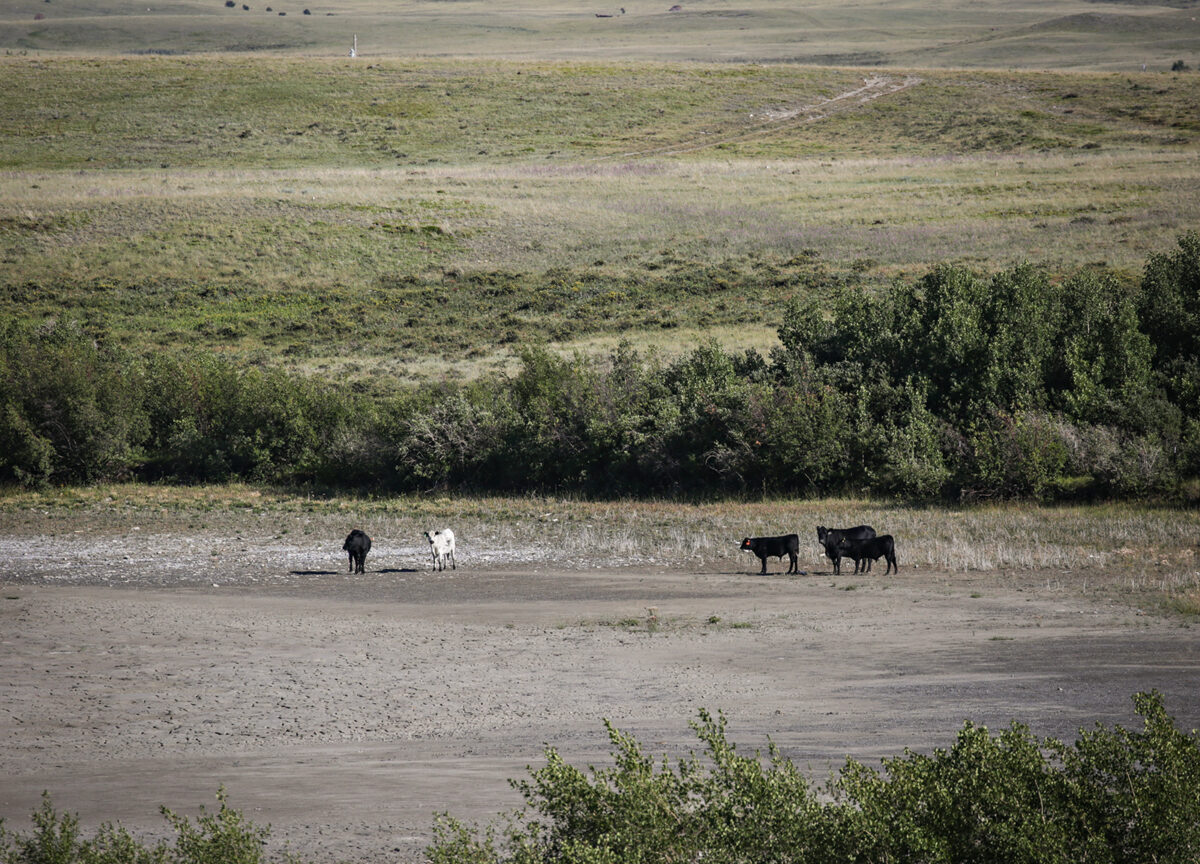
And the nearby Twin Lakes are in the same shape. Williamson recently drove past and saw cattle crowding the edges, trying to drink from what little water remains.
“My neighbor has started calling one of his fields a ‘kill pasture’ because it’s so dry,” he added.
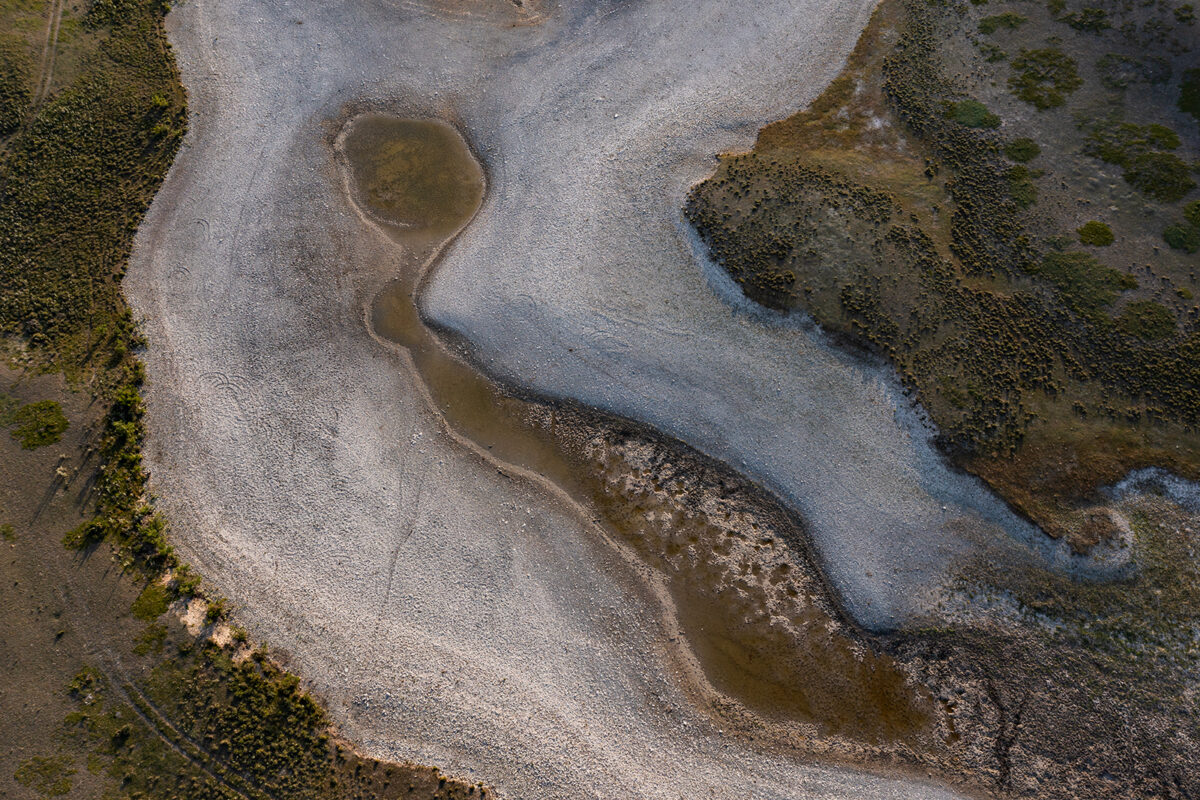
Williamson’s experience reflects a broader crisis on the Blackfeet Reservation, where reports of extreme (D3) drought conditions led the Tribal Business Council to declare a state of emergency last month. Agriculture is the reservation’s primary industry, and the drought is putting livestock, grazing land, and livelihoods at risk for more than 800 producers who operate on the 1.5 million acres of Blackfeet land.
About 15% of the reservation is currently experiencing D3 conditions, according to Kelsey Jencso, a climatologist with the Montana Climate Office. These conditions, expected only once every 50 years, are marked by major pasture losses and widespread water shortages. Meanwhile, the rest of the reservation is in a severe (D2) state, a level typically seen every 25 years.
Sonny Deroche, a rancher based in Two Medicine, added that the heat wave in early June, which saw temperatures rise into the 90s, “scorched” the grass just as it was beginning to grow.
“The grass isn’t as luscious and thick as it usually is,” Deroche said. “We’ve had to just throw all the gates open to let the cows walk from field to field to graze.”
After a scorching June and early July, a stretch of steady rain later in the month brought much-needed moisture to the region. Meteorologist Erik Johnson estimated that the Blackfeet Reservation received more than 1.5 inches of rain on July 21, which helped revive pastures and offered ranchers some relief during one of the driest times of year.
But Blackfeet Agriculture Department Director Craig IronPipe said the summer rain hasn’t been enough to make a long-term difference. Surface water — the kind cattle can drink — remains scarce.
“All this rain has just been teasing the cows,” Williamson added.
IronPipe explained that Blackfeet ranchers are caught in an “economic catch 22” because of the drought. If they sell cattle to conserve resources, they risk losing the income needed to afford their land leases. But if they hold on to their herds and conditions don’t improve, they risk dead cows and deeper financial losses.
The effects of the drought won’t end with the summer, IronPipe said, as cows depend on body fat to survive Montana’s harsh winters. Reduced nutrition from poor grazing can cause weight loss and delay reproductive cycles, which lead to later calving. Lighter cows also draw lower prices.
The drought is taking a toll on ranchers’ mental health as well.
“Ranchers are experiencing a lot of anxiety and depression right off the bat,” IronPipe said. “They’re asking, ‘Am I able to keep my cows? Am I going to be able to keep up with my payments?’”
Bud Grey is a rancher living with that uncertainty. The spring that has always supplied his land northwest of Babb is completely dry. For now, he’s moved his cattle closer to a creek, but he’s unsure what he’ll do next if conditions don’t improve.
“If it stays this bad through next year, there’s going to be no grass, no wild hay,” Grey said. “I don’t know how anyone is going to survive.”
IronPipe is encouraging ranchers who can afford it to sell down now while cattle prices are high, but he stressed that systemic challenges continue to complicate recovery.
Ranchers paid the Bureau of Indian Affairs (BIA) for their leases in March, before it was clear the grass wouldn’t grow. Within two days, the BIA distributed those payments to dozens of individual landowners. There’s no way to recover that money.
That leasing system is rooted in the General Allotment Act of 1887, which divided tribal lands into individual parcels. As landowners died, their property was split among heirs, creating a web of shared ownership known as undivided interests. Today, lease payments on a single parcel might be split between dozens of people, making refunds nearly impossible.
The dry conditions on the reservation aren’t new or isolated. The Montana Department of Natural Resources and Conservation (DNRC) released its annual Drought Outlook Report earlier this month, noting that 59% of the state is currently experiencing drought conditions. That includes isolated pockets of D3 conditions, including those on the Blackfeet Reservation.
Multiple years of drought “set the stage” for extreme conditions on the reservation, Jencso said. The region even faces D1 conditions through the winter, a rare occurrence in Northwest Montana.
“Last summer, a helicopter pilot on the rez described the landscape as a desert full of sand dunes, and it’s only gotten worse,” IronPipe said. “Mother nature comes around to replenish us, but there’s less and less water each time she comes around.”
Geography is a major contributor to the drought, as the Blackfeet Reservation lies in the rain shadow of the Rocky Mountain Front. As moist air masses move up the western slopes of the Rockies, they cool and condense, releasing precipitation. By the time the air descends the eastern slopes toward the Reservation, it’s lost much of its moisture. As a result, Jencso said that the area receives just 50% to 60% of the region’s average annual precipitation, leaving it more vulnerable to drought.
Climate change is only making things worse. The U.S. Department of Agriculture (USDA) reported well below-average snowpack across the state in May and June. Jencso explained that melting snow is important for replenishing groundwater systems, which keep surface water and streams flowing.
Ranchers are seeing these impacts firsthand: Williamson noted that Whitetail Creek, which runs near his lease, dried up in two days instead of the 35 that it has lasted in previous years.
The USDA’s Livestock Forage Disaster Program (LFP) has already kicked in to support ranchers, IronPipe said. The program helps cover the cost of cattle supplements and other resources needed to keep herds healthy during prolonged dry conditions.
The Farm Service Agency (FSA) is also reimbursing producers for the cost of transporting water and hay, paying them per mile to get supplies to their cattle. Deroche has started using the program but said the 60-plus mile round trip to Cut Bank for water is a “pain” that eats up time and energy during the demanding summer season.
Some ranchers feel that short-term aid isn’t enough. Williamson said having more springs and wells drilled, with stock tanks set up over them, would be “a really big relief” for him and other Blackfeet ranchers.
But putting these solutions in place isn’t simple. IronPipe explained that the Natural Resources Conservation Service (NRCS) provides funding for larger-scale projects like spring developments, water tanks, and cross fencing. On tribal land, those projects can’t move forward without approval from the BIA, which requires extensive environmental reviews and land-use authorization.
“The buck stops with the Bureau of Indian Affairs,” IronPipe said. “Their approval process often slows, or completely stops, projects.”
While large-scale solutions face delays, local organizations are working to provide long- and short-term support. The Blackfeet Department of Agriculture organized an event at BTI Feeds in Cut Bank, where feed vendors came to teach ranchers about the minerals needed to get cattle through the drought and offered discounted supplements.
Meanwhile, others are looking ahead. The Piikani Lodge Health Institute, a nonprofit based on the reservation, is working to get a design for natural snow fencing approved, which will help retain snow in areas that are most in need of moisture.
“Neighbors helping neighbors is really important right now,” IronPipe added. “We’re trying to pull resources together to get a list of where we can help ourselves. But it’s a massive problem and a massive amount of land, so it’s slow going right now.”
Ranchers say that the drought’s scale makes mutual support challenging.
“There just ain’t much you can do when it comes to water,” Deroche said. “It’s all mother nature.”
Grey tries to help where he can, letting a neighbor with no water use his lease and helping a friend move cattle towards a creek. But beyond that, he agreed that help from the community is limited, describing the conditions as “every man for themselves.”
That isolation isn’t just social — it’s also systemic. Agricultural production on the Blackfeet Reservation depends heavily on precipitation and soil moisture. But like many parts of rural Montana, a lack of local data historically made it difficult to monitor conditions or plan for emergencies ahead.
“The Blackfeet Reservation is especially tricky because conditions vary so much,” DNRC Drought Program Coordinator Michael Downey said. “Weather is typically going to look very different up against the mountains where the reservation starts versus in the prairie as you move east.”
To help fill that gap, Jencso launched the Montana Mesonet in 2016, installing weather stations in underrepresented areas, including four on the Blackfeet Reservation. But he noted that the data is only meaningful when paired with accurate interpretation and “conversations and collaboration on a regular basis” with tribal members.
Alongside monitoring tools, Downey noted that the DNRC also maintains a weekly listserv that shares drought updates, offers recommendations, and gives producers and partners on the reservation an opportunity to provide feedback.
Advocates say that without tribal involvement, it’s easy for government programs to overlook the complexities of how reservations operate. IronPipe, who sits on the Intertribal Agriculture Council (IAC) board that connects tribal representatives nationwide, works to bridge that gap. IronPipe’s IAC involvement allows him to meet with USDA officials and advocate on behalf of the Blackfeet Nation.
“The government can’t do cookie-cutter policies for tribal land because every reservation functions differently,” IronPipe said. “Being able to sit at the table and tell them how things function on our reservation means that they can make policies work for us –– so the money actually hits the ground.”
As he pushes for policy changes at the state and federal level, IronPipe is also focused on building long-term solutions at home. The Blackfeet Department of Agriculture previously drafted an agriculture resource management plan, but the document was so large that the tribal business council failed to approve it all at once. They are currently in the process of updating it.
A priority in that plan is restarting the reservation’s irrigation system. IronPipe said infrastructure to reach some of the driest parts of Blackfeet land has been in place for decades and can be restarted.
Putting that plan into action will require investment. IronPipe said that funding on the scale needed to address the drought is “very, very challenging” to find.
A few nonprofits have already contacted him with interest in funding water-related projects, but he remains cautious.
“Our people have been exploited for many, many years and that’s always on our minds,” he said. “You have nonprofits flooding in and saying they want to help us, and sometimes we don’t actually get the service they’re offering or anything more than that initial phone call.”
As the summer of drought continues, so do its ripple effects — and community members emphasize the need for caution on all fronts.
IronPipe urged drivers to stay alert, as cattle are increasingly crossing roads in search of water. Williamson noted that one of his calves has already been hit by a car.
“This isn’t the cows’ fault, and it’s not the ranchers’ fault. We’re just in a crisis,” IronPipe said. “But we’re the first stewards of this land and are still deeply connected to it. We’ve been here since time started – and we’ll make it through this too.”