Tourism to Glacier National Park Pumps $656M into Local Economy
A new National Park Service report shows visitor spending supported 5,190 jobs in Glacier’s gateway communities last year, while contributions to the national economy amounted to 340,100 jobs and $18.8 billion in labor income
By Tristan Scott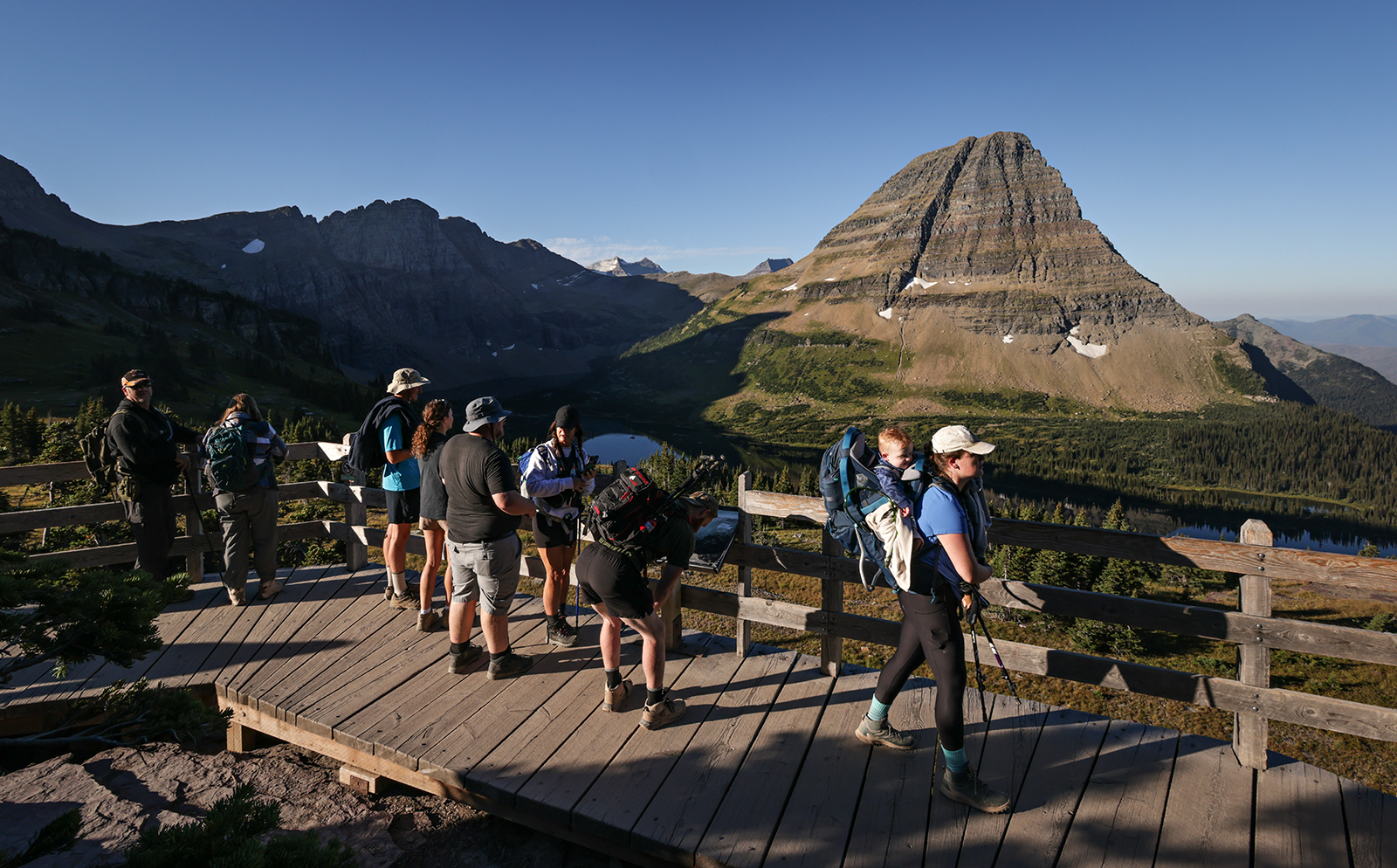
By the time the snow flew in Glacier National Park’s high country last fall, subduing a stretch of late-summer weather that afforded motorists snow-free access to Logan Pass until late October, nearly 3.2 million people had visited northwest Montana’s premier outdoor attraction during the first 10 months of 2025. Through November and December, park officials clocked an additional 20,000 visitors to round out the second-busiest year in Glacier’s 115-year history.
But how does the increasing level of visitation to Glacier percolate down through the Flathead Valley’s larger tourism economy? And to what degree do the expenditures come from out-of-market visitors versus locals?
A new National Park Service report helps answer that question, revealing that, in 2024, Glacier’s 3,208,755 park visitors spent an estimated $458 million in local gateway regions — expenditures that supported a total of 5,190 jobs, $217 million in labor income, $359 million in value added, and $656 million in economic output in local gateway economies surrounding Glacier National Park.
The report also estimated that, in Glacier Park, 94.2% of the visitor spending came from non-local visitors to the park.
“The communities around Glacier are our partners in providing visitors with information that helps them enjoy the park safely and responsibly — so that we may all continue to experience the wonder of this wild and scenic landscape for generations to come,” Glacier National Park Superintendent Dave Roemer said in a prepared statement announcing the report. “The park contributes back to Western Montana through visitor spending that supports jobs and creates revenue. We’re grateful to work with community partners on a sustainable future for our parks and communities.”
It will come as no surprise to western Montanans that spending by national park visitors is a major factor contributing to local, regional and U.S. economies. The new National Park Service report, titled “2024 National Park Visitor Spending Effects: Economic Contributions to Local Communities, States and the Nation,” further quantifies those contributions on a national scale, finding that 332 million visitors spent $29 billion in gateway communities within 60 miles of a national park, supporting vibrant tourism industries.
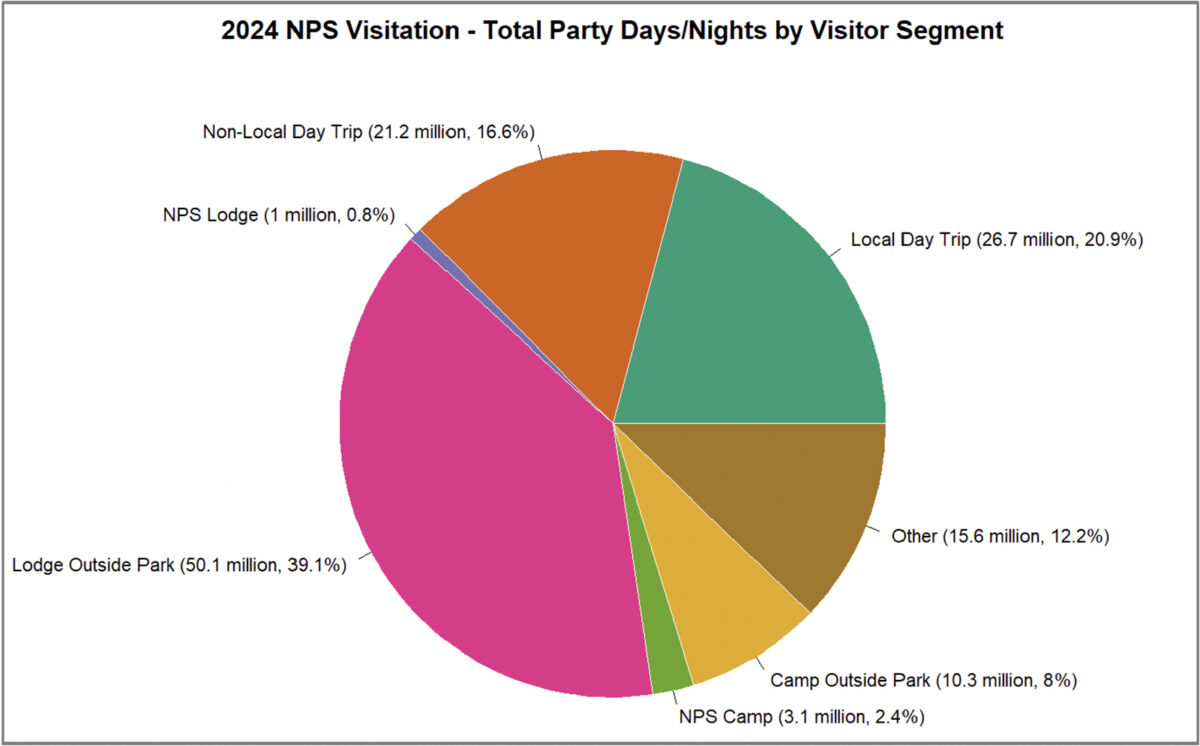
In 2024, the National Park System received 331.9 million recreation visits (up 2% from 2023). Visitors to national parks spent an estimated $29 billion in local gateway regions (up 10% from 2023). The estimated contribution of this spending to the national economy was 340,100 jobs, $18.8 billion in labor income, $33.7 billion in value added, and $56.3 billion in economic output. The lodging sector saw the highest direct economic benefits, with national park tourism contributing $11.1 billion nationally. The restaurants sector saw the next greatest economic benefit from national park tourism, with $5.7 billion.
According to Glacier National Park’s visitation data through August, overall visitation remains steady with 2.4 million people visiting the park in the first eight months of the year. Although visitation to the park declined in August, early surges kept visitation on track with previous years. Many Glacier stood out as an exception, registering a dramatic decline in August visitation, with 11,792 visitors compared to 31,603 visitors in August 2024. Overall visitation to Many Glacier is down 66% this year.
This is due in part to ongoing construction in the Many Glacier area, which is historically one of the park’s most popular sections. Glacier officials closed parking and vehicles access to the valley from July 1 to Sept. 21, except for visitors with a day-hike shuttle ticket, backcountry camping permit, or commercial service or lodging reservation.
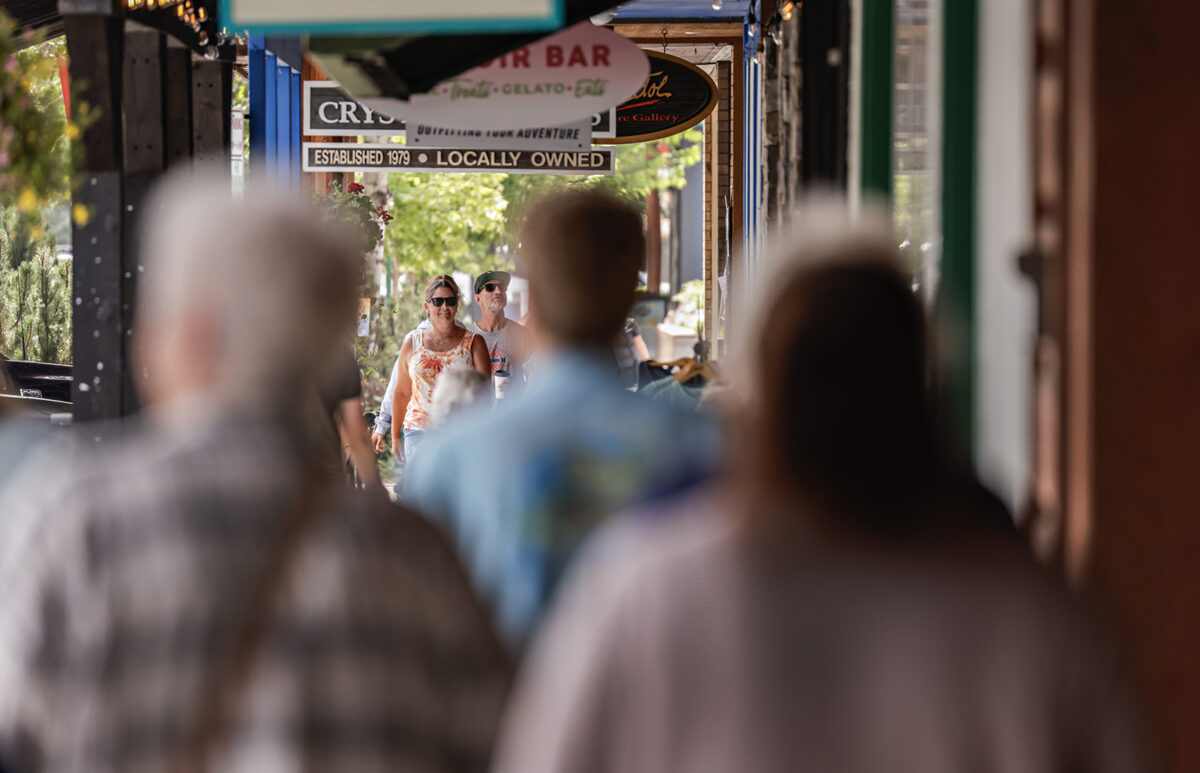
Local business owners on the east side of the park told the Beacon they’ve felt the impact, and attributed the dip in visitation at least in part to inflation and the trade war that has dogged U.S.-Canada relations since February, when President Donald Trump signed orders posing tariffs on Canadian goods. The business owners said the shift in Canadian attitudes has weighed more heavily on local businesses that the Many Glacier construction.
Babb, located just 10 miles from the border, is a convenient stop for Canadians heading to Kalispell’s shopping hub. Susan Higgins, who owns Two Sisters Café in Babb, estimates that in a typical year 25% of her customers are Canadian. This year, however, she said that figure was closer to 5%.
“The basic feedback I’m getting is there is a lot of resentment in Canada,” Higgins said. “They’re being encouraged by not just the government, but also by the rest of Canadian society, to avoid crossing the border.”
An interactive tool is available on the NPS website to explore visitor spending, jobs, labor income, and total economic contribution by sector for national, state and local economies. Users can also view year-by-year trend data.
To learn more about national parks in Montana and how the National Park Service works with Montana communities to help preserve local history, conserve the environment, and provide outdoor recreation, go to www.nps.gov/montana.