Montana Supreme Court Won’t Intervene in Case Against Lakeside Sewer District
In denying the petition for supervisory control, the high court ruled that Citizens for a Better Flathead and a co-plaintiff already have "an adequate appeal process that they are actively pursuing."
By Zoë Buhrmaster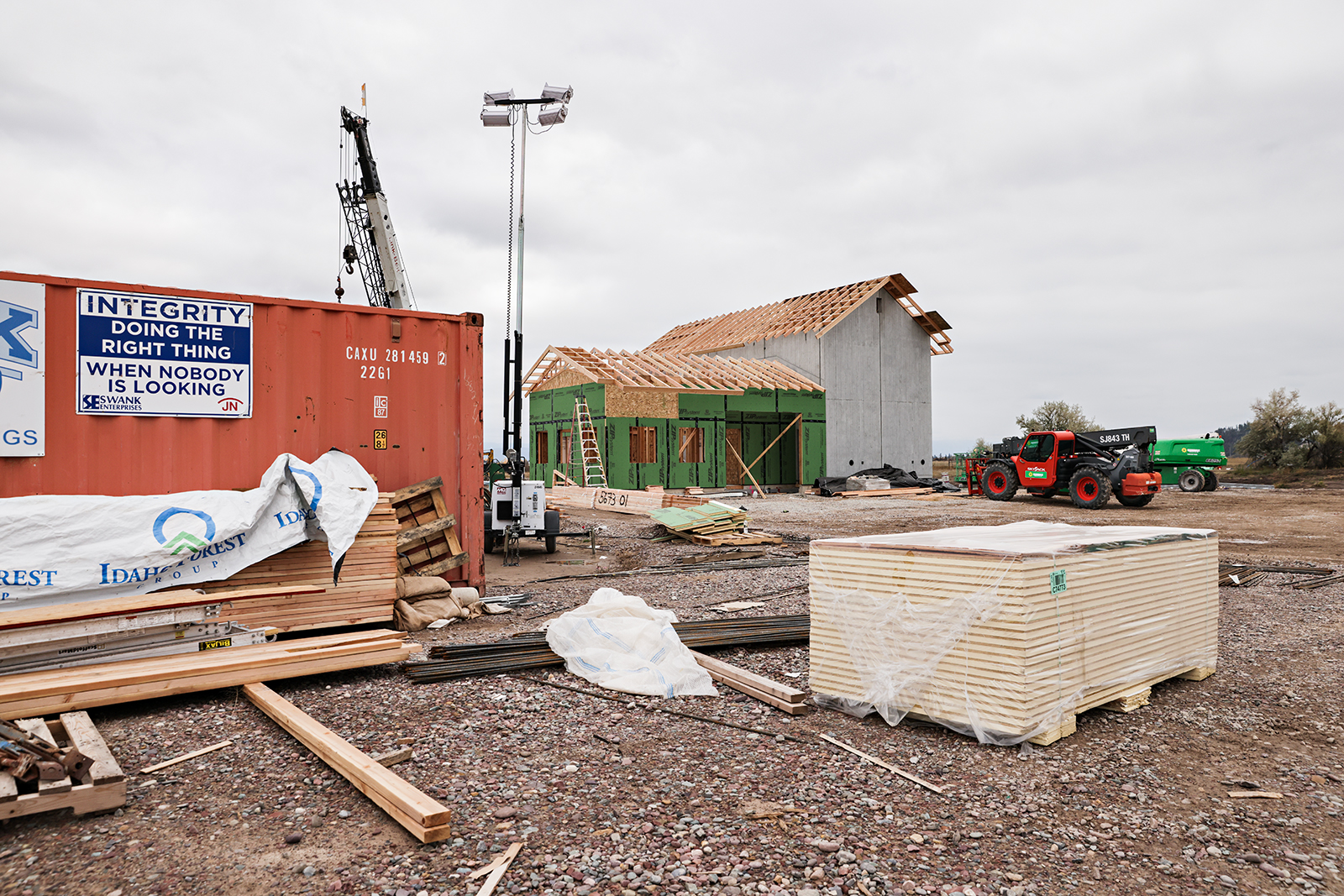
Two lawsuits seeking to block the Lakeside County Water and Sewer District (LCWSD) from moving forward with expansion plans are faltering following the Montana Supreme Court’s rejection of a petition to intervene in one case and a lower court’s denial of a preliminary injunction in another. The local sewer district is currently in the first of a two-phase plan to build a new wastewater treatment facility and a septage receiving plant for Flathead County.
In the first lawsuit, local watchdog group Citizens for a Better Flathead (CBF) and LCWSD ratepayer Bruce Young sued the water and sewer district for allegedly violating public participation laws. In a move to “protect the public’s constitutional rights,” the group claimed that the board did not provide “reasonable opportunity” for ratepayers to participate during the permit approval process, both for the expansion project and, separately, a luxury resort in Lakeside that the district has agreed to service.
Flathead County District Court Judge Paul Sullivan in August denied the group’s petition for a preliminary injunction to halt the expansion project. In response, CBF and Young, the co-plaintiff, appealed Sullivan’s decision to the Montana Supreme Court and filed a concurrent petition for a writ of supervisory control asking the high court to intervene.
On Wednesday, the Supreme Court denied and dismissed the petition for a writ of supervisory control, noting that “Citizens have an adequate appeal process that they are actively pursuing.”
Before issuing the ruling, the Supreme Court requested that the lower court and the water and sewer district respond to CBF’s petition.
In LCWSD’s response, Attorney Seth Bonilla argued that the district is legally required to publish an agenda on its website, which does not include supporting documents except upon request.
“The packets were available upon request and no one other than [CBF] had requested the information,” Bonilla stated.
In Sullivan’s response, which sought to explain why a ruling on the merits of a writ of mandamus that CBF filed in April 2025 was still pending, the judge explained that in the aftermath of a hearing for the preliminary injunction in August, and in his denial of the preliminary injunction two days later, his additional order denying Citizens’ writ of mandamus was “inadvertently not filed.”
Sullivan filed his denial of the writ along with his response to the Supreme Court, which the high court said “resolves the issue for which their petitions seek relief.”
“Having reviewed the petition and the responses, we conclude that the discretionary exercise of supervisory authority is not warranted,” the Supreme Court wrote.




In a separate lawsuit, CBF and the Confederated Salish and Kootenai Tribes (CSKT) are challenging the Montana Department of Environmental Quality’s (DEQ) decision to approve a groundwater discharge permit for the first phase of LCWSD’s expansion plan.
The lawsuit raises objections to the property’s location two miles north of Flathead Lake, with concerns over the wastewater treatment project contaminating local tributaries and the largest freshwater lake west of the Mississippi.
Flathead County District Judge Danni Coffman denied a preliminary injunction to halt the project on Oct. 17. Coffman wrote that construction on the new sewer district is not scheduled to begin until the later part of 2027, saying that “no Montanan’s right to a clean and healthful environment can conceivably be impinged during the pendency of this action.” She also noted that the case relies upon reviewing DEQ’s records in relation to approving the permit – documents that DEQ officials have yet to submit to the district court.
“Even if this Court were to find that DEQ’s decision making was arbitrary and capricious or that it otherwise failed to follow applicable law and rules, the results would be for DEQ to revisit the permitting process,” Coffman said in the Oct. 17 conclusions of law. “Even if CBFC/CSKT are successful on the merits, the end result would not necessarily be different.”
In response to Coffman’s ruling, CBF Executive Director Mayre Flowers reiterated the group’s “unwavering commitment” to continuing its lawsuit against DEQ.
“While we are disappointed by the court’s decision, this is a procedural ruling, not a judgment on the merits of our case,” Flowers said in a prepared statement earlier this month. “The court’s order specifically notes that our core argument — that Montana DEQ acted arbitrarily in approving this permit — still needs to be determined after the full administrative record is filed and reviewed. Our fight to protect Flathead Lake and the surrounding groundwater is far from over.”
